
Quick review
The good
The not-so-good

The “normal” sized update to the iPhone is here, and it packs plenty of punch. Is the iPhone 18 Pro the must-have phone of the year?
It’s been nearly 20 years since Apple launched the iPhone, and difficult to believe as it is, the iPhone is now named in a way where it’s officially an adult.
Now in its 18th generation, the iPhone is refined, tweaked, and designed in such a way where it’s the phone that typically leads the pack and sets the standard for what’s to come, and what will keep people going for the time to come.
The latest iPhone doesn’t sport a whole heap of differences from its previous generation, but for folks going from much older models, or even starting completely anew, the 18 Pro has plenty in it to get excited about. Is it one of the year’s best?
Design
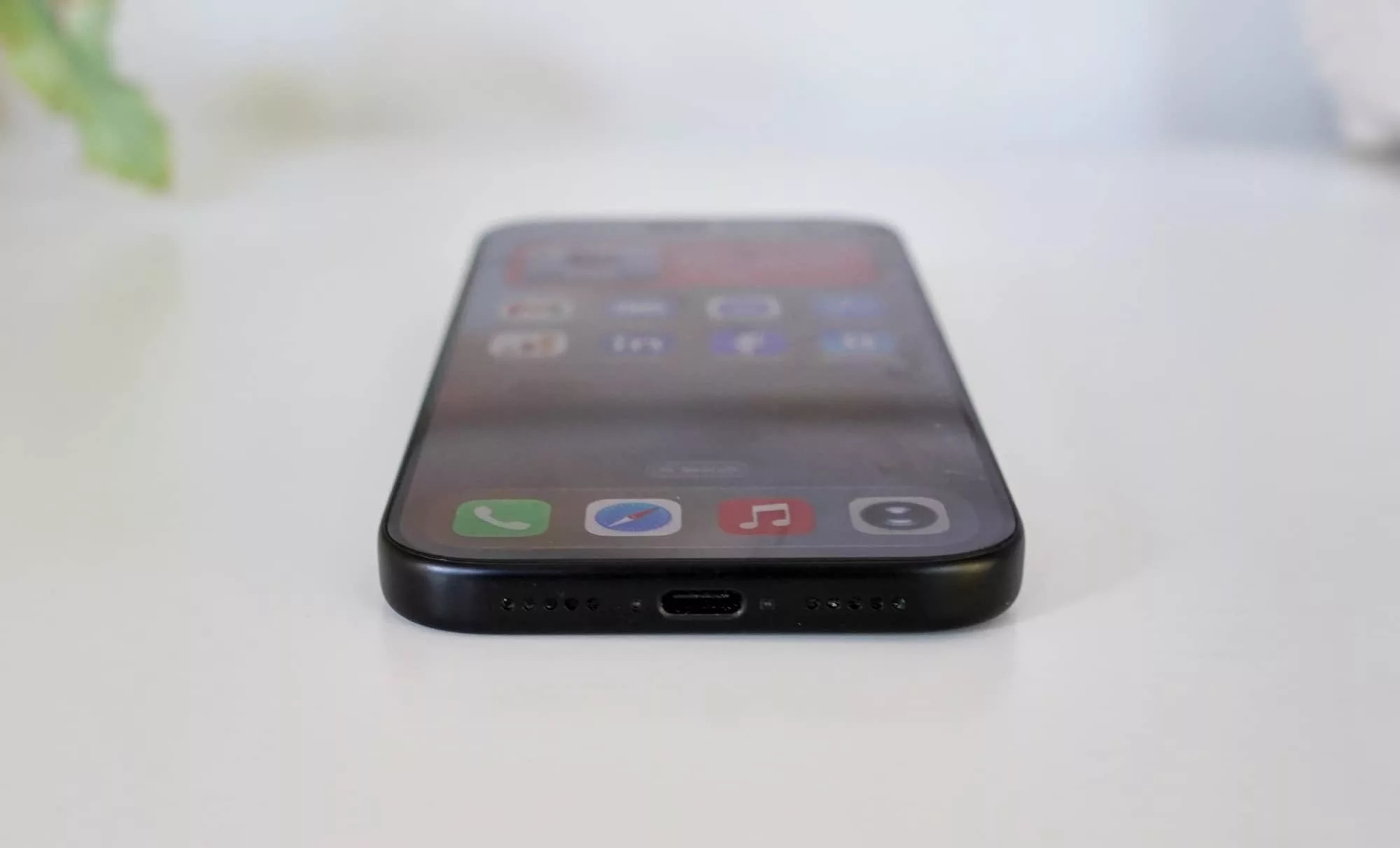
2026’s model of the iPhone is here, and if you’ve seen the 2025 edition, chances are you’re going to think the two are very very similar. Because they are.
There are no changes to the physical dimensions, and no changes to the aesthetics, either. For all intents and purposes, the iPhone 18 Pro is the very looker of its iPhone 17 Pro sibling that came before it, front and back.
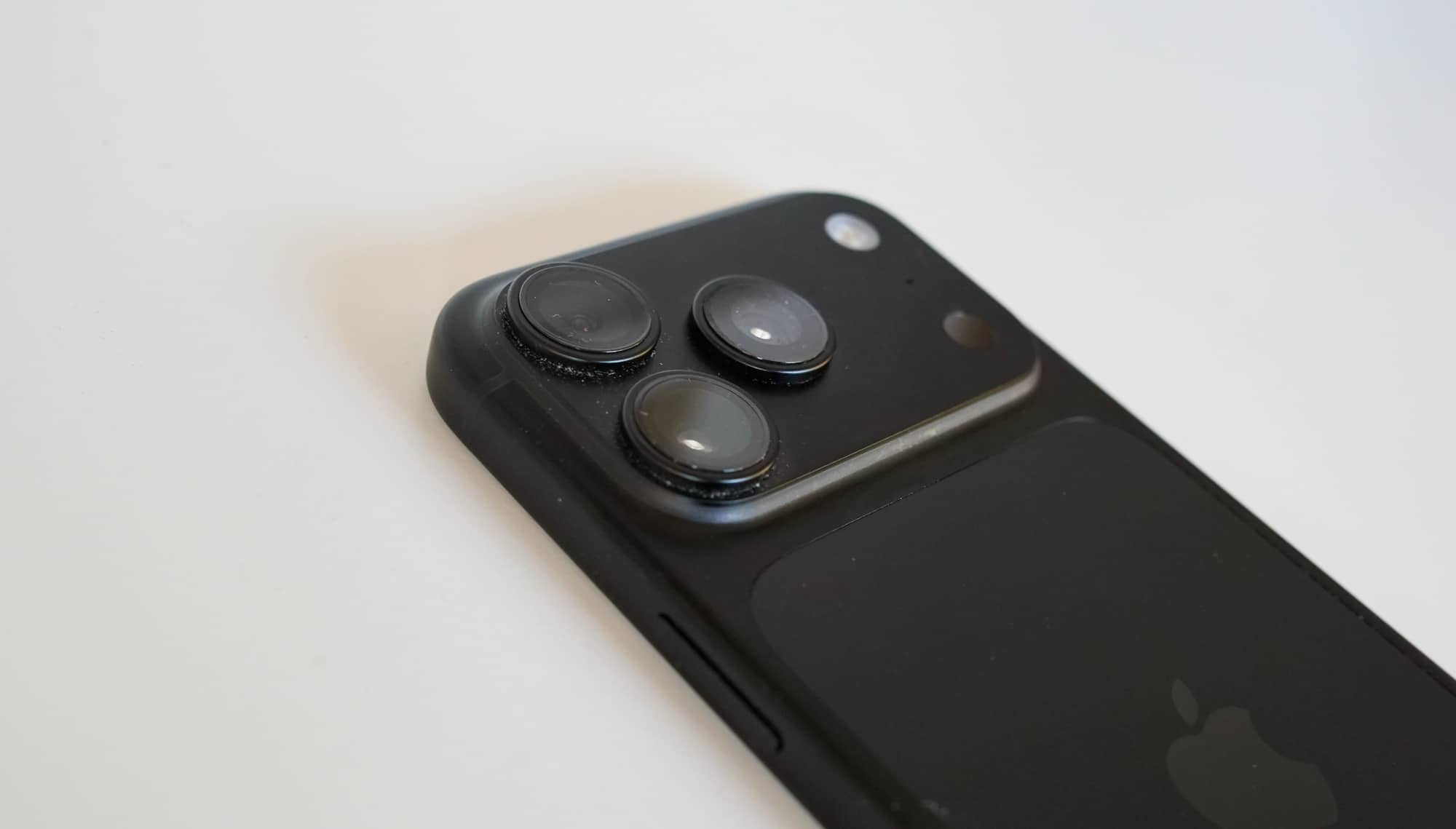
That means you get an aluminium back and glass front, with a rectangle cut out of the camera section near the top, giving the iPhone an easy way of rest up on a surface and tilting at an angle.
It’s a design we’re fans of, much as we are the camera bar used in the Pixel range, which also uses a similar ledge to tilt the phone at an angle when lying flat. The result is a phone that’s suitably premium but still easy to carry, and easy to leave on a table, something not every mobile maker does well with.
Features
Inside, the technology is going to also feel quite familiar, thanks in part to just how little has obviously changed. There’s a new chip and an update to the camera, but beyond these, the iPhone 18 Pro will feel like the iPhone 17 Pro before it, and that’s not bad.
It’s clearly not an upgrade path for iPhone 17 Pro owners, or even iPhone 16 Pro owners before that. If you own one of these devices, you have a phone that’ll keep you going for a while longer yet.
But everyone else may want to consider what’s inside, which in the 18 Pro includes Apple’s latest chip, the A20 Pro, a piece of silicon boasting six CPU cores, seven GPU cores with neural accelerators, and a dual 16-core Neural Engine. While much of that will sound like jargon, the long and short is that this chip is made with AI in mind.
You’ll find a choice of storage here, with 256GB being the minimum you can get, but options of 512GB, 1TB, and 2TB. More costs more, but may keep you using the phone longer, as well.
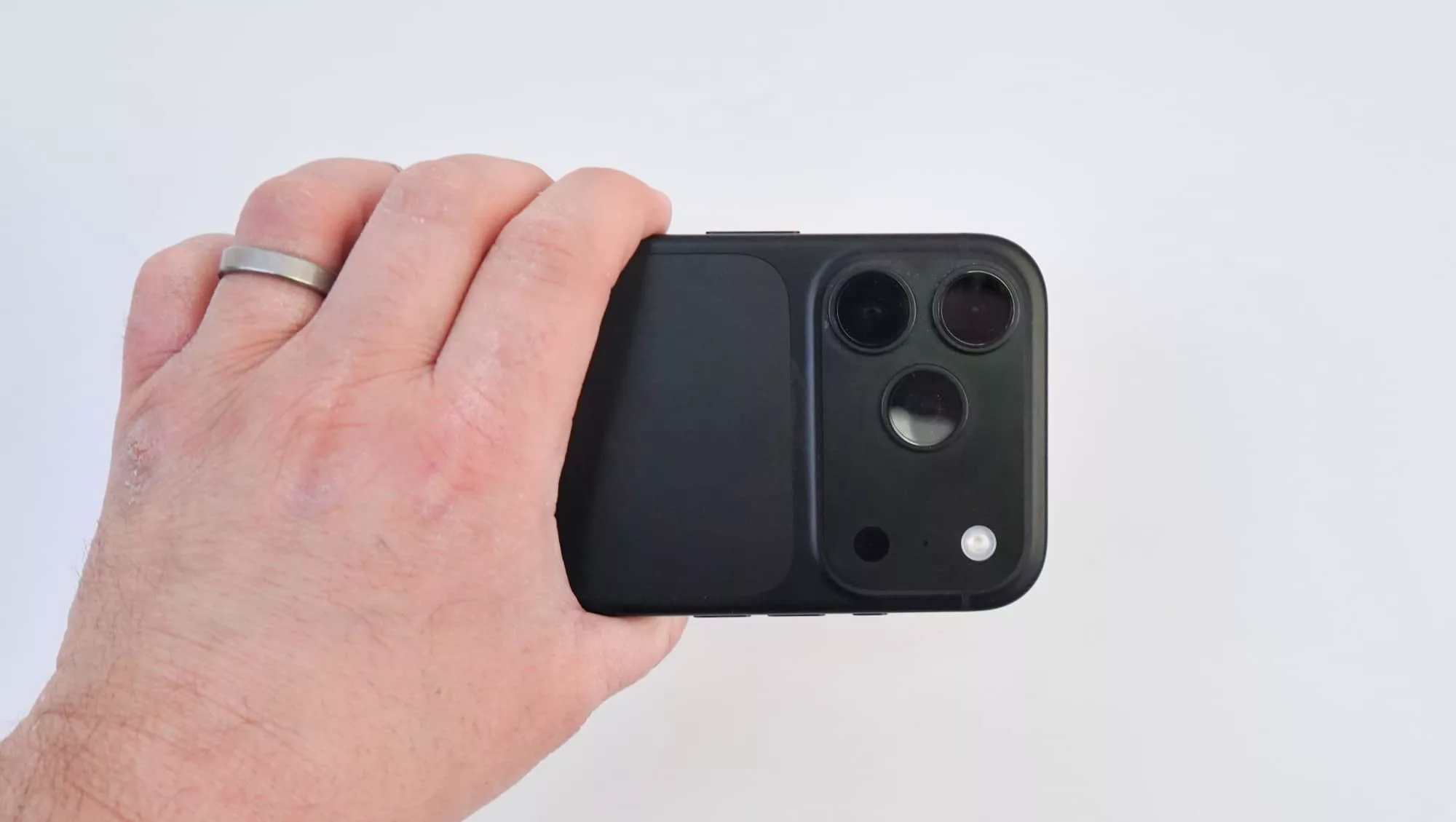
Three cameras can be found on the back, easily one of the most important aspects, sporting a 48 megapixel main wide camera with support for variable aperture across F1.48, F1.8, F2.8, and F4.0, while 48 megapixel cameras also can be found for ultra-wide F2.2 and 4X telephoto F2.8.
Both the main and telephoto camera can also get a little closer, getting twice the reach at 12 megapixels, supporting 2X for the main and 8X for the telephoto, effectively giving you a range of 0.5X to 8X if you keep to capturing in 12 megapixels only.
A front-facing camera is also here, using an 18 megapixel camera with F1.9, though portrait modes are support across front and back, as is 4K video capture.
There are other aspects that you’ll expect, such as support for 5G (sub-6), Wi-Fi 7 (with support for previous wireless networking technologies), Bluetooth 6, GPS, Thread, and Near-Field Communication (NFC) for Apple Pay, as well as ultra-wideband radio technology for Apple’s Find My trackers. That covers wireless technologies, but there’s also the USB-C port at the bottom, which offers fast charging, USB 3 data, and DisplayPort out.
Charging the phone works through the USB port, but Qi2 and MagSafe are also found here, handy if you like wireless and magnetic charging.
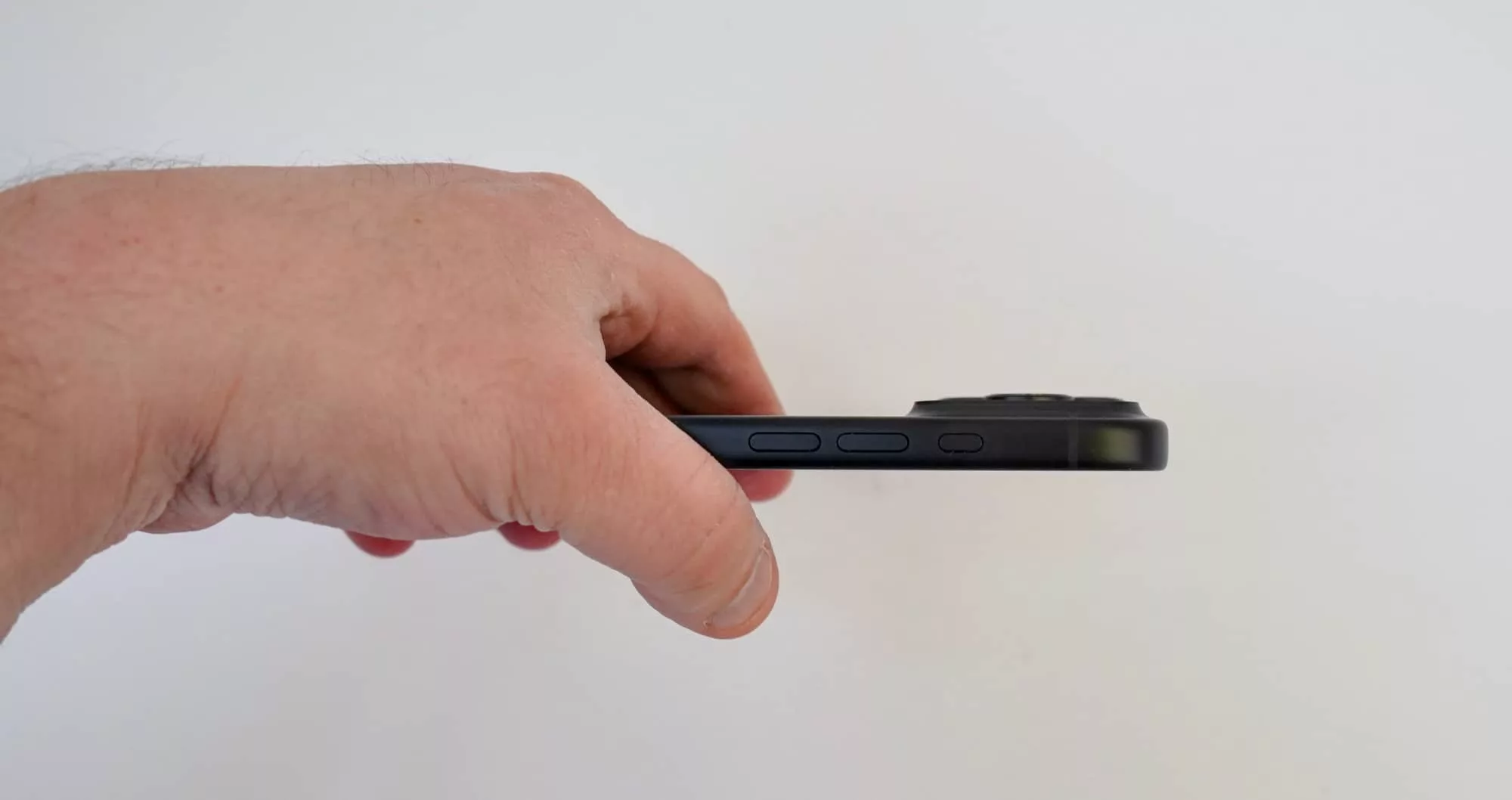
Most of what’s left is what you can expect: power button, volume rocker, and customisable action button, not to mention a haptic camera controller which can see you slide your finger over it. There’s Face ID for logging in, support for both a nanoSIM and eSIM, and iOS 27 out of the box, with support for quite a few updates from here.
It still sports IP68 water resistance and Apple’s durable Ceramic Shield 2 on the front, the same as last generation and even the iPhone 16 Pro, complete with the first-gen Ceramic Shield on the back.
And then there’s the 6.3 inch display, which looks like last year’s, but manages to be a little bit different.
Display
There are some changes to the screen, albeit not in the way you may expect.
Technically, the display used on the 18 Pro is close to being identical to the one used on the 17 Pro before it. However, when you compare them next to each other, it’s pretty easy to see how they’ve changed: the Dynamic Island is smaller on the newer model.
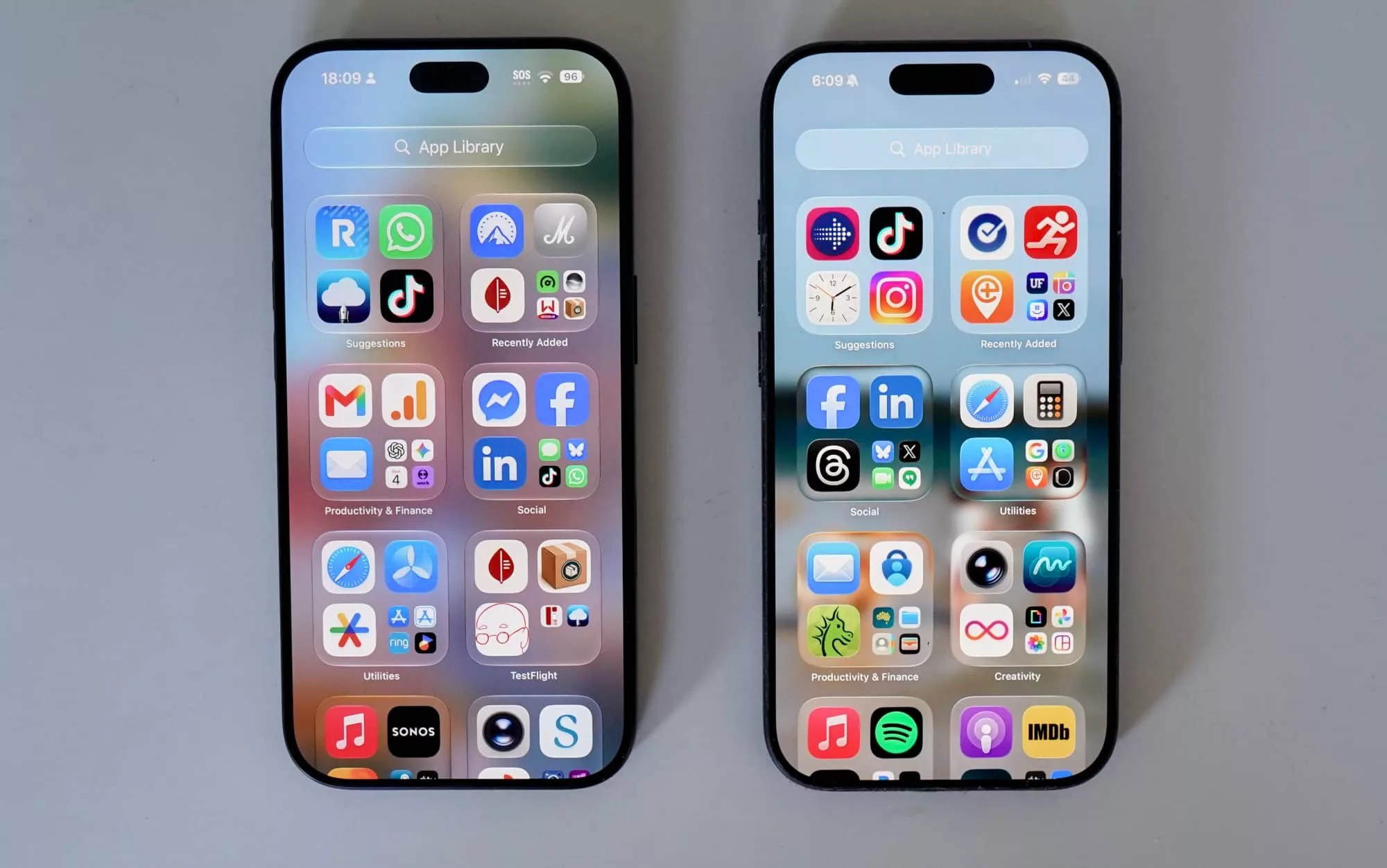
Yes, that cut-out at the top is a touch different, using less of the screen for the camera and Face ID tech, but not that much more. A reduction in used space is always a good thing, though it hasn’t really changed anything else. You get marginally more to look at, but the resolution stays at 2622×1206, running the ProMotion tech at 120Hz and stopping the screen down to a measly 1Hz when the standby screen is on thanks to the always-on tech.
Nothing has changed, but you’ll find a bright display, support for the P3 colour gamut, and Apple’s white-balancing True Tone technology, too.
In-use
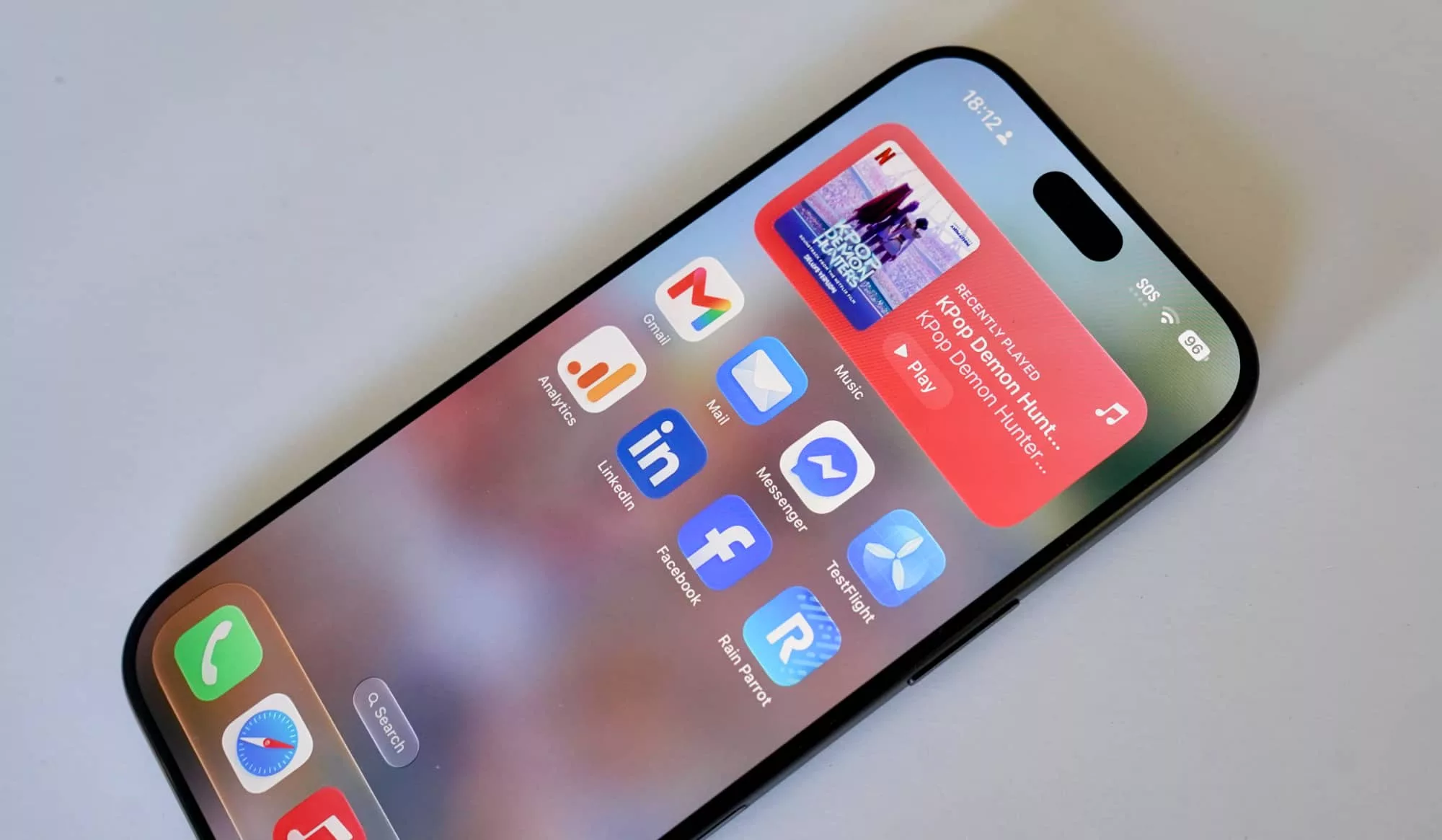
The latest generation iPhone may well have some advances, but using is doesn’t reinvent anything in most areas, so if you’ve used an iPhone before, this will be very familiar.
A widgetised homescreen awaits with app shortcuts and widgets aplenty, support for gestures across the platform, and iOS 27’s Siri AI integration, which you may choose to use or just largely skip. Each to their own.
Making use of iOS in this phone is easy and needs no major explanation. Even if this is your first iPhone rodeo — and it probably won’t be — there isn’t a lot to really get stuck into. It’s an iPhone and easy to use.
Performance
Even before you get the phone into use, you can already probably guess what the new processor is going to be like, with an answer somewhere between “faster than last year” and “faster than what you’ll need”.
You may have heard that phones are lasting longer than ever these days, and the performance of the iPhone processors certainly lend themselves to that.
| Device | CPU Single Core | CPU Multicore | GPU |
|---|---|---|---|
|
Apple iPhone 12 Pro (2020)
Apple A14 Bionic
|
1595
|
4025
|
9221
|
|
Apple iPhone 13 Pro (2021)
Apple A15 Bionic
|
1728
|
4634
|
13985
|
|
Apple iPhone 14 Pro (2022)
Apple A16 Bionic
|
1870
|
5586
|
15220
|
|
Apple iPhone 15 Pro (2023)
Apple A17 Pro
|
2912
|
6939
|
27480
|
|
Apple iPhone 16 Pro (2024)
Apple A18 Pro
|
3379
|
8260
|
32989
|
|
Apple iPhone 17 Pro (2025)
Apple A19 Pro
|
3800
|
9723
|
45749
|
|
Apple iPhone 18 Pro (2026)
Apple A20 Pro
|
4719
|
12390
|
63424
|
Here on the 18 Pro, the A20 Pro is definitely a leap ahead, seeing fairly obvious gains on previous chips, and showing just how much of a performer the phone really is. Good luck finding apps that will flex that hardware too much over the coming years.
Even against some of the best Android phones, while the benchmarks aren’t a straight fight, Apple’s iPhone 18 Pro shows just how far ahead of the game it can be.
| Device | CPU Single Core | CPU Multicore | GPU |
|---|---|---|---|
|
Google Pixel 11 Pro Fold
Google Tensor G6
|
2318
|
6901
|
3269
|
|
Leica Leitzphone
Qualcomm Snapdragon 8 Elite Gen 5
|
2943
|
7853
|
22317
|
|
Oppo Find N6
Qualcomm Snapdragon 8 Elite Gen 5
|
3590
|
9880
|
23066
|
|
Samsung Galaxy S26 Ultra
Qualcomm Snapdragon 8 Elite Gen 5
|
3660
|
11200
|
24842
|
|
Apple iPhone 18 Pro
Apple A20 Pro
|
4719
|
12390
|
63424
|
Over in the world of 5G, the performance is also there, and nothing to sneeze at.
While Australians miss out on one of the mmWave iPhone models like what’s found in America, our sub-6 5G models can deliver high speeds, too, achieving fast mobile access, too.
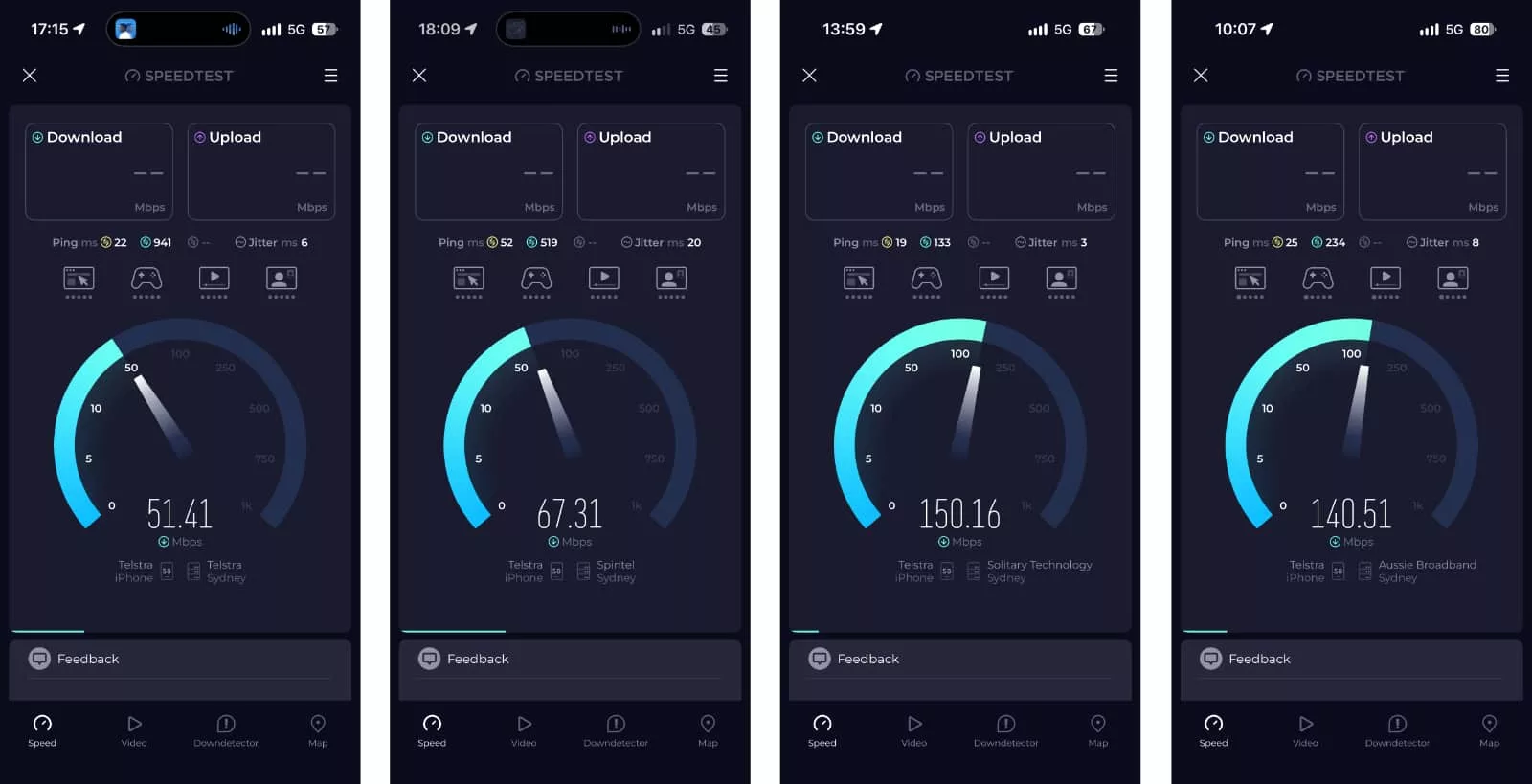
Your speeds will vary based on your telco and where you are at the time, but tested on Telstra’s 5G wholesale network by way of Belong, our iPhone 18 Pro review unit hit speeds as high as 152Mbps in our tests. More is easily possible, but network performance is dependent on a lot of factors.
Camera
Arguably the biggest change for the 18 Pro is in the camera, where the megapixels have largely stayed the same, but the technology for the camera has improved with aperture blades. The result is a system we’ll get into shortly, which aims to emulate how real lenses work on larger cameras, using apertures to control light and depth, and deliver actual focus falloff.
It’s a sizeable change, but so is the software, which is worth talking about first.
There are a few changes, including more manual controls, a welcome addition that means pro users can lean on more specific controls, while also tweaking the “Photographic Styles” feature, now in version three. That’ll let you change the colour and tone, while also bringing in grain if you want it. Almost as if you had a manual film camera, but clearly didn’t. It’s all digital.
Then there’s the interface controls, which on the main camera give you more to work with: exposure, focus, shutter speed, white balance, and even a histogram, all without diving into a “manual” mode. It’s just part of the feature list of this specific iPhone camera.
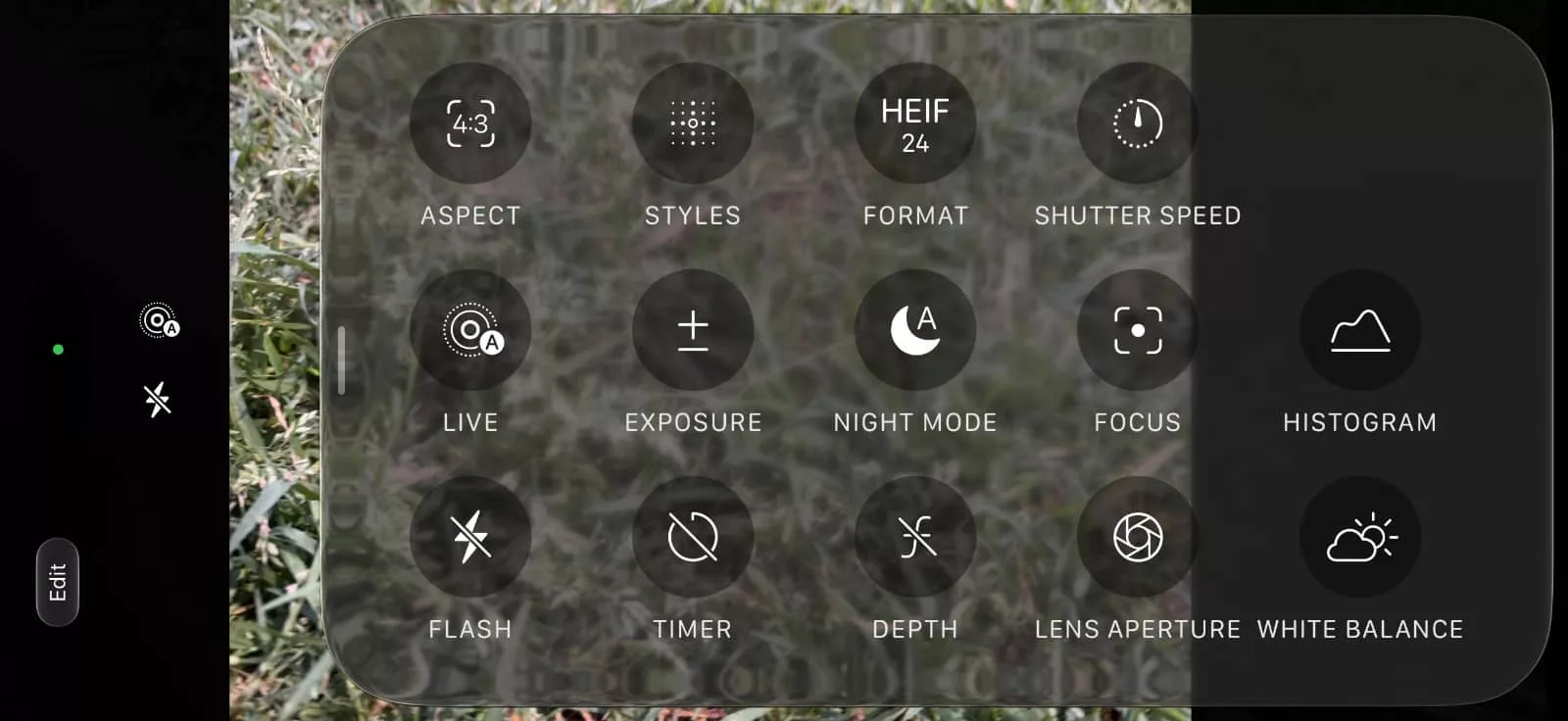
And then there’s also “depth” and “lens aperture”, two options which should be the same — they technically mean the same thing — but which actually do different things.
In the iPhone 18 Pro, “depth” kicks in the portrait simulation technology by letting you shift between fake apertures using a combination of cameras. Meanwhile “lens aperture” lets you control the actual mechanical lens apertures on the main camera, providing you with variable aperture control.
Variable aperture
Quite easily one of the more intriguing aspects is the inclusion of variable aperture, a technology that makes the 18 Pro more like regular cameras is found in the main wide camera: a lens system with actual aperture blades.
Variable apertures aren’t an entirely new thing for phones, with Samsung having tried the concept years ago in the Galaxy S9. However, there are four aperture blade sizes on the iPhone 18 Pro, and that is new.
To make this work, you actually won’t work in Apple’s Portrait mode, a note which surprised even this reviewer. It would have actually made perfect sense for the four apertures to provide support for portraits, but that doesn’t seem to be the case here.
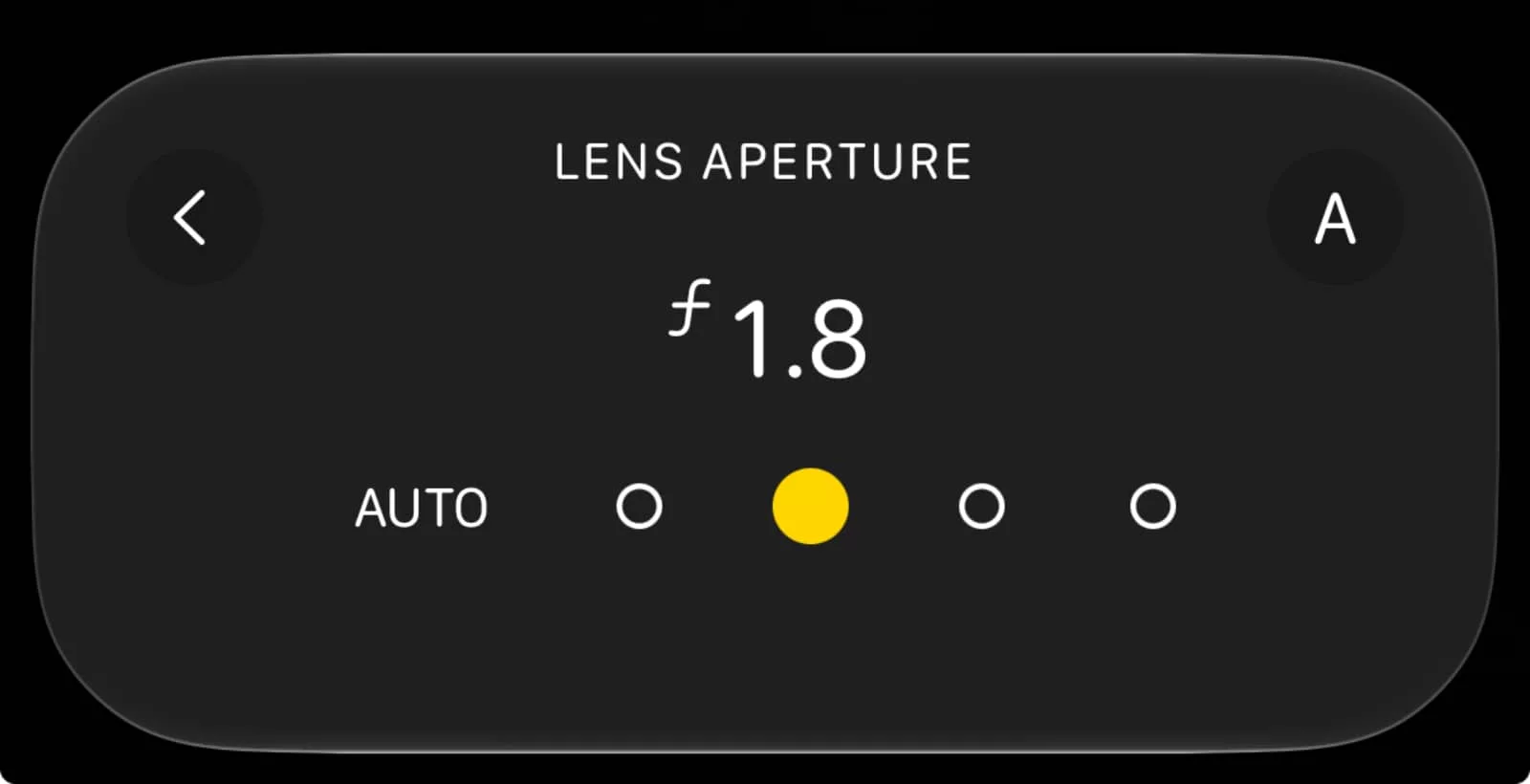
Rather, it’s more of a first-gen sort of vibe, with the aperture ranges being used for the main photo mode and only for the wide camera, which isn’t necessarily wide enough to make a difference.
Switching between apertures doesn’t actually get you a lot of variability for the aperture modes, and while it would have made sense to have the apertures address some of the falloff in portrait mode, it doesn’t seem to do anything.
Even Apple’s own camera interface doesn’t seem right, as if the company wasn’t sure how to address this. Glance at the camera and you’ll see both “lens aperture” and “depth” side-by-side, even though they are technically the same thing. Depth should be controlled by aperture, but here on the iPhone, depth is simply the fake depth being used for portraiture by the software, while the lens aperture runs the aperture blades.
The result of all of this is that the variable aperture feature doesn’t amount to much… yet. The idea is clever, and the concept definitely harks back to the purist photographers who love a real camera body. But it needs more to be worthwhile.
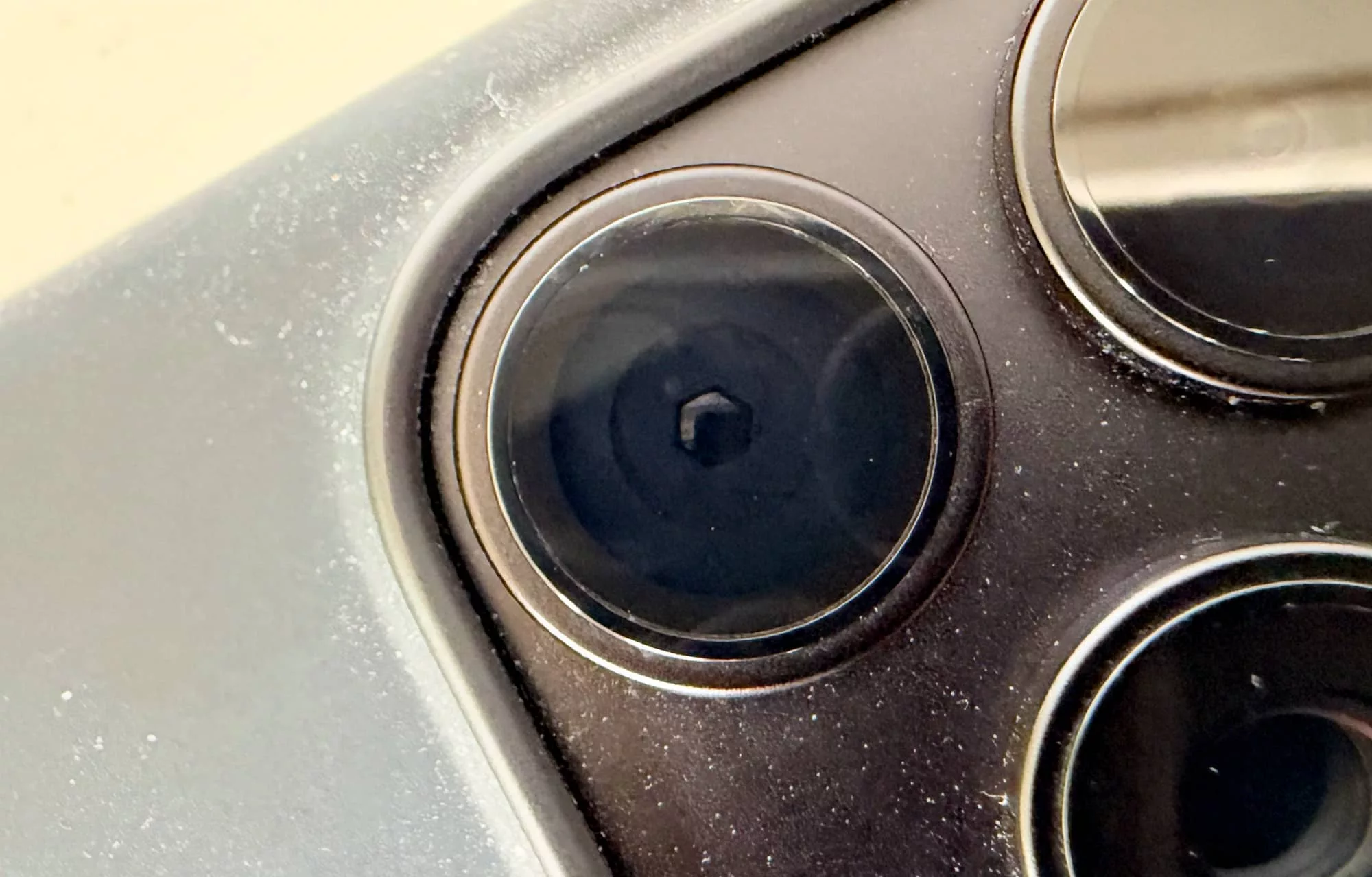
When you use great lenses with lots of aperture control, such as a 50mm F1.4 or 85mm F1.4, you’re getting closer than what the wide camera on the iPhone allows for, and that is possibly the most glaring point about the variable aperture. Wide lenses rarely account for this level of low-light depth control, and it shows. You want to be closer for better bokeh, not wider and further away.
It would have made more sense for Apple to include this technology on its 4X camera, for sure.
Here on the 1 to 2X camera, it is definitely a start. But next year, we have to hope Apple rolls out the tech across more than just the wide lens. It would be so much more useful on the closer camera.
However, Apple has launched the tech on Final Cut Camera just recently, supporting the aperture blades on its pro video system. That’s good because video capture tends to be a little closer, and that could make the aperture system a little more useful up and until the tech makes its way to the closer camera in general.

Images
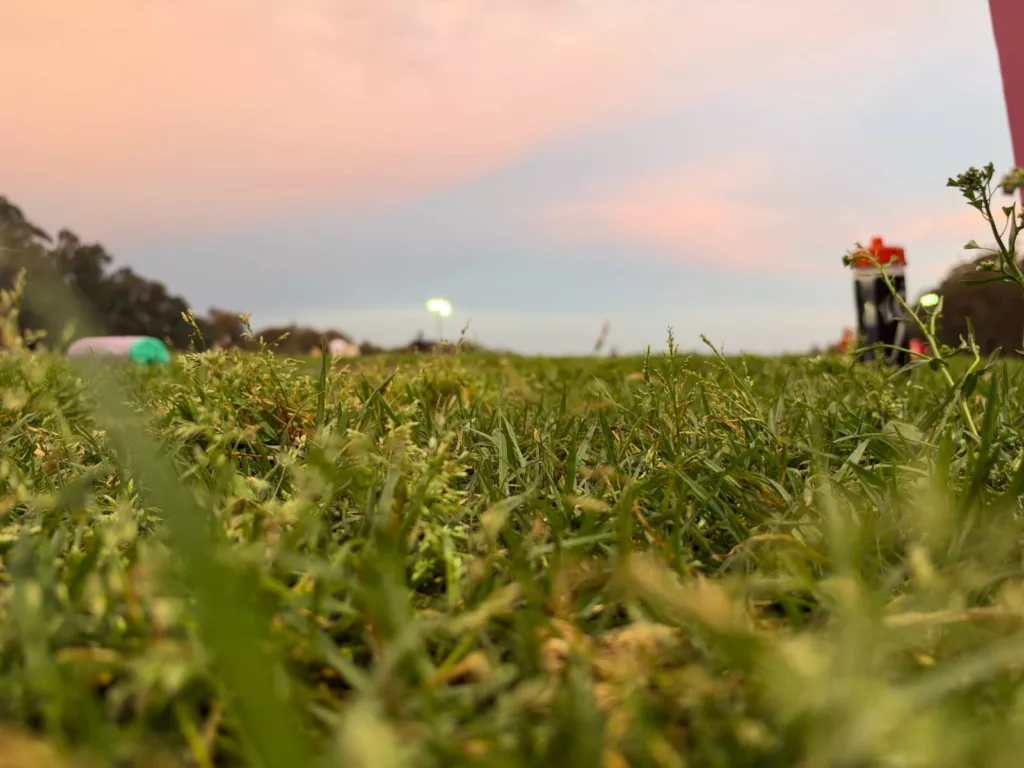
Beyond the variable aperture, images from the camera shine, whether captured in daylight or at night.
The iPhone’s camera system has been great for a long time, and has even found its way used in professional filmmaking, so it’s really no shock to see the camera system get better and better with each passing year.
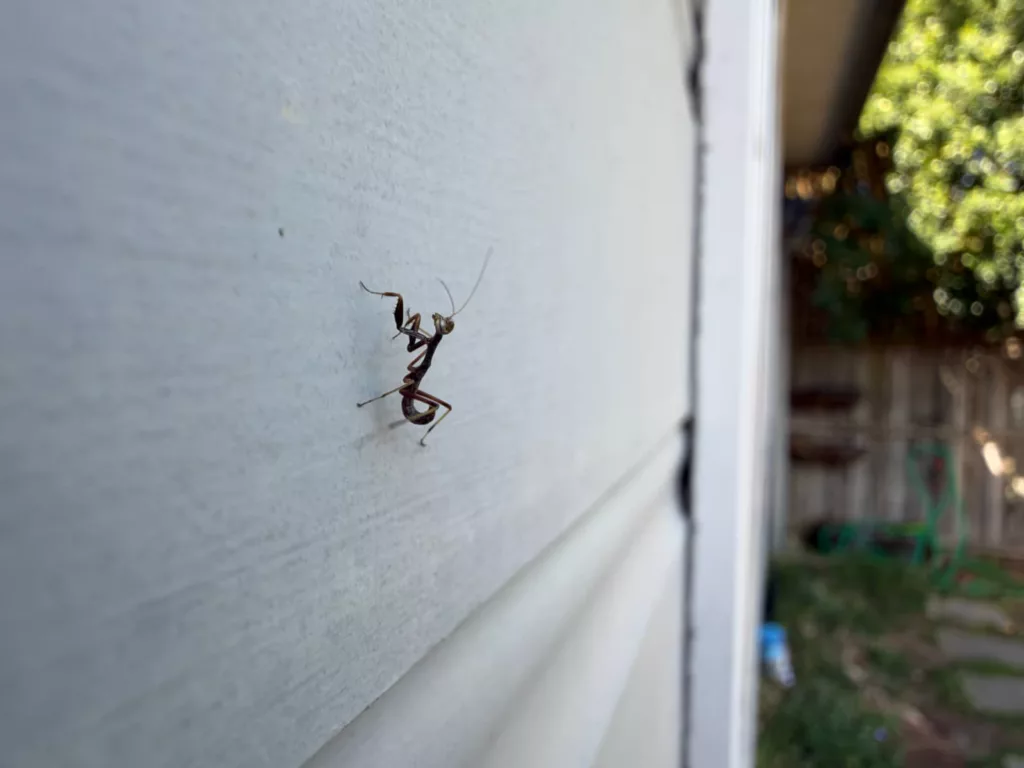
Here in the iPhone 18 Pro, the three camera system effectively offers a solid 48 megapixel system on three cameras you can opt to use in the full 48 megapixels, or a more likely 12 megapixels ranging from ultra-wide to quite-close. Or in easier-to-understand terms, from 0.5 to 8X telephoto, not to mention the excellent macro mode the iPhone camera provides.
It’s a solid system that delivers day and night, meaning sharp images, clear images, and images that you’ll just want to share. The excellent additions in the manual side of things means you can now control focus more obviously, making for more artistic photos, while also diving into light control more solidly, too.



Battery
While the camera has seen some obvious changes, one thing that hasn’t changed significantly is the battery, which gets some improvements from the new processor, but they are marginal.
The simple fact of the matter is the iPhone 18 Pro hasn’t changed much from its predecessor in the battery department, if any. You will struggle to hit beyond a day of regular use, and heavy users may need to plug in before the day is through.
That’s not fantastic, though it does appear to be somewhat normal for iPhone owners. The 18 Pro isn’t really going to change anything here.
Comparing the phone against previous iPhones in Pickr’s bespoke Battery Bench app, we found a little more battery life, but not much more, achieving a good day of charge, stretching into the second day.
Sufficed to say, you will probably want to keep using a power bank if you have one, because the 18 Pro is very much a phone that will likely need a nightly charge. Powering up the device is fast depending on how you do it, sure, but it still powers through the features, which means you’ll likely have it on the charge nightly.
| Device | Battery |
|---|---|
| Apple iPhone 18 Pro |
24:33
|
| Apple iPhone 17 Pro |
23:54
|
| Apple iPhone 17 |
23:39
|
| Apple iPhone Air |
14:25
|
Value
The problem is the price, because just like everything else in 2026, the cost of this gadget is high. Markedly so.
Every phone seems to be more expensive this year, and that includes the iPhone 18 Pro. While it’s not quite as high as the $3K minimum of the iPhone Duo, the $2099 starting price isn’t necessarily inexpensive, either.
With iPhone models costing more than ever this year, and no iPhone 18 on the cards until next year, the 18 Pro is the least expensive of the properly new 2026 iPhone. It’s a new chip, new screen, and a new camera. It’s hardly surprising it also comes with a new price.
That’s just par for the course these days.
What needs work?
The price may be a little higher, but that is largely the norm these days, so we can’t exactly attack Apple alone on that one. Everyone is doing it, and the requirements of data centre hardware is likely the reason. Also known as “thanks AI”.
While we could always do with a more economical price, and the aperture blades on the camera could be better overall, our biggest issue is the battery. It’s just not the improvement we had hoped for.
Apple has managed to increase life a little, and that’s positive, but it’s not going to be the increase you really want to see. The differences are small, not big, and that’s a bit of a shame, truth be told.
What we love
While the battery feels like the sore point on the phone — largely because nothing feels like it has changed in that department — the overall vibe of the phone is solid.
You’ll still likely need a charge overnight or even possibly before it, but at this point, that’s probably par for the course for most standard-sized iPhone owners. If you don’t already have a power pack on your person, you might just be really optimistic or always expecting you’ll be near a power point.
And honestly, outside of this feature, the iPhone 18 Pro is really quite a stellar handset.
It’s distinct to what Samsung produces because none of that company’s flagship models sized to be smaller are actually remotely on par, using totally different cameras to its larger “Ultra” model. In fact, the only Android destined to properly compete with standard-sized superiority appears to be the Pixel 11 Pro, which like the iPhone at least tries to build a flagship device for the smaller size.
For iPhone owners keen on having the best they can without eroding the pocket size too much, the iPhone 18 Pro still hits every note except the battery.
Could Apple probably fix this with better technology? Sure, and we’re already seeing some of the tech from other Android makers, all ready to compete.
But if you can live knowing you’ll need to camp near a plug or BYO battery bank, the iPhone 18 Pro is still one of the best all-rounder packages you can possibly find.
Final thoughts (TLDR)
It’s also one of the only new iPhones for 2026, making it an interesting one all the same. At the end of this year, the only iPhones are pro models and a foldable one, and they all come with high prices and impressive feature sets. It’s difficult to complain about.
Overall, the iPhone 18 Pro is a great phone, delivering one of the best camera and performance experiences you can find in a device today. Outside of its price, it delivers everything you could possibly want for the next few years, and nothing you really don’t.
The iPhone 18 Pro is a compact powerhouse and easy to recommend. Highly so, even.