

Considering a PC already means weighing up an assortment of aspects, namely what you plan on using the computer for right now and how much you want to spend, but there’s an aspect we rarely think about: the future.
Much like how you should consider how much storage you need on your phone for the next few years of ownership not just for today, you may want to consider what you’ll be using a computer for tomorrow in the next few years, rather than simply now.
You don’t have to be a fortune teller or have some grand aspirations to work it out, but you will want to think beyond “what is fine today” in some ways.
Most laptops will have some flexibility and these days they all have speed, but in the world of high performance laptops — where people who need high performance now are already thinking about the performance they need today — they also may want to consider the level of tech they need in the future. And the answer could be a lot.
This week, Microsoft and Nvidia have shown more about what we can expect from its hardware meant to last into the future, essentially delivering more capability for the next few years, and kind of taking a page out of the Mac playbook.
Rolling out capable hardware with plenty of prowess has been the domain of Apple for the past five or six years, ever since Apple Silicon has come out and felt rather ahead of the game. Both AMD and Intel deliver great tech, but neither felt quite up to where Apple is in terms of on-device AI support, nor where the other major AI hardware player is, Nvidia.
Found in most data centres, Nvidia hardware has long been graphics-based, but that hardware can serve another use, delivering the performance in AI processes, as well.
With that in mind, Nvidia has been working on its own processor and graphics combination, resulting in a chip announced earlier this year, the Nvidia RTX Spark. Initially, Microsoft showed it off for its own take on the concept, a Surface model with the Spark onboard.
While that announcement got people thinking — and Microsoft appeared the first to sport the hardware — the gear is now ready, priced and set for availability in Australia, and Asus appears to be the first company to give Australian creatives and developers a taste.
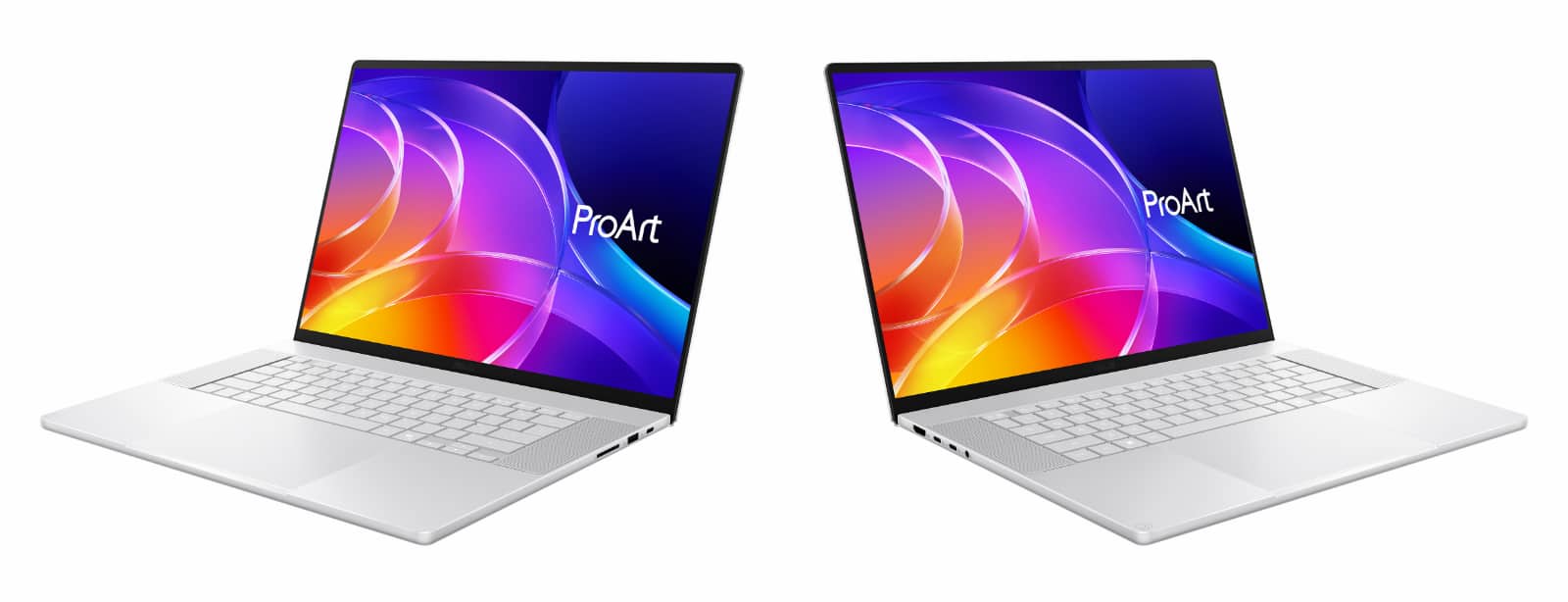
The hardware will arrive in both a 14 inch and 16 inch Asus ProArt machine, systems that will support up to a 14 inch 3K OLED touchscreen and up to a 16 inch 4K OLED touchscreen, all including Nvidia’s RTX Spark system combining up to 20 cores of Nvidia Grace CPU and up to 6144 cores of Blackwell GPU hardware, effectively making it two types of Nvidia hardware optimised for the one place: your PC.
Some models will be higher than others, with the “entry” level part still being quite up there, offering an 18-core CPU and 5120-core GPU, while the high-end equivalents get the 20-core CPU and 6144-core GPU. Lots of power in a small space, it seems, with between 24GB and up to 128GB RAM alongside, even though the storage does appear to max out at 1TB, a move that surprises this reviewer and journalist.
The design is meant to be thin and light, and given it’s taking on the M5 MacBook Pro, hardly a surprise. That machine also comes in 14 and 16 inch versions made to be slim and light, and so does this, the ProArt 14 weighing 1.48kg and the ProArt 16 not much more at 1.77kg.

They’ll both also include several creative subscriptions bundled in, including three months of Adobe Creative Cloud, three months of Google AI Pro, six months of GoPro Premium+, 6 months of Dropbox’s 500GB subscription, and a year of an Asus 200GB backup solution, as well.
Those bundle-ins will be handy, but given the price, also kind of nice to see, with the 2026 ProArt models being fairly up there, starting at $5999 for a 16 inch model with 24GB RAM and an 18-core CPU, with the 16 inch model able to flex to a 128GB RAM model with the faster Spark variation, all for just over $10K, sitting at $10999 when it launches.
The 14 inch Spark-enabled ProArt 14 can hit a similar price of $9999 when spec’d all the way with 128GB RAM, but will also start at $6499 when it’s released shortly, handy if that’s just a little too expensive for your blood.
The Asus 2026 ProArt range with Nvidia Spark onboard looks set for release shortly, kicking off this month, with availability for the high-end models in the months after.