
Quick review
The good
The not-so-good
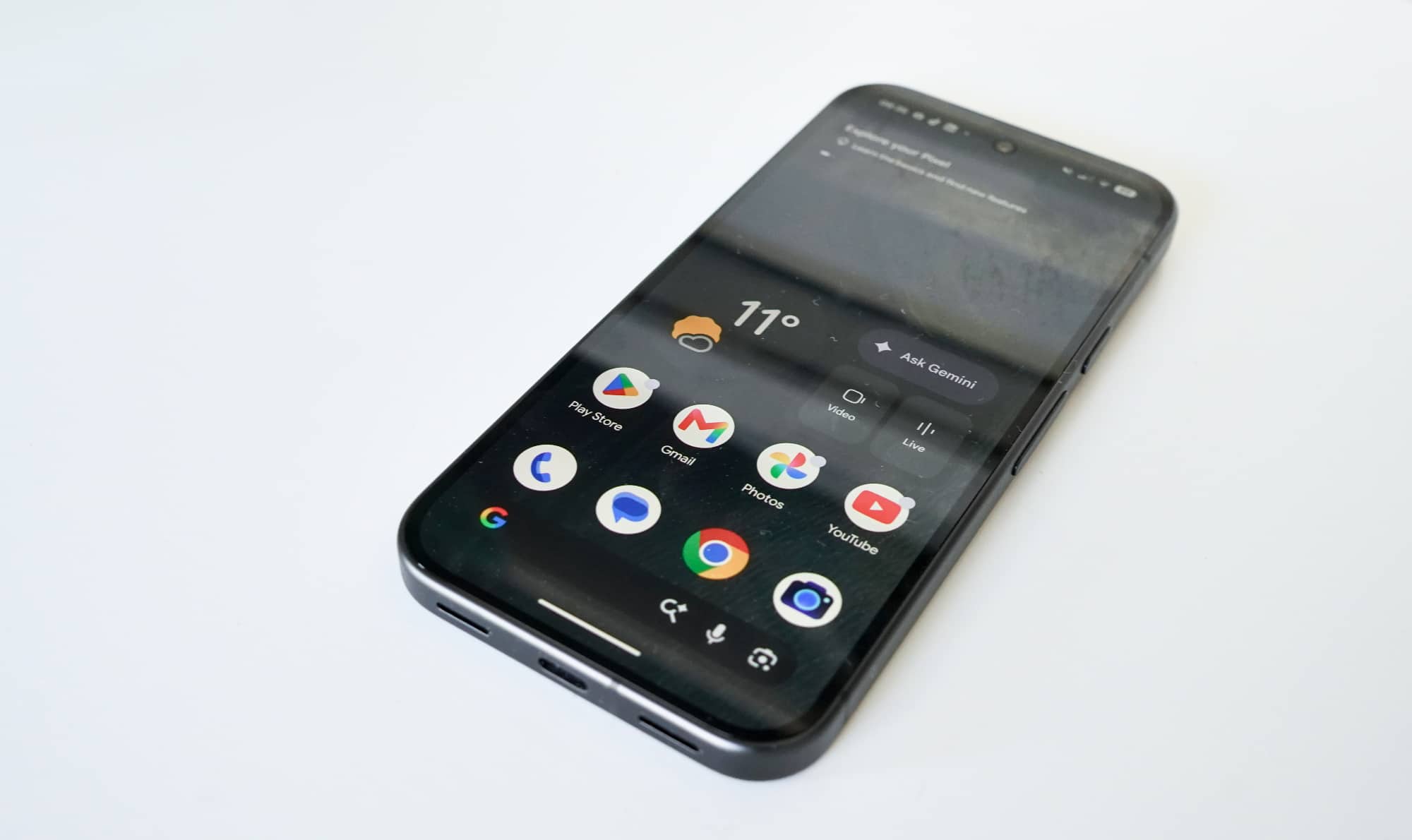
2026 is become the year of “boring” for phone makers, as the near shadow of its predecessor shows. The Google Pixel 11 isn’t exciting, but it will do the job.
Nowadays more than ever, phone updates can feel a little trying. As if the “what” that you’re getting hardly matches up to the revolutionary position the marketing team is always going for.
Faster? Usually. Better? Sometimes. Worth the money? That’s a question that’s less easy to answer, especially now that mobiles cost more than they ever really have before. Now that the mid-range starts around the $500 mark and ends around the $1200 or $1300 mark, phones feel much more expensive in 2026 than they have in many of the years before it. And you probably have AI to thank… or blame.
But in the beginning of the high-end, you have phones designed to do it all without costing an arm or a leg. The proverbial limbs shouldn’t have to be sacrificed to get something that’ll deliver performance and capability over the several years they’re in your life.
And at the low end of that, you have the “standard” models. That’s to say, when a phone company launches its latest, you have the regular model that doesn’t get the Pro, the Max, the XL, or the Fold name.
Over in the world of Google this year, that’s the Pixel 11, a phone that should sport similar changes to the other models in the Pixel 11 range, but might come up just a little short. Is this the follow-up we needed to last year’s surprisingly solid Pixel 10?
Design
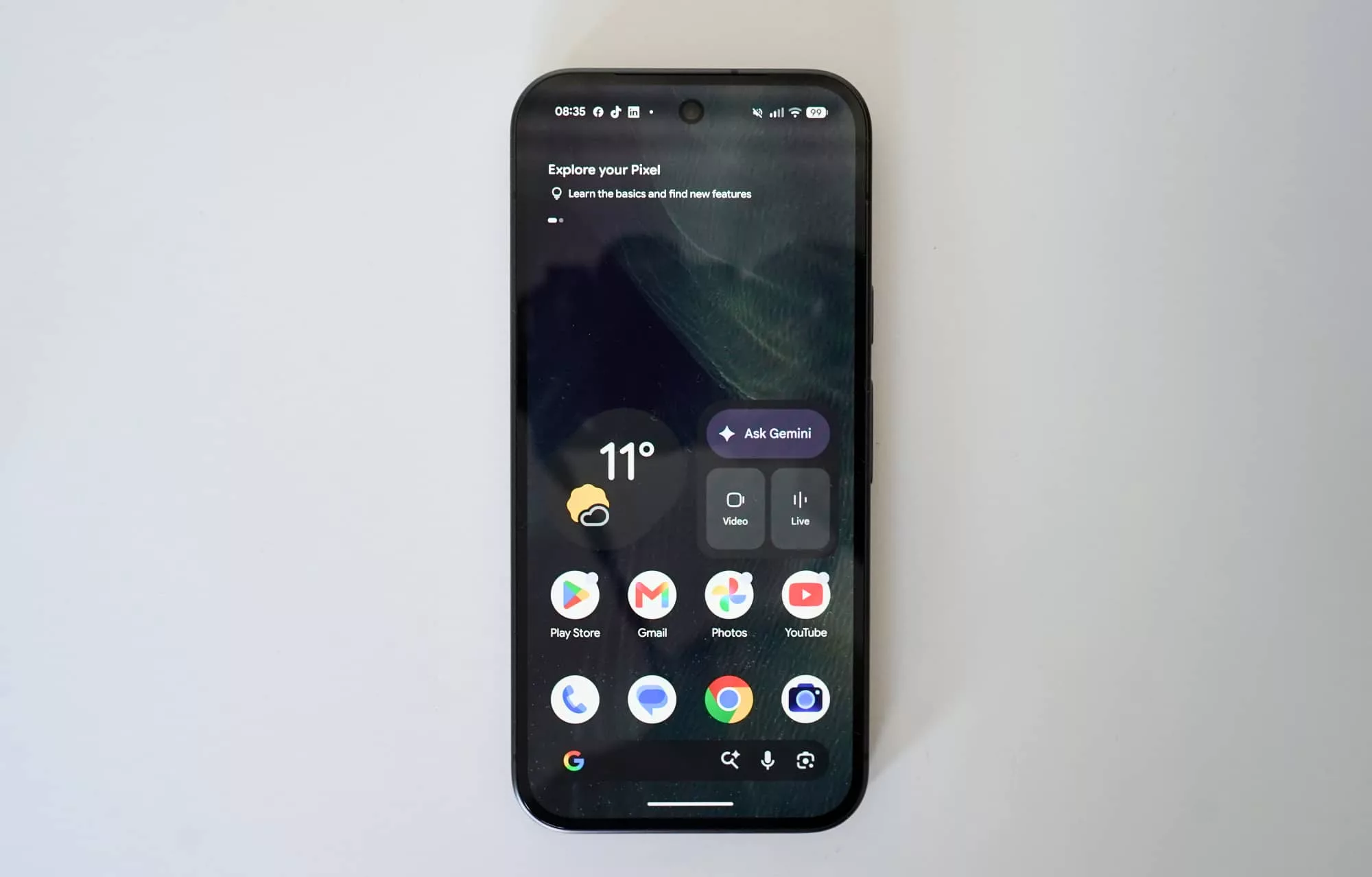
A phone designed for most people, particularly those intending to not spend over $1500 and go with something more regularly “normal” sized, the Pixel 11 is probably best considered a smaller phone in today’s day and age, just simply because it’s not massive.
It’s still big, just not as big. At least compared to its Pro XL sibling.
It means this is a 6.3 inch phone, which these days is the “normal” size for phones that aren’t all that big.
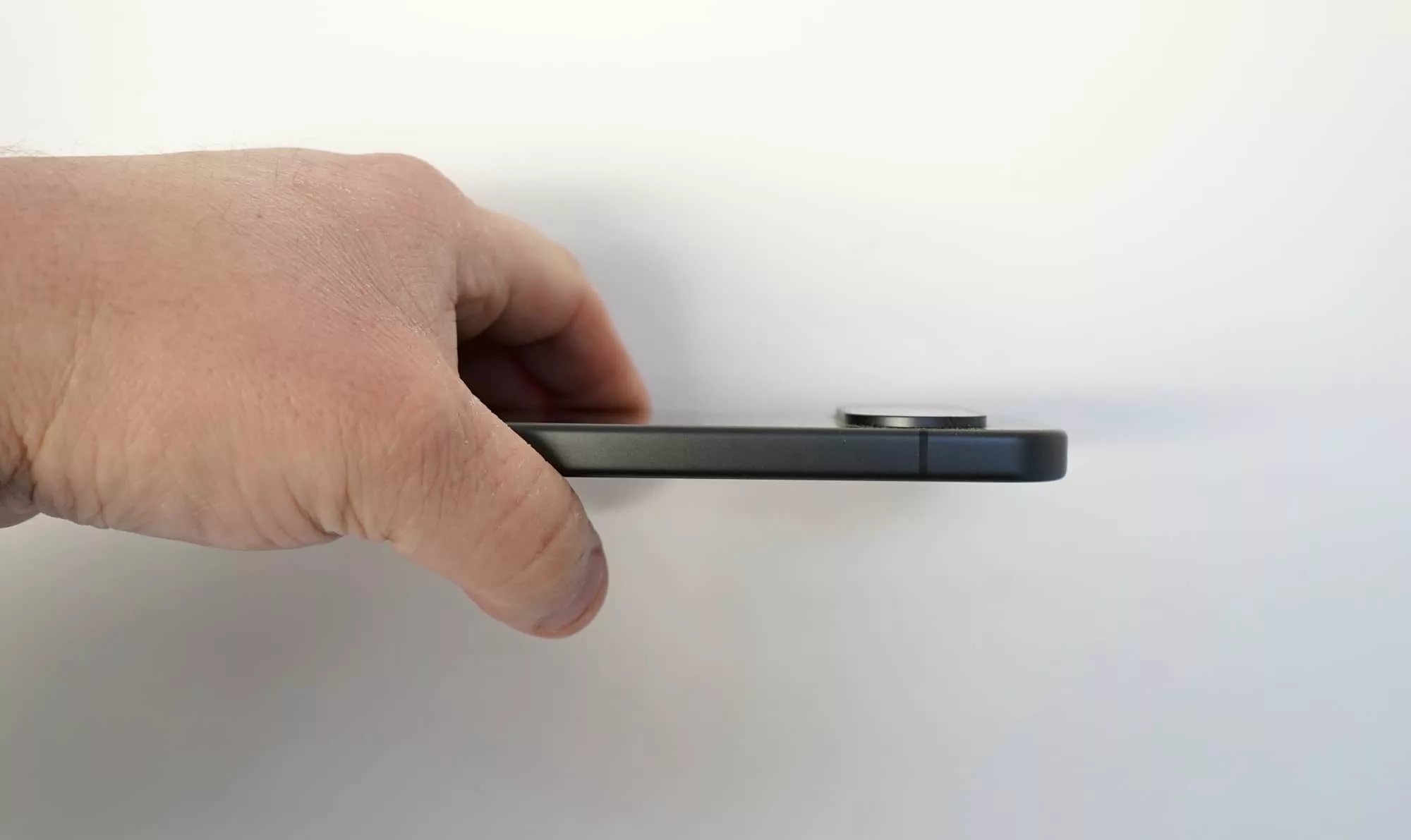
You’ll still be carrying a 197 gram phone made from an aluminium frame, glass on the front and back, complete with IP68 water and dust resistance, and a design made to be 8.6mm thin, not far from the 8.75mm of the iPhone 17 Pro Max, but still marginally thicker than the 7.95mm iPhone 17 it will compete against (for a short time until the iPhone 18 that follows).
Features
Inside, there’s an update to the processor, as the 2025 Tensor G5 is moved to the latest in the 2026 Tensor G6, match with 12GB RAM and either 256GB or 512GB storage, now that the 128GB model has been removed from the list.
Cameras are understandably a big part, offering three on the back and one on the front. That includes a 48 megapixel F1.7 wide camera as the main, a 13 megapixel F2.2 for the ultra-wide, and a 10.8 megapixel 5X telephoto F3.1 alongside. The front camera sports another 10.5 megapixel camera with F2.2.
You’ll find support for 4G and 5G, 802.11a/b/g/n/ac/ax Wi-Fi 6E, Bluetooth 6, Near-Field Communication (NFC) for Google Pay, GPS, and satellite SOS on supported networks. There’s also a fingerprint support in the screen, face unlock through the camera, AI throughout Android 17 (which arrived on the phone out of the box), plus seven years of operating system and security updates, and a 4985mAh battery.
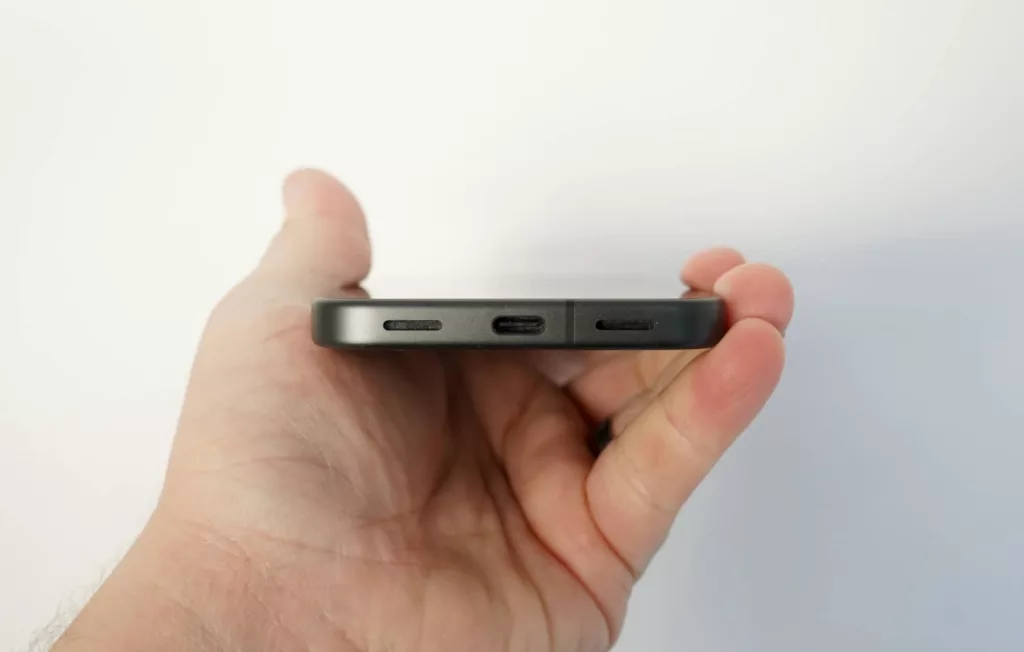
Oh, and one port at the bottom: the USB Type C port everyone now uses.
Display
And it all sits under a 6.3 inch OLED screen, a display Google calls an “Actua” display which runs between 60 and 120Hz for slick animations, runs at 1080×2424 making it marginally better than Full HD, and being protected by Corning’s Gorilla Glass Victus 2.
It’d a relatively bright display with plenty of colours, without being the latest and greatest screen “Super Actua” panels, which Google reserves for its Pro and Pro XL generation of Pixel phones.
In-use
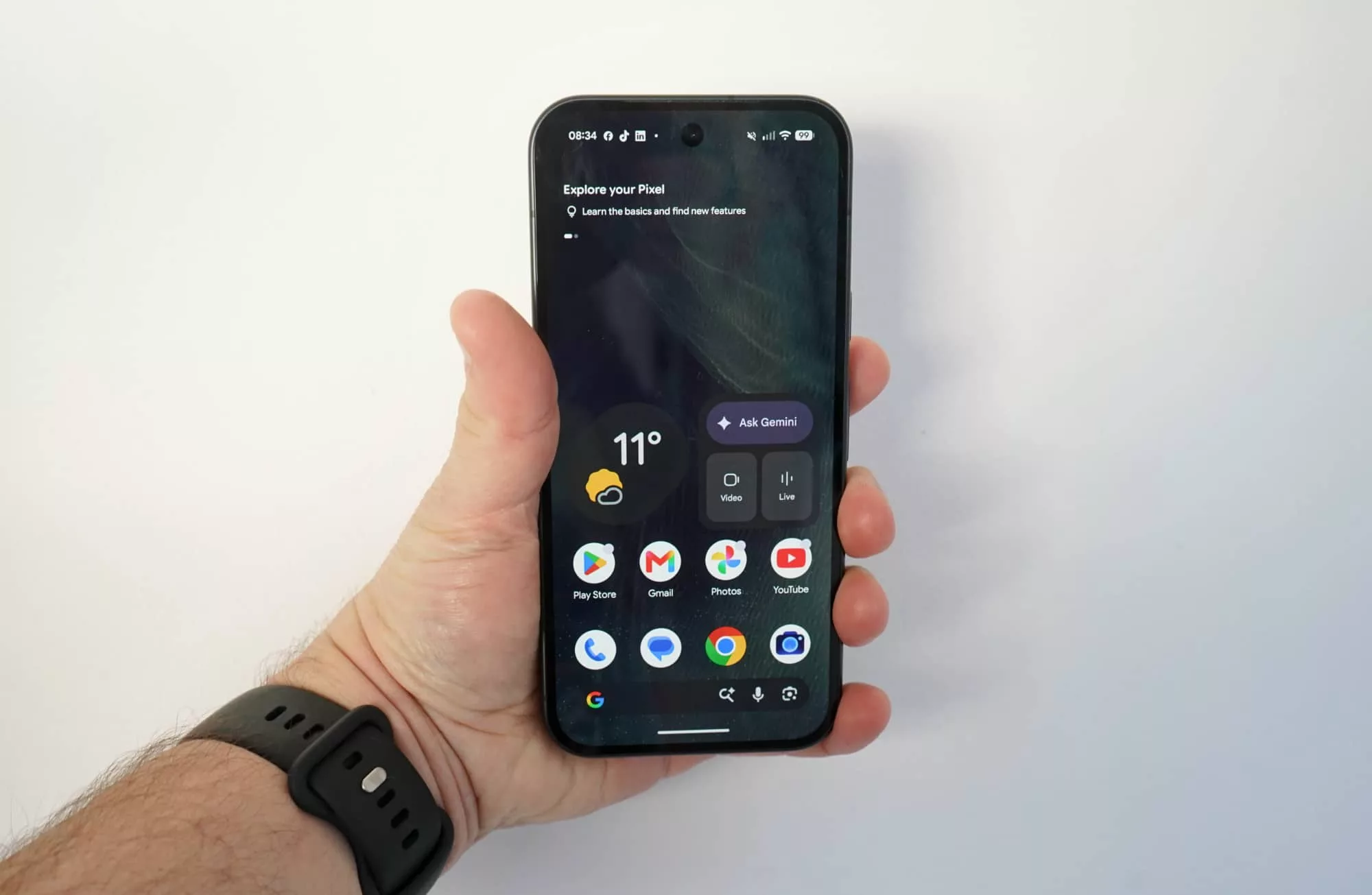
The Pixel 11 standard may not be a Pixel 11 Pro, but it still shares almost every way you’ll use the phone, because this is Android and Android has become pretty consistent over the years.
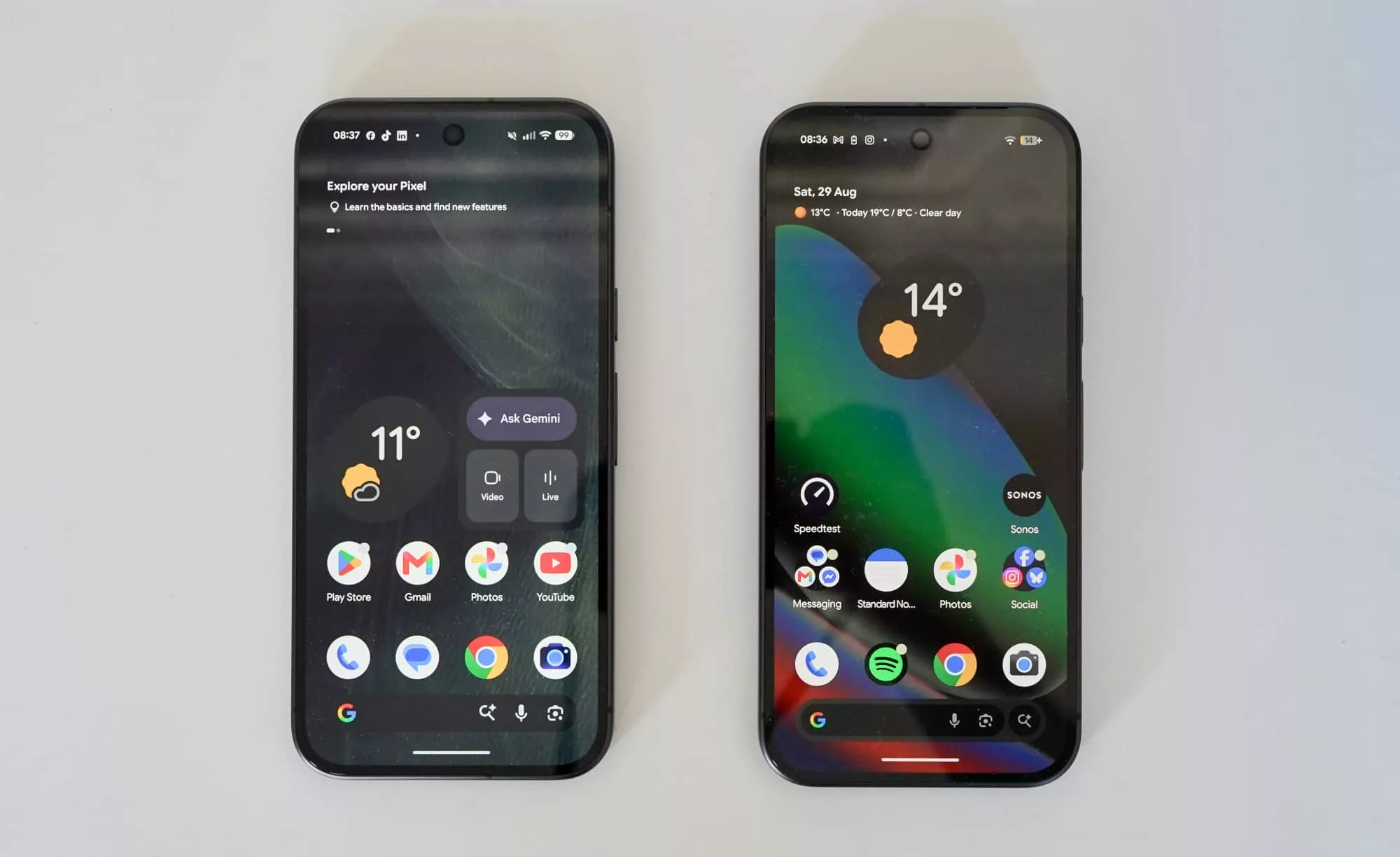
Widgetised home screens and an app drawer, with support for fairly easy gesture control that gives you more of the screen to work with, Google’s Android 17 is more of the same and easy to get your head across.
There are more AI elements along for the ride, though you mightn’t touch them. Open the phone from either fingerprint of face unlock and the handset comes to life, the fairly bright screen staring back at you.
You’ll find Gemini’s AI access waiting for you in so much of the phone, and Google’s new “Rambler” translation tech can interpret your spoken words to on-screen obviousness a little better, meaning your-speech-to-text suddenly runs a little easier when you need it.
By and large, though, this is an Android phone, and ready and waiting to do your bidding. You know, as a phone, and maybe a little more.
Performance
Inside, Google’s latest doesn’t feel like it has improved in leaps and bounds. In fact, it’s quite the contrary.
Despite seeing high-end chips across most of this year’s big phones, including those just under the flagship, the Pixel 11’s Tensor G6 doesn’t get much more life than its G5 sibling from last year. When everything is getting faster, the Tensor processors just seem to be stuck waiting for Google’s chip architecture to suddenly move forward the way everything else is.
| Device | CPU Single Core | CPU Multicore | GPU |
|---|---|---|---|
|
Google Pixel 10 (2025)
Google Tensor G5
|
2291
|
6193
|
3109
|
|
Google Pixel 11 (2026)
Google Tensor G6
|
2310
|
7186
|
3238
|
|
Nothing Phone 3 (2025)
Qualcomm Snapdragon 8s Gen 4
|
2105
|
6527
|
13001
|
|
Samsung Galaxy S25 FE (2025)
Samsung Exynos 2400
|
2046
|
6602
|
13580
|
|
Oppo Find X9 Pro (2025)
MediaTek Dimensity 9500
|
2933
|
8941
|
23458
|
|
Apple iPhone 17 (2025)
Apple A19
|
3060
|
8022
|
36956
|
This year’s processor is actually a little faster, something you can see from benchmarks, but it’s just lagging behind other similarly priced players.
In terms of how this affects you, the good news is that you mightn’t feel it. Most apps run without any major or obvious lag, though we’re not sure what the future will hold.
At least the mobile performance is where it should be.
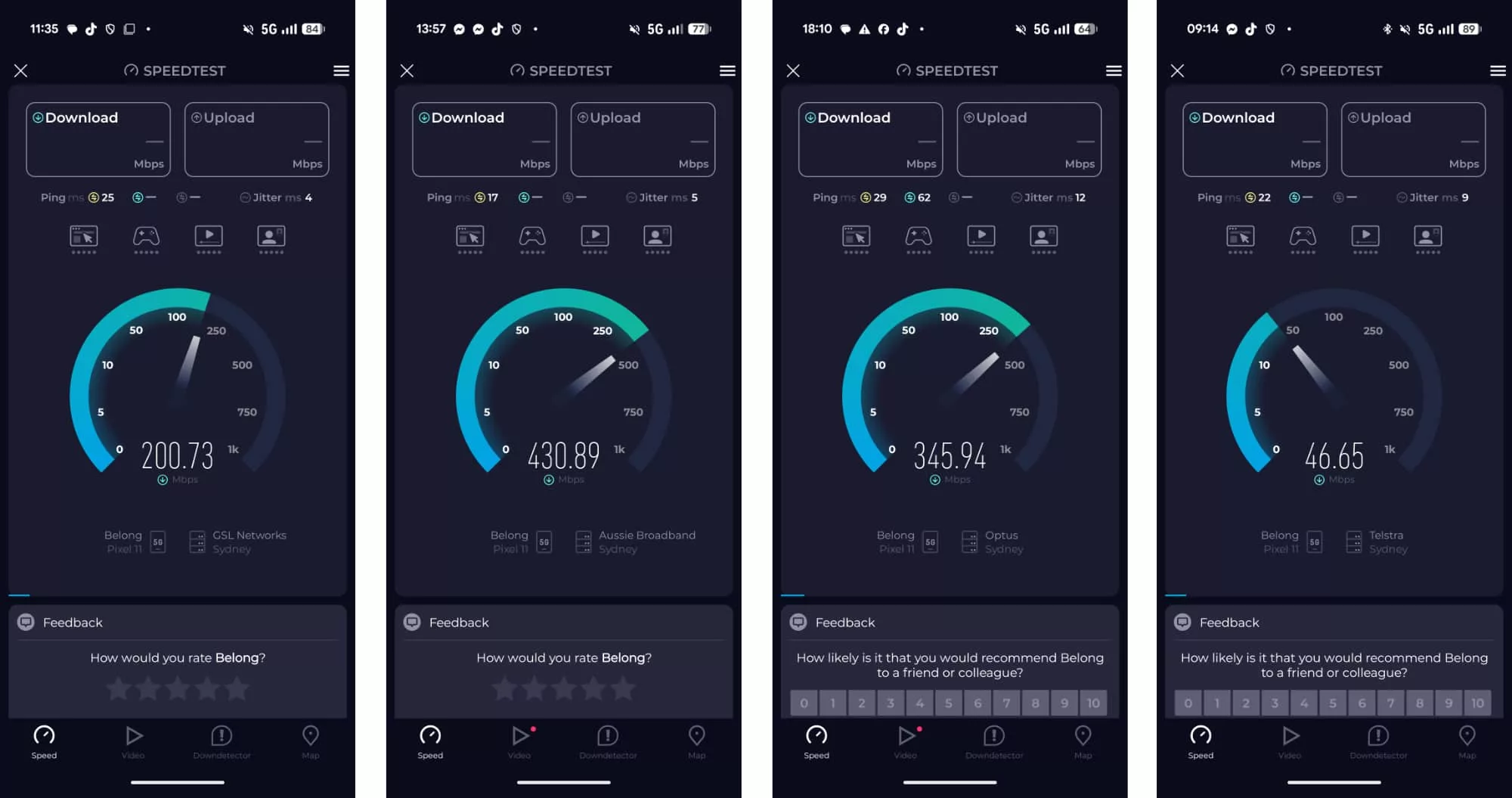
While you’ll only find the more standard sub-6 5G on the Pixel 11, it’s no big loss because mmWave 5G is much more difficult to find in Australia, so you won’t notice it’s missing anyway (and it’s on the Pixel 11 Pro Fold if you need it).
However, in our tests on the Telstra 5G Wholesale Network by way of Belong, we found speeds in Sydney hitting a maximum of 431Mbps, which should be plenty fine for most people.
As with all mobile speed tests, your own performance will vary thanks to a variety of factors, location and network being two of the more obvious ones, but this phone doesn’t fare too badly with mobile performance all the same.
Camera
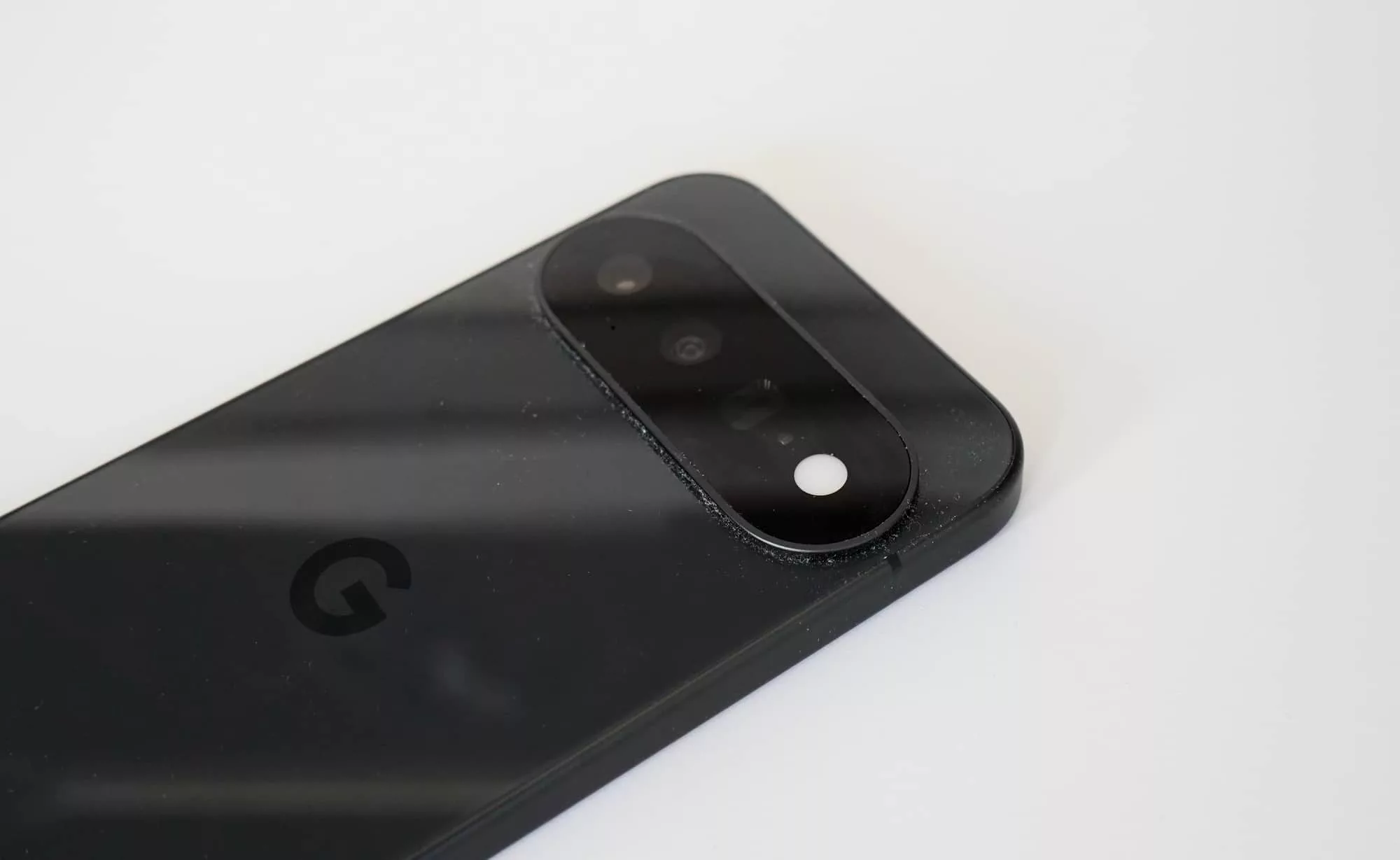
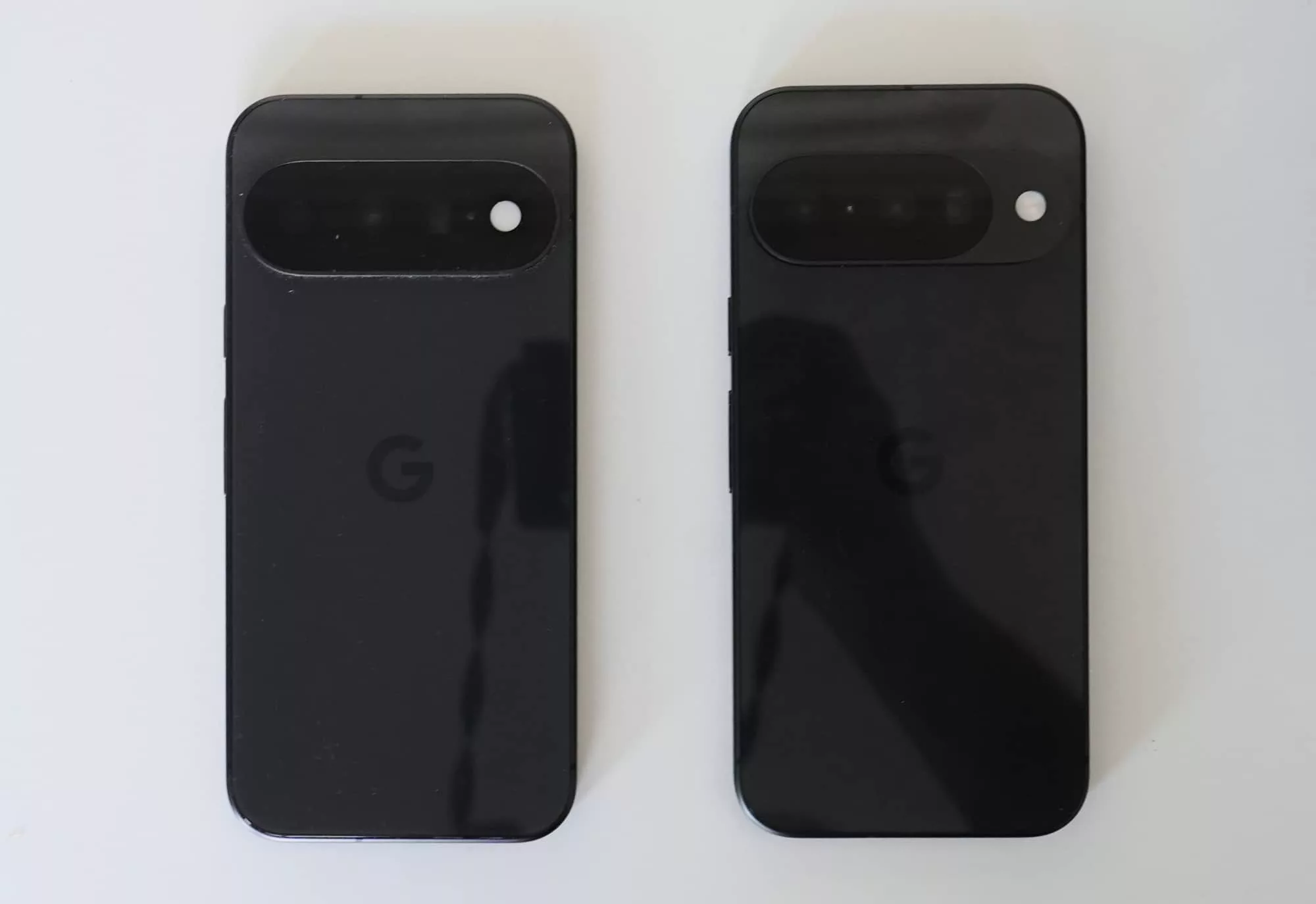
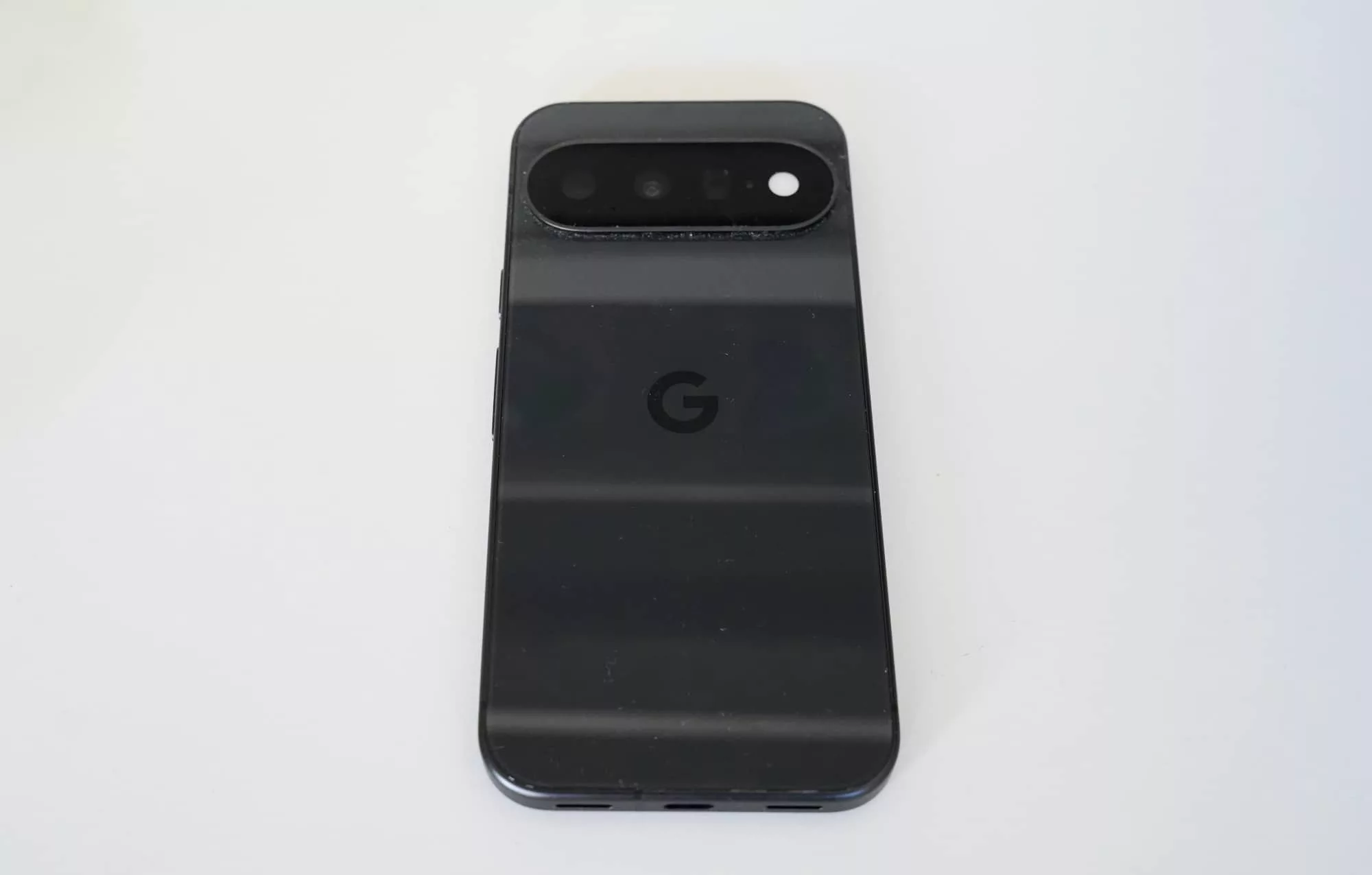
It even manages to get a minor camera change or two, though you probably will only notice one of them, because it’s really obvious from the design: the bump is thinner.
The better the camera, the more it tends to extrude, thanks in part to larger lenses and camera sensors, forcing the camera block and bump to be bigger. That’s a problem practically every phone maker is dealing with, and some do it better than others.
For the past few years, the cross-body camera bar has made the Pixel range one of the better camera design aspects of any phone because it also prevents the phone from wobbling on a surface. But it does come with a caveat: the phone feels thicker because of that large slope.
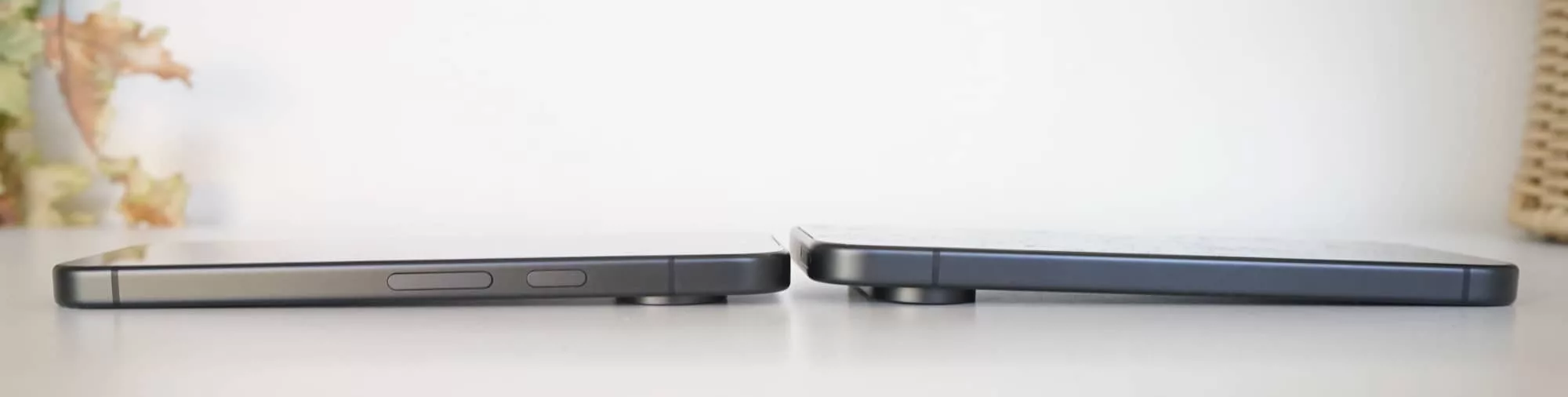
In the Pixel 11, the camera bump is now a little thinner, and it shows in the design. It’s less of a slope and easier to slide into your pocket. It even manages to do this with a slightly bigger main camera sensor, which is a positive.
The difference isn’t obviously noticeable, it’s just a little better where it counts. You’re getting a slightly better 48 megapixel wide F1.7 camera, and then the same 13 megapixel F2.2 ultra-wide and 10.8 megapixel F3.1 5X telephoto camera from last year. It’s a minor bump, but on the whole not a major change. This isn’t a reinvention, just a minor update of sorts.
As such, images in daylight look great, delivering sharp and bright visuals with excellent details and clarity. Low-light has a little more in the tank, likely thanks in part to that new sensor, but we’re not talking to the levels the Pixel Pro models achieve.




You can get close on this camera, thanks to that 5X zoom, but it’s the same as it was, so we’re not seeing a major leap forward. It will fill the gap for anyone keen to get a little closer, sure, but the Pro and Pro XL from prior years will handle things better.
It’s a bump, for sure, and not the only bump in the Pixel 11.
Battery
There is a slight bump in the battery, too, but you’d never realise it on specs alone.
Specifically, that bump measures a full 15mAh, jumping from 4970mAh of the Pixel 10 to 4985mAh of the Pixel 11. That alone isn’t enough to celebrate, but the battery performance does manage to deliver the same if not slightly better in some ways.
Tested with Pickr’s BatteryBench app, we found a life of just under 21 hours of in-action screen-time use, which was curiously a little lower than what the Pixel 10 delivered from the same test.
| Device | Battery |
|---|---|
| Google Pixel 9 |
25:26
|
| Google Pixel 10 |
21:40
|
| Google Pixel 11 |
20:52
|
By comparison, the real-world test delivered between the same and slightly better battery life, achieving almost a day and a half of real-world use as a daily driver mobile, but needing a charge in the middle of the second day. That does technically match the 30 hour runtime Google advertises, though for most people, that would mean about four to five hours of screen time for regular mobile activities, and possibly a nightly charge.
At least you get PixelSnap and its magnetic Qi2 charging, which is handy if you simply want to snap it onto a bedside or desk-based charger and move on with your life.
Overall, however, it does feel like a minor bump, just not necessarily a significant one. In general, it feels largely the same as the Pixel 10, which seems to be a bit of a theme.
Value
It is difficult to feel positive about a phone that feels very much like nothing has changed, and that it is largely business as usual. That’s not necessarily a bad thing, but it’s also not necessarily something we’re going to be overwhelmingly positive over, especially with some companies daring to change things in 2026.
Even the price does stop us from being positive, and is one of those aspects that seems like it’s suffering because of the year. It’s true that everything in tech feels a little more expensive this year, and phones have definitely been feeling it.
Over on the Google Pixel 11, the price has jumped up, too, from the $1349 starting price in the Pixel 10 to now $1499 in the Pixel 11. Granted, storage is likely a part of that: the $1349 price of the Pixel 10 came with 128GB and the $1499 of the Pixel 11 comes with 256GB, so you are getting twice the storage. The problem is that the starting price of the Pixel 11 is actually more than its predecessor, and storage shouldn’t be the reason why.
Yes, you’re getting more storage. Great. You’re also paying more, which for a not-quite-flagship does manage to feel a little ho-hum.
The problem is this price problem is just one of the problems for the Pixel 11.
What needs work?
For starters there’s that chip which clearly doesn’t have as much in it performance-wise as Google is suggesting. It definitely works, and from day to day shouldn’t have any major problems, unless you happen to want to do a bit of gaming, because then it might struggle.
Our issue isn’t that it’s slow this year. More that it will likely start to feel slow in the coming years. The Tensor chip series just doesn’t seem to have the guts it once did, and is being outflanked by… everything. Qualcomm’s Snapdragon and Apple Silicon, it’s just not doing much in terms of raw capability.
Phones are supposed to last several years. As it is, this one has seven years of updates, which is fantastic. But we’re not sure that this phone will handle every app you might throws its way in the next three years, let alone seven.
The lack of performance is tempered by a lack of really anything new, because that chip is basically the only new feature this phone receives.
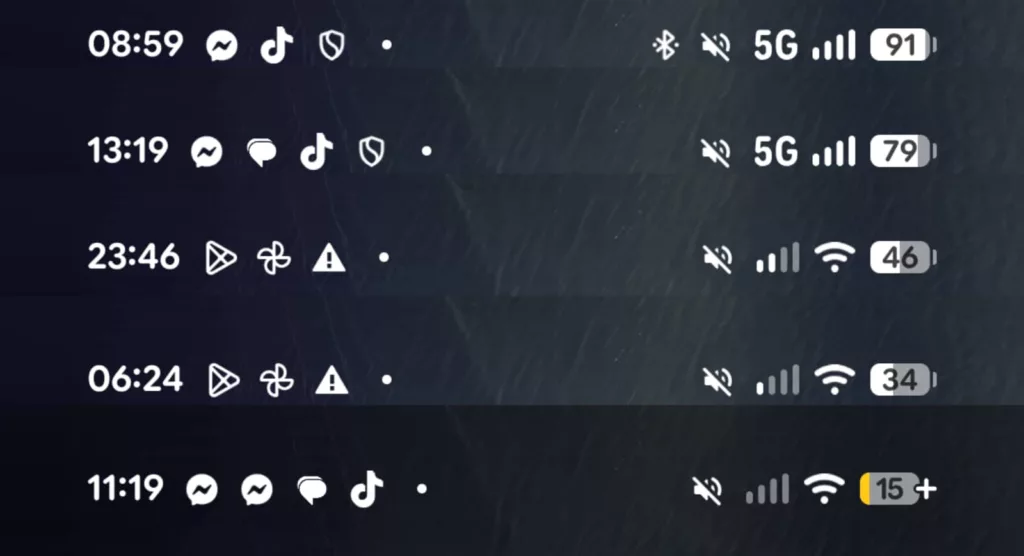
While the rest of the Pixel 11 range gets the company’s new and wholly unimaginative HiLight feature — something a third-party developer has managed to be more playful with than Google — the Pixel 11 misses out.
It’s almost like this is a Pixel 11 only in name, sharing the chip but not the other majorly new feature.
So there’s no notification light on the back and no major changes beyond the chip, and yet this is a whole new phone.
Despite this feeling, there are minor changes to the camera, a minor bump in battery, a minor bump in wireless charging speed, and a minor change in weight, dropping a whole seven grams. Things have clearly changed.
But they are so small, it’s also difficult to shake the feeling that nothing has changed. The lack of that main Pixel 11 feature — a light that feels more like a nod to Nothing’s Glyph concept — just doesn’t help the 11 feel like anything more than a 10.
Even Nothing has worked out how to make its Glyph notification feature different throughout the various models, something Google clearly hasn’t.
It’s just so uninspiring to see a model that’s like the others, but also unlike them. It’s flashes of the Pixel 10a all over again, which was basically a Pixel 9a in everything but name.
That is the period we find ourselves in with phones, where mobiles border on terribly unexciting and where nothing major changes, even if the price has managed to go up. You can probably blame AI for that, given it makes everything in technology more expensive, but that doesn’t change anything for you.
The point is the Pixel 11 is boring and largely uninspiring. If you don’t need your phone to inspire, that is also totally okay. Some phones can be just phones. There is nothing wrong with that.
It’s just that this phone does not seem like much of an update beyond the year being changed, and that’s frankly not good enough. If Google had kept the price the same, at least it would be a continuation in a positive way: you would be getting more storage in the same phone for a better price.
The point in the Pixel 11 is that you’re not. You’re paying just as much for a 256GB Pixel 10 as you are the 256GB Pixel 11. Nothing has really changed, we’re just in a new year.
Final thoughts (TLDR)
As a reviews publication, we loved the Pixel 10. It was one of those phones that managed to actually feel like it delivered excellence for the customer, achieving balance in features and design without charging too much. It was still pricey, and didn’t have the budget tag of its cheaper sibling in the a-series, but for the most part, it felt well rounded.
It was every bit the Pixel 10 without being extra premium, like its Pro and Pro XL siblings.
The Pixel 11 keeps that vibe, but manages to miss out on nearly everything new, and that’s a problem this year. Furthermore, much like the Pixel 10a and even the Pixel 11 Pro Fold, the phone simply comes across as last year’s phone but with some minor changes, price being one of them.
Google’s own marketing essentially calls the Pixel 11 “refined to the edge”, and that’s actually a fair analysis: it’s refined, and the edge is a little slimmer, thanks to the camera bump. But it just doesn’t seem like much of a change when the rest of the Pixel 11 range has seen something.
“Refined”, sure, but a whole new model? Hardly.
None of this says the Pixel 11 is bad, because it’s not. It’s… fine. It’s a totally acceptable mobile. But like our experience on the Pixel 11 Pro Fold, the Pixel 11 is boring. A clear rehash of its predecessor with minor changes and virtually no reason to buy if its predecessor is still around, and you can get it for cheaper.
The Pixel 11 is boring but fine. If you want the third camera — and that is totally understandable — the Pixel 10 is the better purchase if you can find it, because the Pixel 11 has so much in common, it’s not even funny.