
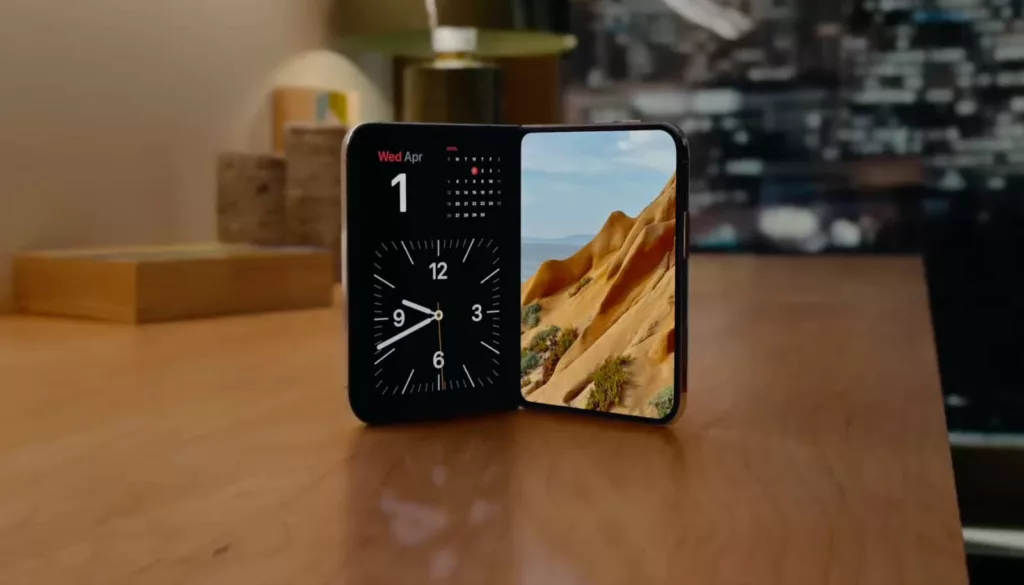
It’s been a curious eight generations of foldable phone technology kicked off by Samsung, now in its eighth generation. Despite one of the biggest players pushing on with the tech, and with more manufacturers jumping in, Apple has been nowhere, almost as if the company has been dabbling behind the scenes and doing what the company tends to do: perfecting the tech and concept before releasing versions for people to check out.
But now finally a good eight years after Samsung first showed foldable screens to the world, Apple has its own flavour of fold ready for release. In October.
What is the iPhone Duo, and how does it differ from other iPhone models?
Finally, a foldable iPhone
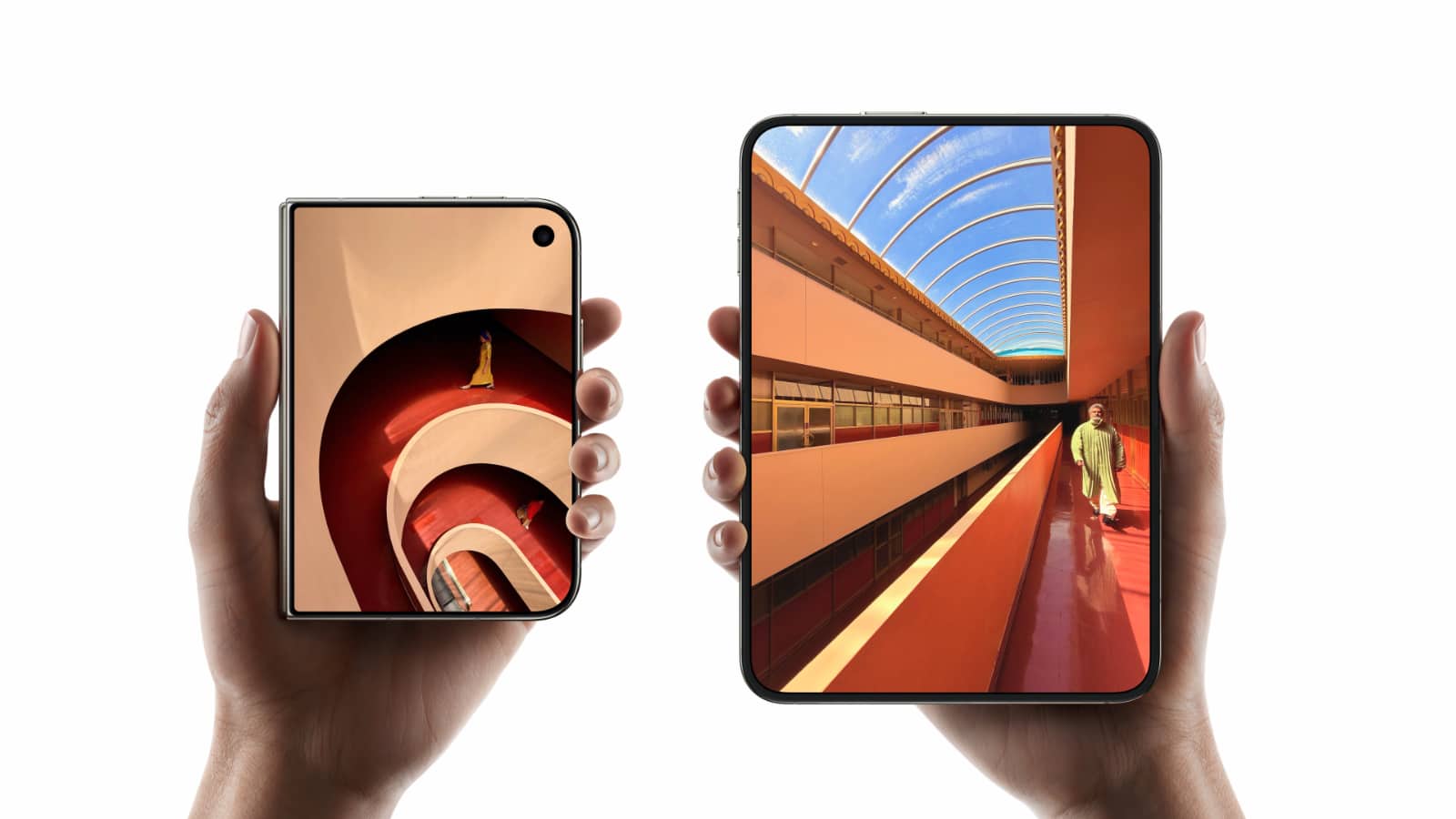
The first of its kind, the iPhone Duo is exactly what you’ve probably heard from the rumours with a curious blend of iPhone and iPad.
The iPad is arguably the most successful tablet you can find to date, a category Android hasn’t quite been able to topple in the way where its phones definitely put up a good fight comparatively. The concept here is to combine the two: phone and tablet, or more specifically, iPhone and iPad.
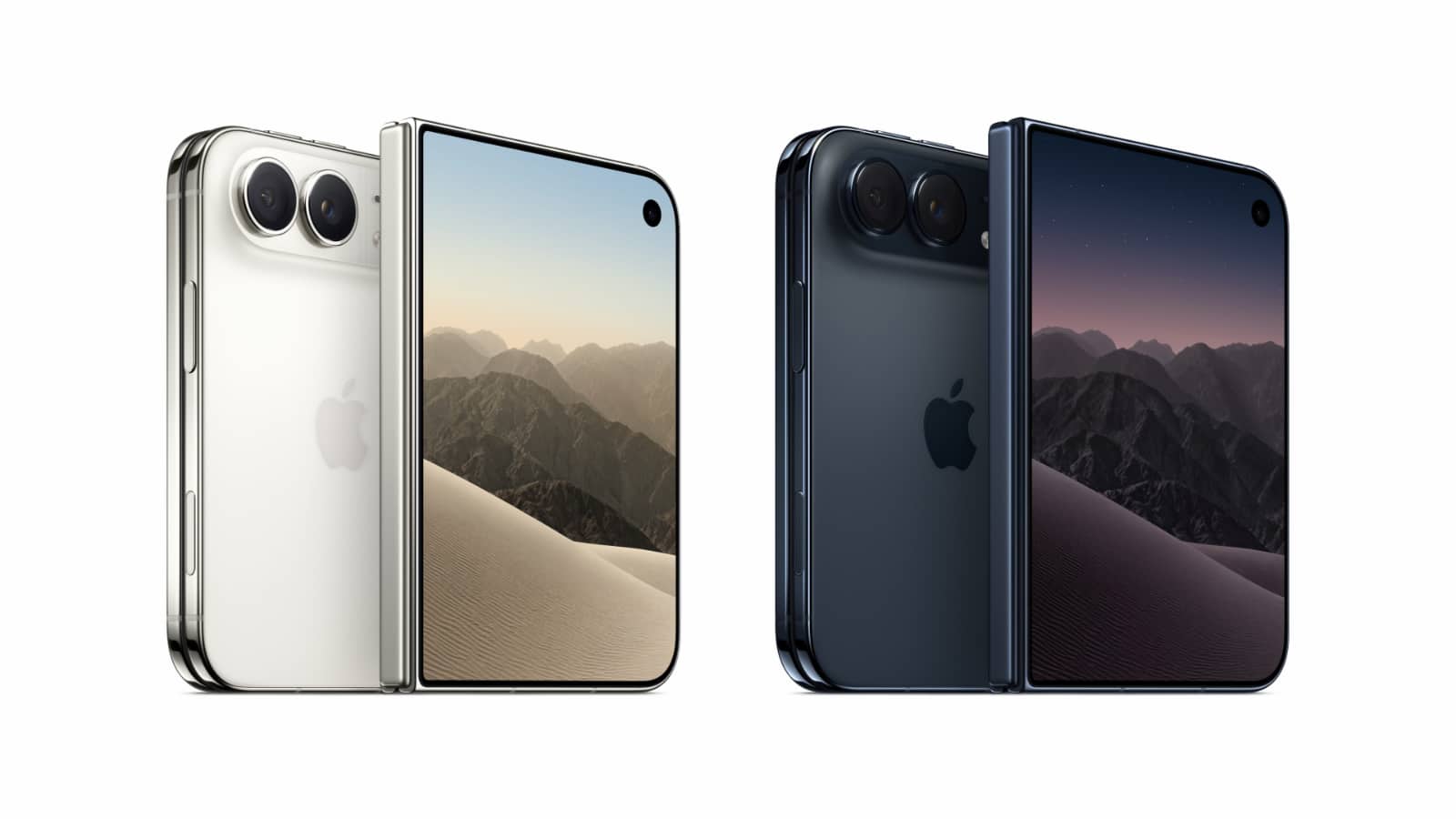
To do that, Apple has made a smallish phone open up into a smallish iPad, and the whole thing looks a little like what Samsung released recently: the passport-sized Galaxy Fold 8.
Just like that model, this is a short passport-sized phone from the outset that opens up into a more iPad-like tablet, thanks in part to a more iPad-like aspect ratio.
Different from the near-square tablet styles seen in the standard Galaxy Fold models in the past (now Ultra) and the variety every other manufacturer including Google seemingly does, this provides an aspect ratio more like a tablet, allowing content and apps to scale normally, and be a little easier to watch and read.
That experience awaits on the inside with a 7.6 inch foldable screen, while the outside greets with a 5.4 inch panel, a smaller size to any other model iPhone, but one that provides all the usefulness of every iPhone, too.
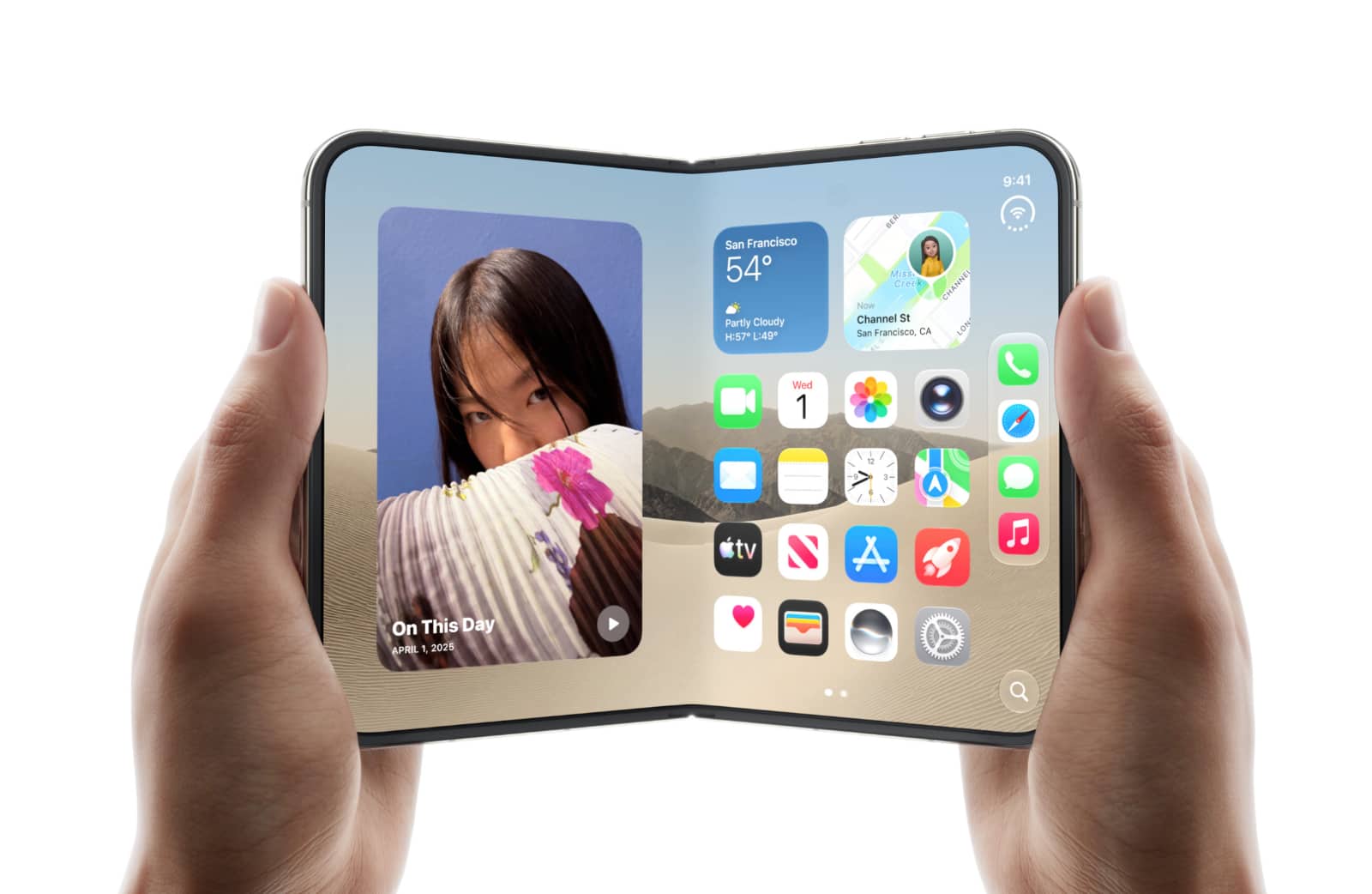
In many ways, it’s the best of both worlds, addressing the complaints of a big phone by providing a small phone that unfolds into a big tablet.
It will end up a little thicker than an iPhone, measuring 5.2mm when unfolded and 11.3mm when folded closed, and weighing 254 grams, making it both thicker and heavier than the iPhone 18 Pro models on the way shortly.
Under the hood
Like its iPhone 18 Pro sibling, there’s a new chip under the hood, with the same Apple A20 Pro hardware supporting a 6-core CPU, 7-core GPU, and dual 16-core Neural Engine for that age of AI we find ourselves in.
That’s more or less the same as the 18 Pro and Pro Max, making it close to an iPhone 18 model.
Where it differs is the camera, which will see technology more like what we saw in the iPhone 17, providing a 48 megapixel wide camera and a 48 megapixel ultra-wide, using the same “‘Fusion” camera stack that comes together as a “Dual Fusion” system to work together.
While the camera does appear to come from the iPhone 17, the features are a little different, with faster Dolby Vision 4K at up to 120 frames per second, new photo styles options, improvements to low-light video, and also new modes that use the foldable style to take photos.
A “duo preview” will let people see themselves on the rear screen to take the photo, while Apple’s “Smart Take” feature will take photos for you when the phone is set up in one of its stand modes, firing the shots so you don’t have to.
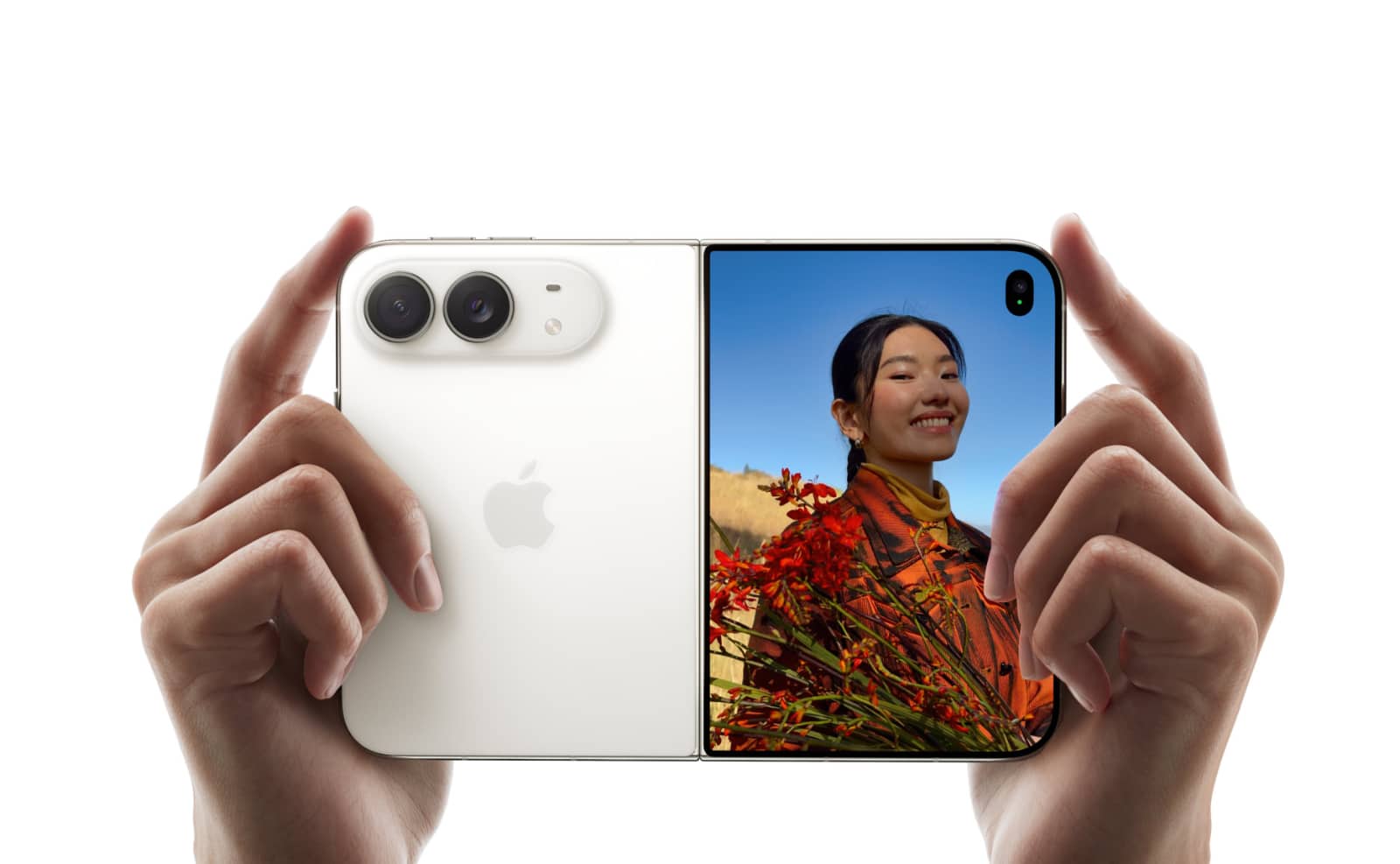
While these seem new in the Apple camp, they’re not totally new for foldables. Motorola has long offered the preview option in its Razr, complete with a similar kid-focused animated screen (though Apple does have Snoopy on its version). Meanwhile, Samsung and Google have both dabbled in a similar concept to Smart Take, with Google adding its in this year’s Pixel 11 models.
Beyond these, the technology is very much an iPhone in a foldable design. You’ll get a minimum of 256GB storage and up to 2TB, supporting for magnetic charging over Qi2 MagSafe, 5G, WiFi 7, Bluetooth 6, and there are also built-in front-facing cameras for each screen, with a 12 megapixel camera punch hole on the right side of the front 5.4 inch screen, and an under-screen 12 megapixel camera under the 7.6 inch screen that appears only when it needs to.
Oh, and it only supports eSIM, as Apple moves away from the physical hardware (and forces reviewers to gradually do the same, it seems).
Australian pricing and availability
But then there’s the price, and much like we’ve warned on radio the past couple of months, it is not inexpensive.
We largely expected it would cost a minimum of $3500, and lo behold, it’s set to cost a minimum of exactly $3500.
Simply put, the starting price of the iPhone Duo is $3499 in Australia, with the 512GB model stretching to $3899, a 1TB model punching past $4K at $4699, and remarkably a 2TB edition set to fetch $5899. Yes, that is basically a $6000 iPhone, especially once you bundle in a case, which will cost either $119 for a standard case or $199 for one with a kickstand. Oof. Double oof.
That said, you probably shouldn’t be surprised, partly because this is Apple’s latest and greatest tech, and so it naturally comes with a bit of a premium.

Essentially, iPhone owners looking for the best are being asked to pick what matters most: a portable tablet screen or a best-in-class camera experience. Pick the former and you’ll find yourself at the iPhone Duo, while everyone else will land on the iPhone 18 Pro and Pro Max.
But it does leave Samsung in an interesting position, too, because now it has a similar take on the foldable that also happens to be a good $1000 less expensive.
The iPhone Duo will go up for pre-order on October 16 with delivery a week later on October 23. Which gives you a good month or so to start saving, if you happen to dig this foldable entirely.