

It’s the year 2026, and noise cancellation has never been easier to find. It varies quite a bit across the spectrum of sound wearables in the market, from the inexpensive CMF Buds 2 Plus to the much more expensive Apple AirPods Max 2 and Sennheiser HDB 630, headphones that hit a staggering thousand dollars, and they’re not even the most expensive.
You might not believe it, but this whole tidal wave of noise cancellation changes actually started happening a good ten years ago, back when Sony launched its 1000X headphones, known as the MDR-1000X.
It was a cataclysmic shift. Bose may well have pioneered active noise cancellation technology, but Sony was changing it, bringing the concept of adaptive cancellation to life with a system that not only looked good and sounded great, but also could change the cancellation based on how you wore the headphones.
Since then, there’s been a pretty healthy rivalry between Sony and the other headphone makers, all the while noise cancellation became one of the democratised technologies and made its way to more price points.
Active noise cancelling earphones and headphones can now be found at a variety of quality levels and price points, and Sony’s 1000X series is still up there, albeit in the “normal” high-end. In the expensive high-end at the thousand dollar mark, not so much.
Ten years in, Sony seems game to change that, and with features reviewers like this one have been asking for.
Almost at its exact 10 year anniversary (which would have been in September 2026 if memory serves because this journalist was at the IFA 2016 launch), Sony has a new pair of headphones, though it’s definitely focused on the premium crowd.
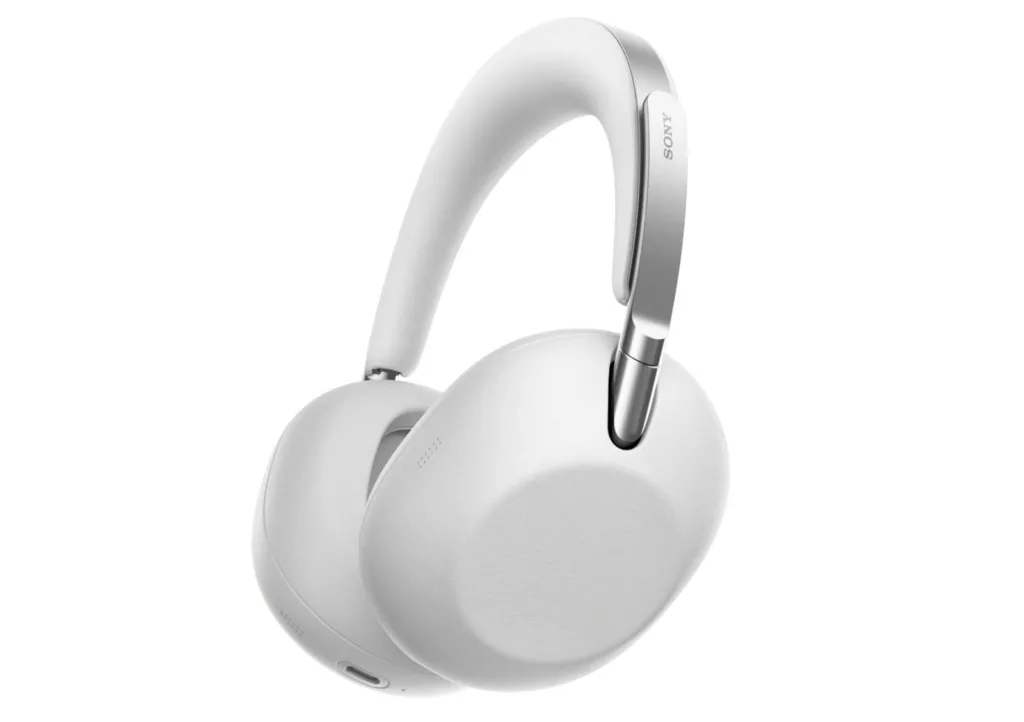
Named after its original MDR-1000X and other models following it in the 1000X series, the “1000X The Collexion” is a new model focused on the premium and high-end. Think of it as last year’s WH-1000XM6 with a few updates and a price focused on the likes of the aforementioned AirPods Max 2 and Sennheiser HDB 630.
The headphones borrow the style of its predecessor, but upgrade the comfort using a fake leather like the first pair, marrying it to metal buttons, a metal headband, and a choice between platinum and black. Sony’s fit aims to be better, too, using a wider cushioned headband with spacious ear pads, plus a renewed focus on the tech under the hood.
There’s a new driver made from unidirectional carbon composite, which Sony says improves the sound by delivering clearer distinction, not to mention a new DSEE Ultimate processor that uses AI to upscale compressed sound. A staggering 12 microphones are included on the headphones, likely sitting at six per ear, with adaptive noise cancellation that can match more environments.

Sony says the 1000X Collection headphones have been worked on with Grammy award-winning artists, just in case you wanted to make sure the sound was good.
You’ll find some clever changes, too, including some that feel like they’ve been on the cards for a while.
For instance, the pads can now be replaced, clipping on and off for cleaning or replacement, and the spatial audio can upsample stereo to head-tracked 360 Reality Audio, handy because not many people subscribe to services with Sony’s own format.
Not everything is hunky dory, though; there’s no USB-C audio as far as we understand, and the head-tracking may be limited to Android only. The battery life is also slightly diminished, dropping from around 30 from its predecessor to a maximum of 24 hours on the 1000X Collexion.

The biggest factor could well be the price, with the 1000X Collexion charging a staggering $300 more than the original, hitting $999.95 in Australia. That’s as high as other high-end models, sure, but also a whole lot more than Sony’s other best-in-class cans in the $699.95 WH-1000XM6, a pair that can be easily found about the place for a good $150 less at street price.
Price alone could be the deciding factor for anyone glancing this way, but we can’t wait to try Sony’s definition of premium all the same. If anything to at least work out whether they match up and are worth it.