
Quick review
The good
The not-so-good
While the style may end up dividing people, the combination of three cameras, a capable battery, and cool camera profiles make the Nothing Phone 4a Pro better than you’d expect. The support, however, leaves something to be desired.
When it comes to spending money on a phone, everyone has lots of choices. You can spend a little and you can spend a lot. And these days, that last category can be quite hefty.
That could be why the mid-range is so appealing.
Typically priced between $500 and $1000, phones in this category offer much of what you need and very little of what you don’t. They’re often designed well, feel more premium than they otherwise should, and deliver a little bit of the high-end at a less expensive price.
There are plenty of models sitting in this part of the market, but the two that command the lion’s share come from two of the biggest manufacturers: Apple and Google, the makers of each respective major mobile operating system.
So what happens when a challenger brand decides to do just that, challenging for a piece of the pie with something designed to be different?
You end up with the Nothing Phone (4a) Pro, a handset that brings a lot to the table, but might just miss out on some of the important points.
Design
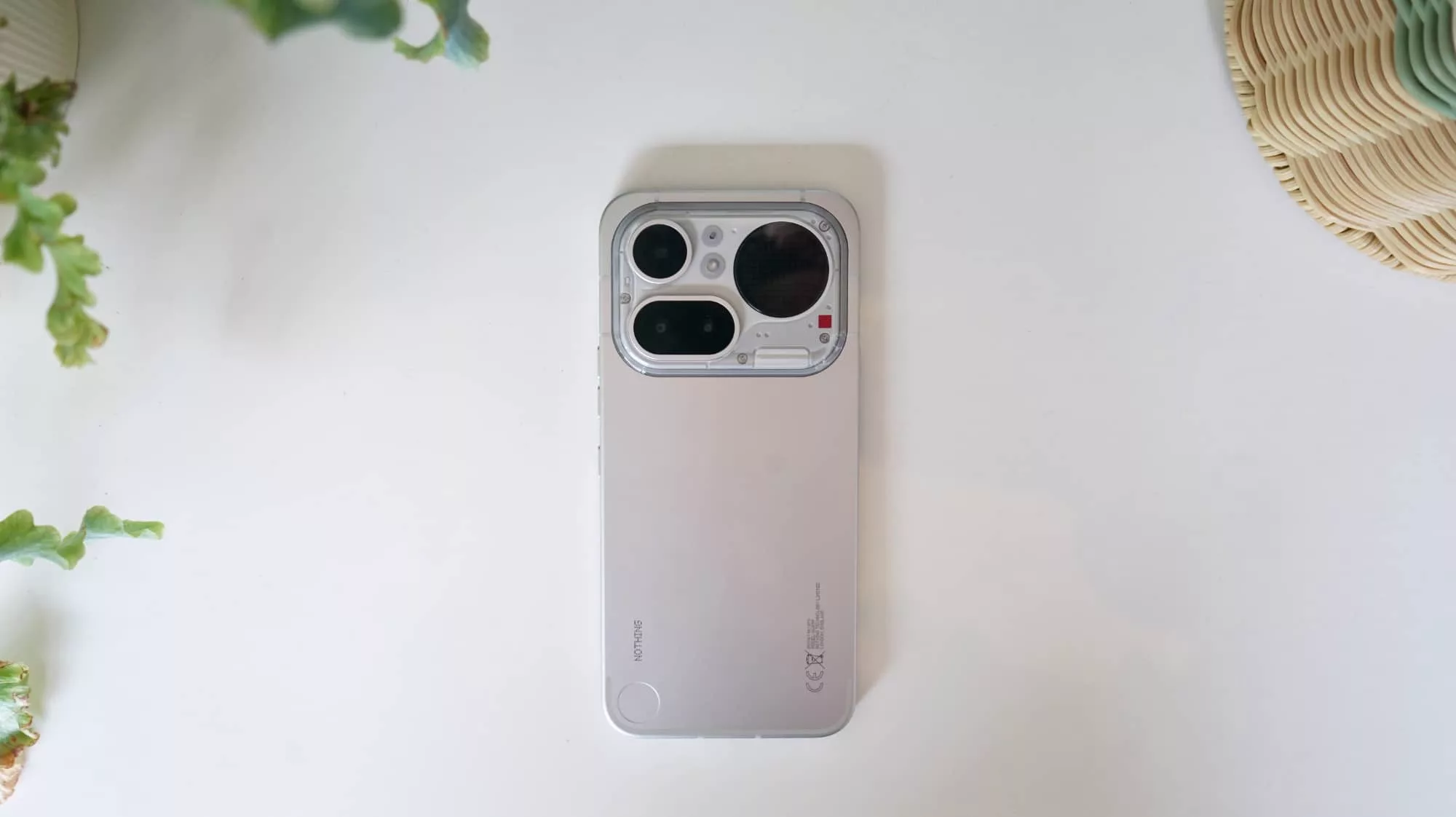
Made from a combination of aluminium and plastic (or polycarbonate, if you want to be fancy), the Phone 4a Pro isn’t quite as see-through as other Nothing phones have been, but manages to tread a more premium-looking line.
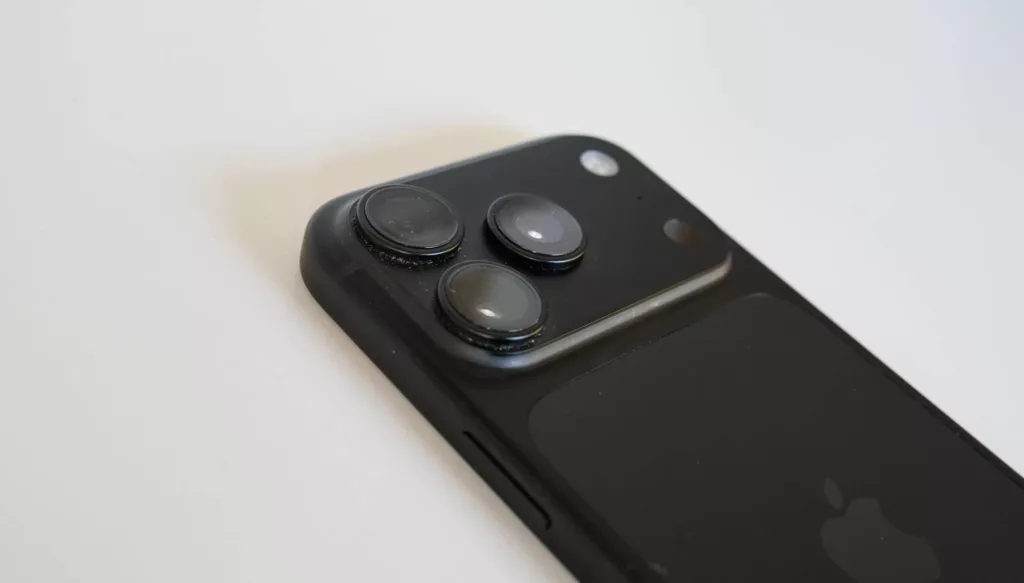
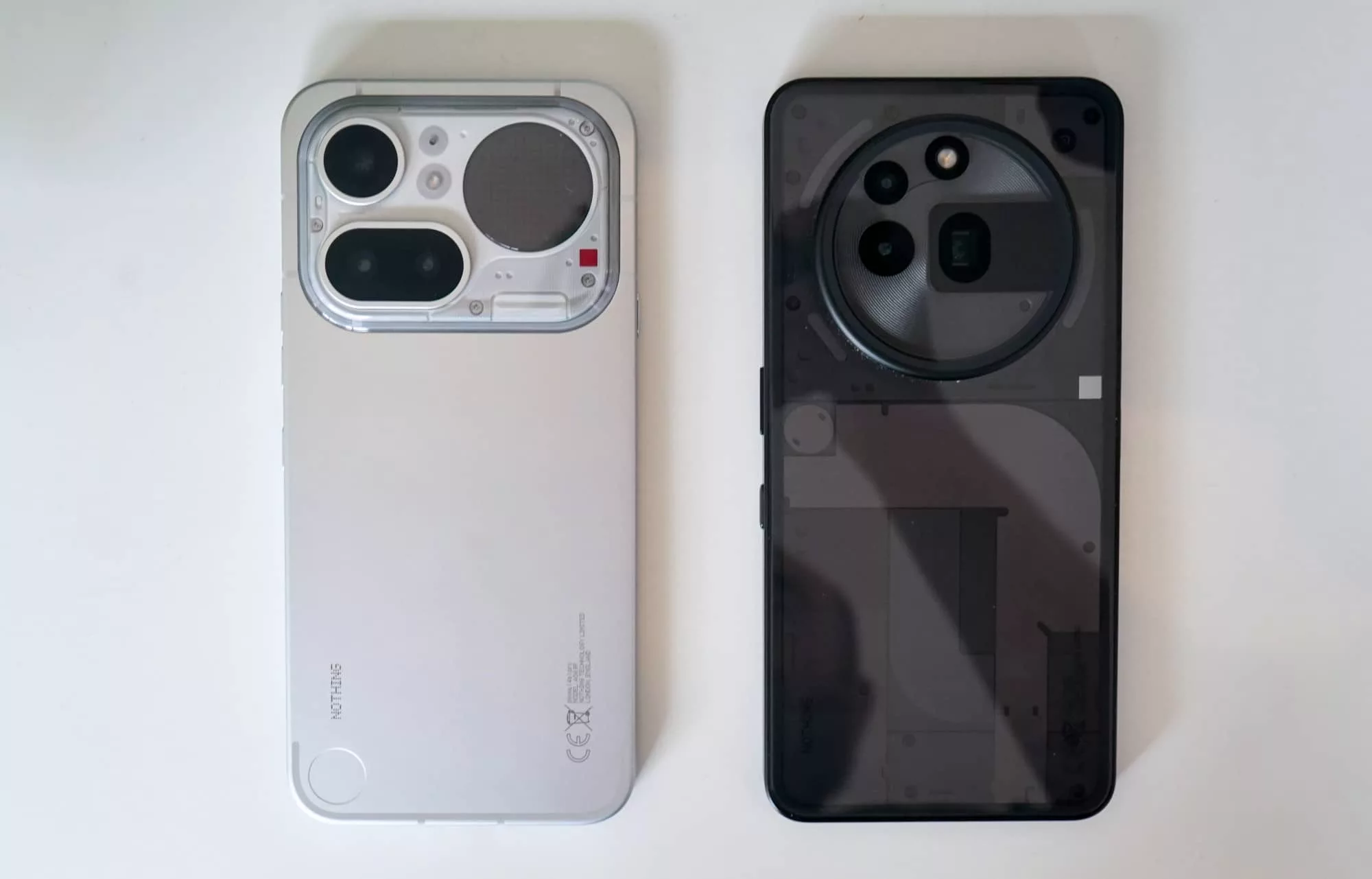
Instead, it’s an aluminium casing with a cut-out section for the camera that shows the transparent design, more like a motif. It’s a little like if Apple had decided to make the iPhone 17 Pro Max with a see-through camera. That’s the vibe.
Like all Nothing releases, it’s a look that will please or divide. Some will love, and others markedly less so. This reviewer digs it, though not everything in that little camera block is useful. It stands out, but not every feature stands up.
Features
For instance, there’s a large circular LED screen acting as Nothing’s “Glyph Matrix”, albeit a lower resolution take on the feature that popped up on the Nothing Phone (3) last year. The idea is a continuation on Nothing’s design language to use lights to communicate small messages, with glyphs for timers and messages, and basically just lights that pop up on the back of your phone when you don’t want to waste time on the front.
The camera is the other obvious feature on the back, which is a three camera system made up of a 50 megapixel F1.9 main wide camera, a 50 megapixel F2.9 3.5X optical, and an 8 megapixel F2.2 ultra-wide, while the front sees a 32 megapixel camera.
There’s more than simply what’s on the back of this phone. The front sees a 6.83 inch AMOLED display running at a slick 144Hz and supporting the Full HD+ resolution of 1260×2800, complete with Corning’s Gorilla Glass 7i protecting things, and a pre-installed screen protector.
On the inside, you can expect a Qualcomm Snapdragon 7s Gen 4 processor, armed with either 8GB or 12GB, and then either 128GB or 256GB storage. Our review model was the 12GB RAM / 256GB storage option.
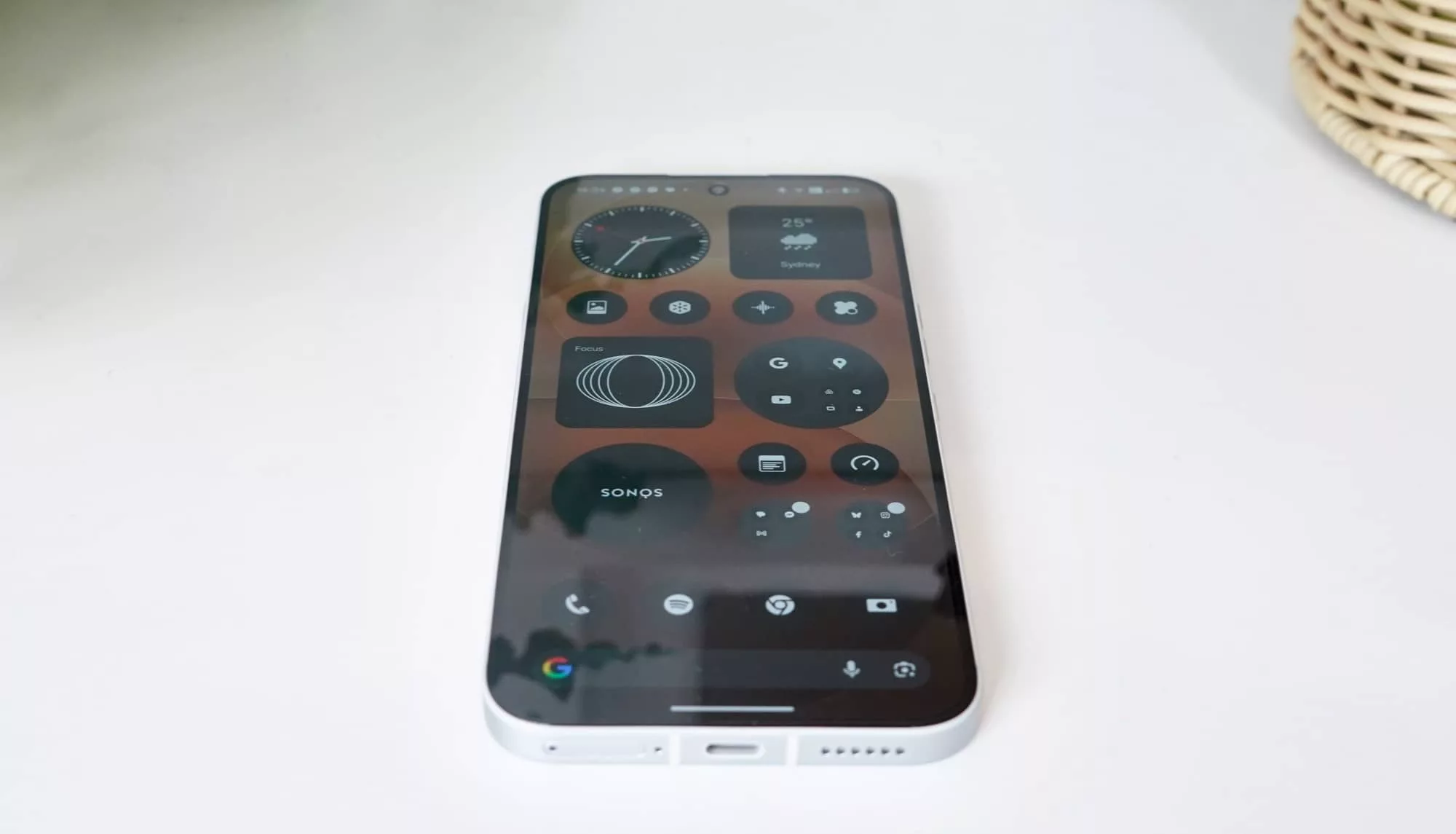
Regardless of which model you land on, you can expect Google’s Android 16 with Nothing OS 4 over the top, supporting three Android updates, essentially maxing out at Android 18 three years down the track.
You’ll also find 4G and 5G, 802.11a/b/g/n/ac/ax WiFi 6, Bluetooth 5, GPS, and Near-Field Communication (NFC) for Google Play, plus a wired USB-C port for charging and data, not to mention the Qi wireless charging if you need it in a pinch, as well.
There’s also a fingerprint sensor built into the screen, IP65 dust and water resistance, a thickness of 8mm, and a weight of 210 grams for the handset.
In-use
Using the phone is easy enough, with both facial security and fingerprint security on offer, while the phone offers an assortment of widgetised home-screens and app menus to work with.
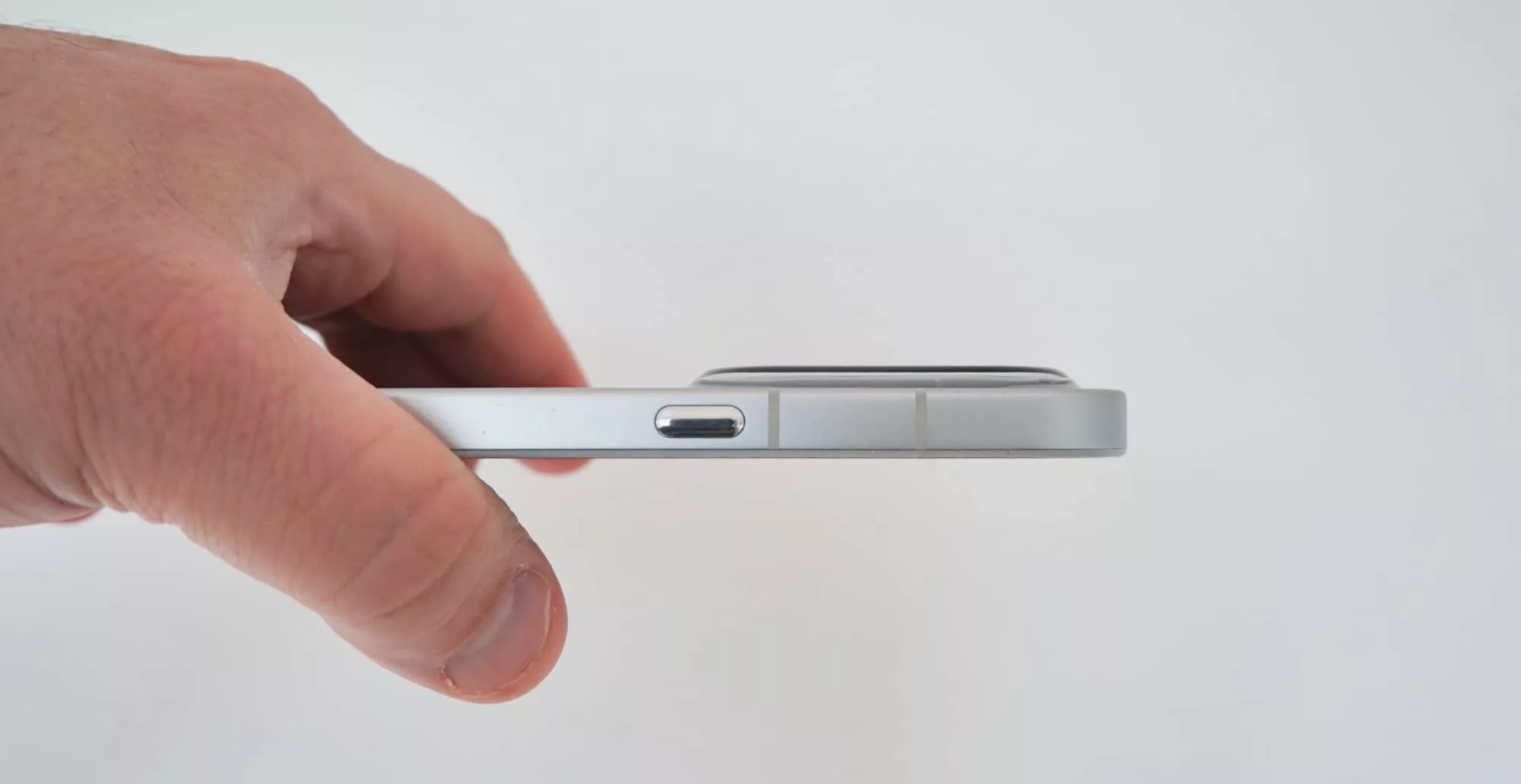
Nothing also offers an extra button other Android phones don’t have, a silver rounded button on the left edge that uses some of the Nothing Essential AI software to snap a screenshot and record your thoughts.
Nothing’s look
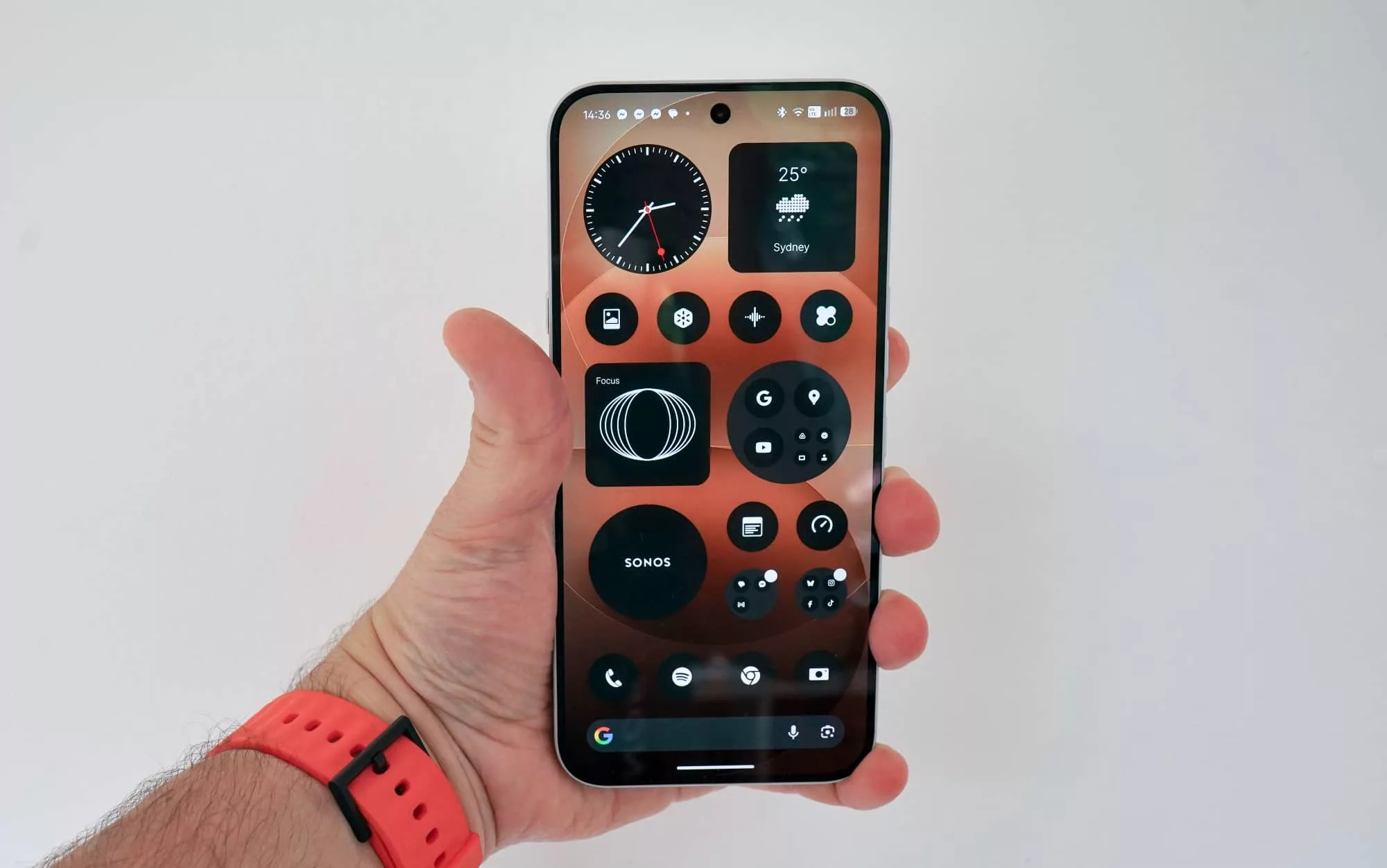
While the look of Nothing’s Phone 4a Pro is largely touched on in the design, there’s also a look to how you use the phone. And really, you have two choices: stock Android and stylised by Nothing.
Stock Android is basically like adopting a Pixel, kinda sorta, while Nothing’s approach applies a combination of serif fonts, monochromatic and minimalist icons, and pre-sorted menus that give the phone a unique feel.
It’s your choice, and there are even ways to tweak everything, complete with an AI approaches to wallpaper generation, though that’s not the only way AI appears on the Phone 4a Pro.
Essential and AI
One of the key features in the Nothing range of late is AI, something you’ll find from pretty much every phone maker, though Nothing goes a little deeper.
Yes, there’s the whole Google Circle to Search thing, and yes, you can use Gemini to help you edit. All of that is pretty normal for any recent Android phone.
There’s also Nothing’s “Essential Space” stuff, allowing you to capture moments and screenshots, and having its AI analyse things and detail those as memories. You can record conversations and let the AI transcribe and summarise, with just that little bit more AI thrown in there for good measure.
Much like it is on other mobiles, you might choose not to use it, but there’s a smidge more than simply circling to search and letting Google’s Gemini talk to you as your personal chatbot of sorts.
Glyph Matrix
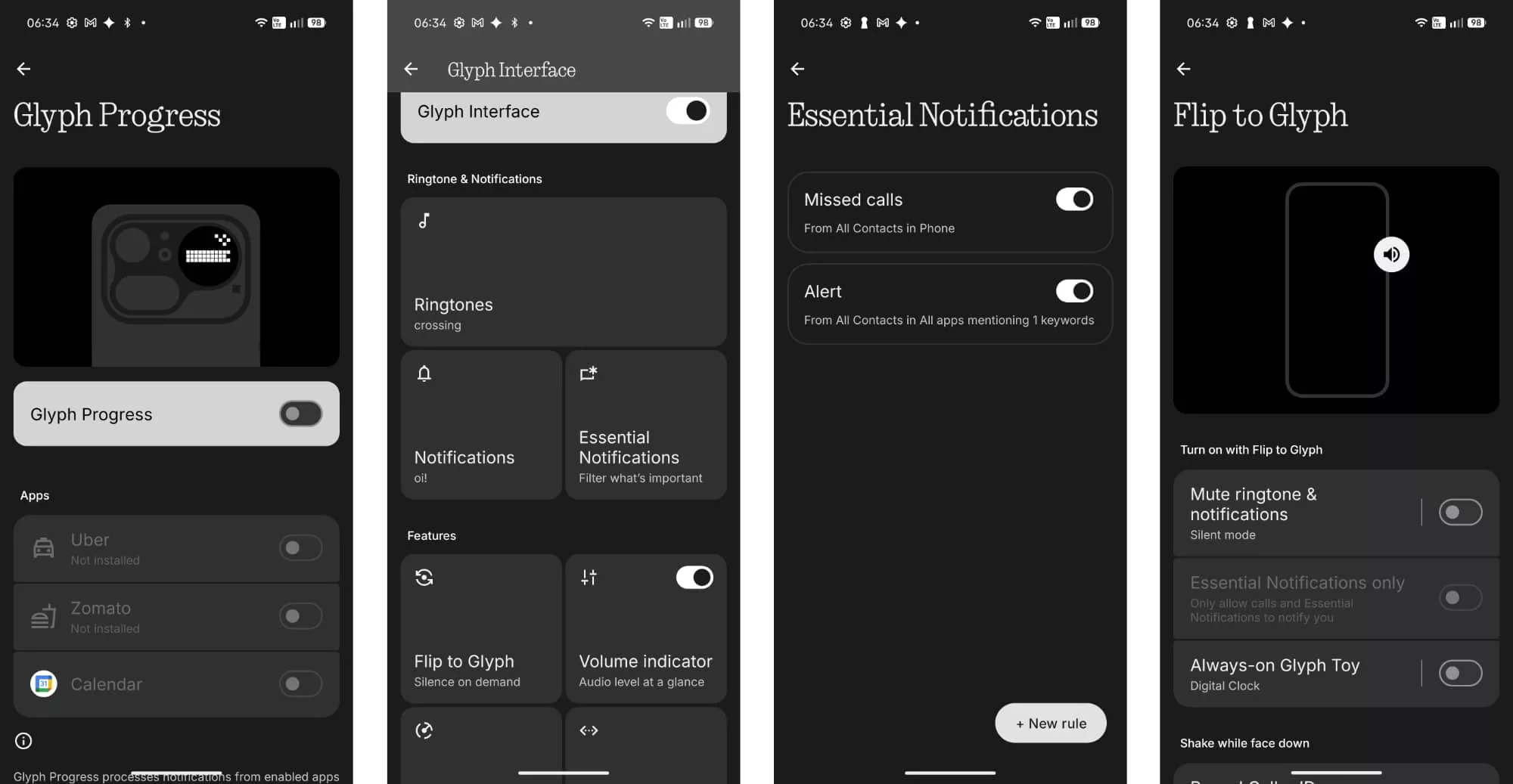
The other main feature is the aforementioned circular screen on the back, the “Glyph Matrix”. Technically, it’s a continuation of previous glyph concepts, ideas which have largely been lights, and even look simply like a bar of lights in the Nothing Phone 4a.
The Phone (4a) Pro’s Glyph Matrix is actually the same concept as what appeared in the Phone (3) last year, only with a lower resolution. You can map icons to its compact screen, and have them show up when notifications and alerts would chime, basically giving you a compact screen to look at.
Like last year’s phone, it’s an interesting idea, albeit one let down by a much lower resolution display.
Fortunately, there’s more going on then simply a less impressive matrix.
Performance
Armed with a Qualcomm Snapdragon 7s Gen 4, it’s pretty clear the Phone 4a Pro is a mid-range mobile, but it’s one that feels stronger than you’d expect it to.
The hardware isn’t breathtakingly high-end, but it’s also no slouch, achieving acceptable performance both in the benchmark and day-to-day. It’s abundantly clear this isn’t wielding flagship performance like a model twice its price (and then some), but it handles its own fairly well altogether.
In real-world terms, you might see a few moments of lag here and there, but most of our time with the Phone 4a Pro was breezy and easy. It rarely skipped a beat.
| Device | CPU Single Core | CPU Multicore | GPU |
|---|---|---|---|
|
Nothing Phone 2a (2024)
MediaTek Dimensity 7200 Pro
|
1110
|
2551
|
3249
|
|
Motorola Edge 60 Fusion (2025)
MediaTek Dimensity 7300
|
983
|
3012
|
2603
|
|
Motorola Edge 50 Pro (2024)
Qualcomm Snapdragon 7 Gen 3
|
1076
|
3040
|
3532
|
|
Nothing Phone 3a Pro (2025)
Qualcomm Snapdragon 7s Elite
|
1154
|
3177
|
3329
|
|
Nothing Phone 4a Pro (2026)
Qualcomm Snapdragon 7s Gen 4
|
1221
|
3963
|
4620
|
|
Google Pixel 10a (2026)
Google Tensor G4
|
1723
|
4334
|
8805
|
|
Samsung Galaxy S25 FE (2025)
Samsung Exynos 2400
|
2046
|
6602
|
13580
|
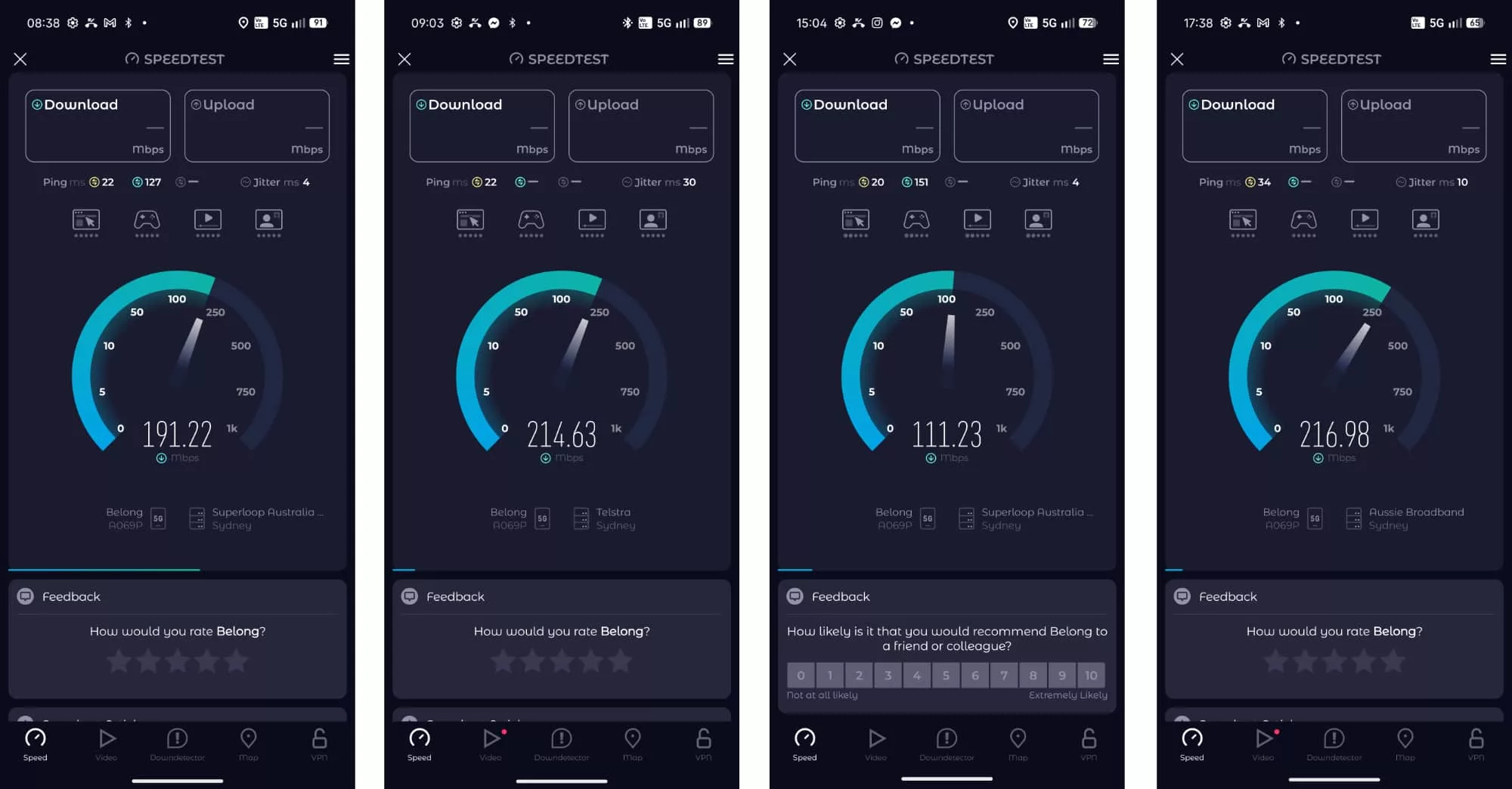
It’s a similar story over in the world of 5G, because this is one of those high-speed 5G mobiles. Truthfully, most phones these days are 5G phones, and usually anything above $399.
As such, you can expect relatively quick speeds from the Nothing Phone 4a Pro, provided you’re within reach of a tower, the network isn’t too packed, and your telco allows you to make the most of the mobile plan you have.
Tested using the Telstra wholesale network by way of Belong in Sydney, Australia, we found speeds maxing out at 226Mbps, which was easily quick enough for 5G tests. You may find faster is available, though it will depend on some of those factors we noted earlier.
Camera
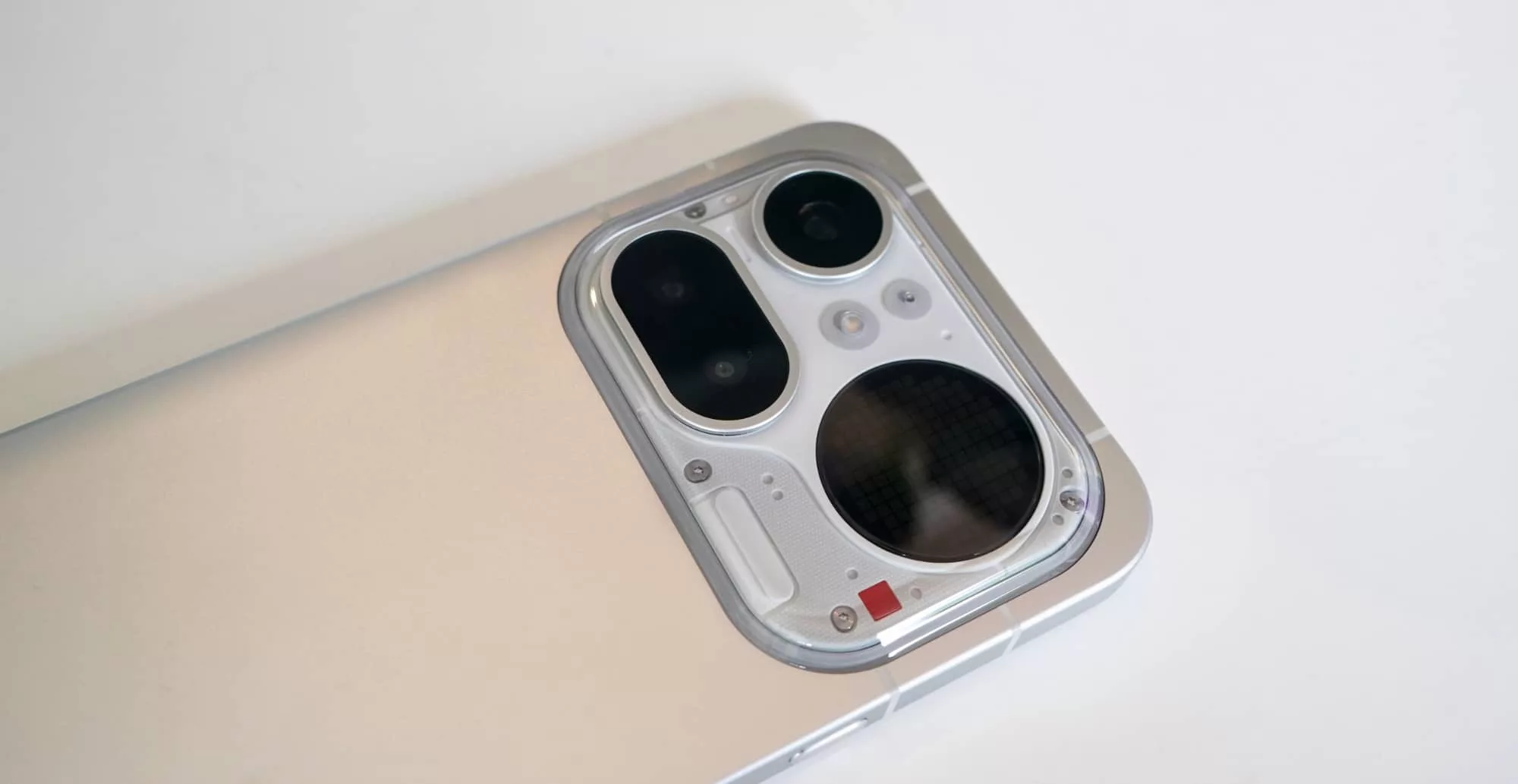
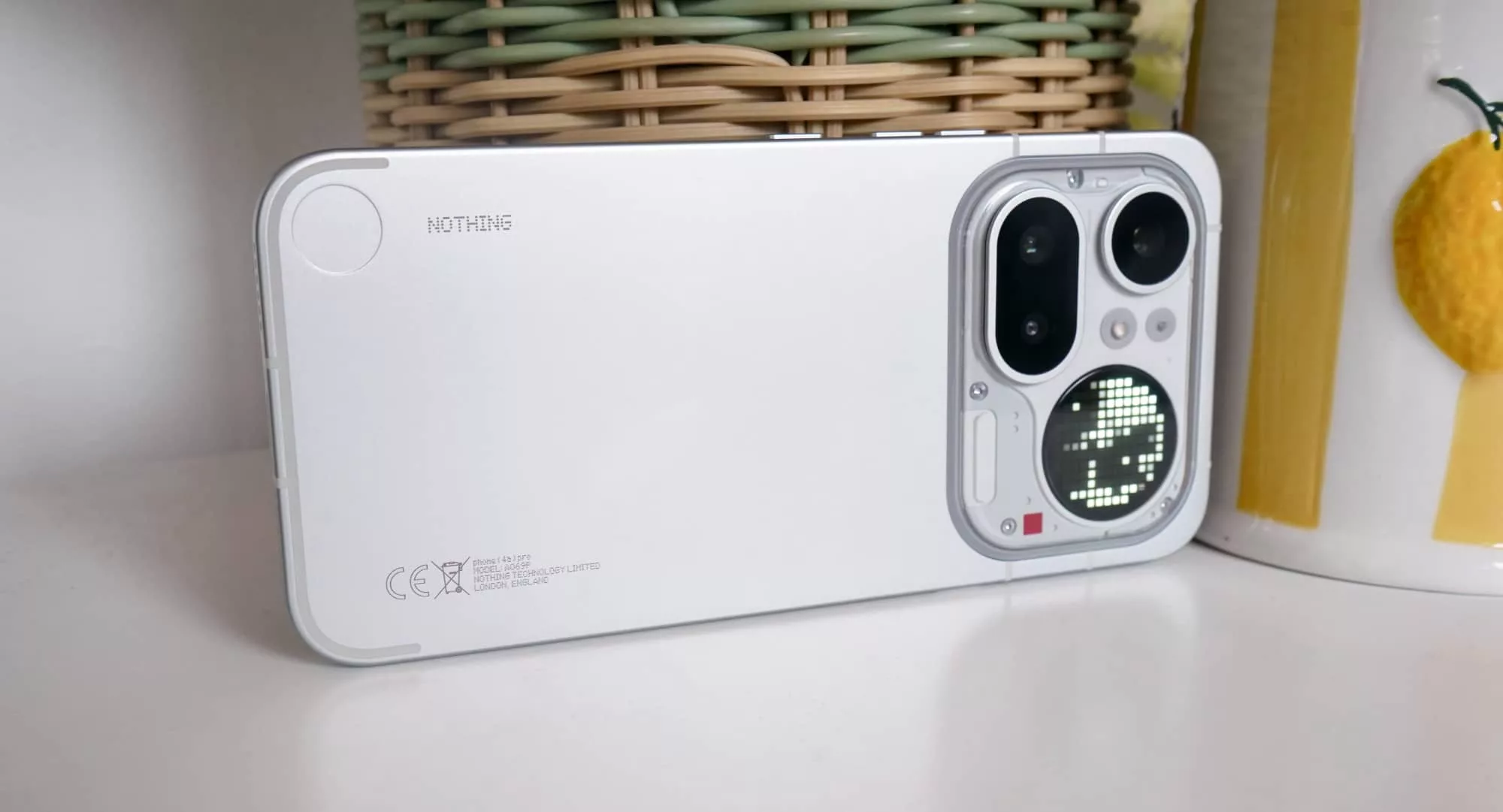
Next up is the camera system, and for that, you’ll find a combination of three cameras in a design that feels both new and yet also familiar. A simple glance might make you think of what Apple has created on the iPhone 17 Pro Max, but the whole thing has been given a Nothing twist.
For starters, it’s transparent, or a little bit that way, covered in clear plastic and feeling slimmer than what Apple achieved. Granted, the camera technology is different, so Apple is likely using larger cameras hence the larger size, but for anyone interested in what Nothing has to offer, it’s a similar-yet-different vibe.
Inside, there are three cameras, covering 50 megapixels for wide and close, but something much lower for ultra-wide.
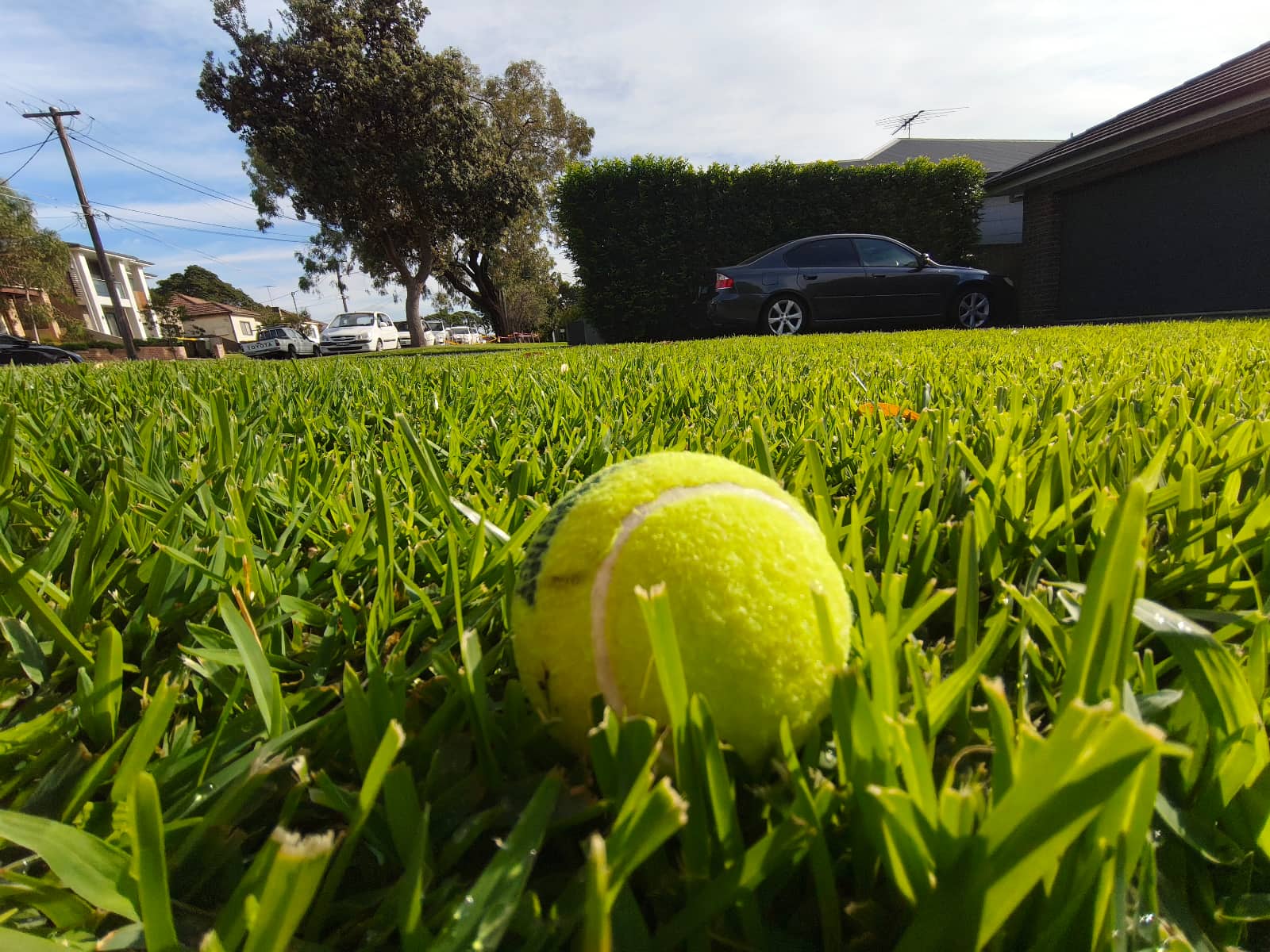
Most of the shots you take should look solid. Images are fairly sharp with great colour. Highlights can blow out almost too easily, but the portrait mode has some capability and delivers this almost filmic quality in its generation.
About the only catch in the camera is the ultra-wide, which lets the team down.
ou get a 50 megapixel main and a 50 megapixel telephoto, but are left with 8 megapixels ultra-wide, and it doesn’t really handle all that well. Colours and light can blow out on all the cameras, but more so here than any other.



Camera profiles
One of the other intriguing features Nothing has thrown in is camera profiles, which are little programmed modes you can tweak with specific filters pre-applied. Think of Nothing’s camera profiles as being more like preset film simulations, but without the grain. It doesn’t take long to realise why.
You’ll be able to make little presets for the camera and even share them with others, creating a social dynamic for the phone camera we’ve not really seen anyone try outside of an app.
The whole thing has a sort of VSCO-like feel, but without the app used by the film simulation and photo-social network of old (if it’s still around, then maybe skip the “old” term).
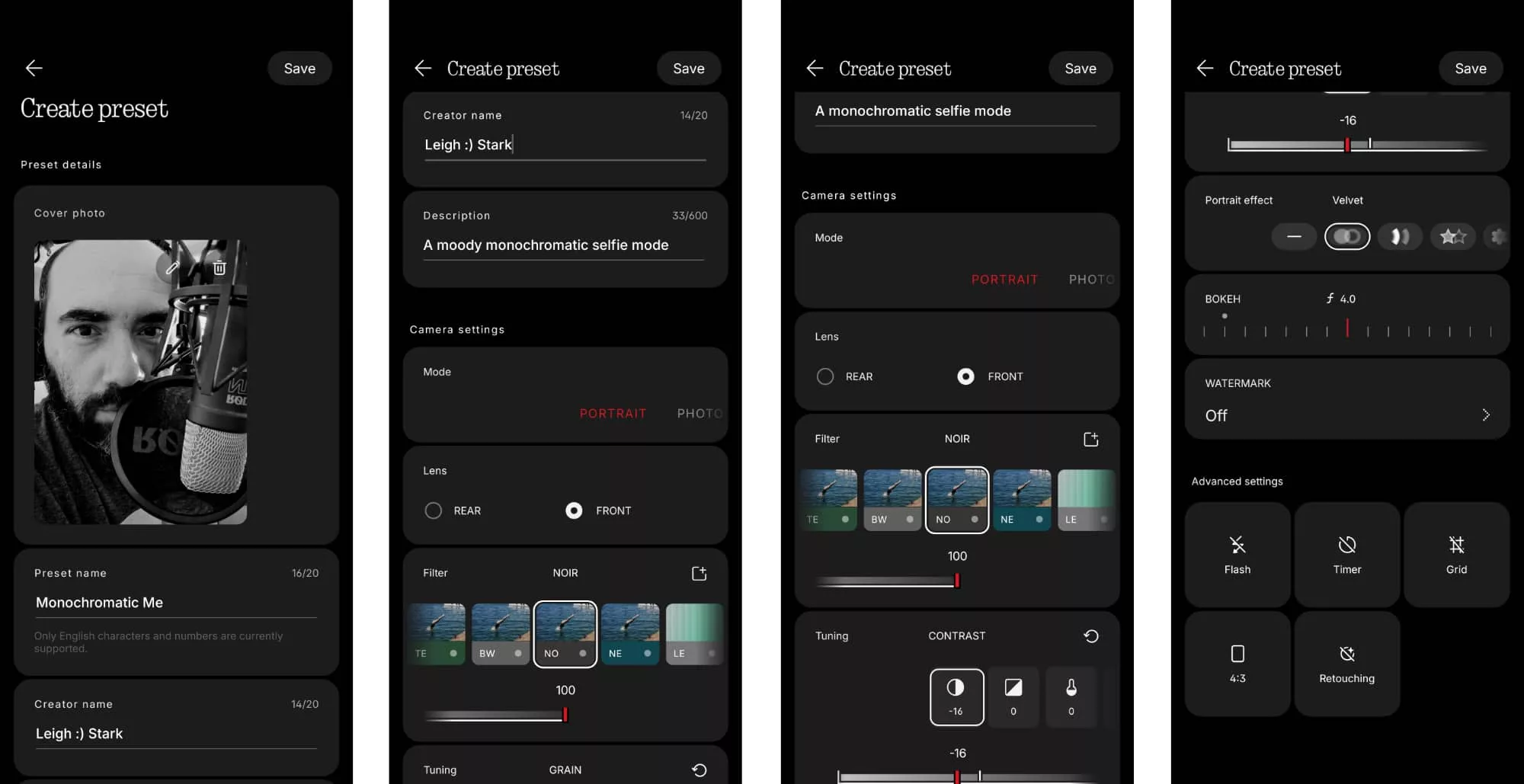
Beyond the profile sharing, the idea has merit because you can quickly jump into retro simulations that let you flex creative muscle on the phone camera all too easily. Even Apple’s photographic styles features aren’t quite this suave and savvy.
Some images even offer an almost soft snapshot vibe not far out of kilter from some of the warm tones of renowned photographers. It’s not quite the same, but this reviewer is reminded somewhat of 70s retro photos, giving the camera a little more than you might expect from a phone, especially one at this price point.
While the 50 megapixel wide camera isn’t quite like a proper film body, the custom profiles afforded to it give you that extra flex for making a series of images really, truly yours.



Battery
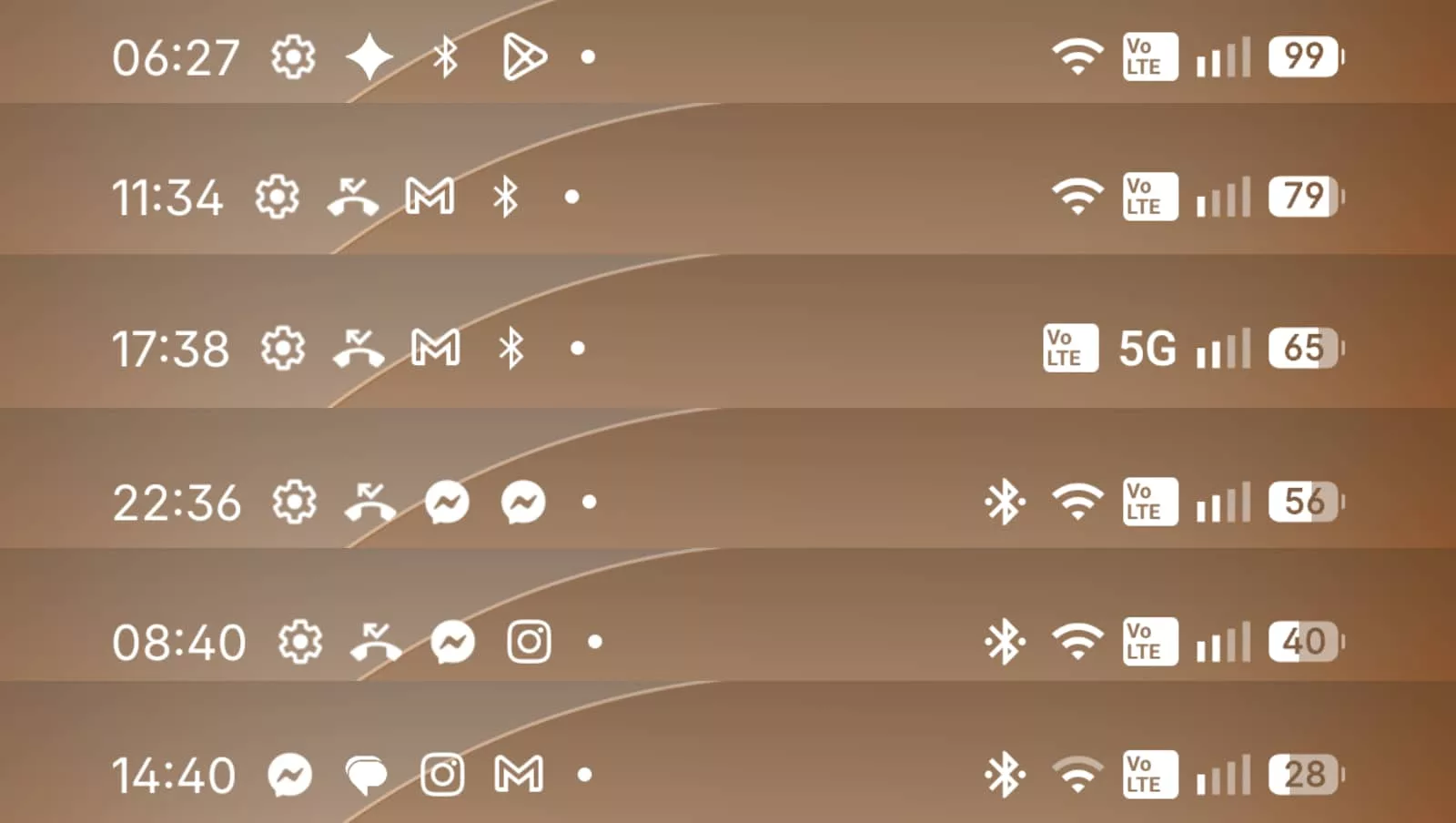
Testing out the battery, we found the 4a Pro’s 5080 mAh of life could handle a good day and a half of regular use, though spend more time with the screen and camera, and you might need a nightly charge.
Pushing ahead with a proper battery rundown, the Nothing Phone 4a Pro managed close to 24 hours of solid runtime, achieving just shy of it, and marginally below what the Nothing Phone 3a did with our bespoke rundown app, Battery Bench.
By comparison, it actually managed three hours more than the 3a Pro this model replaces. And it achieves better battery life in our tests compared to most of the contenders worth competing against in the mid-range.
| Device | Battery |
|---|---|
| Nothing Phone 4a Pro |
23:09
|
| Google Pixel 10a |
22:15
|
| Nothing Phone 3a Pro |
20:23
|
| Apple iPhone 17e |
20:11
|
| Nothing Phone 3 |
18:35
|
That’s pretty good, and real world usage with phone as our daily driver gave the handset room to move, as well.
Testing the Phone 4a Pro as if it was ours, we found a day and a half was normal for the handset, with a full two days of life possible if you bolted for a USB-C cable near the end of the day, or pulled back from the screen.
Most people will likely charge nightly, but the very fact that you don’t technically need to gives the Nothing 4a Pro something to work with.
The omission of Qi2 magnetic wireless charging is a bit of a sour point, especially given at least one competitor does have it, found in the MagSafe-compatible iPhone 17e.
Value
Priced from $949, the Phone 4a Pro makes the case for value by giving you a little more in everything.
The 256GB iPhone 17e with one camera is $999, and the 256GB two camera Pixel 10a is also $999. Meanwhile, the 256GB three camera Nothing Phone 4a Pro undercuts both by making it $50 less, and still arriving with its own personality.
This is no iPhone clone, nor is it a wannabe Pixel. Nothing has made its own clever little beast. We’re not at all bemoaning the price in the slightest. You even get a case in the box.
What needs work?
Surprisingly, the combination Nothing has set up for the 4a Pro works quite well. It’s a lovely phone that comes with some clever ideas to make it stand out. This isn’t your ordinary phone, and clearly not yet another Android phone made to match a style.
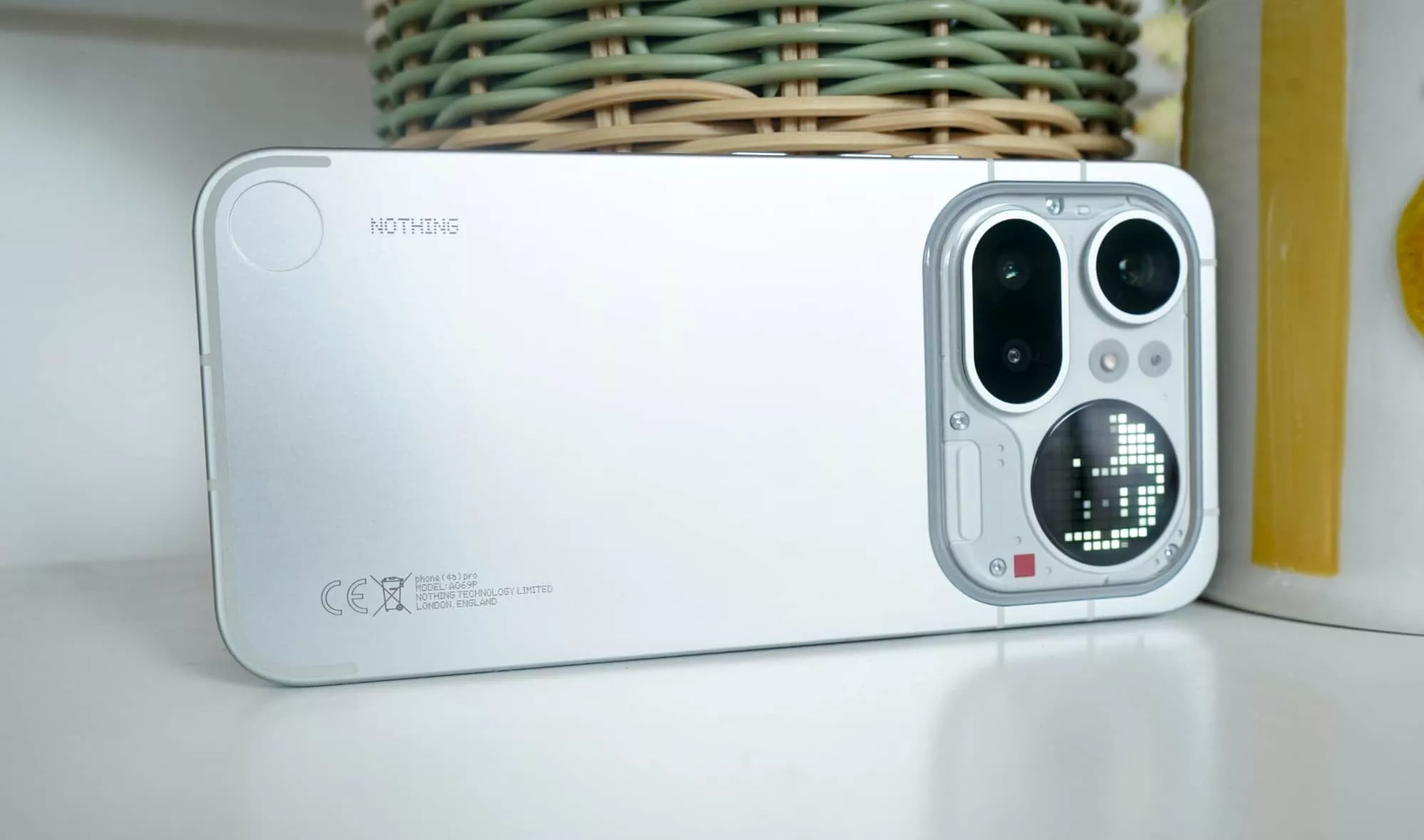
But there are things that also don’t work in this handset, and one of the things that doesn’t work in this phone is the Glyph matrix, also known as the extra screen that helps make the Nothing Phone 4a Pro stand out.
Here on the 4a Pro, it’s big and suggestive that it will be useful. The reality is that it’s not, and Nothing has bigger pixels to thanks.
Whereas the Phone (3) used smaller pixels that could show the little LEDs up nicely, the 4a Pro is more a mid-range phone that the flagship the Phone 3 managed to be. That difference means a lower quality Glyph Matrix screen that makes it more difficult to see. the shape of glyphs clearly.
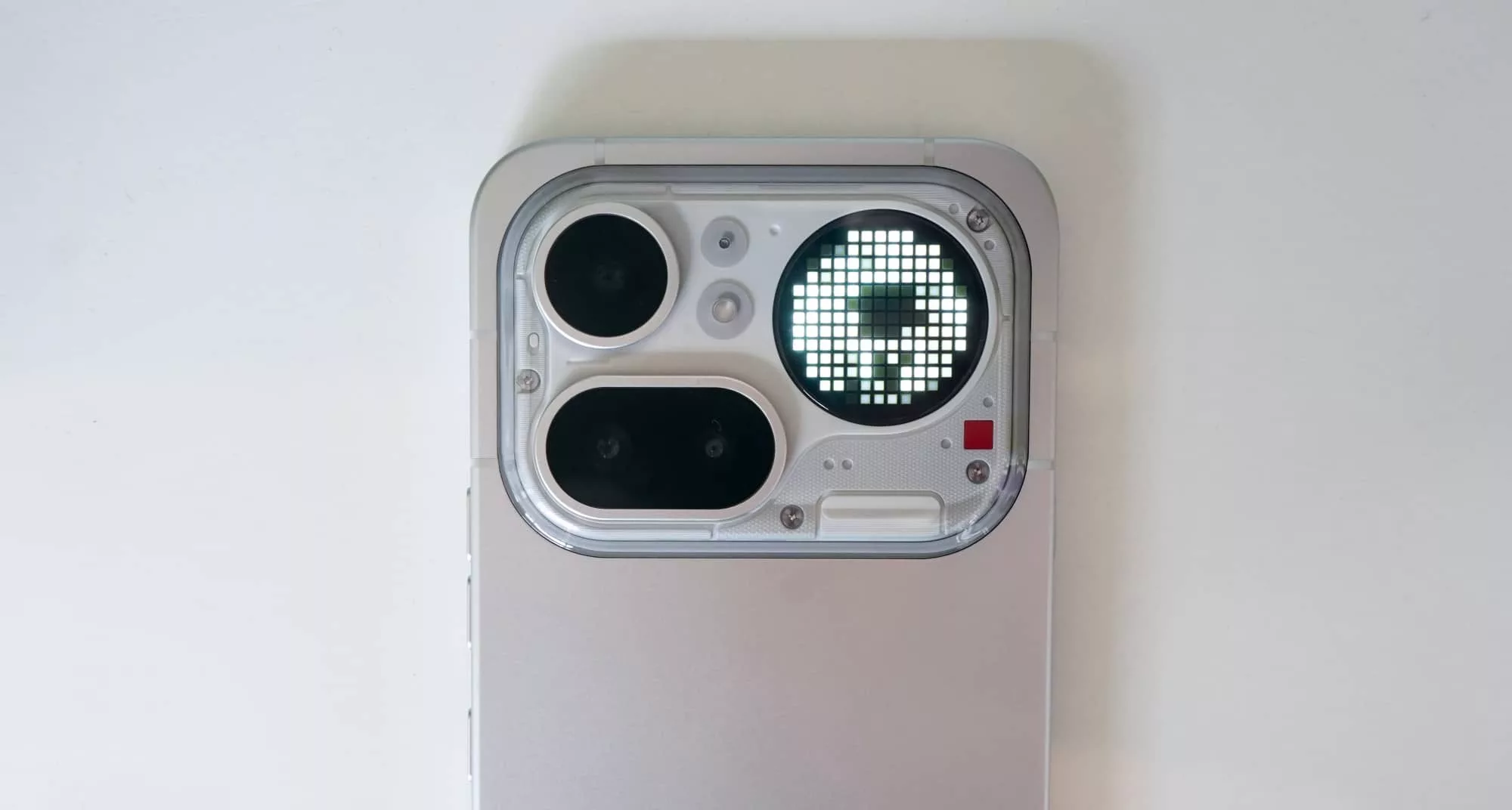
Things are totally fine when the glyph is simply a light flash, much as they would be with the older style of glyph lights on the back of these phones. But when the matrix has to look like anything with form or shape, the big size of the pixels just comes out looking clunky and overly retro.
Even the feature that should make it ends up looking like a blur of white pixels, with the camera mirror utterly useless.
Yes, you can turn the Glyph Matrix’s LED panel into a small preview screen for taking photos. Unfortunately, the lack of any detail renders it pointless.
If you like looking at a blob of white at varied opacity, you’ll get it. You just won’t get the mirror you were hoping for. Better look at another gadget for that, such as Insta360’s Snap screen.
Ultimately, the mid-range incarnation of the Glyph Matrix just doesn’t work as well as Nothing intended. If you’re anything like us, you’ll do what you can to not look at the thing. It’s just not useful at all.
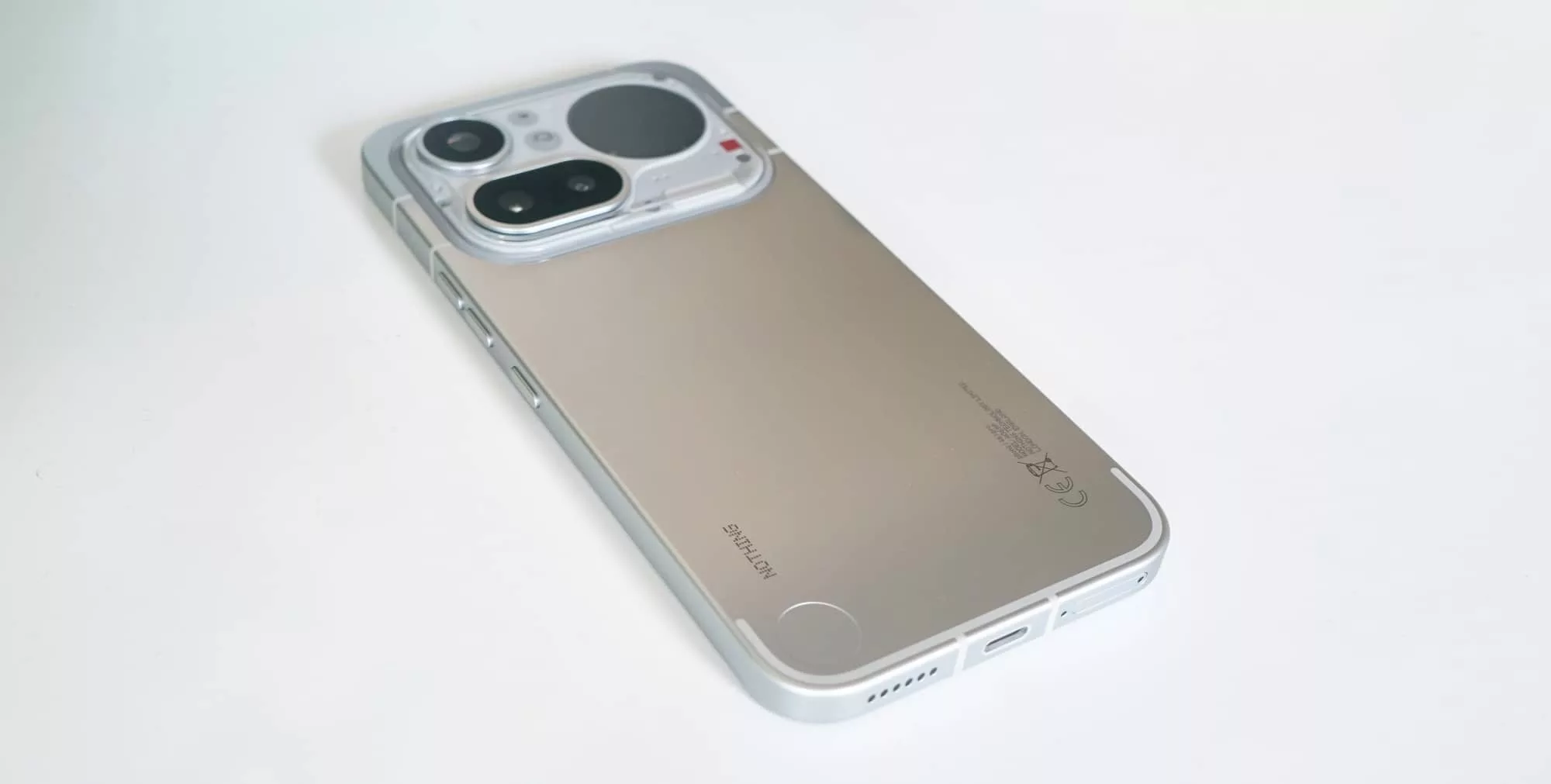
And then there’s the look, which will definitely divide.
While Nothing has long been about transparency in a very literal way, the Nothing Phone 4a Pro feels like a firmer realisation of that. It is mostly normal while the camera lets you peek under the hood, kinda-sorta.
This is still very much a stylised take on transparency; you’re not getting a clear look at the sensor stack and other pieces of tech. It’s like diet transparency: the whiff of transparency without the fact that it’s happening in real life.
What we love
But it works surprisingly well, and it’s a feature we actually liked.
We’re also fans of the camera system, which also isn’t perfect, but dares to be different. It’s almost retro and film-like.
The camera isn’t perfect flat the way it was on the Pixel 9a (mostly) or this year’s 10a, but it’s also not much of an extrusion where you’d care. It’s barely there, and comfortable to hold and carry.
When you’re using it, the camera stack goes from wide to close, which is more than most mid-range phones manage, and it even has a recording light on the back with a blinking red square, a handy little note to let others know that yes, you really are recording.
And while clarity comes with a bit of a question mark on the Phone 4a Pro camera, it’s not bad and you also get the camera profiles to work with. They’re like having a digital film camera, or your own personal take on classic Instagram filters, but with a little more playfulness thrown in.
It’s really the individuality of the camera stack that makes it stand out, and gives the Phone 4a Pro more cred than the aesthetics Nothing normally arms its gear with.
Final thoughts (TLDR)
There’s one other downside of the Phone 4a Pro worth mentioning: the support time, which is much lower than we’d expect a near-thousand-dollar phone to be.
While Apple will likely support the iPhone 17e for between five and seven years, and you’ll get seven years of support on the Google Pixel 10a, Nothing is only offering three years of major OS update and six of security updates. That’s not nothing, but it’s also not a lot, and that’s a problem.
If you buy a phone for a thousand dollars, it should ideally last longer than three years, a problem that hit us at the end of this review.
It’s one of those factors that hurts the appeal of the Nothing Phone 4a Pro, a handset that otherwise wins points for being its own device. This is a mid-range with personality. Unfortunately, it’s also a mid-range that won’t last the years that it should. It’s personality sans-support, because one should not lose out to the other.
If Nothing can improve the software upgrade policy, there’d be more to love about this Pixel 10a competitor. Right now, it simply falls short when it could be that little bit better.