
Quick review
The good
The not-so-good
AI is supposed to make things easier, and yet the Google Home Speaker seems like a gadget built to make life more difficult, and more costly, as well.
What once was a fantasy far off in the future has become a bigger reality in years past, and a reason to keep the internet connected all the time at home: the smart home is here, and your life and devices are now always connected.
It was probably always going to happen, but thanks to a chip in everything and the internet connected to gadgets all around the house, your home is now smart and you probably have an app to join it all together. Or several apps, even.
Smart lights. Smart vacuums. Smart doorbells. Smart TVs. Smart security cameras. You may even have a smart fan, smart fridge, or smart oven. Anything with an internet connection is technically a “smart”-something, and while smart lightbulbs were one of the first ways many were introduced to the world of the smart home, the smart speaker might be the gadget that truly managed to get them over the line.
You could speak to it. You could ask it questions and have it play music and read the news and order an Uber, and depending on what was going on, you could make it control other smart devices in the home.
A good decade or so since smart speakers started turning up in our homes, Google is back with a more modern take on its Home Speaker. No longer the Nest Audio and back to a more obviously homely name, the 2026 incarnation of the Google Home Speaker is smaller, but a little more costly overall, and arrives to a marketplace where it’s no longer the only player with a smart speaker. Can it compete?
Design and features
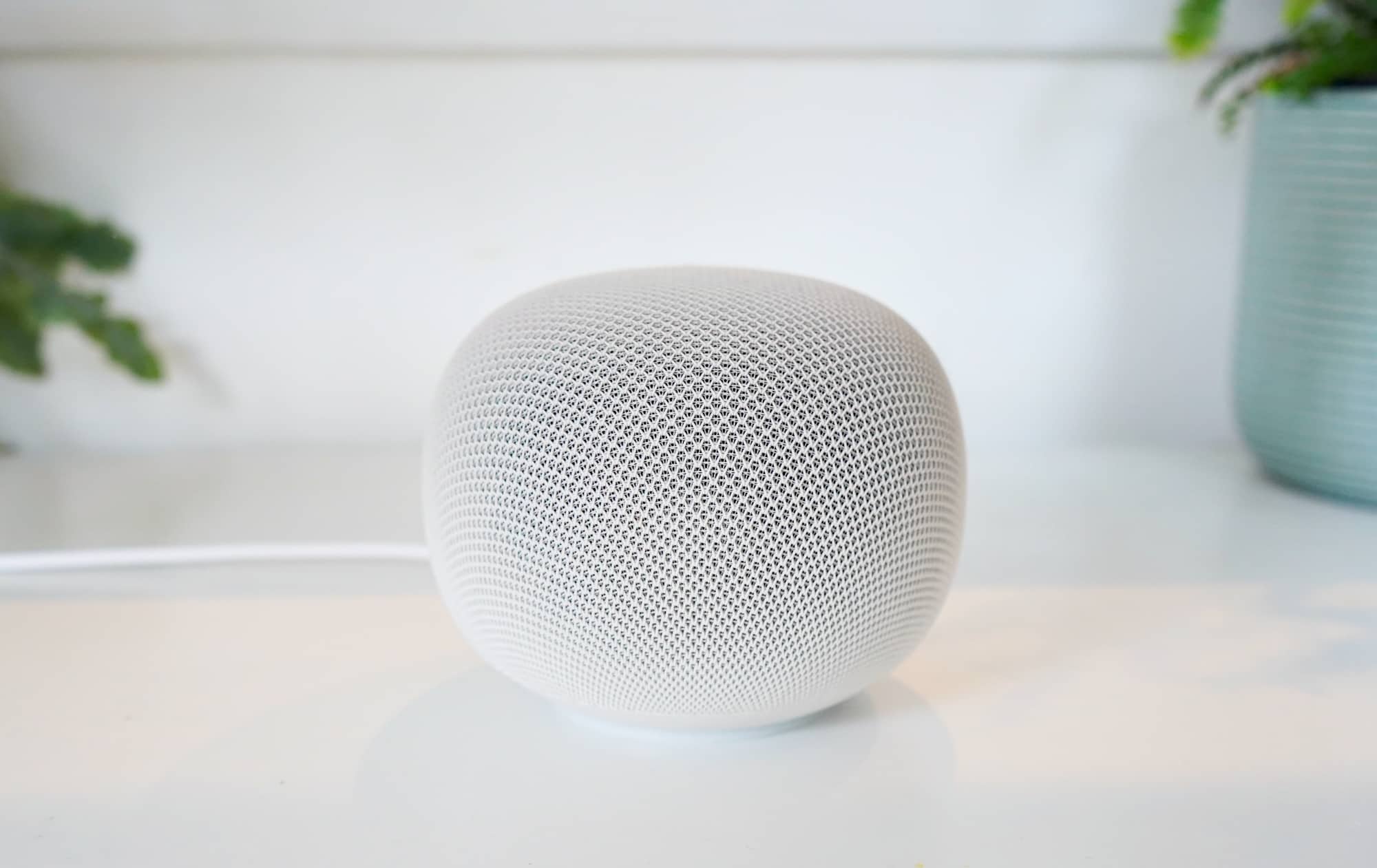
Clearly built like a compact speaker, there are probably only so many ways for Google’s Home Speaker to look lately, especially when Google has shown speakers in the past.
Designed more like a HomePod Mini or even a taller incarnation of the Google Nest Mini, the Home Speaker is somewhat small, but still thicker than previous compact models we’ve seen from Google prior.
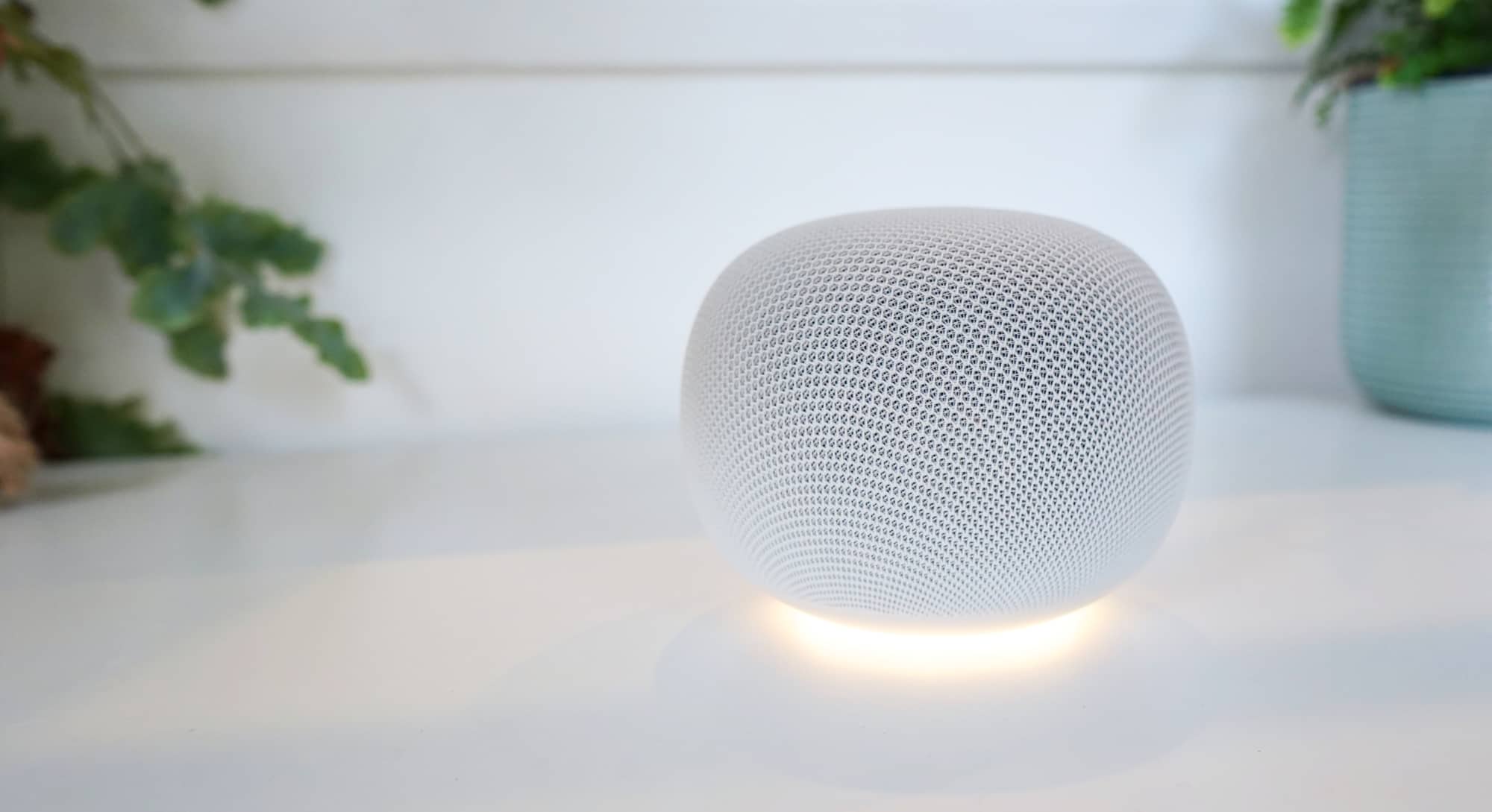
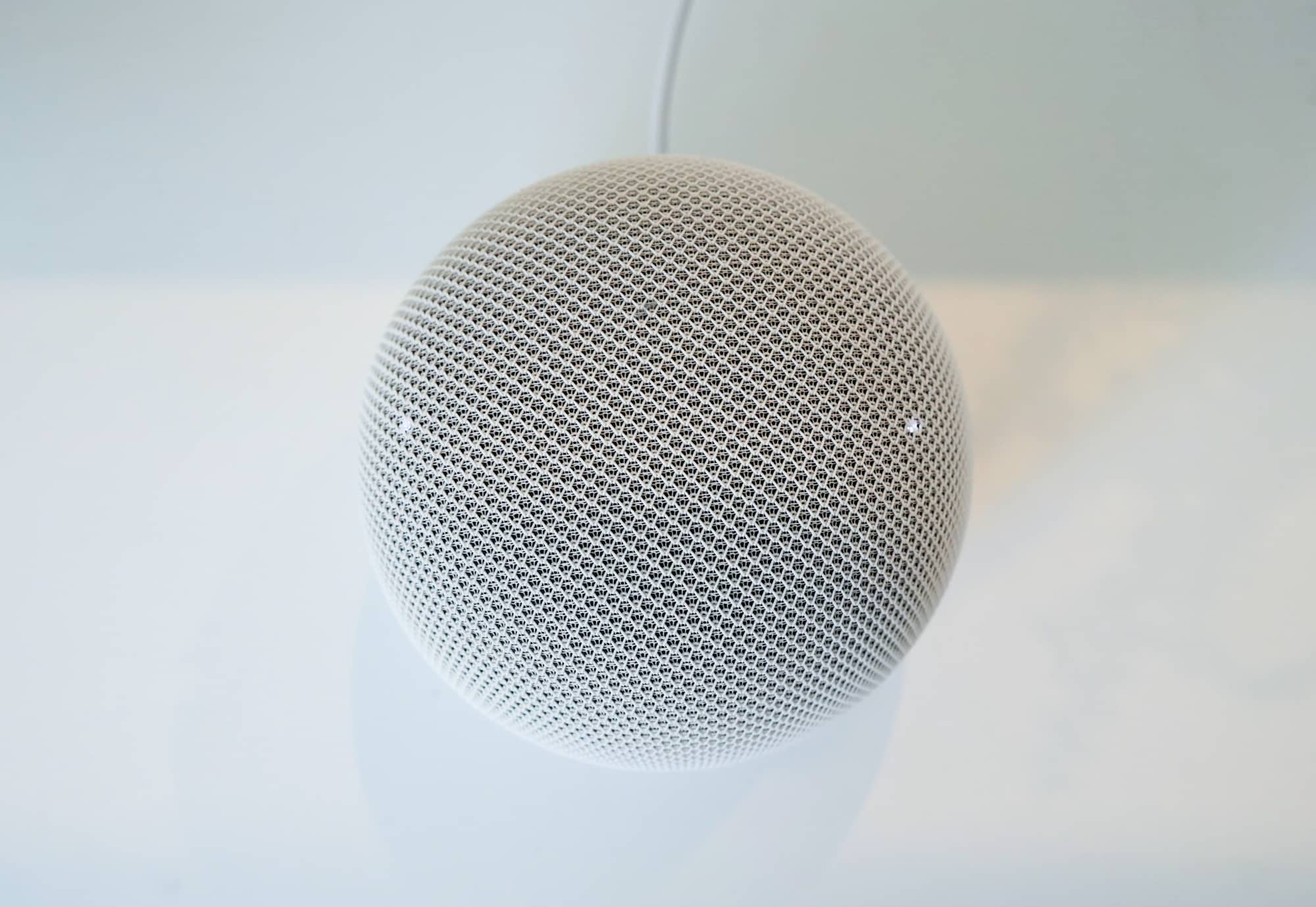
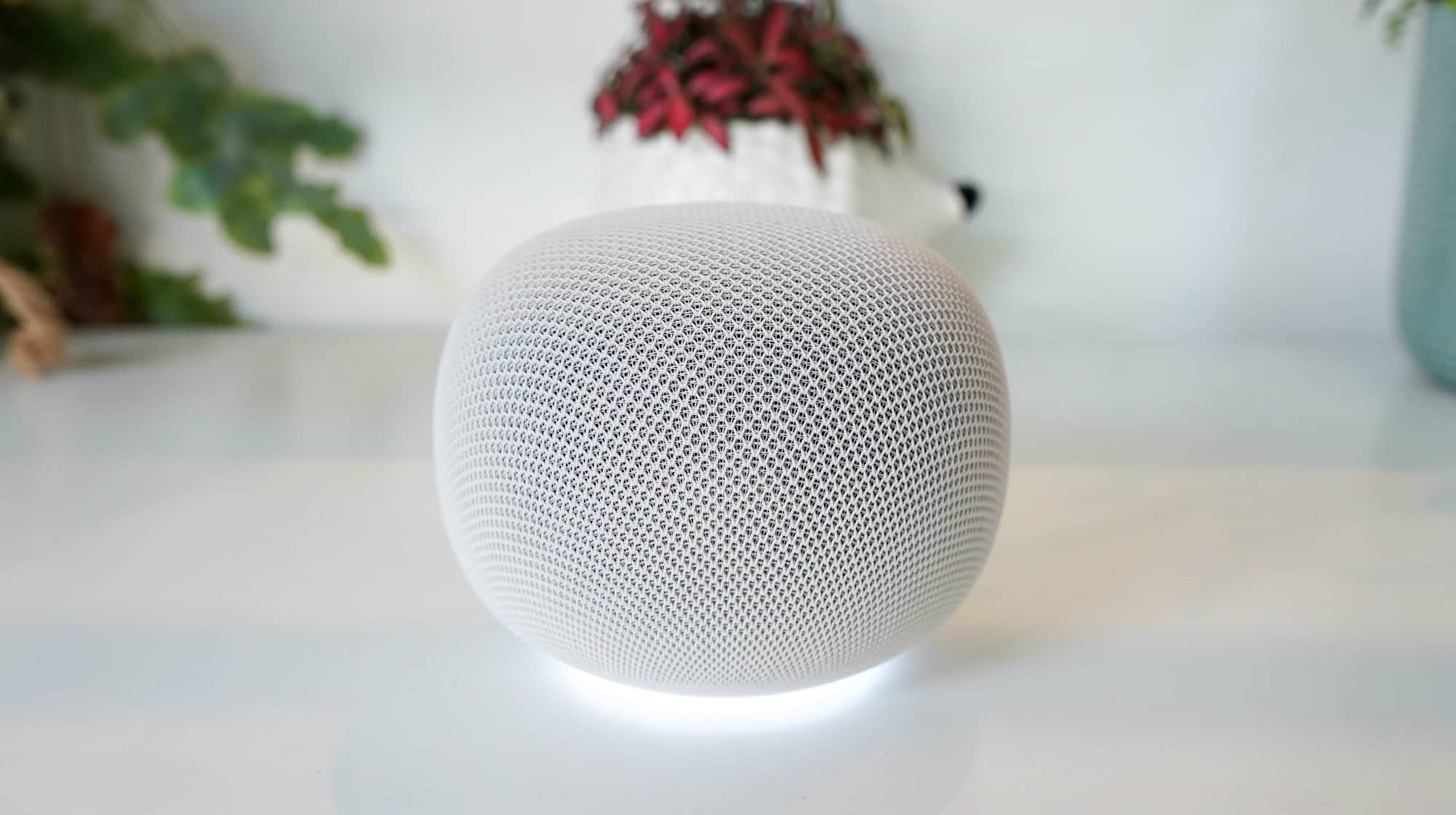
It’s a speaker, a fact that won’t surprise you since that word is clearly in the name and title, and it’s a speaker with a colourful light at the bottom when you talk to it. In fact, if you grabbed the HomePod Mini and flipped it upside down, you would basically have the Google Home Speaker, they look that much alike.
Weighing 396 grams and needing a cable connection to a 30W adapter (or a spare USB port with plenty of power behind it), the speaker actually runs on a small quad-core chip, a gigabyte of RAM, and 4GB storage you’re never going to really touch. What you will listen through, however, is a 58mm driver, with three far-field microphones and a hardware mute switch to shut the microphones down.
Support for wireless is also here, using 802.11a/b/g/n/ac/ax WiFi 6, Bluetooth 5, and the smart home support for Thread and Matter, playing with the Google Home app available on iOS and Android, as you’d expect. It also supports casting from Android, giving you a way to share the audio of one device to another.
In-use
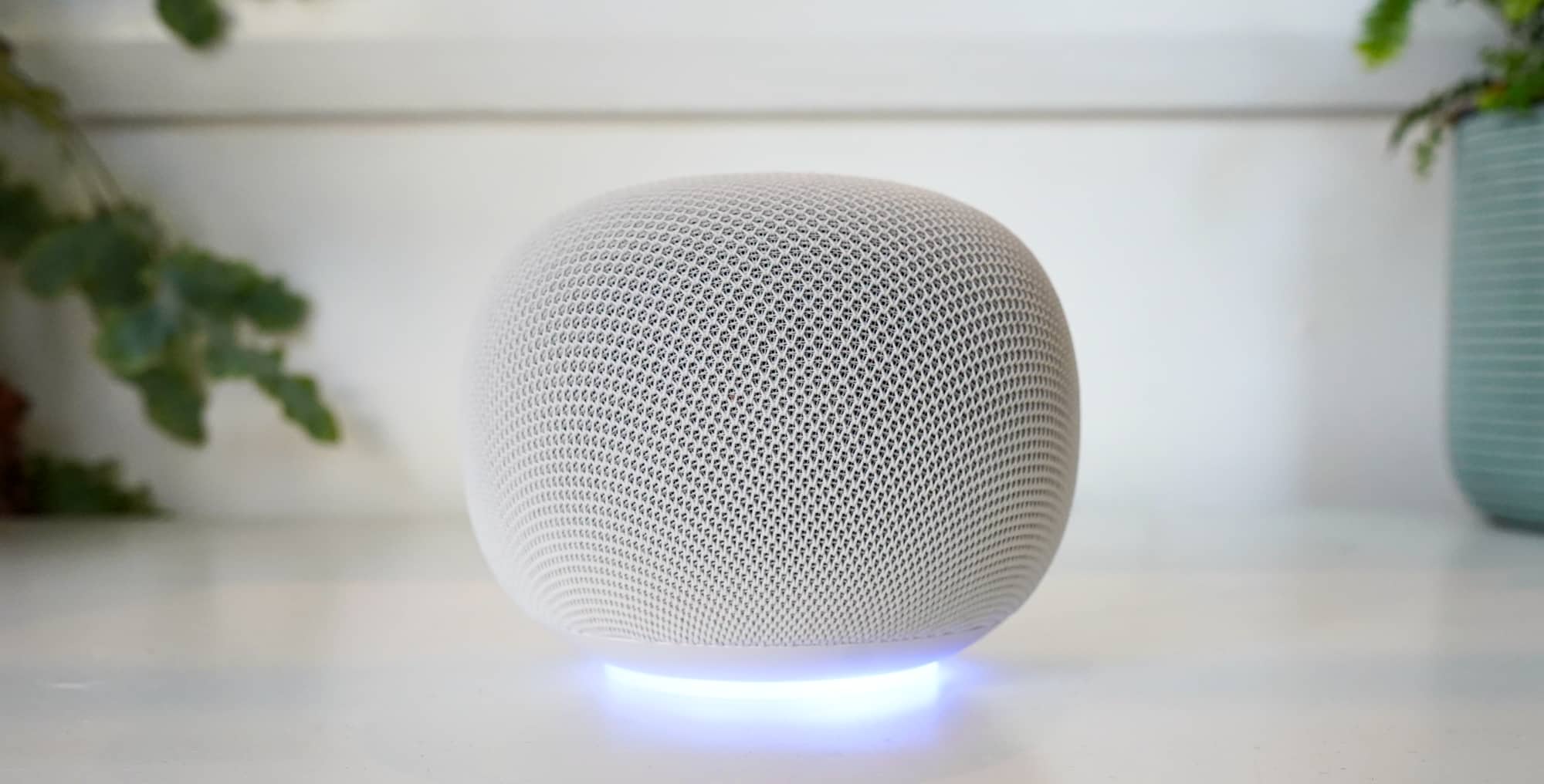
Like other smart speakers, your voice is the main way of controlling this speaker, though there are touch sensitive spots on the speaker, with opposite ends controlling volume with a simple light up LED, and a pause and play controller in the middle (which interestingly doesn’t work when casting).
Speakers these days tend to be one of the two methods — touch or voice — but Google’s approach is primarily voice. It wants you to talk to the speaker, and that has been a method for smart speakers for ages.
Talking to Google
But the main point of difference with the 2026 incarnation of the Google Home is that you are talking to Google, or specifically an upgraded incarnation of Google’s virtual assistant thanks to the inclusion of Gemini.
We’re using the term “upgraded” intentionally, because you’ll actually need to upgrade your Assistant experience once you start setting up the speaker. If you already have a Google Assistant speaker in your life, that experience will be upgraded. And if not, you’ll just get a new assistant, so you can start your journey without knowing all the previous nitty gritty.
The new assistant is technically more conversational and can feel like you’re actually having a discussion with a person. They’re direct, don’t take as long to come off from a jumping off point in a conversation, and do rather seem like you’re talking to someone, compared to a computer with ears .
But there are also problems. Big problems.
For instance, the new Google Assistant doesn’t always remember the things of the previous Google Assistant. If you’ve previously used your Google smart displays as a picture frame, you’ve been able to ask when the photos were taken for a trip down memory lane. You can’t do that anymore, and the assistant simply doesn’t offer any help.
And that’s only the beginning. Even asking it to play music can be a trying experience for a system that has been advertised as better and smarter in just about every way.
Take our experience trying to get the Google Home Speaker to play the Pickr Sound Test, which is how we test every speaker and headphone that arrives for review at this publication.
Nothing worked. We tried for the longest time before the conversation with Google’s AI eventually led itself to the suggestion that we could simply unplug it and re-plug it back in.
“If it’s like this in a few minutes, you can try troubleshooting in the google play app” it said. And then said that “you can try unplugging it and plugging it back in”.
The review period was so much more enjoyable when you simply left it unplugged and contemplated your existence talking to an AI that clearly wasn’t learning, and didn’t feel as clever as it had been previously.
Some smart speakers can be commanded easily: play this, next track, etc. Other smart speakers can be played to, such as how Amazon’s speakers can be streamed to from a computer, as can Apple HomePod models from a Mac, iPhone, or iPad.
You can stream to the Google Home Speaker by casting, but it doesn’t always seem stable this way, either, and the controls for volume appear disconnected like an old Bluetooth speaker. We even had numerous dropouts, even as the devices sat next to each other. It was certainly not ideal.
Talking is the best approach, and it just doesn’t deliver the ease of use you’ll expect. The problem is it can be infuriating talking to Google’s now supposedly smarter assistant.
This reviewer has spent a lot of time with frustrating tech over the years. And yet this was the first time he has been tempted to throw a speaker out a window.
In an age when usability is a key factor, Google’s shift away from making something usable and functional — and really just the latter — is a trip. And frustratingly, not a good one.
Performance
To eventually test the hardware, we had to play our sound test’s tracks individually, which was definitely a process.
That started with electronic via Tycho and Daft Punk, a process which itself was a thing, and delivered better bass than a speaker of this size should have, though not a deep bass.
Listeners who love the low-end warmth will get some of it here, a punchy bass that hits back, but not necessarily where it counts. The lows are laid on thick, but the guttural bass sound simply isn’t here.
Fortunately not every track cares about that. There’s a lot more punch than we expected and a slightly warm rendition of pop in Carly Rae Jepsen’s “Cut To The Feeling”, and plenty of volume across both Ariana Grande and Mark Ronson.
Detail can feel like it’s a little missing in action in the lows, but the highs are definitely clear, and there is a lot of volume for a small space. But where deep bass is concerned, the speaker can feel a little shallow.
FKA Twigs’ “Two Weeks” is our clear earthy bass test track, and it forces every speaker and headphone to show what they’re capable of. The lack of guttural bass shows here, and in tracks where an earthy bass is needed, the speaker will flinch and simply give you highs instead.
Truth be told, this is hardly a surprise; while the 2026 Google Home Speaker performs better than we expected, the lows aren’t as stretchy as you might expect. They’ll give you punch, just not the detail that a bigger speaker with more room can work with. There’s only so much you’ll be able to get.
The good news is the impact isn’t entirely lost. Rock, for instance, gives you a slightly restrained sound in the lows, while the mids and highs offer depth and a fairly level soundstage.
This isn’t a bad speaker, it’s just a small speaker. The 2026 Google Home Speaker offers a lot more volume and punch than you might come to expect, but it can’t outpace its size.
Value
The value also isn’t quite where we expected it would be. Time has clearly changed and everything is more expensive, but the fact that Google’s Nest Mini used to be priced between $59 and $99 means this new speaker is a lot more expensive comparatively.
It is a jump in time, and the speaker’s size is larger, too. So there’s that aspect, sure.
But at more than double the cost of the Nest Mini for a similar size, the Google Home Speaker doesn’t seem like a great value all things considered.
What needs work?
We have reservations about the price, which seems higher than it should be, as if Google is facing off against better speakers when its own isn’t amazing. But the price isn’t what really holds us back here; it’s the performance. It is simply put not amazing.
For a speaker you are supposed to talk to, it is impressive how unimpressive the whole experience is. It’s just not fun. It doesn’t work anywhere near as well as it should.
You might emerge victorious and actually get timers to work or music to play, but it has never felt this awkward to use a smart speaker, and we’ve been using them since they first appeared.
Maybe the problem is we’re not paying enough, and in the Google Home Speaker, that is a genuine consideration because you now need to pay more to get better features. This isn’t just a speaker, but also an entry into the AI world you can’t really escape from.
The speaker costs $199, but that’s just for Gemini for the Home. If you want to talk to Gemini about other things, it’ll be $150 per year (or $15 per month) for the standard Google Home Premium subscription. So roughly the cost of another speaker paid yearly.
And heaven forbid you have Google smart home cameras in a doorbell and around the place, because if you want voice summaries or to search those videos by voice using Gemini, that’ll actually be $300 per year. More than the cost of a new speaker each and every year.
So it is entirely possible that we’re just not paying enough, and that maybe the better Gemini smart assistant experience is found if we spend more.
Frankly, that’s silly. It’s already bad enough that you need to spend extra on another AI service that crazily is unrelated to another you might have with Google, such as the kind found with a perfectly great Chromebook. The fact that you need to spend so much to get the speaker to actually do the AI things Google is talking about is maddening.
It makes the cost an obvious red flag. You’re not just spending once; you’re potentially spending forever, or until you move onto an entirely different product.
You might simply call that a regular cost of today, because everything seems to cost more, and AI is usually the reason to blame. But we expect gadgets to work before we’re asked to reach into our wallets for more.
The red flag of cost just makes the 2026 Google Home Speaker too much of an ask for anyone except the most ardent of Google users to consider. And frankly, we’d still probably suggest they look at another brand or platform.
What we love
At least the size is still very much a positive for the Google Home Speaker, as is the technical support for what’s here. Spatial audio is listed as a feature, and might finally be a reason to use the Google TV Streamer given they go hand in hand with each other.
It’s nice to see Google finally making a dent on its speakers, especially when the whole voice assistant thing has felt like an area the company has declined to keep updated.
If you use a Google smart speaker or smart display — and we sure do — the lack of reliability of late is impossible to ignore. Timers cancel themselves, the microphone doesn’t always listen, and in general it can feel like you’re talking to a pigeon. The Google smart pigeon, sure, but that’s about as good as it sounds.
Google Home Speaker vs the competition
The problem is that price still gets in the way, severely undermining the 2026 edition of the Google Home Speaker, a device that manages to look and feel like the Nest Mini’s marginally older brother (maybe it just got a little older and taller).
By comparison, the competition is possibly the most interesting, and really offers Google some solid push back.
For instance, there’s the obvious contender in the world of Apple: the HomePod Mini. This is a speaker that hits well above its weight, and is due for an upgrade this year, but still fetches a price of $199 at retail and can be found at street price for around $179.
The most obvious competitor is actually from Amazon in the Echo Dot, a speaker that costs roughly half that of the Google Home Speaker, and which we’ve never had the level of problems talking to.
Granted, Amazon has only just rolled out Alexa+, so it remains to be seen whether the Amazon AI will perform as well, or even whether it will become a sloppy system, too. However, with Amazon’s Echo Dot running at half the price, and its Alexa+ bundled into other subscriptions for the brand, it is difficult to see how Google’s approach is better. We are not sure it is.
Final thoughts (TLDR)
After spending several weeks with the Google Home Speaker, the gadget is a really confusing mixed bag. It’s a bag of emotions, and not all of them are good.
It’s expensive, confusingly so, with a subscription model that clearly needs to be more upfront with an obvious asterisk on the already slightly more pricey $199 tag we’re not sure about.
It’s frustrating at times, and may struggle to work for you. This reviewer is fairly positive, and he has considered lobbing it out the window. He’d open it first — there’d be no use breaking a perfectly good door or window to prove a point — but the sheer anxiety this speaker has caused is monstrous.
The speaker not only doesn’t work or listen properly, but the updates to the AI have made the other Google speakers in the home measurably worse.
It offers technically good sound in a delightfully minimalist design, doing what Apple did with a woven speaker look and basically applying a Google touch.
But it is just not worth the effort, and may well be the first speaker in a long time that this reviewer is glad to be putting back in the box.
If the speaker were less expensive and the AI features priced lower to go with them, the argument would be easier to make. As it is, the 2026 Google Home Speaker is a difficult conversation to have.