
Quick review
The good
The not-so-good

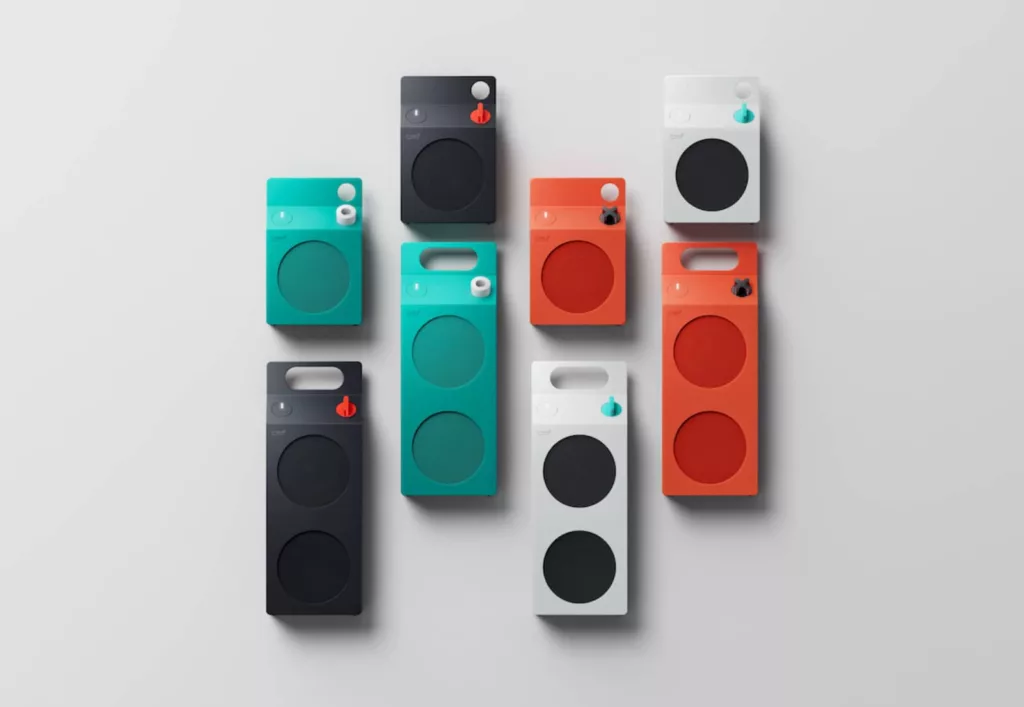
Sonos now has three wireless speakers covering little, big, and somewhere in the middle. Is the Sonos Play a weird middle child, or a success you have to own?
Stories can teach us many things, and one story that could inspire how we pick and choose technology stems from three beds and three bowls of porridge. You probably don’t need to think too hard to see where this link is, but when you’re given three choices, you’re always going to choose the one that fits best with you.
Choices matter, because without them you’re typically shoe-horned into being happy with something that matches a specific set of requirements.
Things can be pretty similar in technology. With gadgets typically offering not just one choice, but many, a middle-ground option is normal for budgetary reasons, allowing companies to dabble with giving a mid-way point between cost, capability, and convenience.
These mid-points aren’t always as good as their bigger sibling, and they’re not always as cost-effective as the least expensive of the bunch. Instead, they offer people the chance to spend less and still get more, becoming the perfect bed or the perfect bowl of porridge in the classic Three Bears story.
Of course, there are always more choices simply because there are lots of brands to choose from. You’re no longer picking just inside of one set of bears, but rather a whole bunch of different animals. But inside the brand, there’s a real bed-and-porridge test to work out which device suits you best. And in the world of Sonos, portable speakers have begun to follow a similar pattern.
While Sonos has largely been a company building speakers specific to rooms and volumes of sound, its approach to portable and wireless speakers means it now has a similar test of what fits best for your needs.
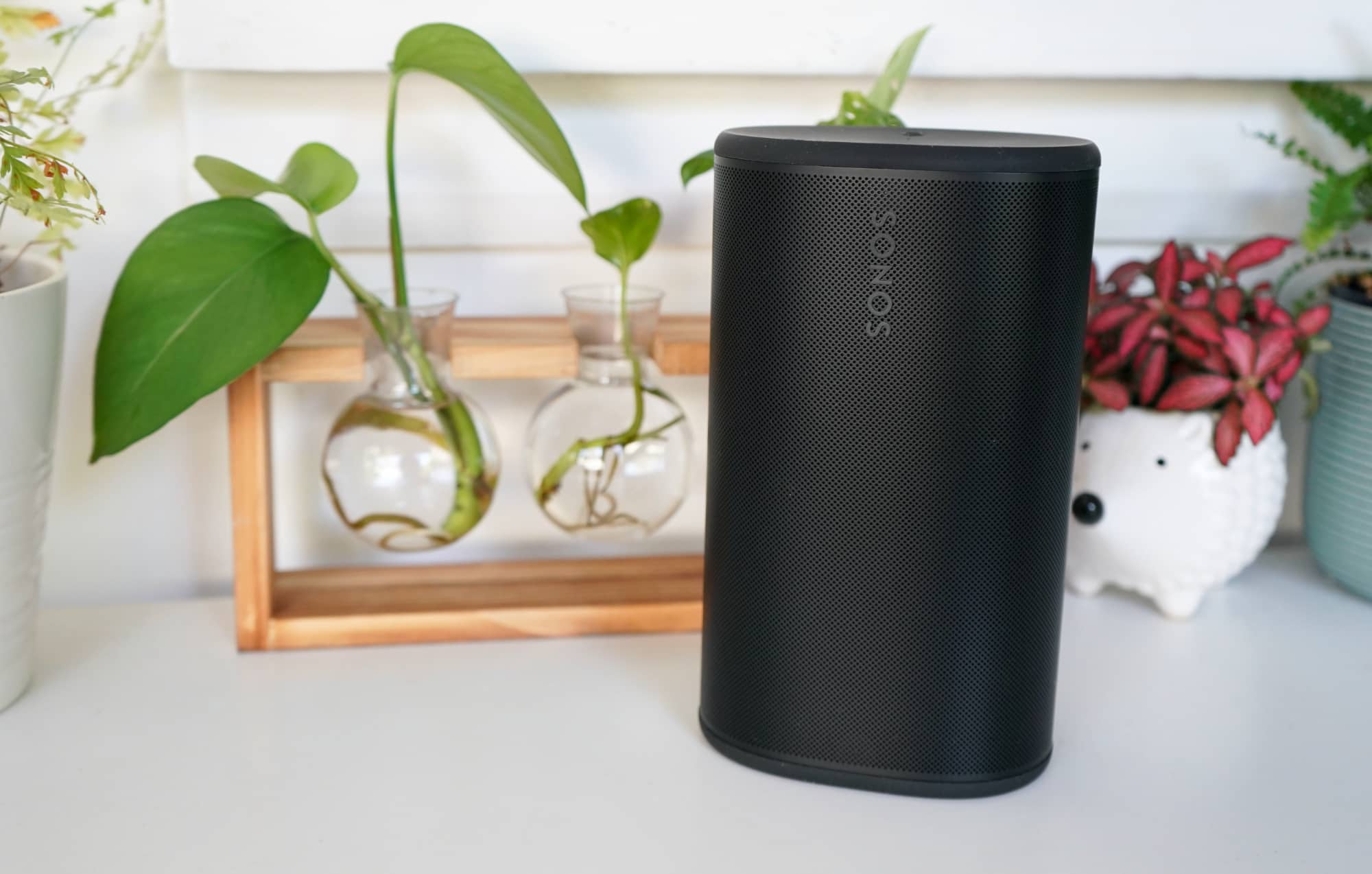
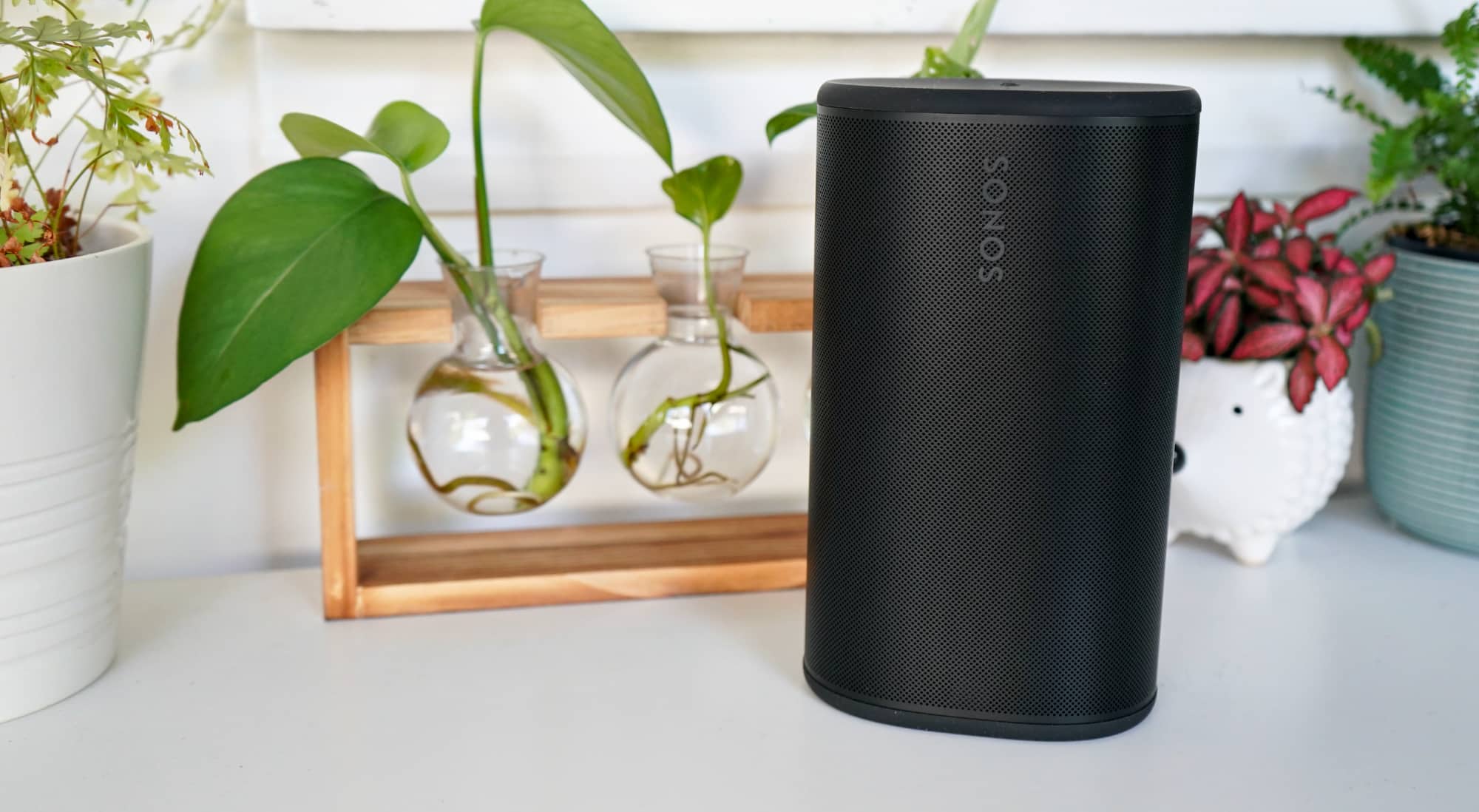
Smaller than the room-specific Era 100, but offering a similar approach to sound under the hood, the Sonos Play is not what you might expect it to be. Rather, it could well be the Goldilocks of the Sonos Bluetooth range: not too big, not too small, but just right. That’s the idea. Does it succeed?
Design and features
If you were expecting a new middle ground speaker from Sonos this year, you might want to buy yourself a lottery ticket. This one surprised this reviewer greatly.
The compact Roam is still around now in its marginally upgraded Roam 2 successor, and the large Move has also become the Move 2 in recent years, but there’s still clearly room for something in the middle. That is where the Play goes, a mid-range option for someone who doesn’t want something too small or too big.
The Sonos Play is basically the Goldilocks of speakers, sitting in the middle where it can be just right. Or that’s the idea, anyway.
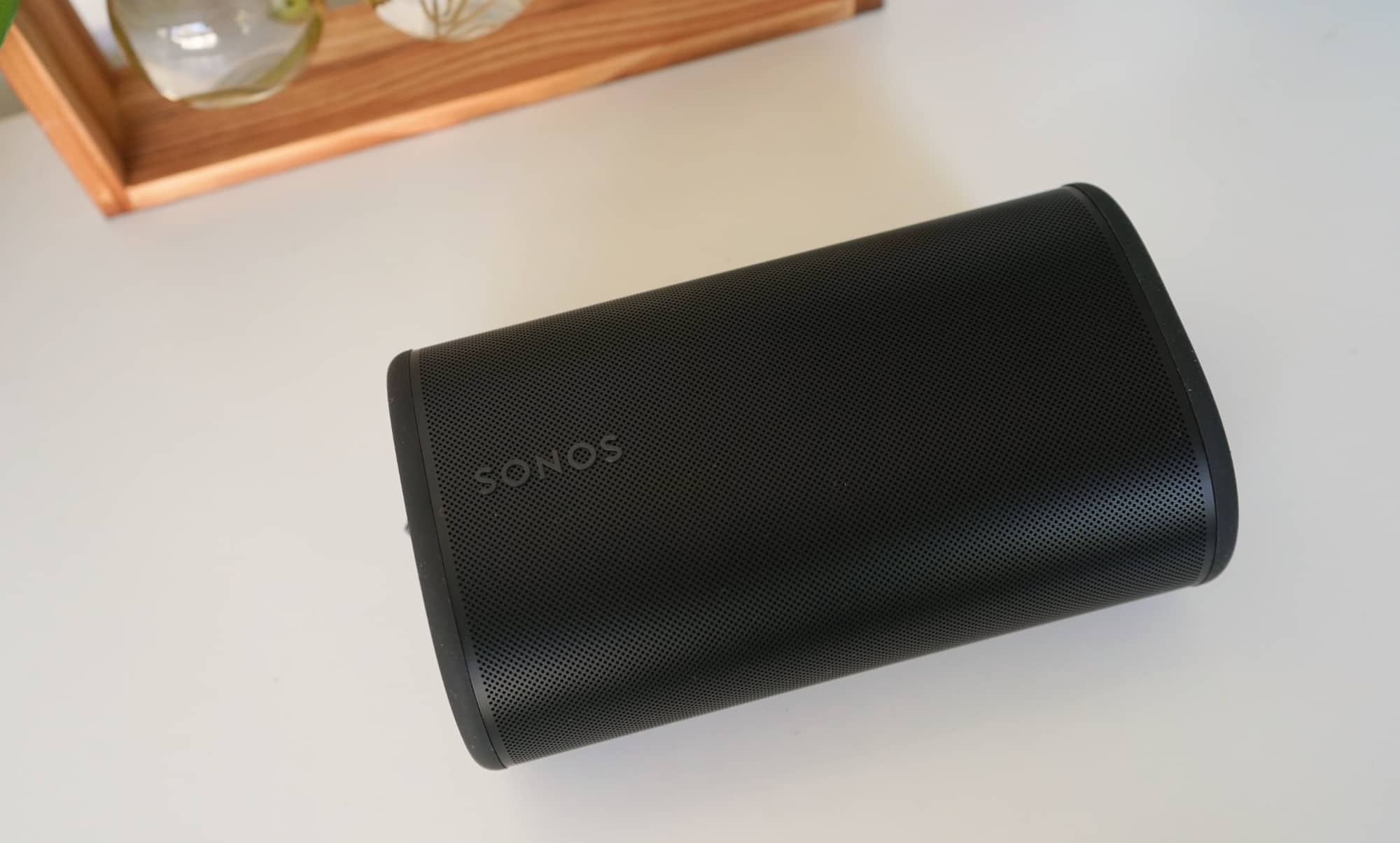
Under the hood, the speaker includes one midwoofer, two force-cancelling passive radiators, and two angled tweeters with waveguides, with the design focused on a 180 degree coverage of sound. The combination of parts means you’ll get lows, mids, and highs aimed at the front and sides, but less so at the back and top.
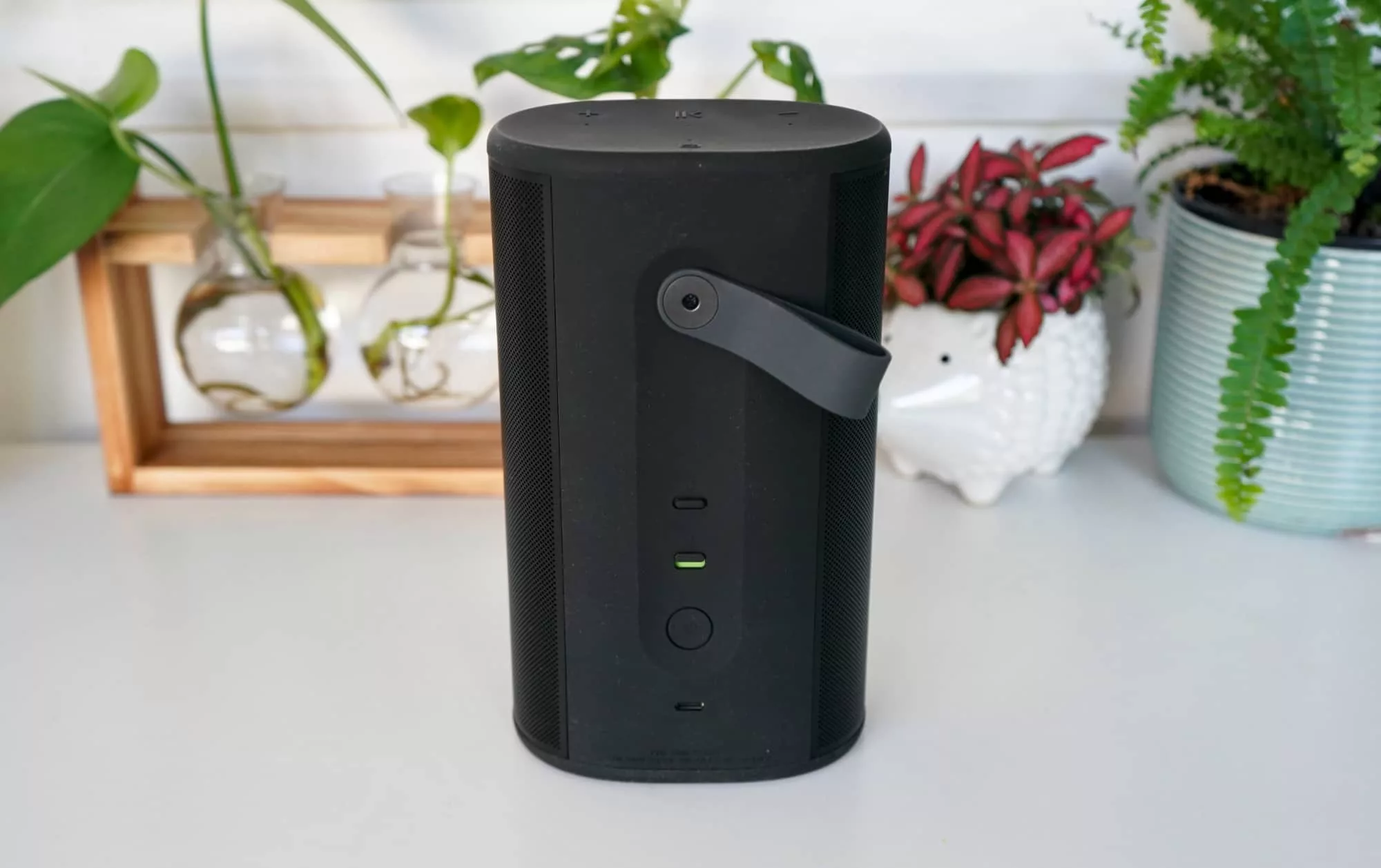
Processors work under the hood for music, as does a battery capable of handling up to 24 hours, charging using a wireless charger Sonos ships with the Play, while you can also plug in a USB-C cable if you need to.
The speaker also sports a water-resistant IP67 protection rating, meaning it’ll survive more than the chance encounter with water and dust and dirt, while the speaker can also act as a power bank when plugged back into a phone, or even as an input for other sources when using the Sonos Line-In Adapter.
There’s flexibility here, with support for wired line-in, wireless Bluetooth, or just fitting in with the rest of the Sonos app and ecosystem of speakers. You can also expect a microphone, with an automatic TruePlay feature tuning the sound to match the surroundings.
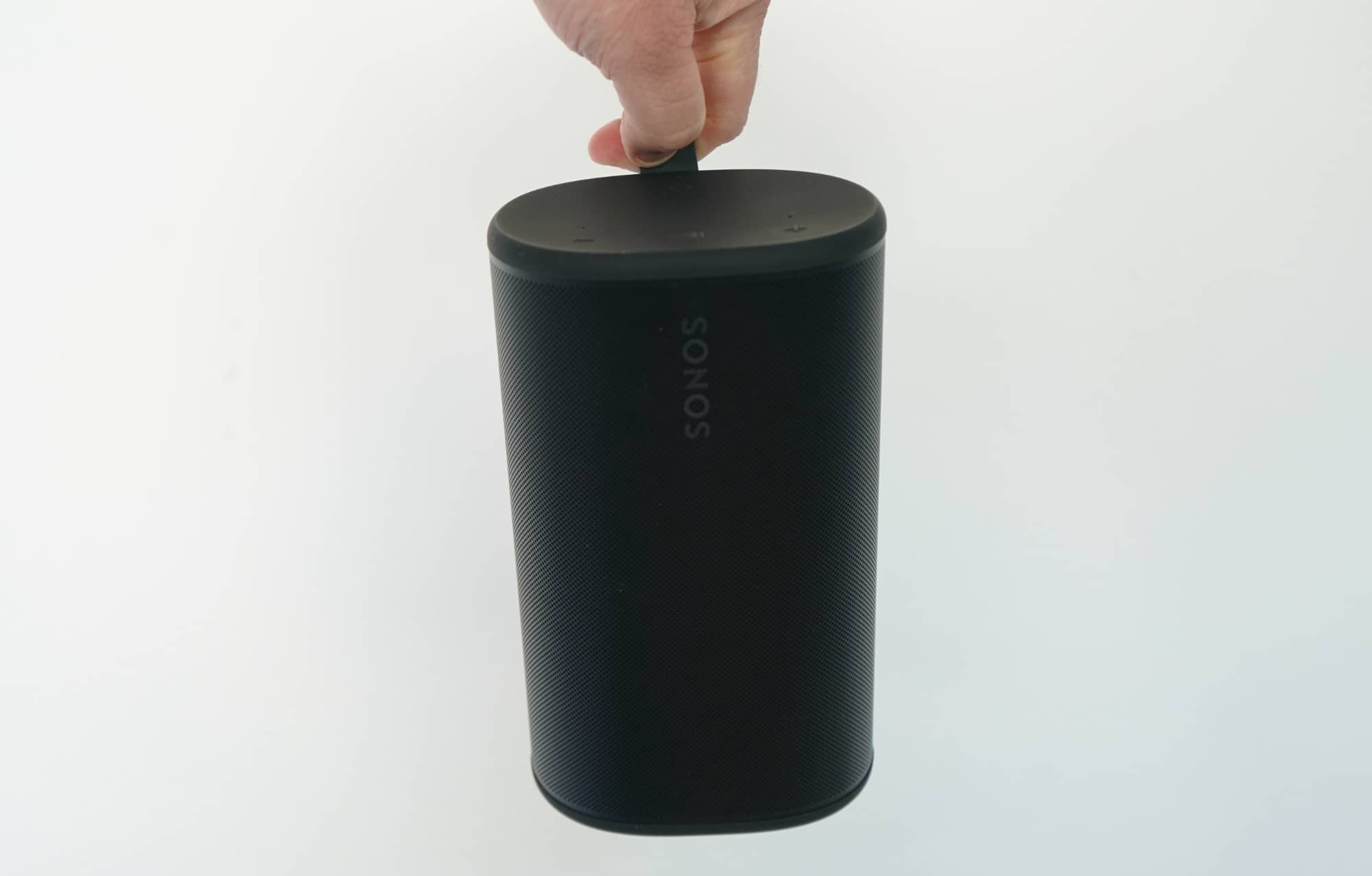
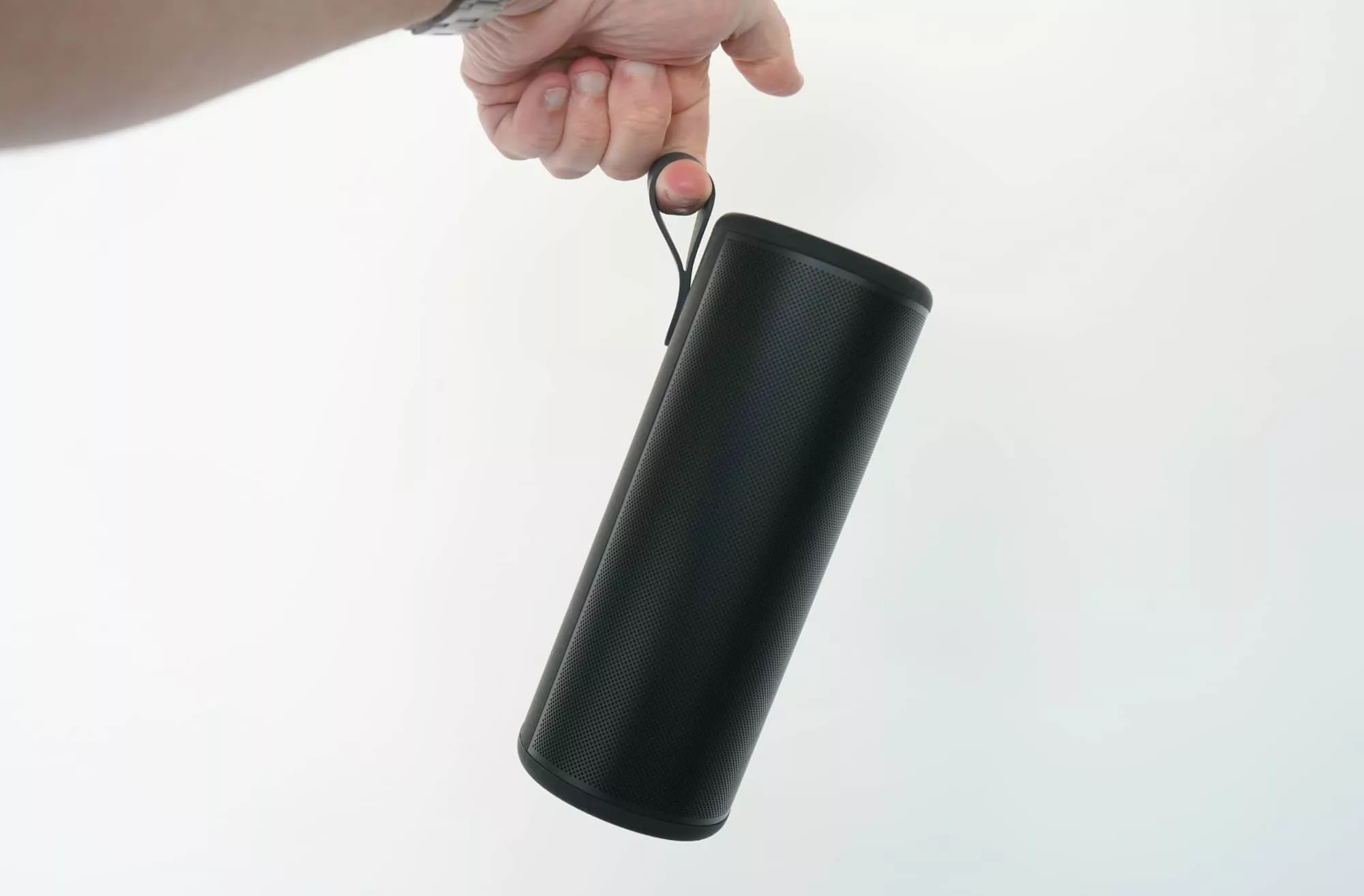
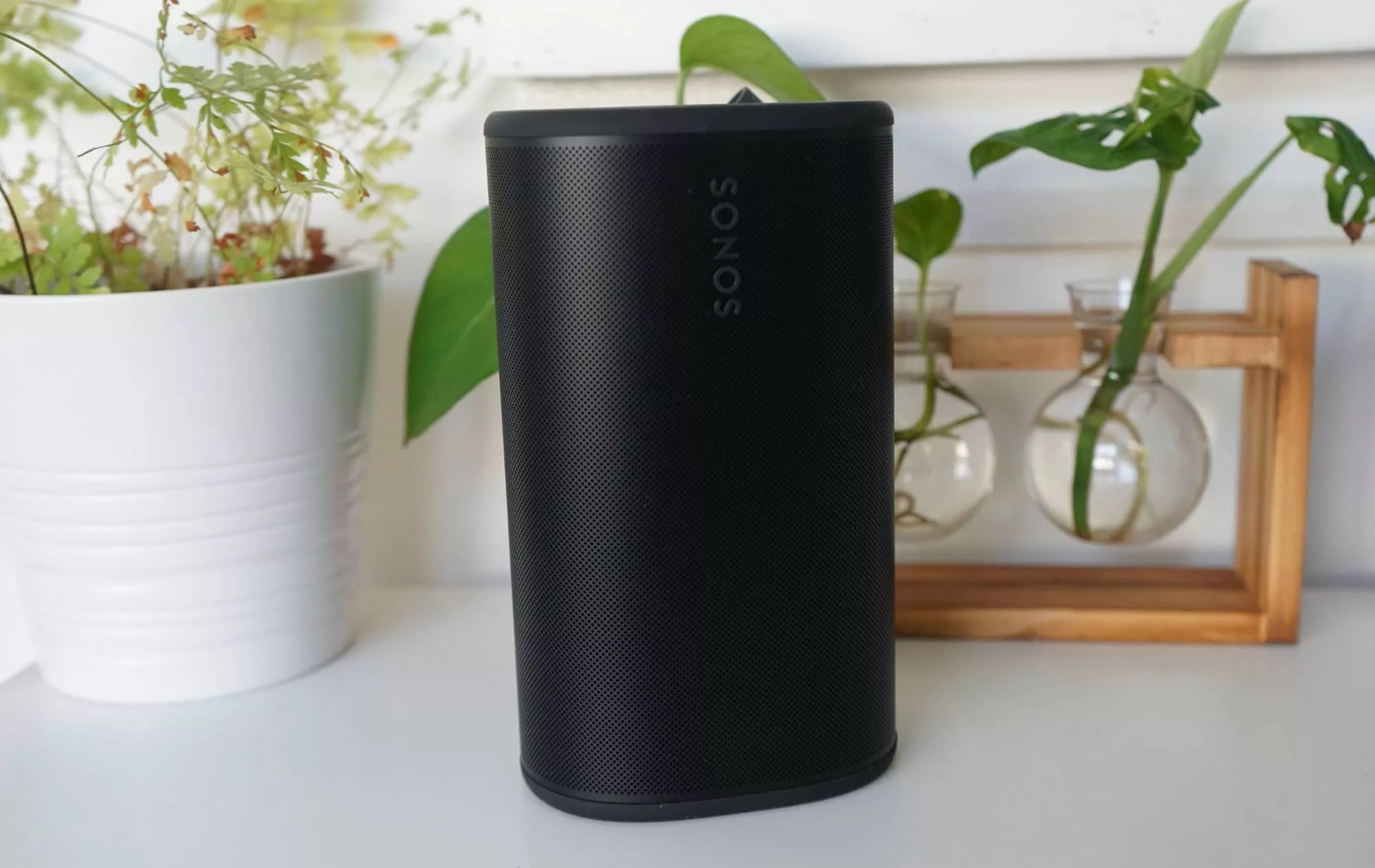
Finally, there’s a little carry loop at the back, giving you a way to carry the speaker on your fingers, or simply strapping it to your bag.
In-use
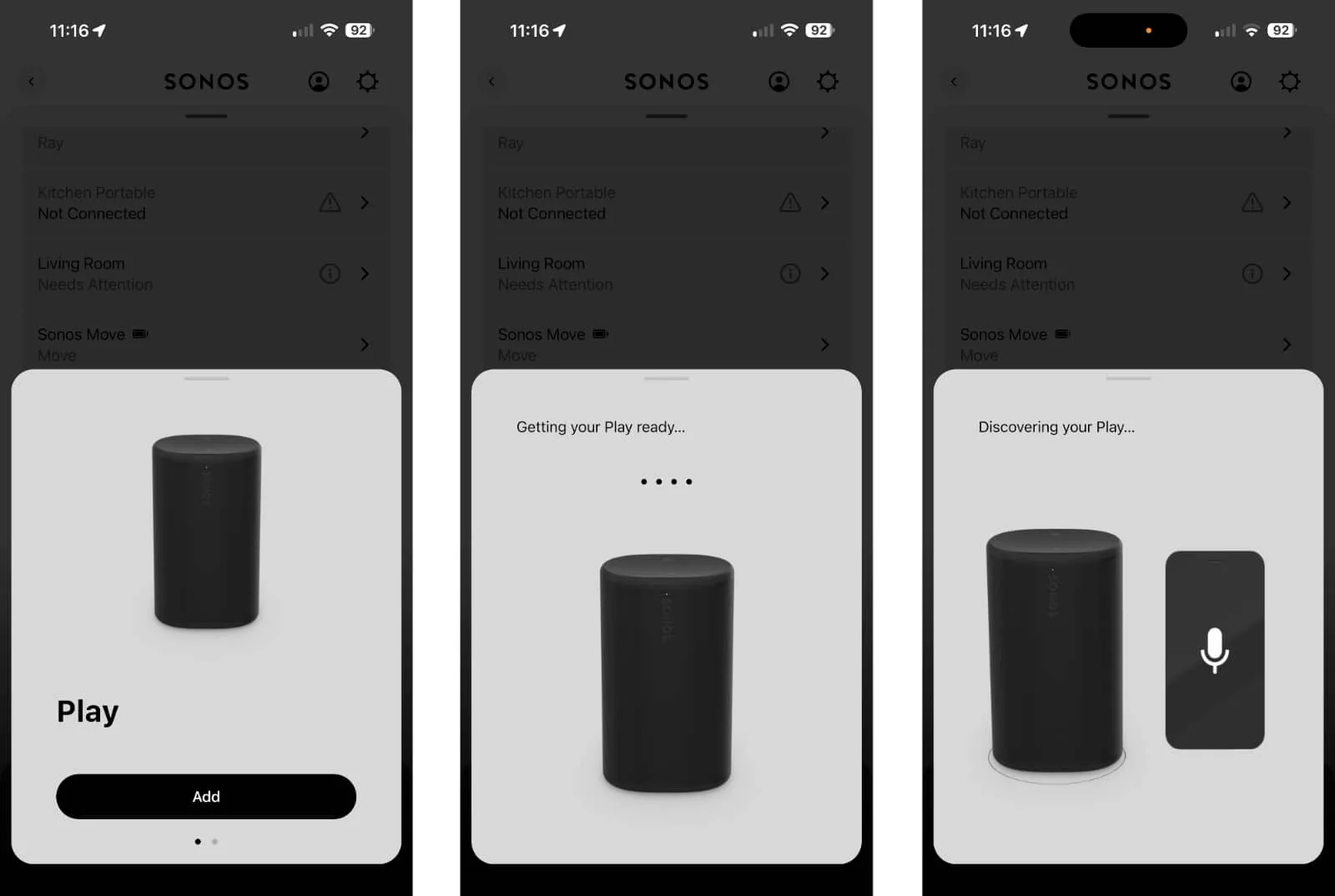
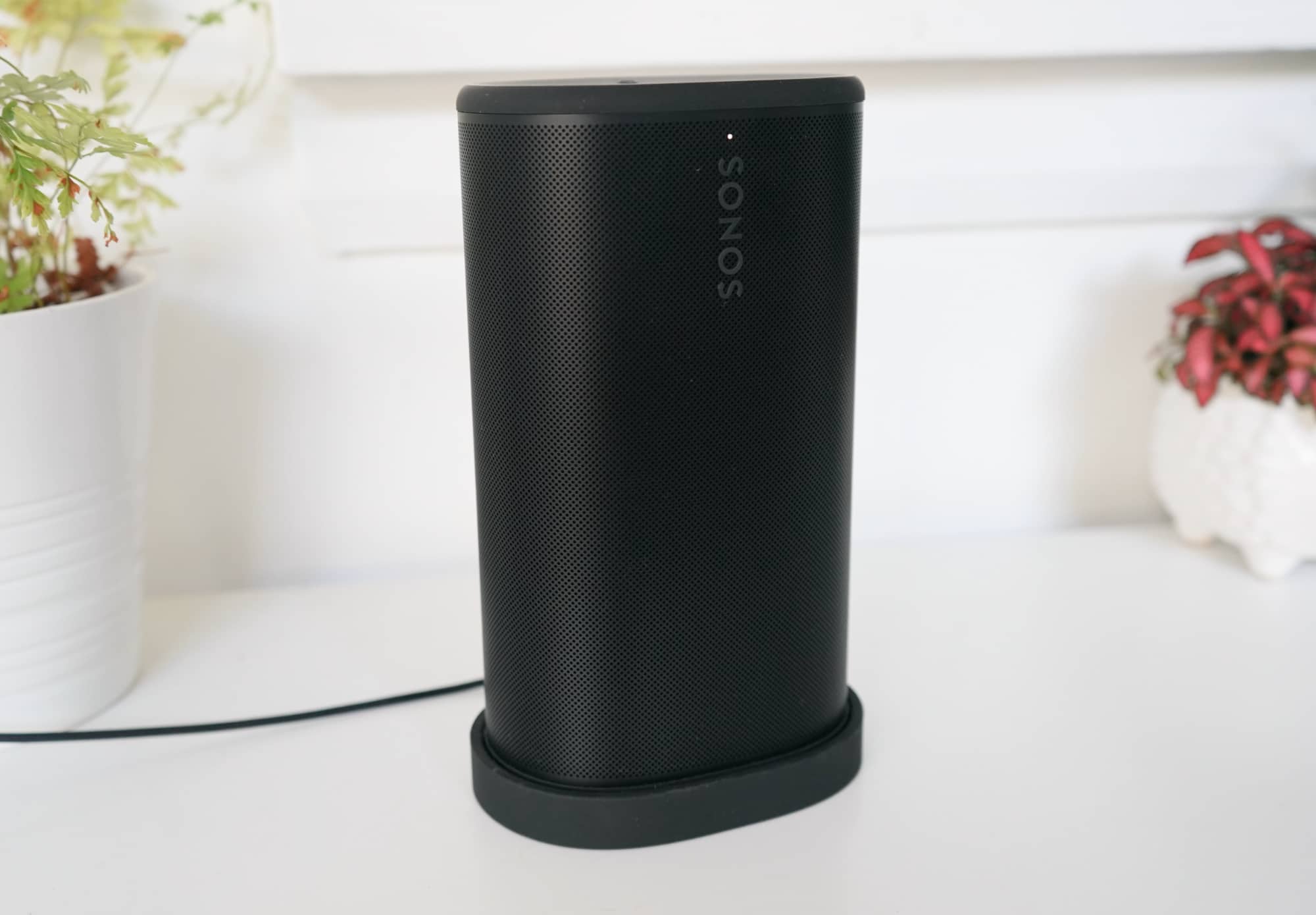
Grab the Play from its included charging pad, a nice inclusion that feels more solid than the ring-style we saw in the Move, and you’ll be able to start listening fairly quickly. You may actually need to turn it on using the push button at the back, as Sonos typically turns the speaker off when not in use.
When powered on, though, it’s fairly easy to operate. If it’s included in your Sonos system, it’s just another speaker to send audio to, either individually or as part of a multi-room experience. Alternatively you can set the speaker into a Bluetooth connection and just use that.
Sonos has also provided support to connect multiple Play speakers together, supporting up to three additional speakers made from either Sonos Play or Move 2 speakers, totalling four in a bit of a mix.
You can also trigger the controls up top if you need some quick-thinking physical pausing and playing, with the track controls up top flanked by volume down and up.
Performance
The most important aspect for speakers will clearly be how they sound, and for that, we turn to the Pickr Sound Test, which you can hear for yourself (and use with your own headphones and speakers).
As usual, that starts with Tycho, which delivers a decent sound with strong bass that’s certainly punchier than we expected, but misses out on the guttural response. The drop from Tycho’s “Glider” is hardly pronounced in the way we expect, but the song is otherwise excellent, and it’s much the same with Daft Punk.
Things sound similar listening to pop, where the push from the highs and lows are clear, though the balance is definitely better when TruePlay is switched on.
For those playing along at home, TruePlay is the Sonos microphone-assisted audio optimisation system that in the home theatre world works best when you wave your iPhone slowly against the speakers playing a sequence of sounds.
In the Sonos Play, things work a little differently. Instead of moving your phone about, the speaker does its thing automatically, testing sound as its bounces off surfaces, and optimising the audio in real time.
The real-world response means the balance is turned up a bit, and even some of the warmth, delivering better sound than without. That slightly stronger bass throughout tracks so far becomes a little more restrained with TruePlay powered on, and the speaker arrives as some semblance of balance. It’s much better armed with TruePlay than without.
And it’s a balance you can hear: the sound in Marvin Gaye’s “Ain’t No Mountain” feels a touch better by not blowing out the lows, coming across warm, while Maroon 5’s “Animal” reigns in the bass for that sense of balance we crave.
Rock delivers much the same, though can feel too restrained at times, the bass pulled back alongside the mids, leaving a little muddle in the music of Muse, for instance. Most tracks sound great, though, with rousing renditions, solid strength, and clusters of clarity. All the alliteration you can fit into a paragraph, and then some.
It’s especially solid when the music is mostly instrumentation with excellent mixing, such as with old rock, jazz, and classical. The speaker really comes alive when faced with the expert engineering of David Bowie’s classics and the warmth of instrumentalists like Dave Brubeck and Miles Davis giving tracks their all.
Unsurprisingly, though, it all really depends on what you’re playing. However, things get noticeable better when TruePlay is engaged. It’s not that the standard sound of the speaker is particularly bad, but more it sound better when the automatic balancing of Automatic TruePlay is powered on and being used.
Similar to an Era
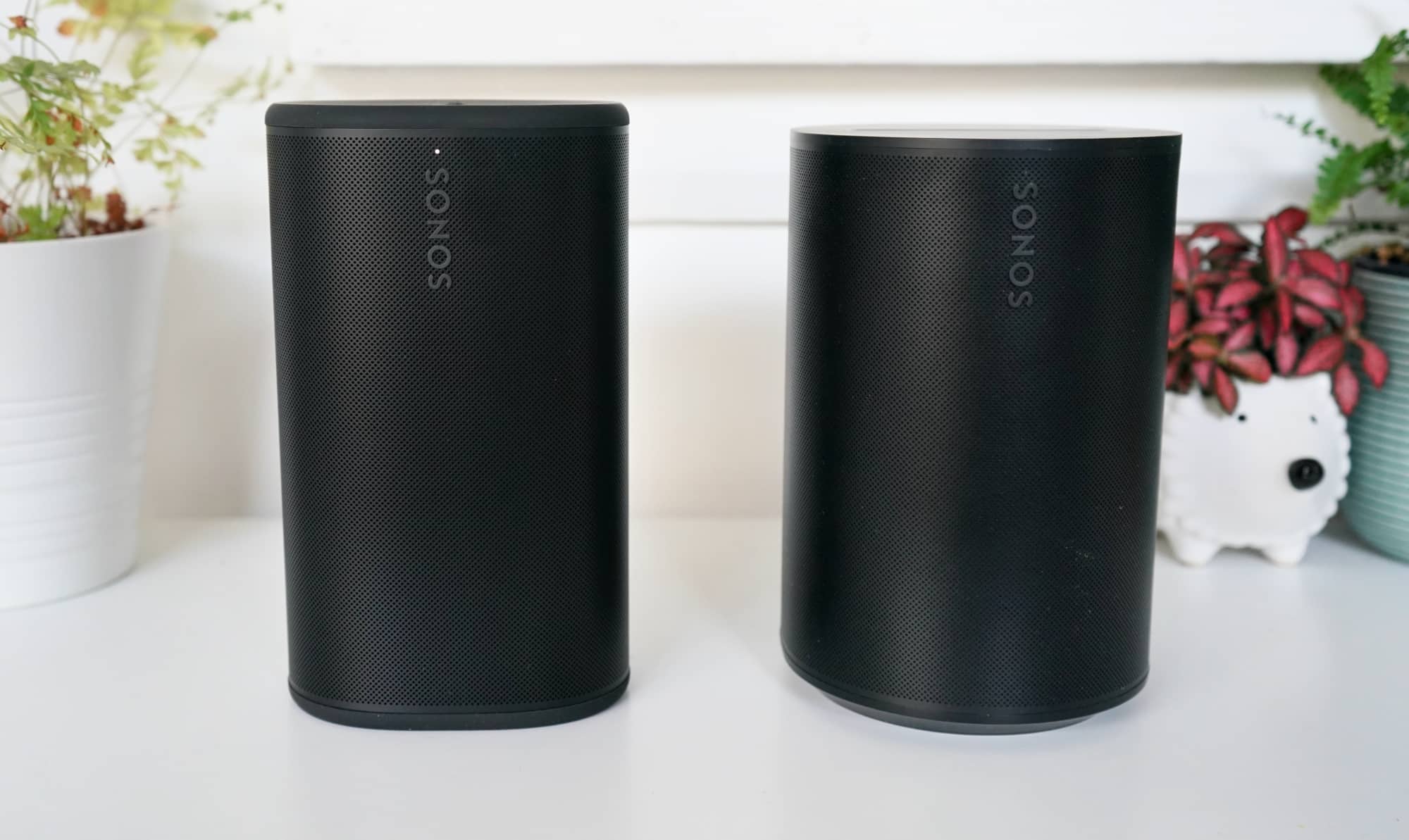
The bigger problem may be the competition from within. You see, this speaker can sound a lot like an Era 100, albeit one that you can move around.
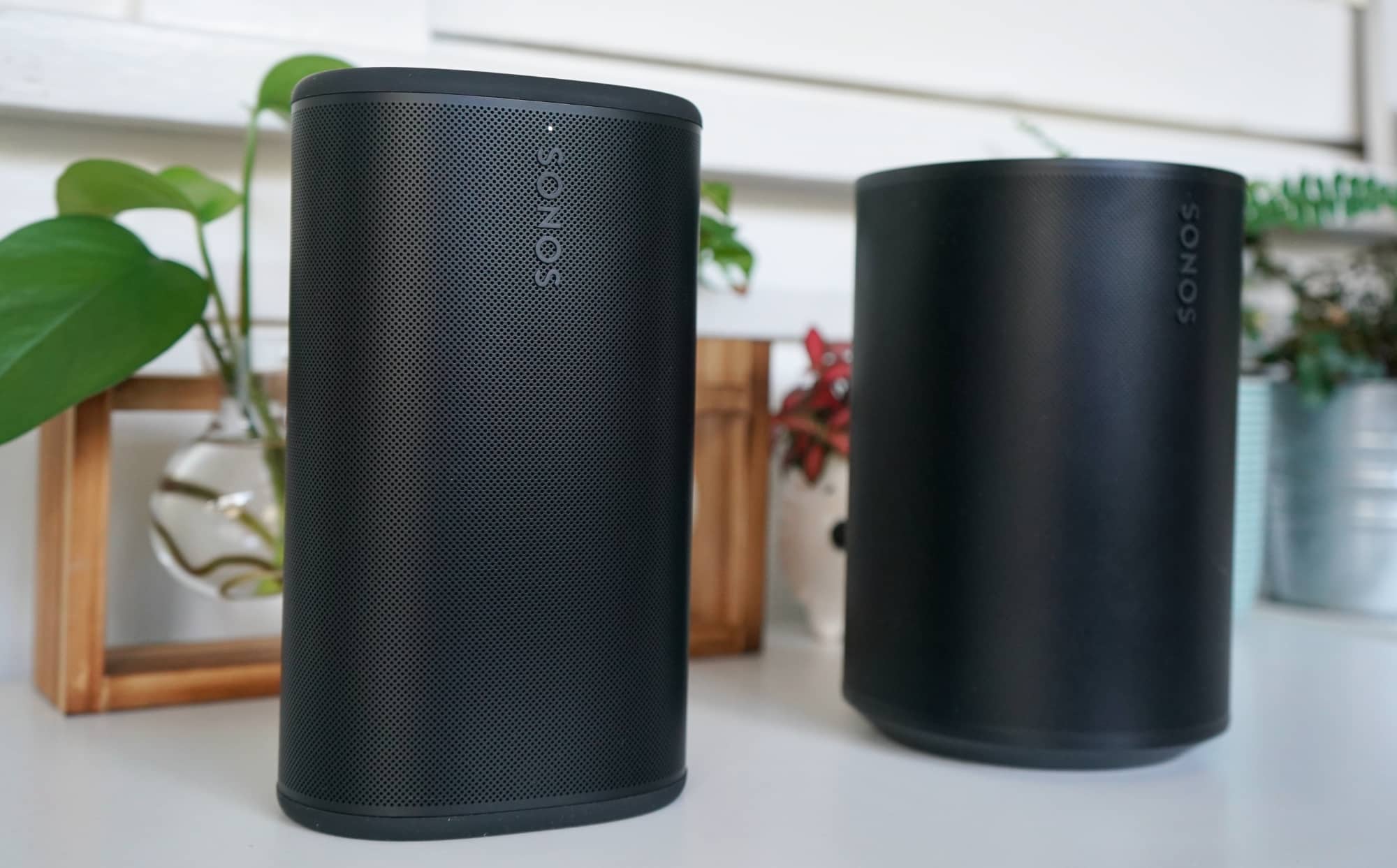
The Sonos Play is technically a little taller, while the Era 100 is a lot wider and rounder. That alone should tell you that the insides of the Era are very different, but there are definite similarities: the sound is similar, the balance is there, and there’s a good amount of volume that matches the size.
By comparison, though, the bass on the Play can feel a little restrained, letting you down just as you need that big oomph, while Automatic TruePlay attempts to balance things out. That can come out with not always as even-handed dynamics.
Sitting next to each other and shifting between Play and Era 100, the vibe is definitely similar, just not the same. It’s almost like a new Era, albeit one made to go, with a caveat or two in the mix.
Battery
One of the more admirable features is the battery life, achieving roughly 24 hours of use.
That’s not too shabby for a speaker able to push out this sort of volume, and there are even two ways to keep it charged, using USB-C for efficiency or simply using the wireless charging at the base.
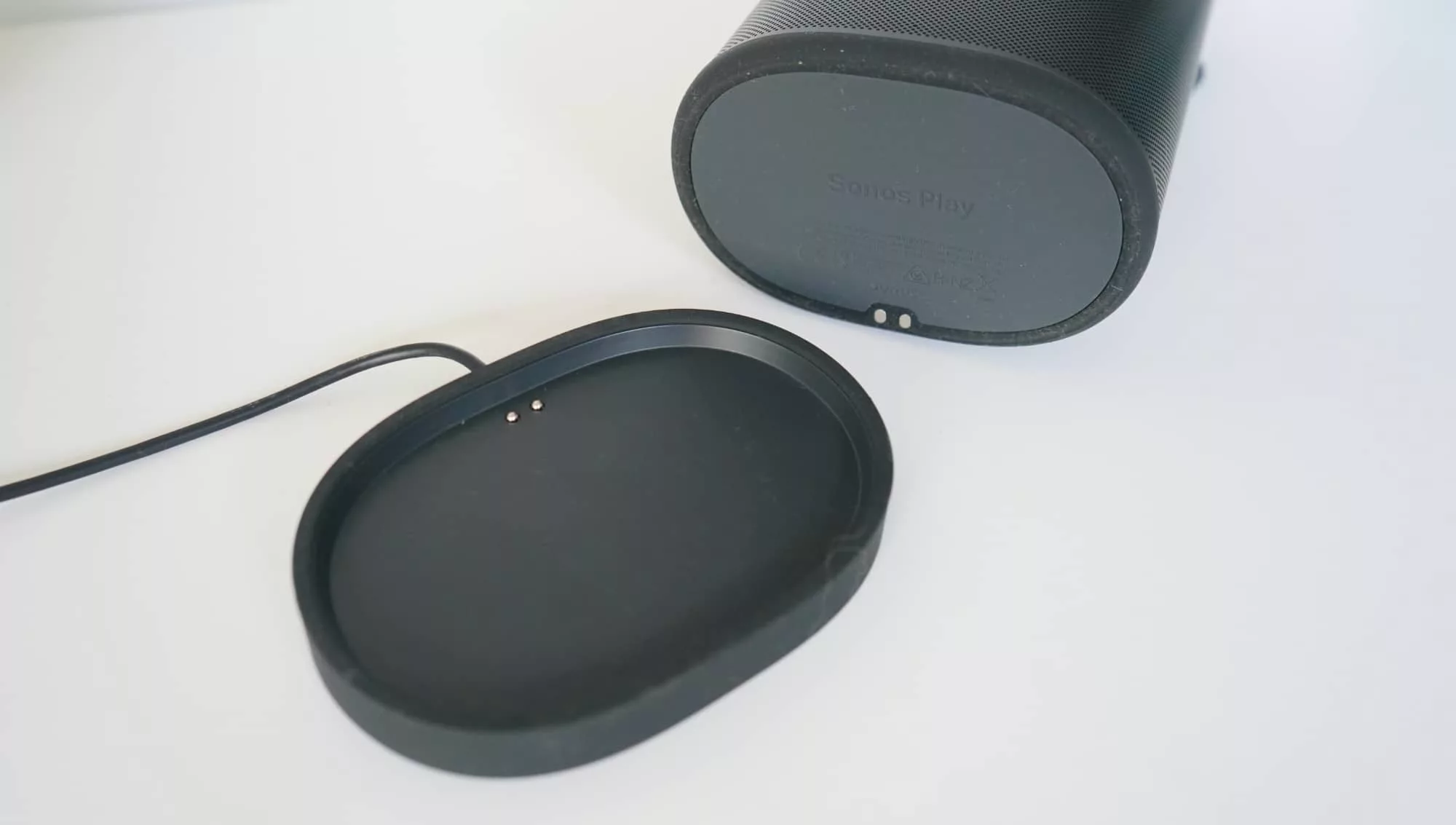
It’s not technically wireless in the way your phone handles things, though; the Sonos charger is specific and uses a small set of metal jumpers at the bottom, so it’s more of a cordless charger than what most of us would call a wireless charger. Semantics are fun that way.
Hopefully you won’t have to think about it, though. The maximum of 24 hours wasn’t far off the mark, and we found we didn’t need to think about the battery in the Sonos Play throughout its use.
If you did need to give it more life in a pinch, you probably have a sizeable power bank you can feed it. You might even choose to take some of its battery to top up your phone, which is also an option.
Value
But at a hair under $500, the Sonos Play just can seem a little expensive for what you get: an almost Era 100 with a battery built into the design.
In fairness to Sonos, $499 is actually a decent price to pay for a speaker this big. While some speakers in this size bracket cost under $400, many are also over $500, so the $499 tag of the Sonos Play is actually quite sound.
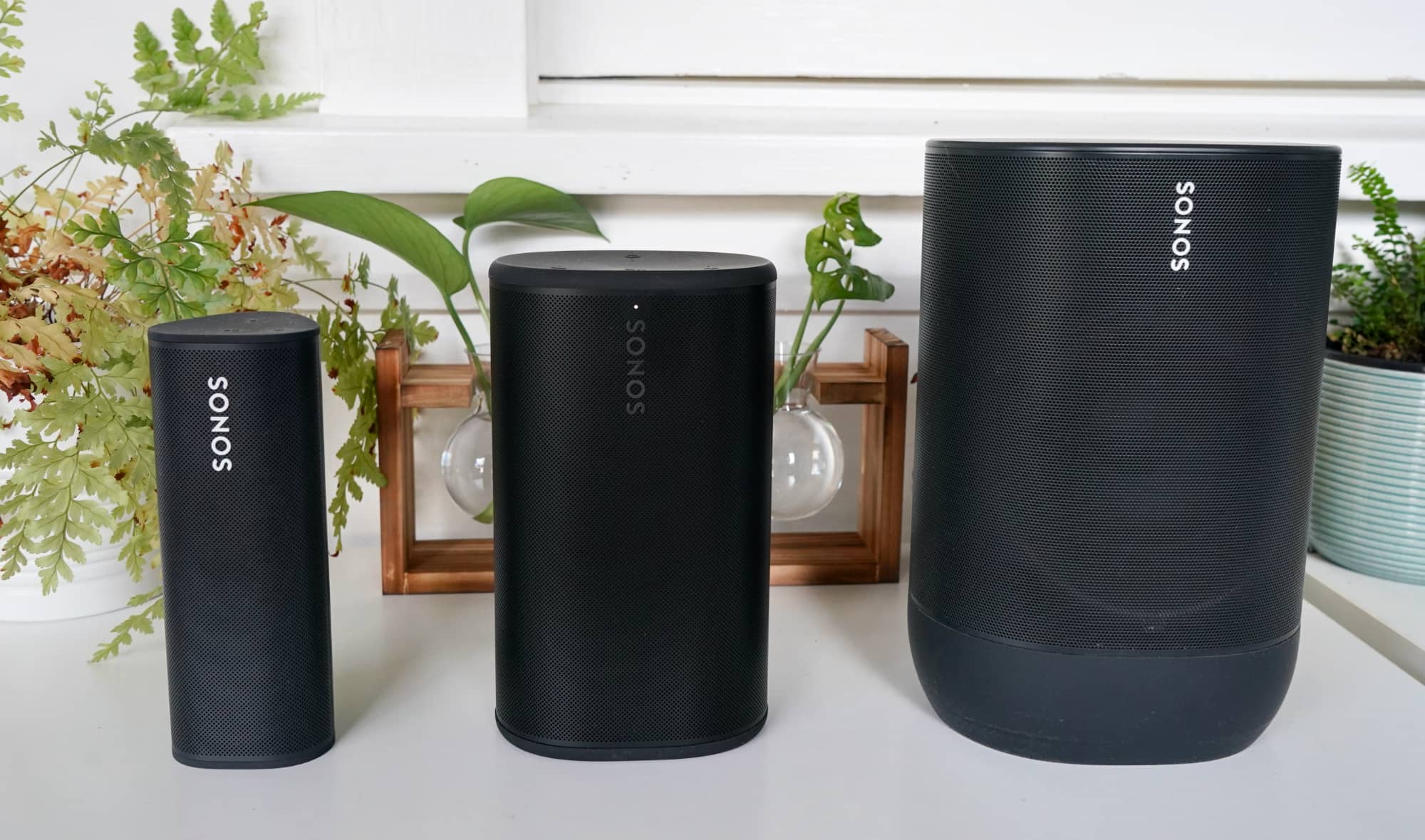
It’s a speaker that isn’t quite as big as the pricier $799 Move 2, but somehow gives you a little more than the $299 Roam 2.
What needs work?
But that price is still arguably the biggest hurdle, because it can feel like more than it should be when compared against the speaker the Play feels more like: the $319 Era 100.
While these speakers are clearly different in portability — one has a battery and the other does not, requiring a wall plug to work — and the speaker architecture is also very different, the sound is familiar.
The Era 100 is technically offering a bigger sound with a slightly taller and heavier build, while the Sonos Play is wireless, water resistant, and a whole lot more portable. The cost difference is staggering, too, with a full $200 between them and their reasons for existing very different.
Really, though, the similarities in design and use make it difficult to vouch for the Sonos Play, which does intrinsically feel like an Era 100 with a battery.
mIt’s easily the biggest sticking point for the speaker, which sounds great most of the time, provided the sound balancing tech TruePlay is working.
Really, the question you should be asking isn’t whether the Sonos Play is worth what you pay, but more what your plans for the speaker are: do you plan to take the speaker outside and want it to be portable and water resistant, or is it largely going to sit in its spot in a room or hall delivering sound? If it’s the former, the Play makes sense, while the latter really has you working from Era territory.
What we love
Despite the big question mark looming over price, the Play is actually quite a decent speaker and comes with some of the extras Sonos is known for
Features like line-in support on the Play ends up a bit of a surprise. It means if you have the official Sonos 3.5mm to USB-C converter, your Play suddenly becomes a speaker for another media gadget, such as a record player or a projector. It’s a great way to expand on what you have.
It’s a better feature than say the little strap at the back, which is a cute addition, though doesn’t feel like it would be as useful because it lacks any real strength. It almost needs to be easily interchangeable and support something more like a carabiner clip of sorts.
While not perfect, these inclusions give the Sonos Play something not every speaker achieve: versatility.
Yes, a speaker is for playing music and podcasts and the like out loud, and 90 percent of the time, it’s going to be content from your phone. But the fact that the Sonos Play can take a feed some another device or be used with services inside the Sonos app, working with a multiroom Sonos system, all of that helps to make the Play that little bit more versatile.
Sonos Play vs the competition
“Versatility” isn’t a word we typically associate with speakers, either. But there are speakers that compete on versatility by simply integrating some of the same features Sonos is using here.
Take the Bose SoundLink Max, easily one of the best portable big speakers around, and one that can take a 3.5mm connection without the converter cable, just by using the plug port on the body. It, too, has the carry strap built in and manages to feel even better. But it’s also $100 more for a big speaker made for the outdoors, and even the inside a bit, as well.
Also similarly priced is the Marshall Kilburn, a speaker designed for inside and outside that looks like an amp and adopts a totally different vibe.
By comparison, the LG xBoom Bounce is similar but smaller, including an equally silly strap (possibly worse) and a lower price of $299, but the app experience is a disaster and the sound could be better, too.
And then there are the options from Ultimate Ears and JBL, which tend to provide solid sound and water resistance in similar sizes, but for usually between the $399 and $499 price points.
If that doesn’t make you feel a little like Goldilocks, a comparison we made earlier with Sonos’ own gear, we’re not sure what will.
Final thoughts (TLDR)
There’s definitely a good speaker in the Sonos Play, and it very much tries to nail that storied idea of being just right. The critical question is more whether it manages to be just right for you, and frankly, that will come down to where you want to use the speaker.
If the Sonos Play is basically going to be left in a room with the occasional second use going out and about, you might be better off getting an Era 100 and a second Bluetooth speaker. It just might complete your Sonos system better.
But if your movements and sound are a little more all over the shop, and you need to take your speaker in more places — out on a trip, over to the patio or balcony, to friends, to picnics — and you also plan on using it at home, the Sonos Play makes more sense. It’s not just a potential answer to a Goldilocks question, but a great speaker in its own right.
We’d still argue the Move 2 is a bigger and better speaker, while the Roam is more compact and just as versatile, but if you need something in that curious middle-ground, the Sonos Play is worth checking out. Recommended.