
Quick review
The good
The not-so-good
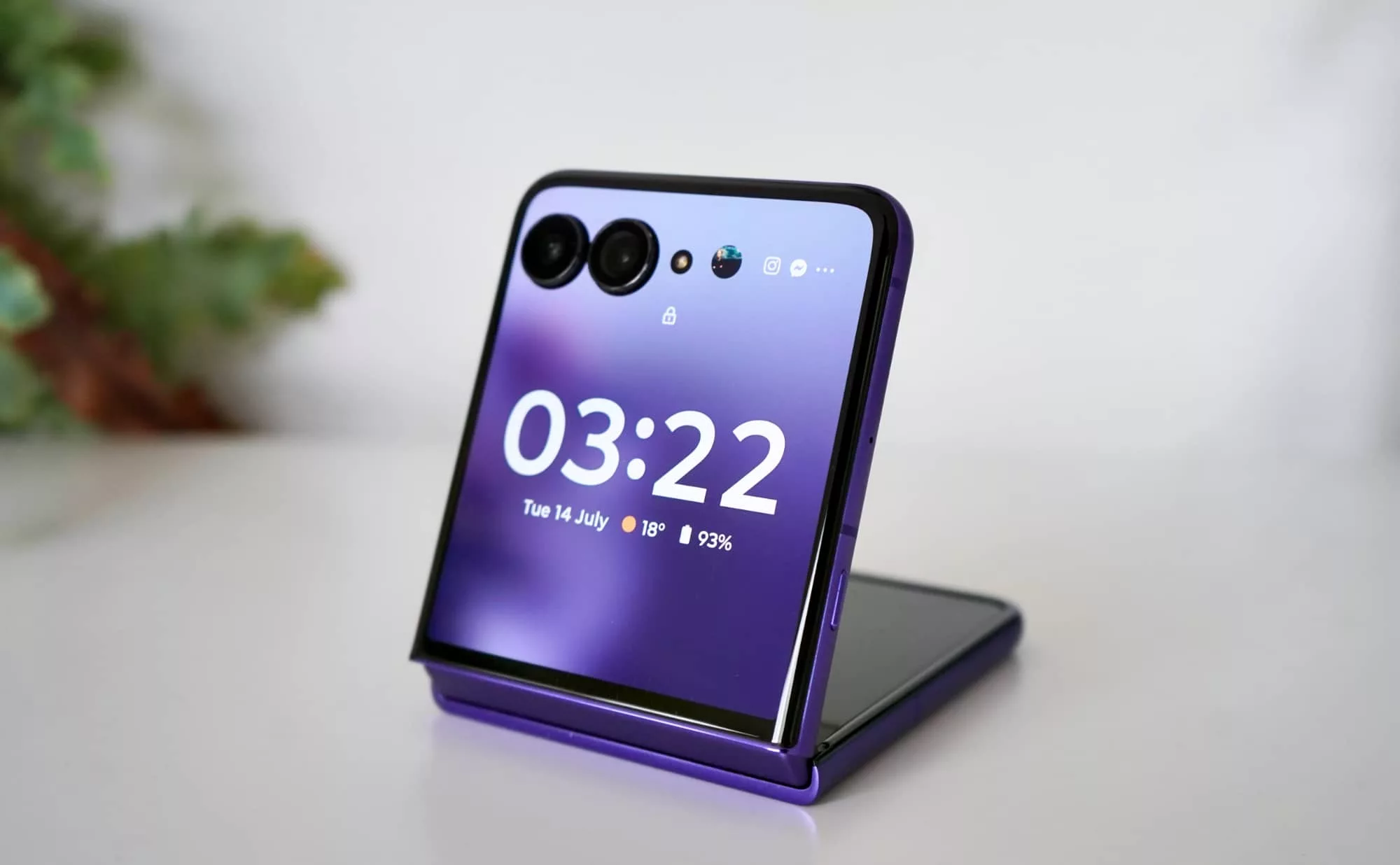
Small phones aren’t all big news anymore, but a minor refresh in the Motorola Razr 70 Ultra could give fans of tiny phones something to keep them going for a while.
Big phones are clearly bigger than they’ve ever been, but spare a thought for people who just want something smaller. Who desire something more compact.
What they want isn’t easy to find anymore. The very idea of a mobile that can’t be seen is also one that can’t be easily found, meaning they more than likely need to settle for something larger than they’d like.
There are good reasons why most of the market loves bigger phones, though most of the reasoning comes down to the battery. A bigger screen almost always means getting a bigger battery, and small phones don’t always sell as well. Marry both of those reasons together and you get a bit of a problematic scenario where manufacturers just don’t want to take a chance on the modest miniature mobile.
But Motorola has been taking that chance for a few years now, flexing its foldable screen technology in a design that can be both big-when-opened and small-when-closed.
At the same time, the range revived a classic Motorola line, as the Razr was given new life. It’s actually been one of this reviewer’s favourite foldables over the past few years, though Australia missed out on the premium model in 2025.
We saw the mid-range Razr 60, but the flagship foldable just… stopped.
Good news, though, because it’s back in 2026. Has it managed to get better, or is it simply more of the same?
Design
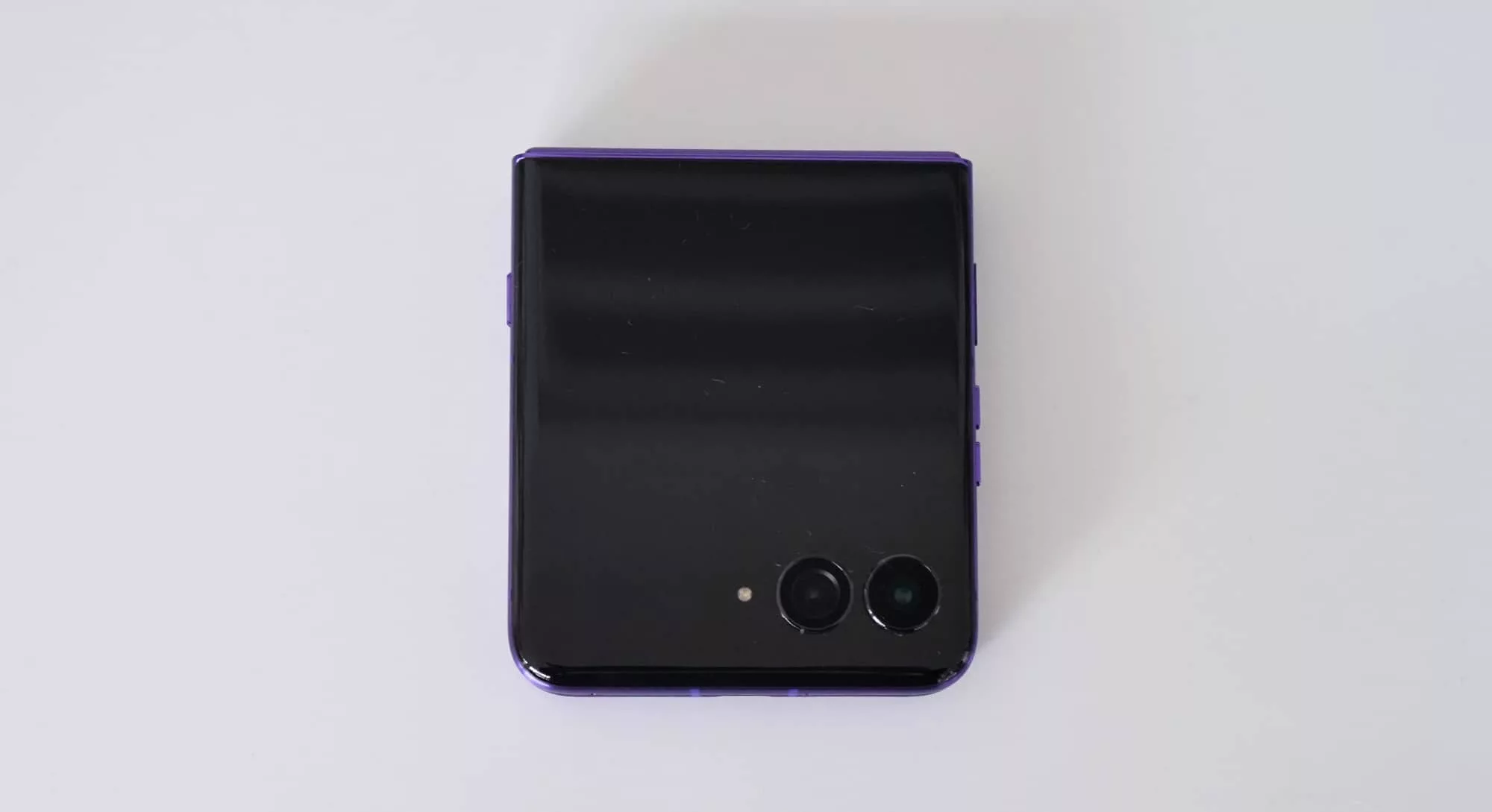
It may have been a couple of years between the models, but that doesn’t mean much needs to change in design. And indeed, not much has.
Motorola’s previous efforts had slightly curvy edges, the Razr 50 Ultra being soft and shiny yet simultaneously chunky, thanks to the fact that it was basically one phone folded over onto itself.
That design logic hasn’t changed, and is largely what the whole foldable flip phone thing is all about: a large foldable screen that folds into a much smaller phone, roughly half the size and almost a square.
The edges are similar on this generation in the 70 Ultra, just a fraction flatter and more matte by comparison.
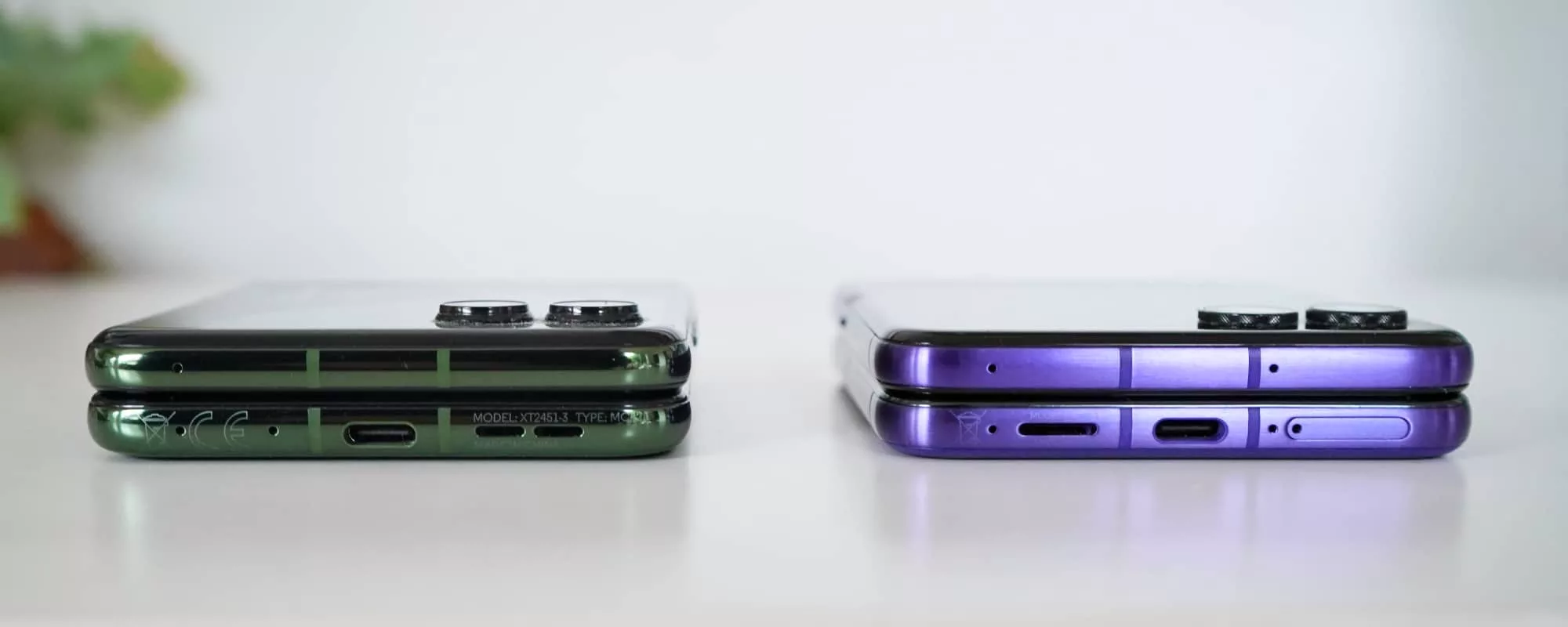
It’s a look that feels a touch more refined, as does the textured back which manages to be almost quilted and easily gripped. The front is clearly glass, the back is textured plastic, and the whole thing measures 7.19mm when unfolded, but a chunky 15.69mm when folded together, ideally for storage in your bag or pockets.
Weighing 199 grams, it’s not exactly too heavy or too light. It’s largely just right, at least for its size. Aluminium is a key part of what keeps it this way, and there’s titanium in the hinge and plastic on the back, making it a neat combination of materials.
Features
Inside this combination of materials sits a Qualcomm Snapdragon 8 Elite, officially the Gen 4 model as opposed to the Gen 5 we see in other flagships. It’s paired with 12GB RAM and 256GB storage in the model we’re reviewing released in Australia, running on Google Android 16.
Two main cameras are found on the phone in the form of two 50 megapixel cameras: one set to a wide lens with F1.8, and the other ultra-wide at F2.0. Another camera can be found above the screen, offering yet another 50 megapixel wide camera again set to F2.0.
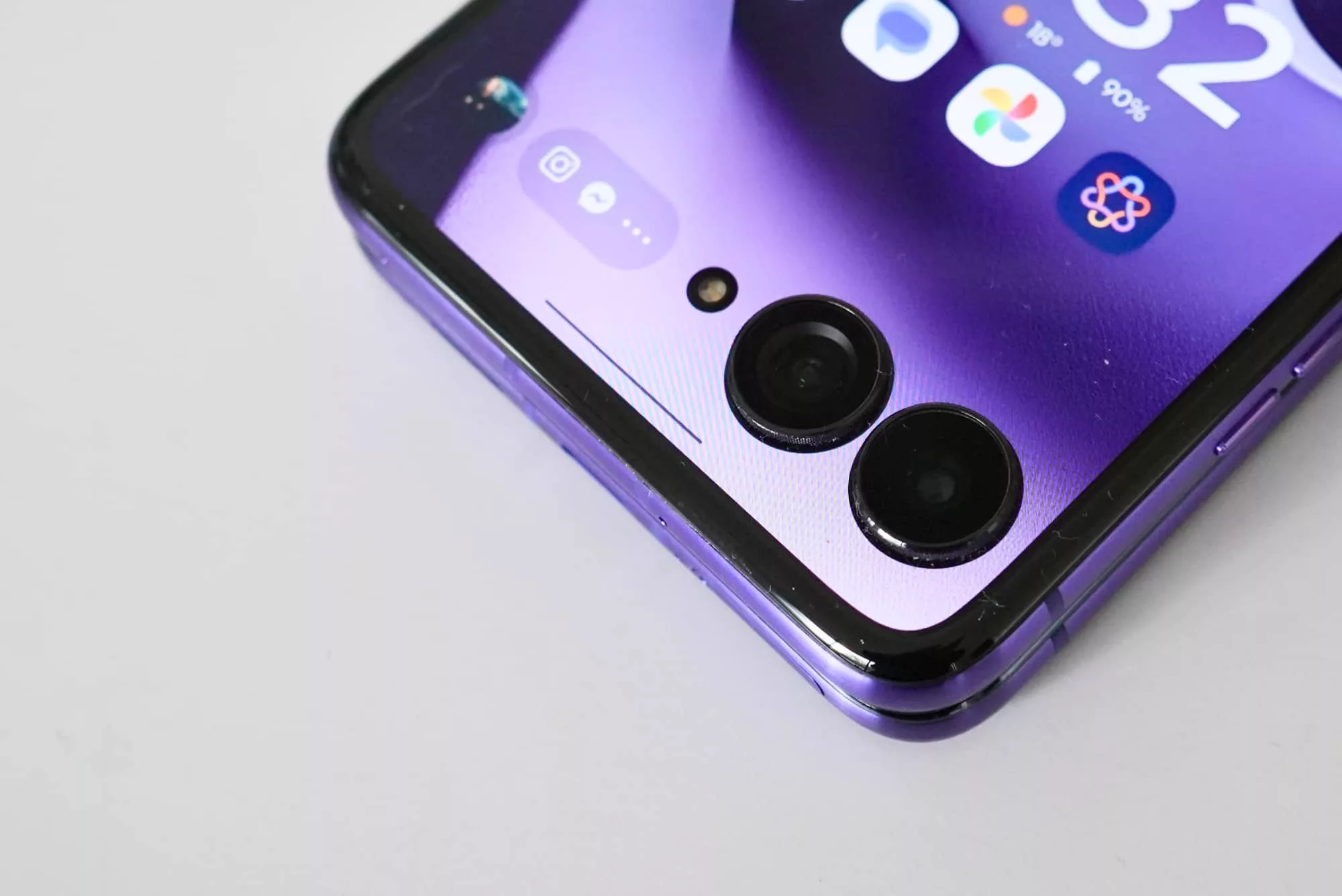
Connections are fairly normal for phones today, offering a single USB-C for charging, data, and if you need to connect a pair of wired earphones, while wireless is catered for using 802.11a/b/g/n/ac/ax/be WiFi 7, 4G, 5G, Near-Field Communication (NFC), Ultra-Wideband (UWB), and GPS. A fingerprint sensor can also be found under the power button on the side, which is flanked by individual volume buttons.
Underneath it all is a 5000mAh silicon carbon battery, supporting both wired and wireless charging.
The Razr 70 Ultra also supports an IP48 water resistance rating, making it splash resistant, though it may not survive a hefty encounter with water.
Display
As is the case with all foldables we’ve seen prior, two screens sit atop all of this, providing both an inner and outer cover screen. Whether foldable phone-tablet hybrid or flip-phone style, you’ll get two screens, and the Motorola Razr 70 Ultra is no different in this respect.
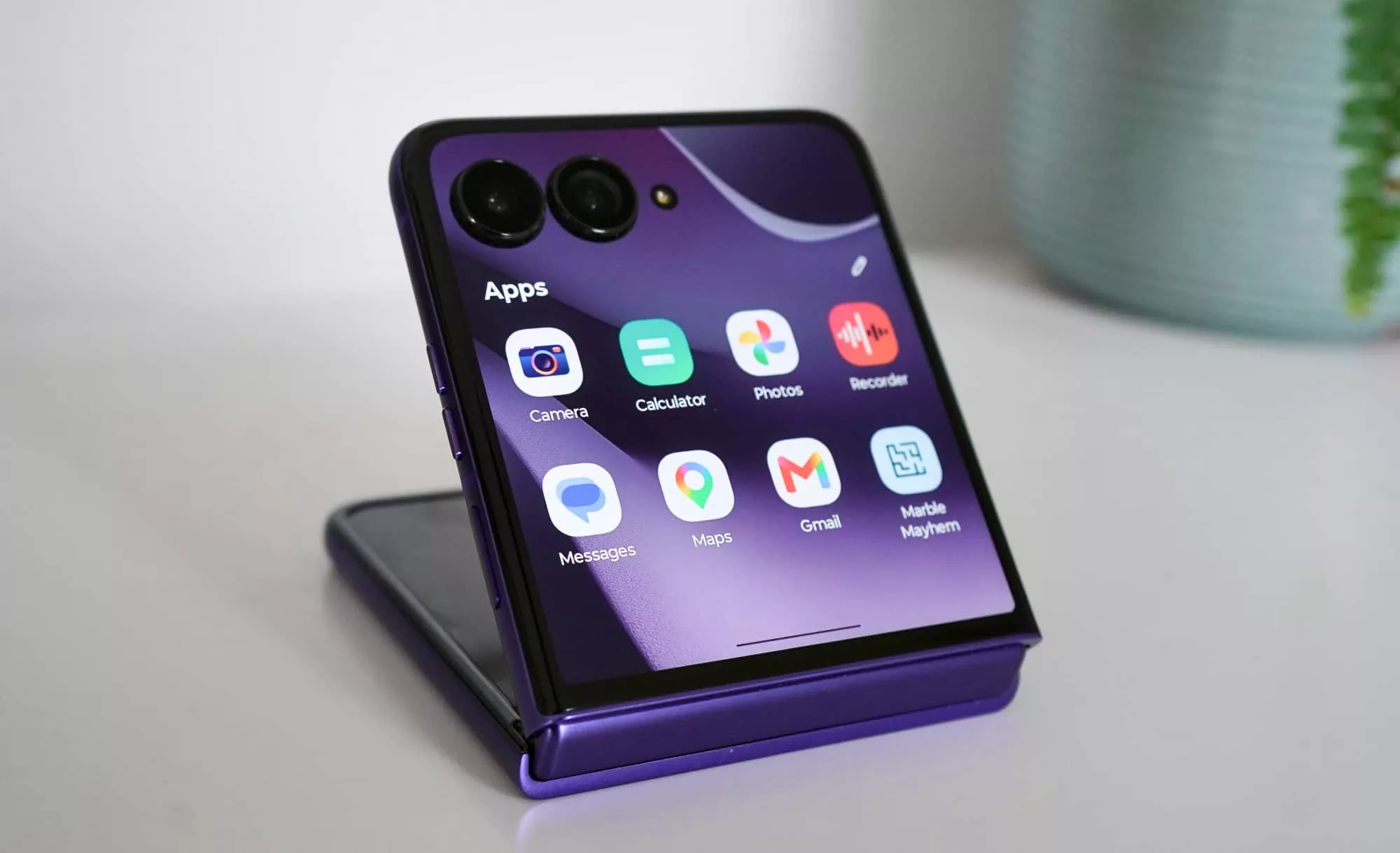
On the outside, you’ll find a 4 inch AMOLED display sporting a resolution of 1272×1080 and running at a slick speed of 165Hz. It’s event protected by a larger or Corning Gorilla Glass, providing some protection.
The inside screen misses out on the Gorilla Glass, but may not need it: you’ll snap the phone shut when not in use, protecting the flexible display at the time.
That inner screen is a 6.96 inch AMOLED display running at 1224×2992, also supporting the 165Hz refresh rate. Both are roughly the same and easy to look at, offering bright and sharp visuals on either side.
In-use
The insides might be just like another phone, but being a foldable flip phone, using the Razr 70 Ultra is just a little different.
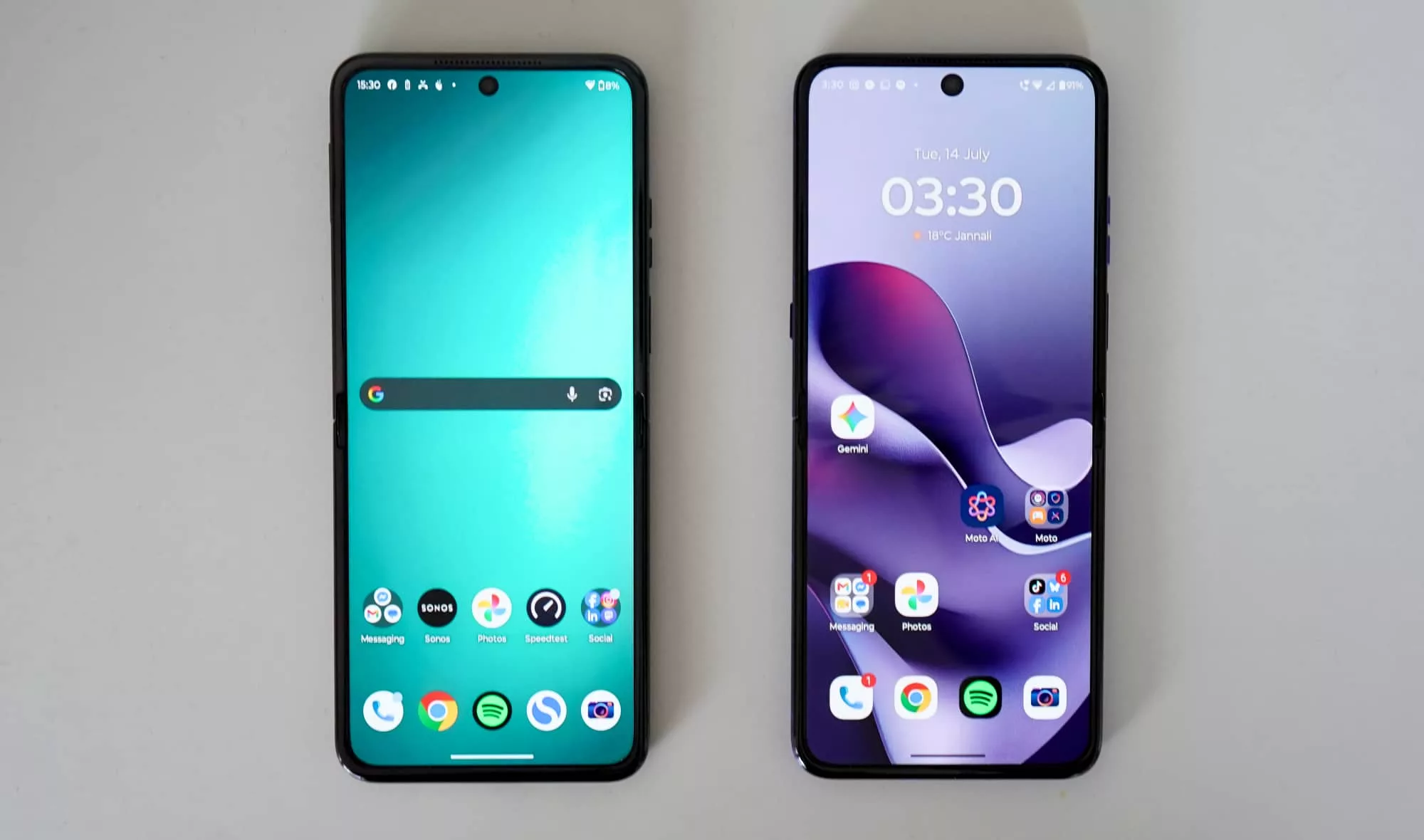
You’ll flip it open to use the full Android experience, embracing the 6.96 inch screen. And then when not in use, you’ll close it shut to use a smaller 4 screen, which also conveniently offers Android access on the compact outside screen.
The outside use is easily one of the more attractive features of the phone, and something we’ve still not seen another company pull off in quite the same way.
While Samsung’s Flip only offers you widgets and micro apps to play with on its compact exterior screen, Motorola’s flavour of an external cover screen is more like a full version of Android. You’ll get shortcuts and widgets, sure, but you can also run apps normally, making it like having both a compact phone and a big phone when you open it up.
It’s really clever.
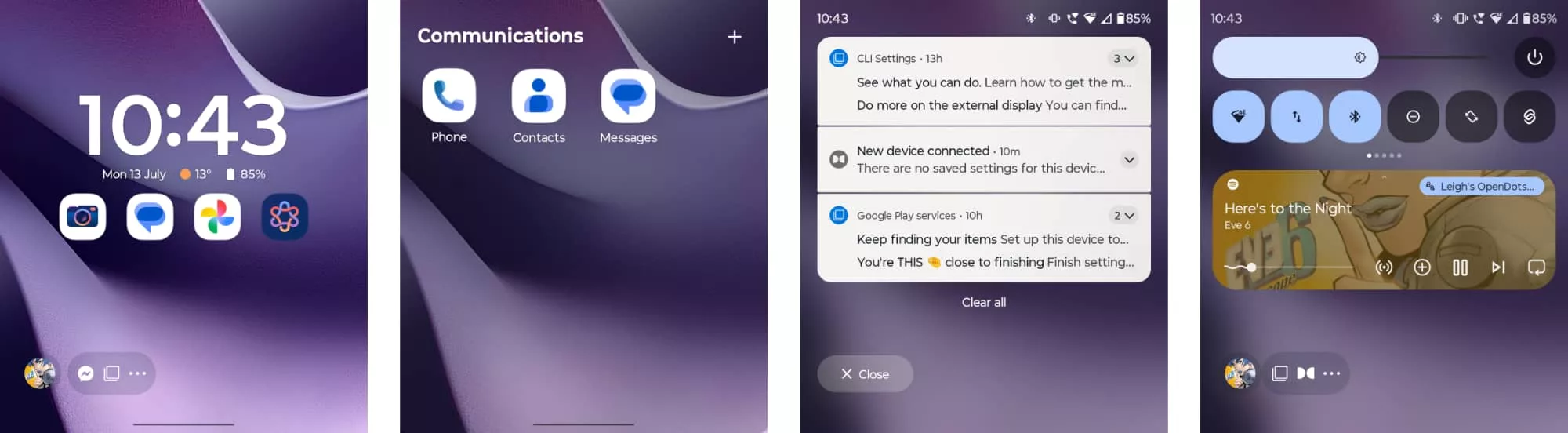
Outside of the compact screen and pint-sized Android experience, Motorola’s flavour of Android 16 is somewhat similar to what you might find on other phones.
There’s a new “Newsfeed” connected with the app drawer, and the Motorola gesture shortcuts still work a treat, such as shaking the phone to launch directly into the camera mode.
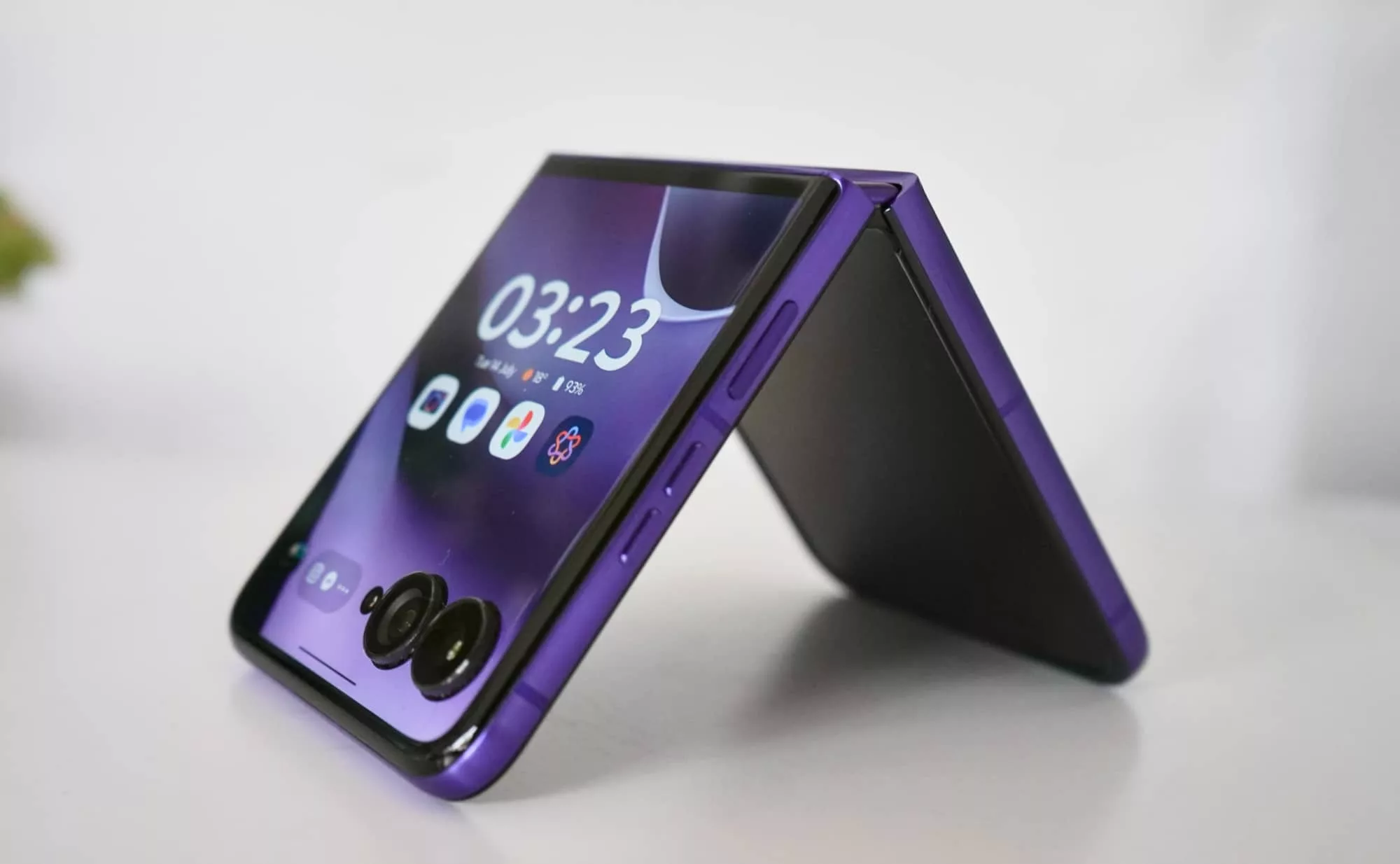
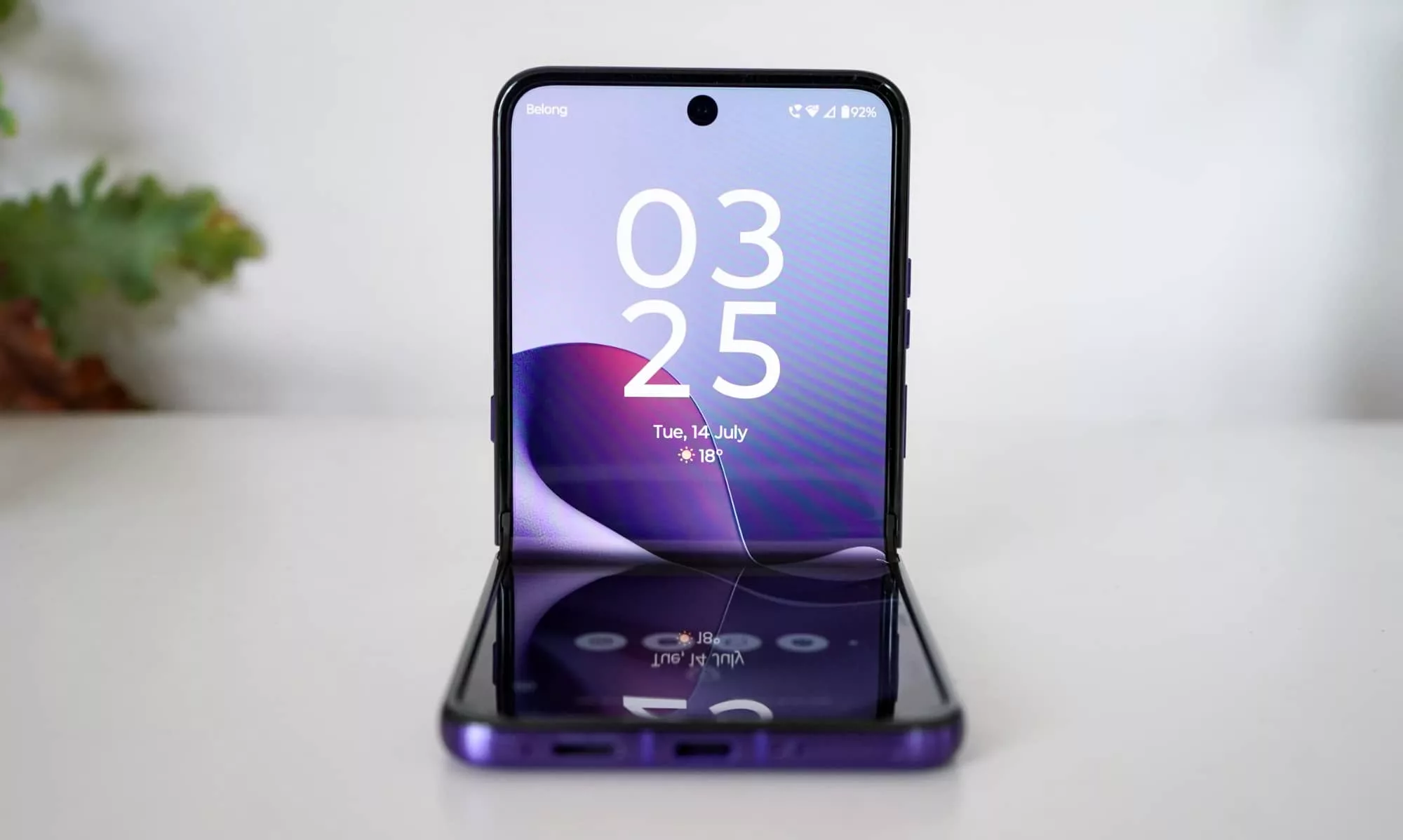
You’ll also still find Razr-specific approaches to using the phone, such as setting the phone flat and the screen faced up, turning it into a micro-display of sorts for a clock and album art for whatever you’re playing, something you can also do in the tent configuration, which is setting the phone up as it’s open and shaped like, well, a tent.
There are some new usability touches that are also cute, extending to camera mode.
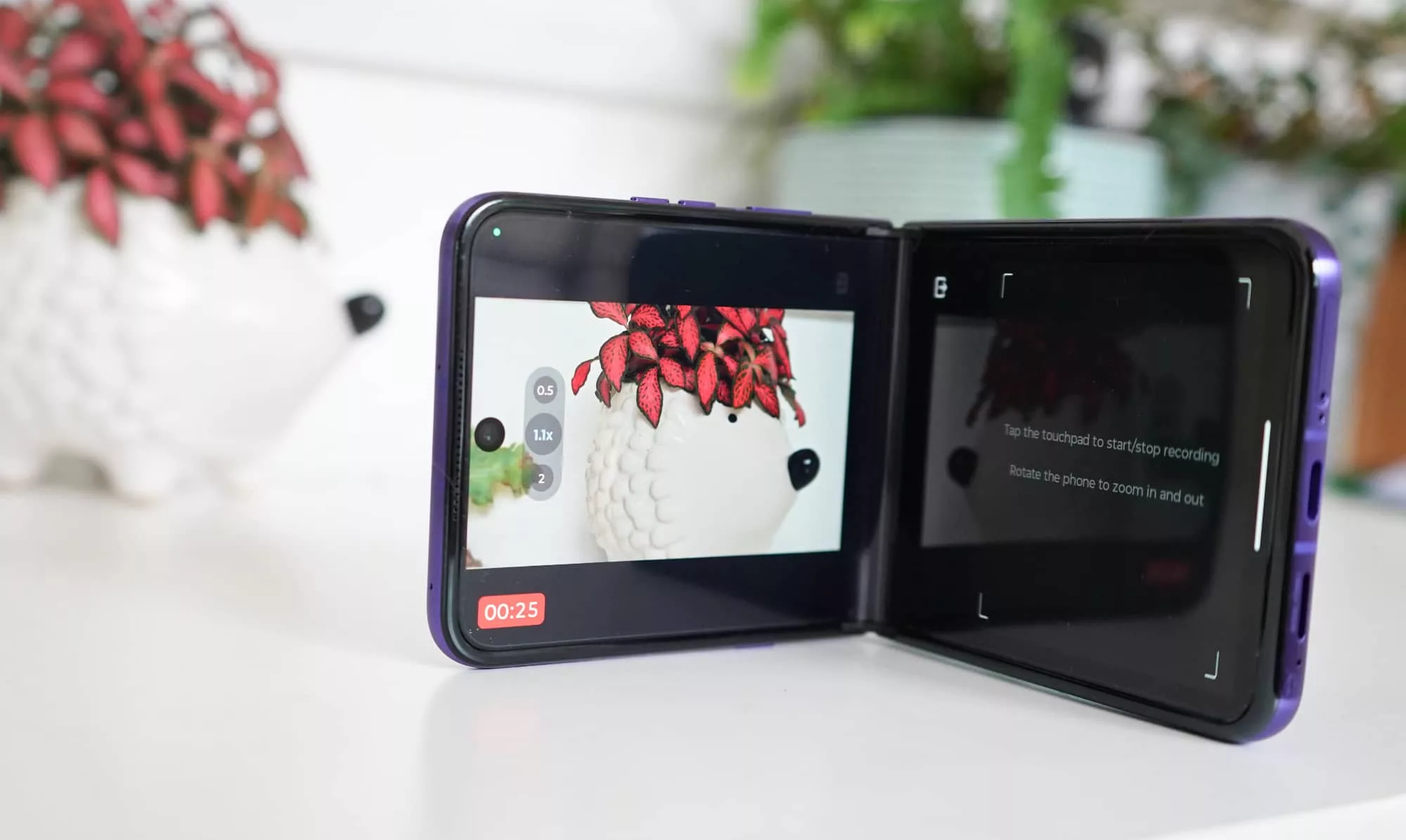
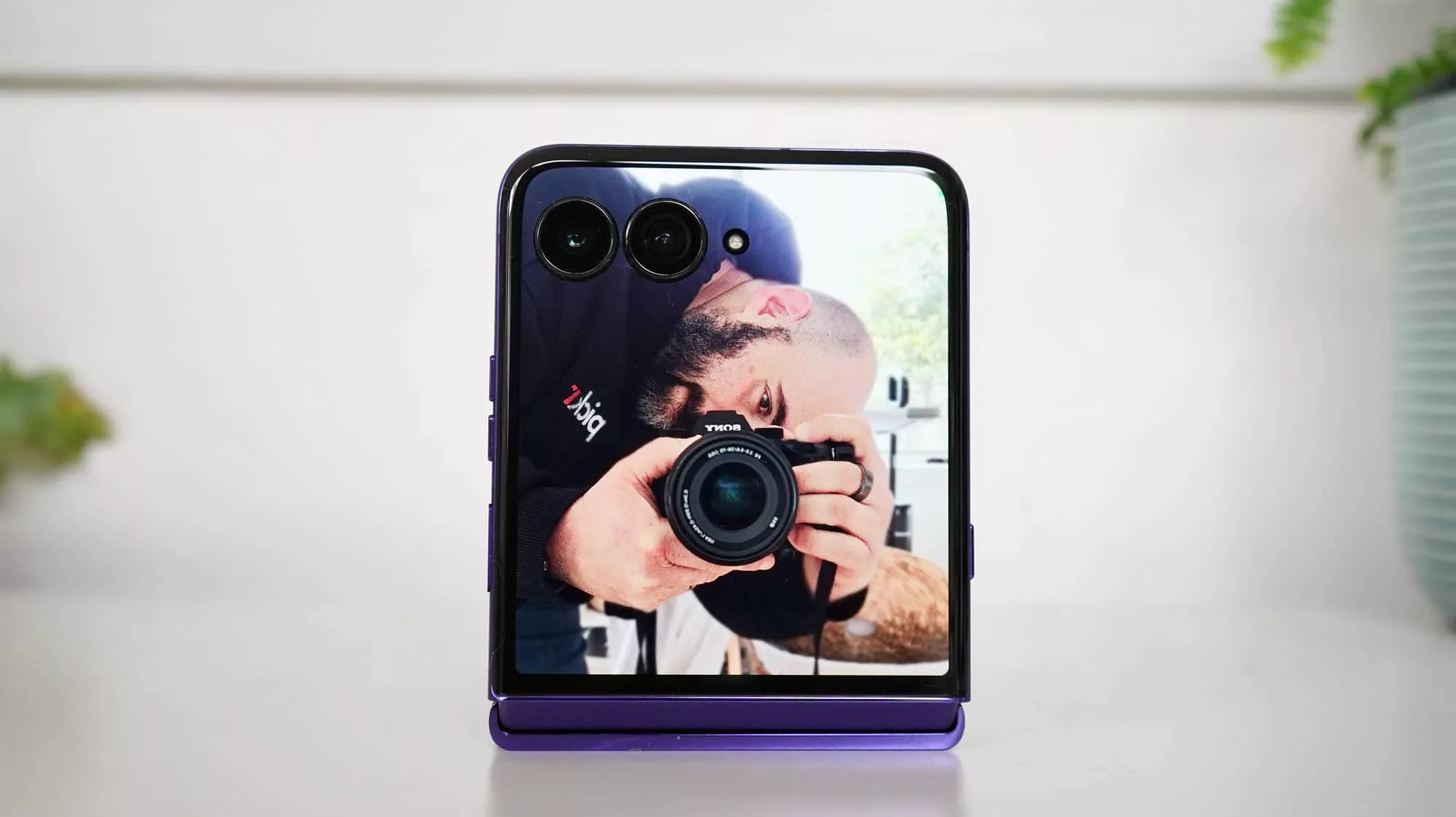
Simply put, you can turn the open Razr into a camcorder-style device, with a touchpad on one side and the screen on the other. Touching the pad side will give you controls, as will tilting the camera, which gives you a layer of zoom control.
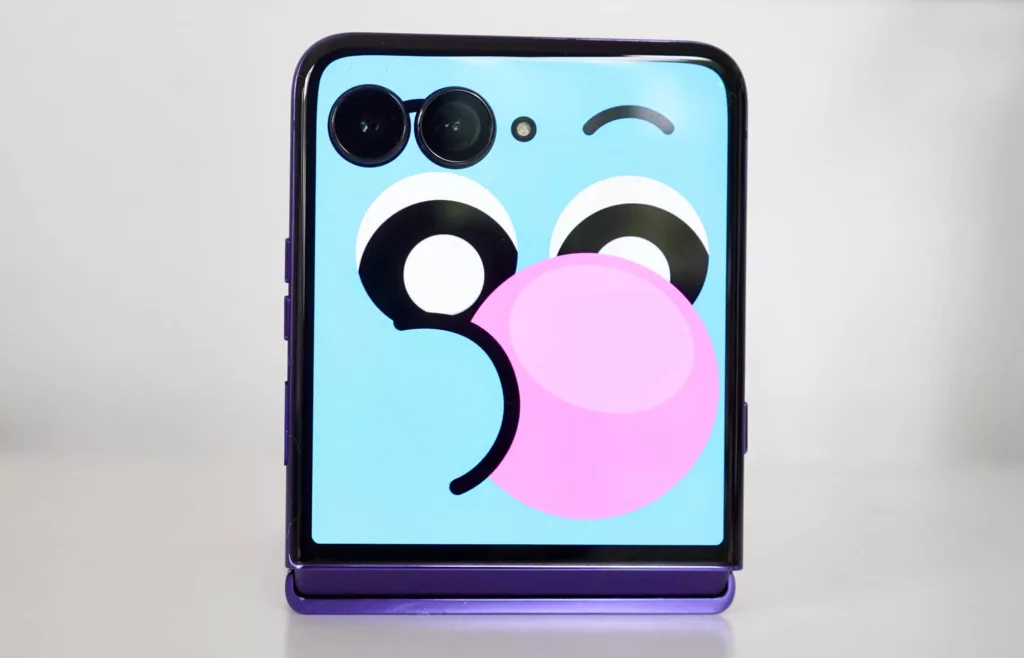
When you’re capturing people, though, the phone can scroll through some cute animations to get your subjects smiling all the right ways. They’re bright, colourful, and impossible to ignore, making for an easy way to get kids smile at the camera.
Performance
One of the key changes in every generation of phone is the processor, and understandably, that has an obvious effect on performance. It’s no different in the Razr 70 Ultra.
Like with so many phones this year, there’s a Qualcomm chip inside, though it’s technically last year’s high-end processor, the Snapdragon 8 Elite Gen 4. While not the best, it’s still easily up there in capability, able to take on some of the competition.
| Device | CPU Single Core | CPU Multicore | GPU |
|---|---|---|---|
|
Google Pixel 10
Google Tensor G5
|
2291
|
6193
|
3109
|
|
Motorola Razr 70 Ultra
Qualcomm Snapdragon 8 Elite Gen 4
|
3120
|
9408
|
19108
|
|
Samsung Galaxy Z Fold 7
Qualcomm Snapdragon 8 Elite
|
3056
|
9621
|
19744
|
|
Oppo Find X9 Pro
MediaTek Dimensity 9500
|
2933
|
8941
|
23458
|
|
Samsung Galaxy S26 Ultra
Qualcomm Snapdragon 8 Elite Gen 5
|
3660
|
11200
|
24842
|
You won’t find the Razr 70 Ultra besting this year’s flagship handsets, but in terms of overall performance, it’ll handle plenty, and for years to come.
In fact, testing the phone as a daily driver saw minimal lag across its 12GB RAM for the week we spent with the phone, handling apps with ease, and even the odd game here and there.
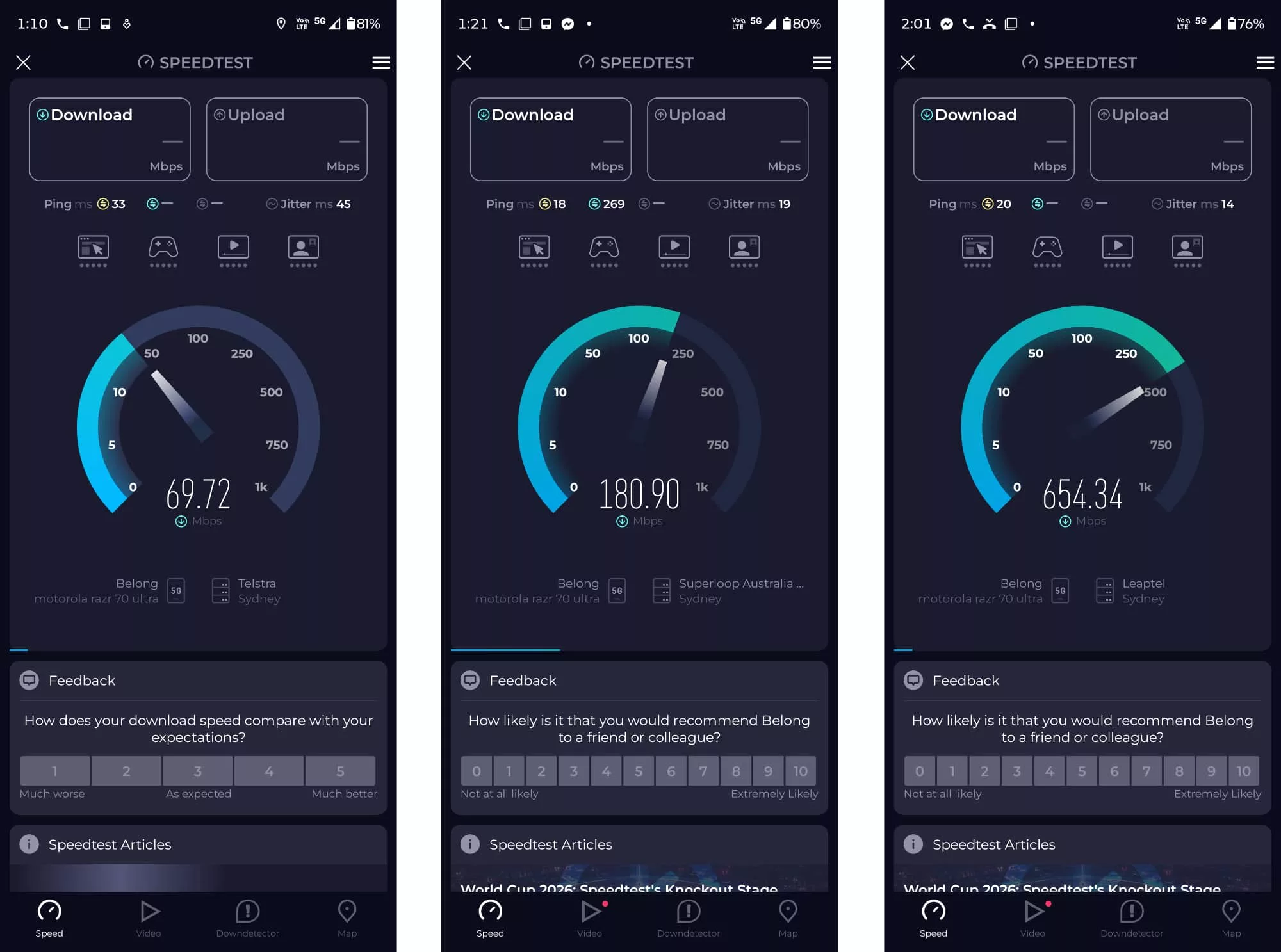
Mobile performance is also quite capable, achieving speeds as high as 654Mbps in our tested on the Telstra 5G network in Sydney, Australia, by way of Belong, at least until the telco’s bandwidth limiter kicked in.
Overall, it’s a good solid effort on performance. It may not be the best in the business right now, but it has it where it counts, and should keep you going for a few years yet.
Camera
The camera is an interesting situation, because the last time we checked out the Razr Ultra range in the Razr 50 Ultra, Motorola had made the rather clever decision to ditch the ultra-wide camera and adopt a telephoto instead.
It was one of those “lightbulb” moments that made us wonder: why doesn’t everyone else do this? Giving you wide and close without the need for an extra-wide camera, a lens you’ll probably use less.
And yet here in the Razr Ultra 70, Motorola has gone backwards, replacing the telephoto with an ultra-wide, and delivering the trope “one step forwards, two steps back”.




While that’s not necessarily a win for consumers, the images from the camera still manage to be quite nice, as the 50 megapixel sensors deliver bright and sharp images, a decent amount of detail, and acceptable low-light imagery.
The latter of these does feel like it could be better: images in low-light can appear soft and blotchy, missing out on the sharpness daylight photos deliver. We’re not expecting this to be perfect, but the images don’t seem dramatically improved from the dual 50 megapixels combo of the Razr 50 Ultra, which was two years ago and managed to sneak in a telephoto, not an ultra-wide.
Battery
A new battery is also part of the package, thanks in part to silicon carbon, the almost magical battery chemistry making it possible for phone batteries to go for longer.
You might not have heard about the tech, but it’s a different battery material that can help pack in more milliamps into similarly small sizes, essentially providing more battery life in compact sizes.
For a phone like the Razr 70 Ultra, it’s a match made in heaven, or at least where ever Motorola makes its phones.
It also means slightly better battery life, giving you a good day and a half of a real-world use, but resulting in 18 hours using our Battery Bench app.
That’s not necessarily flagship performance, but given the size, it’s still pretty solid. Granted, it’s beaten by Samsung’s Flip 7, but it does have more life than its predecessor, which is a win of sorts.
| Device | Battery |
|---|---|
| Samsung Galaxy Z Flip 7 |
23:15
|
| Motorola Razr 70 Ultra |
18:31
|
| Motorola Razr 50 Ultra |
17:06
|
Value
While the battery wins points, the prices loses some, because yikes, this foldable ain’t cheap.
In what is very likely a direct consequence of the AI era — where memory and storage prices have gone up because of the data centre boom — the Razr 70 Ultra is a lot more expensive than it ever has been, even though the technology hasn’t changed dramatically.
Yes, there’s a new chip, and yes, there’s a new silicon carbon battery, an aspect that is possibly the best addition to this phone.
But the new phone is also $300 more than the Razr 50 Ultra from 2024, and that is a little surprising given you’re actually getting less storage, dropping from 512GB to 256GB.
Halving the storage is a thing where we’d expect the Razr 70 Ultra to maybe hold on to its existing $1699 price from two years ago in wake of the AI memory and storage crunch, not go up. You’re going the wrong way, Moto.
About the only way Motorola has made the price somewhat logical is that its pre-order price is $1799, saving about $200 before it goes back. That would be semi-acceptable, but the near-$2K cost with a few aspects going backwards, that is difficult to forgive.
What needs work?
While the value needs some work, our biggest complaint is with the camera, which just feels like a backwards shift for what is an otherwise excellent system. It’s just not as versatile as it once was, and fits more in line with the wide and ultra-wide combos you expect on a $1500 phone, not a $2000 one.
And sure, AI and the cost of memory is likely the reason why the phone is more expensive, but so little has changed that it also makes you wonder beyond a less impressive camera stack and a better processor whether the added cost is worth it.
Yes, the new model is faster, and it is much faster than any other Razr model before it. But at the same time, the changes aren’t major. You probably won’t notice the speed for most apps, but you will notice the price.
| Device | CPU Single Core | CPU Multicore | GPU |
|---|---|---|---|
|
Motorola Razr 50 (2024)
MediaTek Dimensity 7300X
|
1030
|
2897
|
2603
|
|
Motorola Razr 40 (2023)
Qualcomm Snapdragon 7 Gen 1
|
1033
|
2888
|
2752
|
|
Motorola Razr 60 (2025)
MediaTek Dimensity 7300
|
1047
|
2866
|
3021
|
|
Moto Razr 40 Ultra (2023)
Qualcomm Snapdragon 8+ Gen 1
|
1758
|
4235
|
6364
|
|
Motorola Razr 50 Ultra (2024)
Qualcomm Snapdragon 8s Gen 3
|
1984
|
4972
|
9103
|
|
Motorola Razr 70 Ultra (2026)
Qualcomm Snapdragon 8 Elite Gen 4
|
3120
|
9408
|
19108
|
The lack of changes isn’t something Motorola sits alone in, mind you.
Samsung’s 2026 Galaxy Z Flip8 is really similar to its Flip7 sibling from the year prior, giving you an idea of just how minimal the upgrades are. In that model, there’s a slightly faster process, a slightly slimmer design, and a more expensive price, matching Motorola’s $1999.
It’s not a pretty picture, all things considered. The fact that you’re getting such minor changes makes these flip fold phones less compelling.
There are other catches, such as the continued omission of Qi2 magnetic charging, which feels like aspects are here — there’s definitely some magnetism at the charger on the back, but it doesn’t hold.
Or even the lack of an Android update commitment, which has seen as many as eight years on rivalsight from Google and Samsung, but here on the Razr 70 Ultra is “up to 3 years” for operating system updates and “up to 5 years” of security updates.
Neither is tremendously impressive, and one of those OS updates will be this year’s Android 17, so it’s already one behind. That eats into value considerably, because it affects longevity.
And the inclusion of little bloatware games is back, though this time, Motorola goes a little deeper. We’re actually fine with the tiny games included for the cover screen, but now due to Motorola’s sponsorship of the FIFA World Cup, you also get a mediocre FIFA game thrown in, and wouldn’t you know it, the title even comes with in-app purchases (IAP). How quaint.
We’re never a fan of bloatware, but tie-in bloatware with IAP is rarely nice to see. It may as well be an ad, albeit one timed to match one of the sporting events of the year.
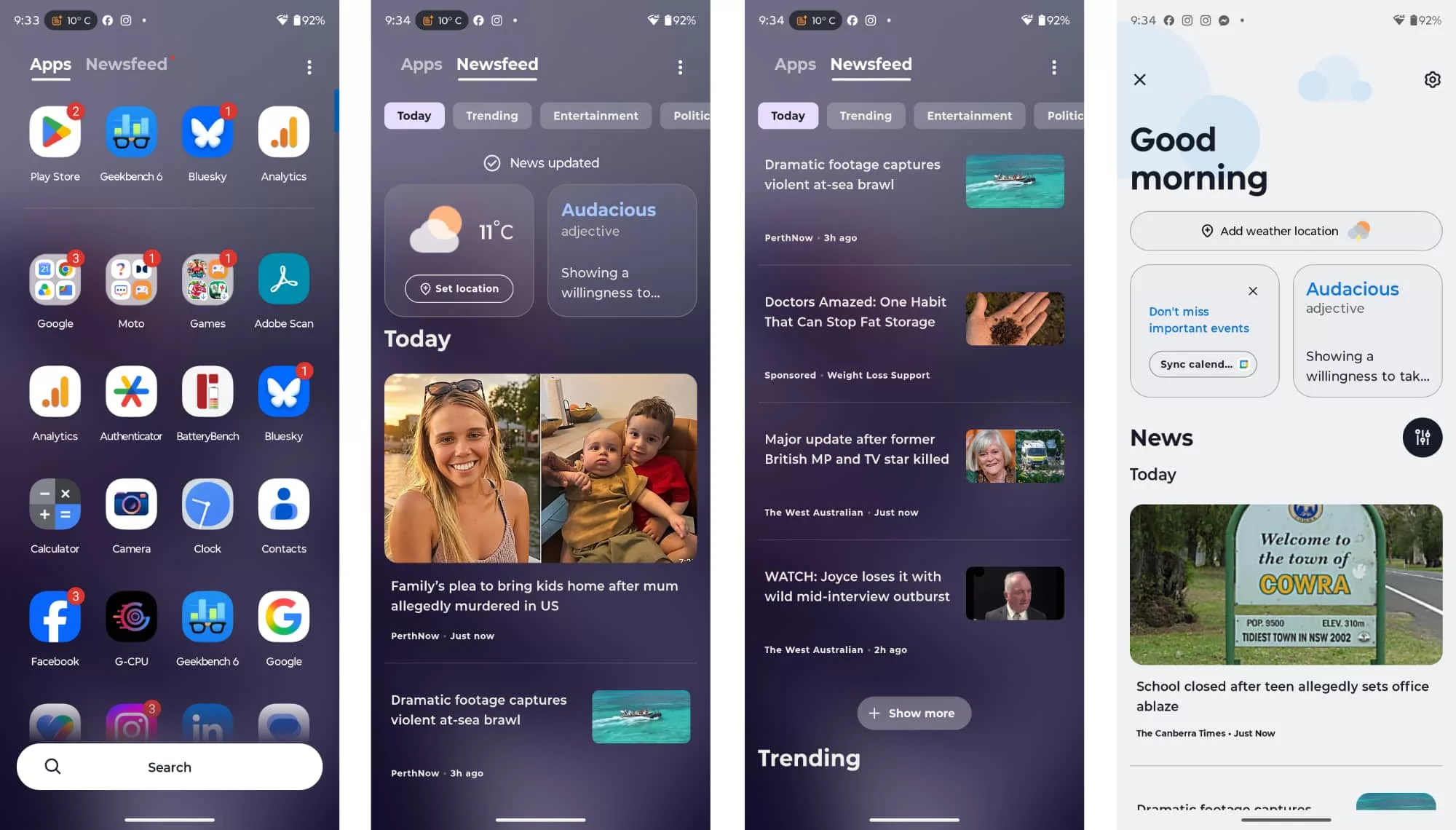
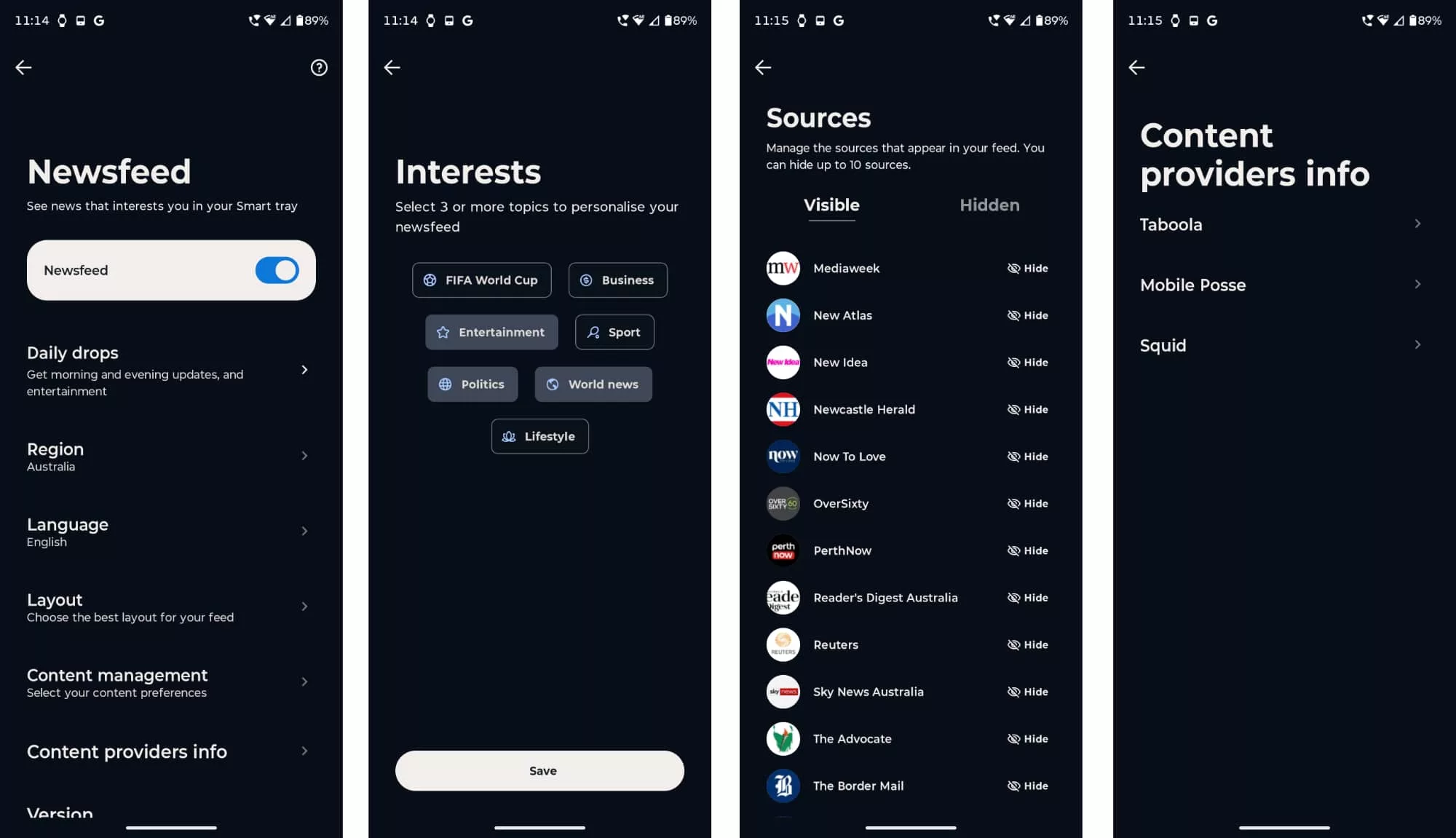
Even the newly added “Newsfeed” built into the app menu feels like a half-measure, and something you didn’t really need that Motorola has tried to differentiate itself with. You already get the option of a newsfeed with Google’s discovery feed on the left most screen, and it comes from your entire web presence, not just a few key locations.
But in Motorola’s Newsfeed — which is powered by Taboola, Mobile Posse, and Squid — you’ll find a handful of topics and a handful of sources, in what appears to be a tightly controlled newsfeed that you can’t impact too dramatically. Oh, and it has ads, also.
You might as well just look for its predecessor, the Razr 50 Ultra, which arrived with a better assortment of camera capability, minimal bloatware, and can be found for around the $999 mark without too much of a search.
What we love
Despite the obvious nudge to make a little extra coin from someone who may have already bought the phone, most of the Razr 70 Ultra experience is positive. It really is one of the nicest foldable flip phones around.
The design is still nice, the performance is great, the cover screen is still really useful, the battery life is improved, and even some of the camera control tweaks are positive, making for a delightful small phone experience.
Final thoughts (TLDR)
The idea of a small phone isn’t something that really exists anymore… and that’s a shame.
Big phones are all the rage, partially because a bigger screen is nice to have, but so too is the battery life that goes with it. Small phones mean small battery life, while big phones mean, well, you get the picture.
It’s no wonder then that big phones are more common, because they solve the battery dilemma almost immediately. But that is changing. Thanks to improvements in battery chemistry and changes like silicon carbon, companies can fit more life in, reviving the whole small phone idea.
An idea that Motorola appears to hold true, with its latest being a really solid example of a compact phone, an idea that all but doesn’t exist anymore.
For the most part, the Razr 70 Ultra keeps that vibe going, just not the momentum. It’s a great phone, but it hasn’t really changed much positively beyond the battery life, and worse the price is higher than ever. While that might not entirely be Motorola’s fault, the result still leaves you with a phone that feels more expensive than it should be, and with a support model that feels a little short lived.
The Razr 70 Ultra then becomes a phone worth owning only if the price really matches. That means it’s great, albeit with a but: but only really when the sales kick in and you don’t feel like you’re being charged too much for a phone without major improvements.
The combination of small design, big price just doesn’t sit well with us. Worth checking out, but we’d wait for the prices to fall slightly, possibly during a sale.