
Quick review
The good
The not-so-good
At over $4000, the HP Omen 16 should feel like a laptop able to last several years. But the model found today also manages to feel like it wasn’t properly spec’d for when it came out.
Being a gamer tends to be a high-spec’d sort of affair, though one that tends to attract a specific look for PCs.
You know the sort: gear with sharp coloured accents, angular bodies, and laptops that basically would be perfectly suited to your desk and a party with friends, but less so an office where productivity looks a little different. Underneath, the hardware is high end and made for action, but on the outside, the look mightn’t suit a corporate lifestyle.
It’s a bit of a shame, because some of the better placed computers for visualisation and 3D and data processing tend to be the meaty sort of systems you expect in gaming. Gaming laptops can be great little high performance laptops and workstations, they just don’t look super professional.
But that appears to be changing, and a recent push from HP could be a literal omen of change on the horizon.
The HP Omen 16 packages a lot of specs and a decent feature set into a 16 inch size. Is it enough power for the next few years, and able to survive both work and play?
Design
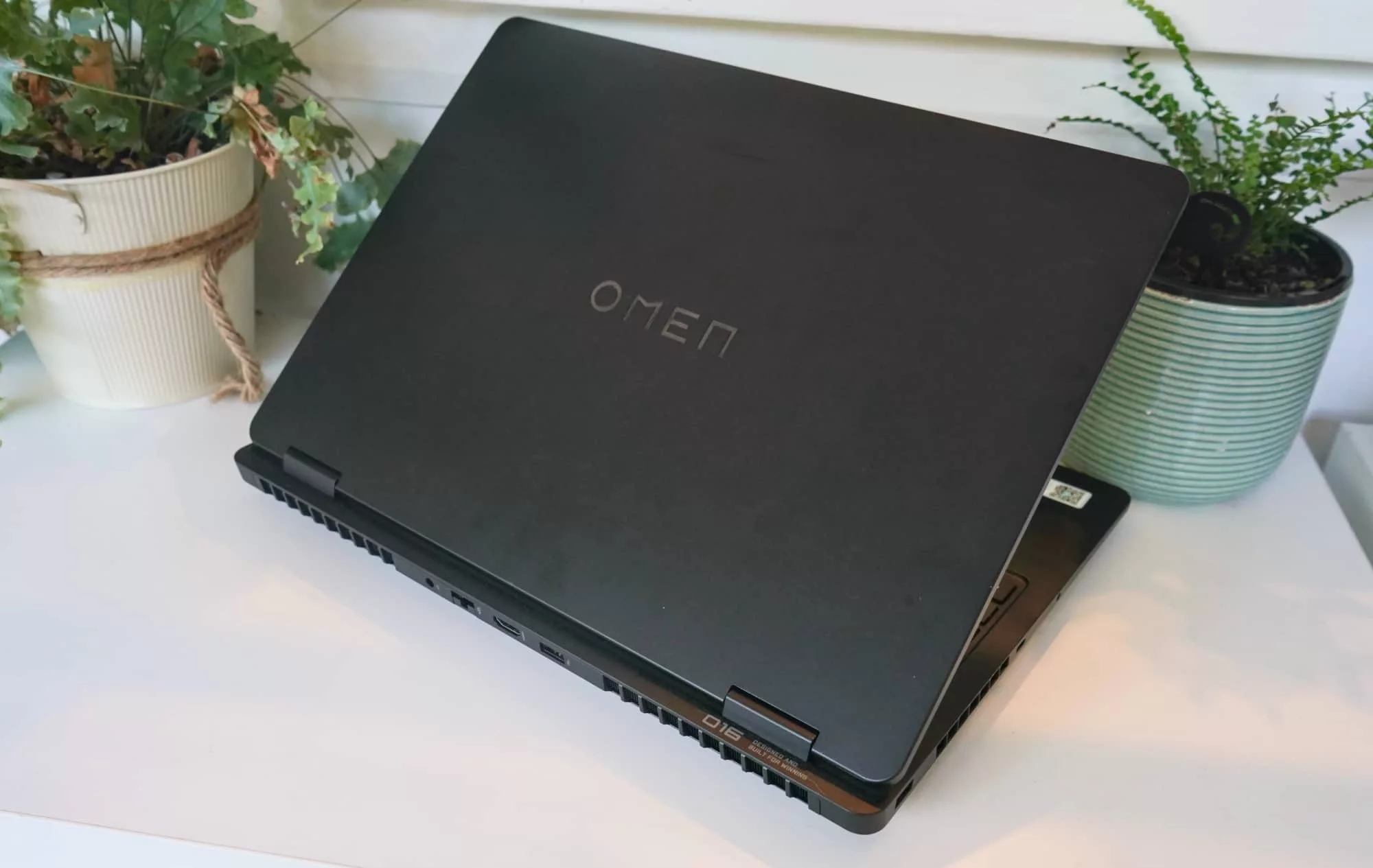
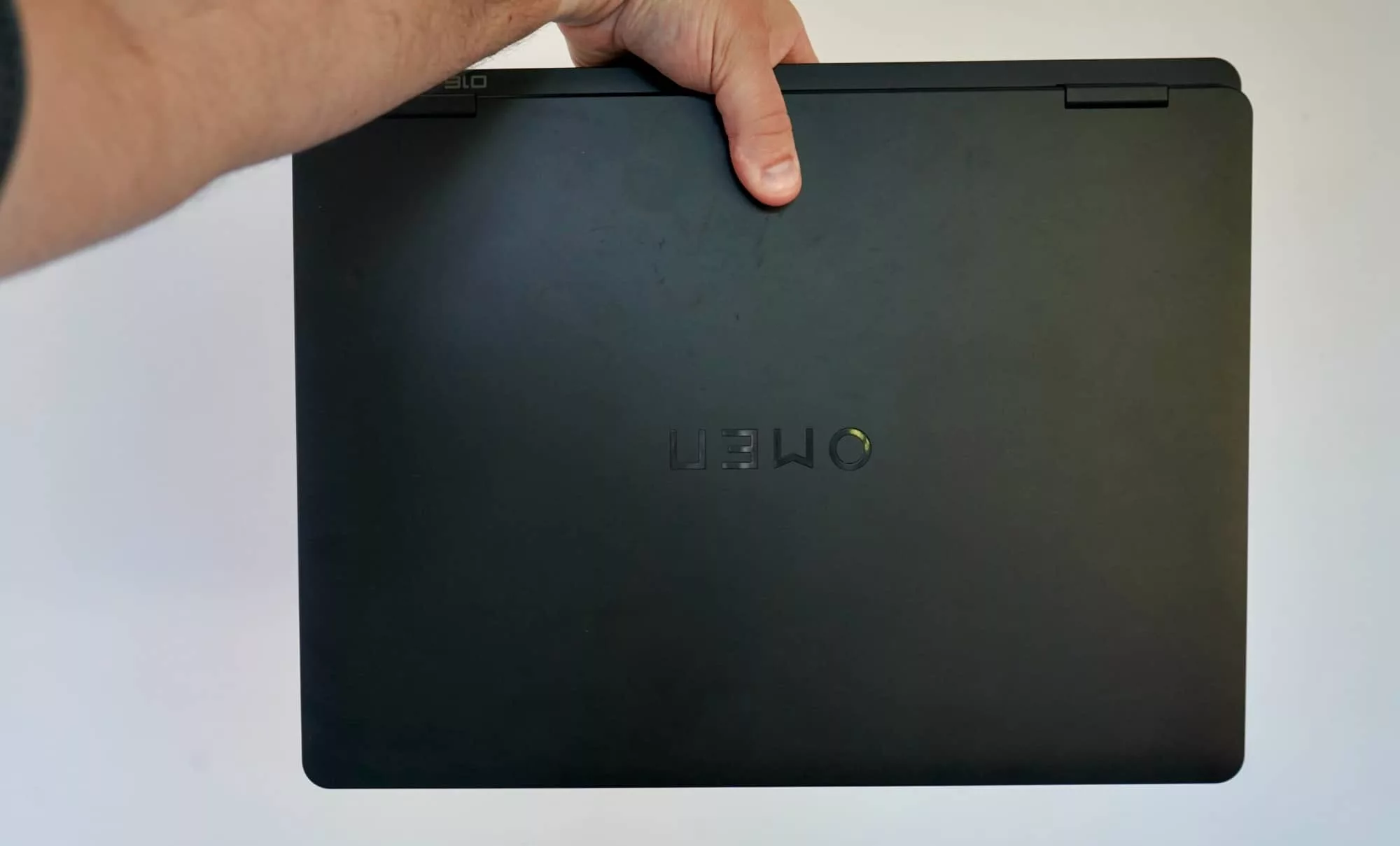
Arriving in a matte black design that simultaneously screams “gamer” and yet feels professional enough to take to work, the HP Omen 16 is a little surprising.
This isn’t your traditional gamer machine from the outside, with no obvious signs beyond the “Omen” font and name. What business-grade or workstation counterpart ever gave you an omen? Exactly.
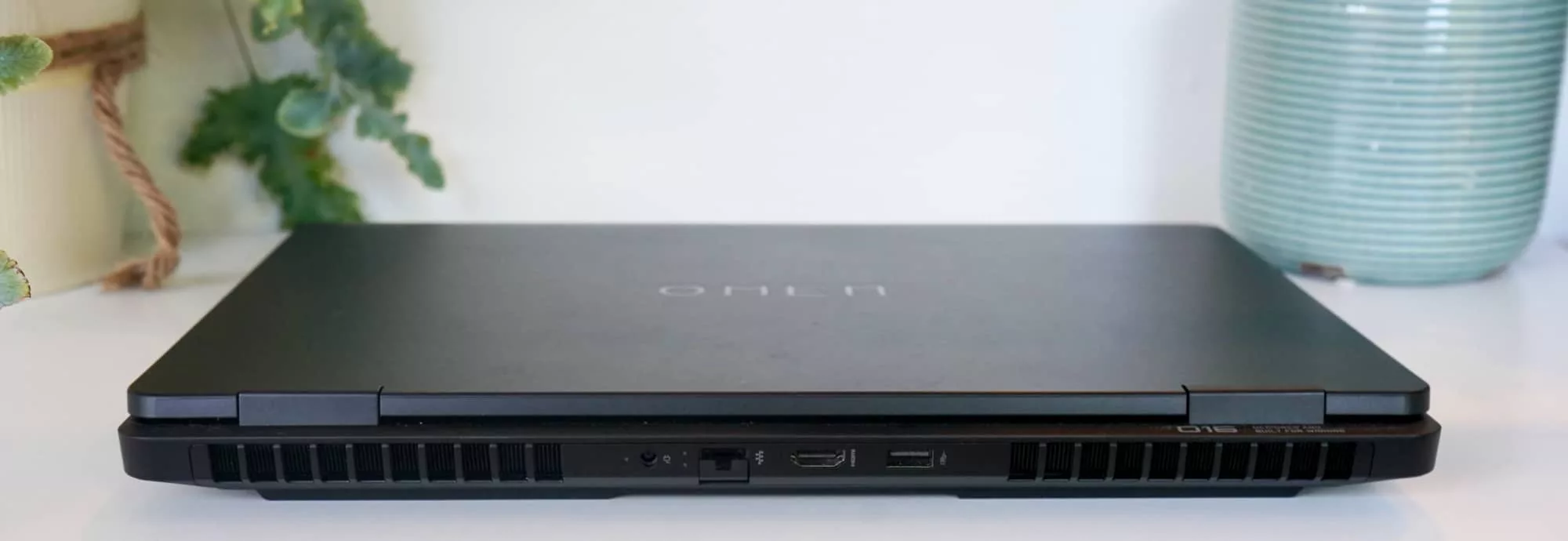
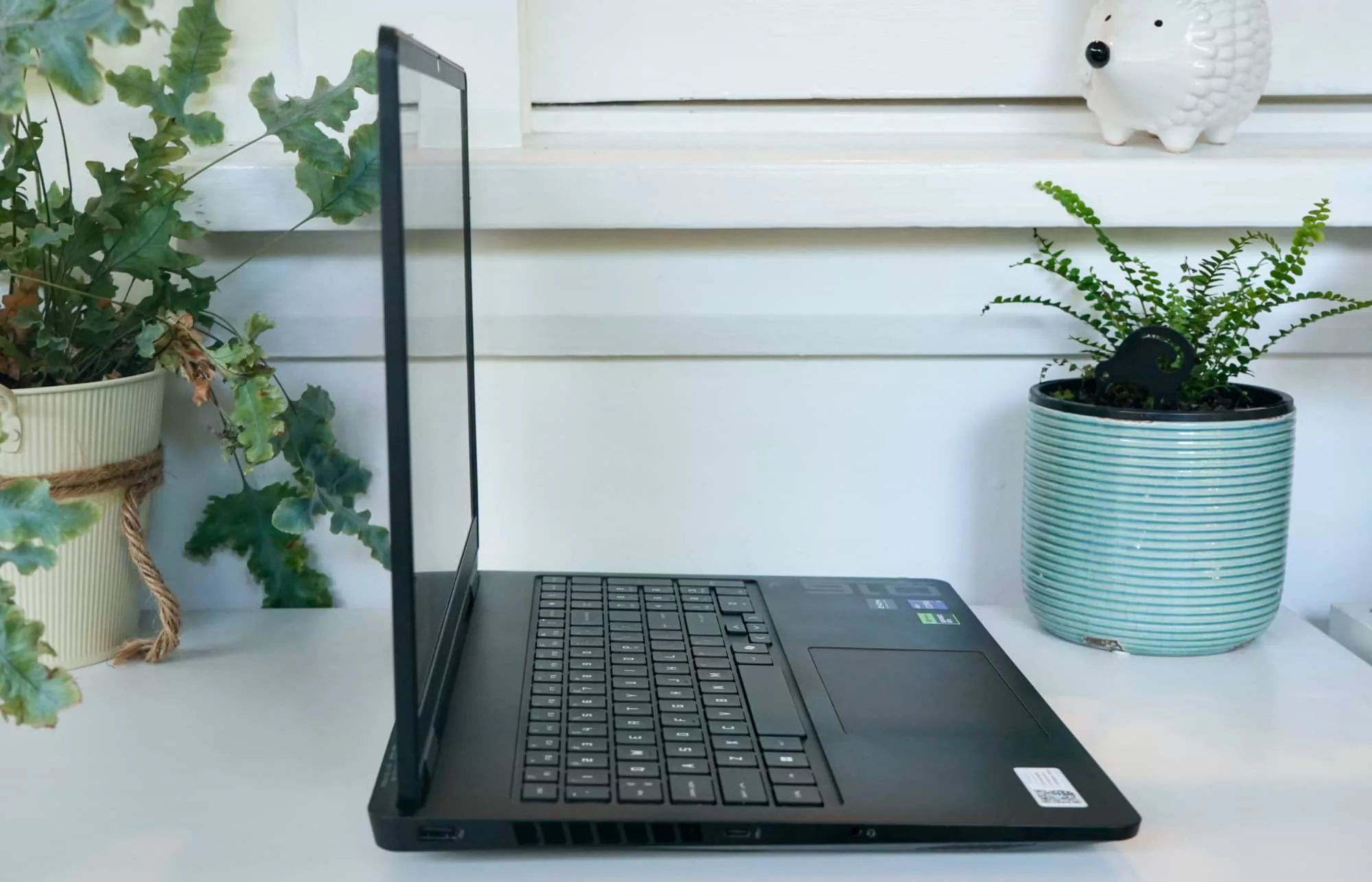
And yet the Omen 16’s look is distinct from the typical edgy designs we see of gaming machines. There’s no bright green or blue or pink accenting, and the look isn’t overly sharp. It just looks like a black almost-business-grade machine interpreted through the eyes of a gamer, with a lip out the back for where most of the ports are, and vents and more ports on the sides.
If you didn’t know the Omen 16 was a gaming machine, you’d never realise it from the outside. It doesn’t scream “gamer” the way other gaming-style laptops do, which usually have light or particularly bold accents. Weighing around 2.4 kilograms, it’s not particularly easy to carry, but at least the look isn’t overtly ostentatious, which some may prefer.
Features
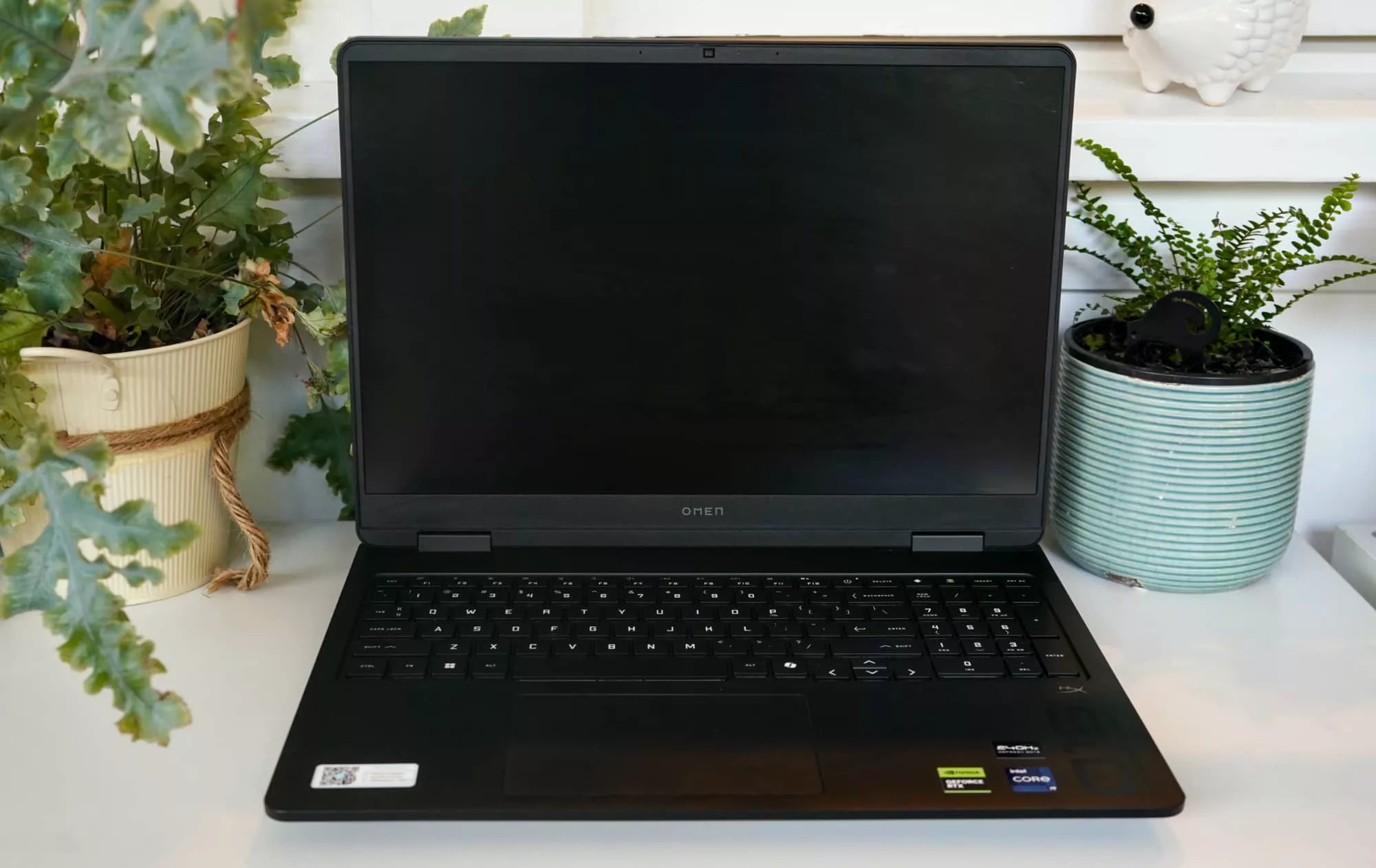
Under that spectre-like style, HP is offering up some solid specs on paper, including a high-end bit of processing power in the form of an Intel Core i9 14900HX. That’s a 24 core processor, and one paired with 32GB RAM and 1TB SSD storage in our review laptop.
Meaty specs are a good start, and you’ll find it paired with an Nvidia GeForce RTX 5070 graphics card and 8GB RAM, with all of that making up the majority of specs to look out for.
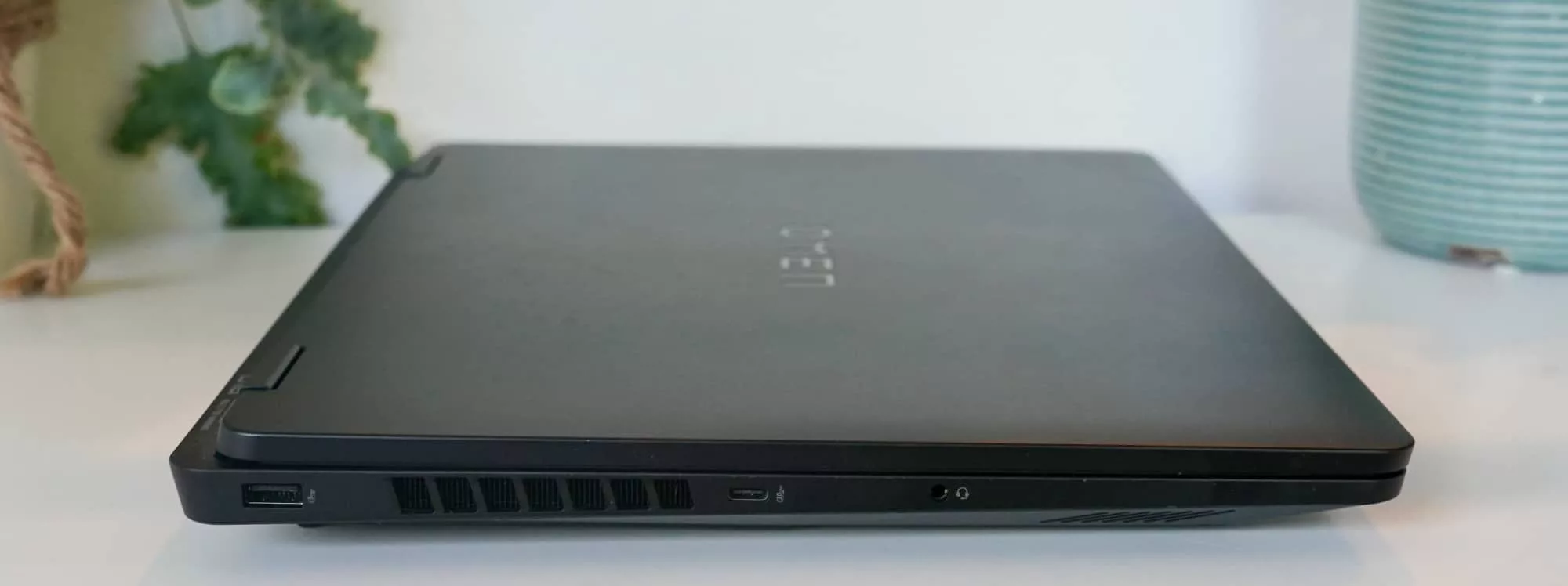
Elsewhere, there’s the connectivity side of things, covering WiFi 6E (802.11a/b/g/c/n/ax) and Bluetooth 5.3, while wired ports sees one HDMI port, two rectangular old school USB A ports, 3.5mm headset, Ethernet, and perhaps bizarrely, one USB-C port. HP also offers its own charge port, but you can also use the Type C port to charge from, albeit at a lower voltage.
There is also a webcam, speakers, and Windows 11 Home — all the features you expect a Windows PC to have these days — and then there’s the screen.
Display
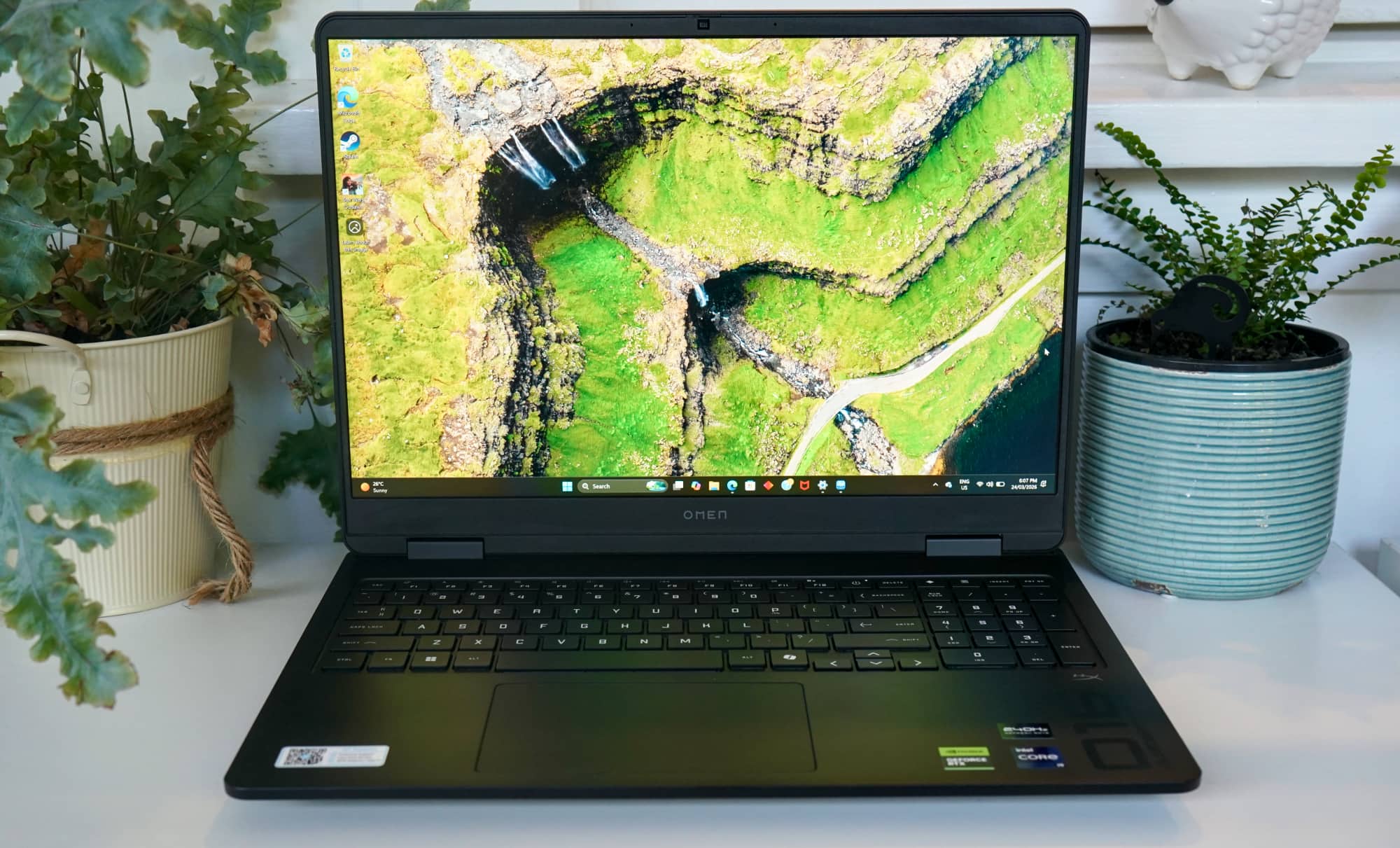
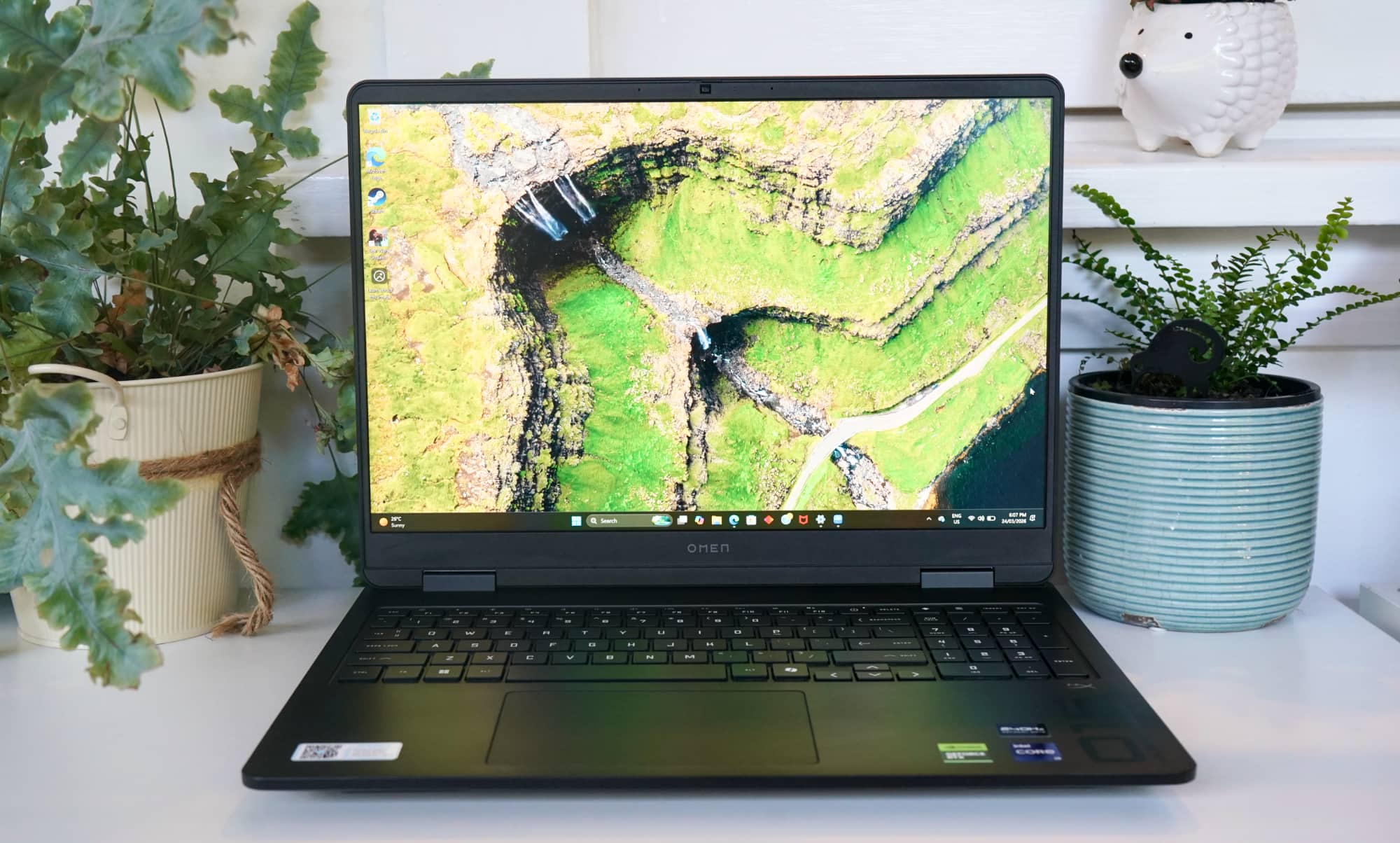
While the design may well be the first thing you’ll see, the more important part is when you open it up: a large and bright 16 inch screen with a quick 240Hz refresh rate. The speed might be one of the best things HP has going for this display, which is fast and anti-glare, or more strictly speaking, matte.
You won’t find OLED here (or we didn’t), with HP opting for a still nice In-Plane Switching (IPS) display, which is bright enough for gaming inside, but may not be fantastic for outside gaming. Who games in a park, though?
The resolution is better than your standard Full HD panel, using WQXGA’s 2560×1600, which in a 16 inch screen probably could be a little better, but isn’t bad either. It’s definitely going to be good enough for entertainment.
In-use
Like most laptops, using the HP Omen will see you lean on a combination of keyboard and mouse, and absolutely no touchscreen. The displaying being matte misses out on this, though it’s not a major issue: gaming is the focus, with a minor in productivity. And it’s not as if Windows prides itself on being good for touch these days.
On Windows laptops, the touchscreen is an extra, and one you don’t use.
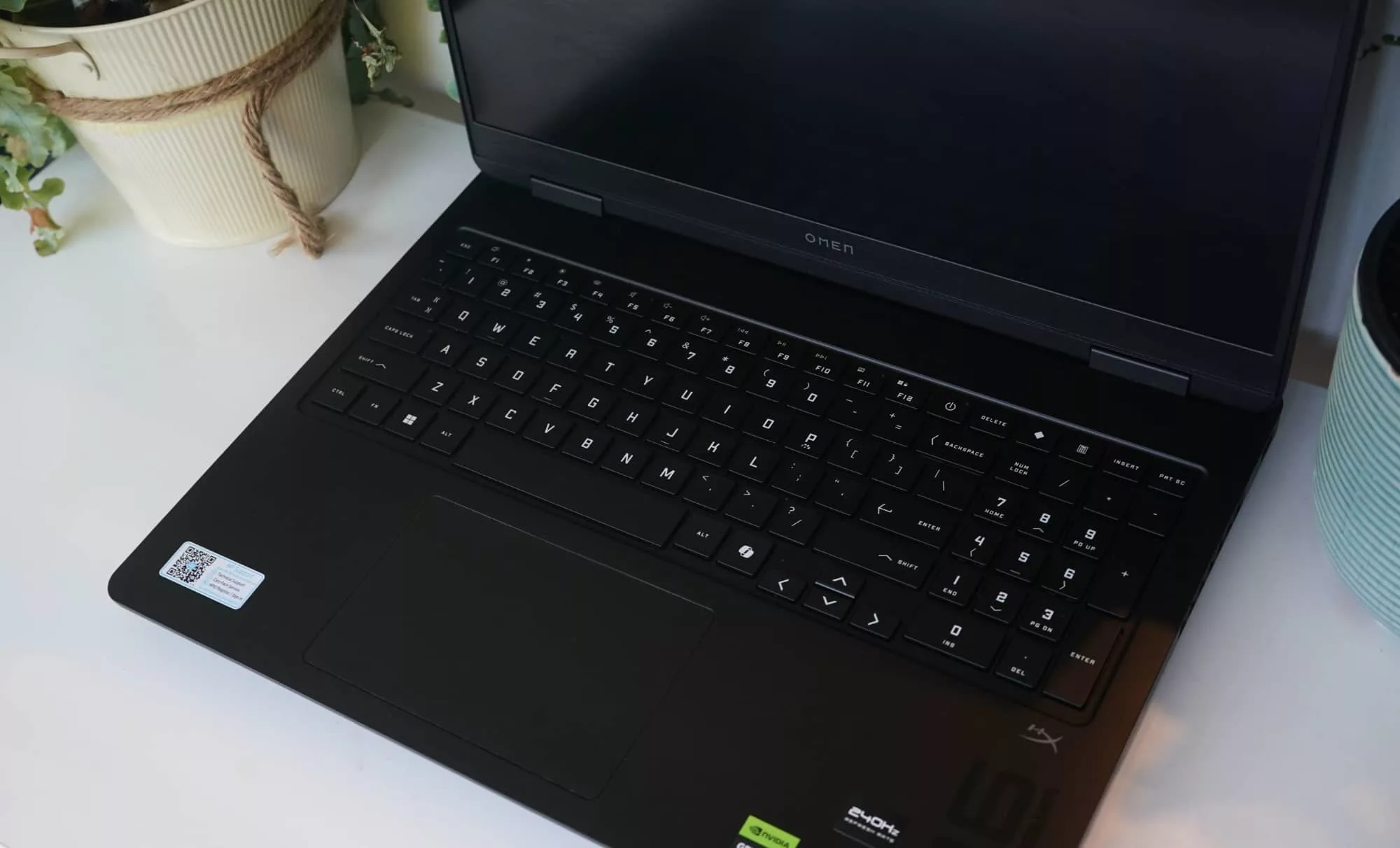
At least the keyboard is good, however, offering a spacious and surprisingly tactile set of keys to punch your best work in, be it holding down WASD or typing in more than just nonsensical character combinations that only work in games.
You get some backlighting for the privilege, and it can use colourful backlit keys that give you a rainbow effect until you go and change them, or you can just settle with the more professional approach of keys sans-colour.
The trackpad isn’t bad, but can sometimes feel like it’s a touch cheap, clicking in that plasticky way you expect less premium portable mice to work as. It does the job, but we’ve definitely felt better.
Performance
The specs inside should give us a good show, too. After all, an Intel Core i9 14th-generation chip is nothing to sneeze at, and neither is the level of Nvidia hardware inside, the GeForce RTX 5070. Graphics gets a decent 8GB RAM, while the rest of the system is armed with 32GB RAM, so the combination should deliver excellence in spades.
The reality is that in games, the performance is pretty clear. Minimal frame-rate disruptions, solid graphics and rendering, and a general feeling that the Omen 16 should last for a few years.
But when it comes to benchmarks, it’s a different story altogether.
| Device | CPU Single Core | CPU Multicore | GPU OpenCL |
|---|---|---|---|
|
HP Omen 16 (2025)
Intel Core i9-14900HX
|
2377
|
8871
|
50071
|
|
Acer Nitro 16S AI (2026)
AMD Ryzen 7 350
|
2890
|
12866
|
103344
|
|
Lenovo Yoga Pro 9 Aura Edition (2025)
Intel Core Ultra 9 285H
|
1751
|
12452
|
109651
|
Tested with our regular performance benchmark of Geekbench 6, the numbers don’t completely stack up, losing out to this year’s Acer Nitro 16S and last year’s Lenovo Yoga Pro 9 Aura Edition. Both should be similar, but both also deliver newer processors, and that could be one of the critical points.
While there’s nothing at all wrong with the Intel Core i9 14th-generation, it feels closer to a two- or three-year old system. Intel has moved away from the Core “i” nomenclature, shifting to “Core Ultra” instead, with Core Ultra 3 launching now.
That’s not to say the 14th-gen Core i9 is slow, but benchmark-wise, it certainly does hit its stride the way you might expect. Curiously, it does feel more like a 2024 spec, where you’re getting the best of what two years ago might have looked like.
| Device | CPU Single Core | CPU Multicore | GPU OpenCL |
|---|---|---|---|
|
HP Omen 16 (2025)
Intel Core i9-14900HX
|
2377
|
8871
|
50071
|
|
Asus ROG Zephyrus G14 (2024)
AMD Ryzen 9
|
2384
|
10824
|
89703
|
|
Acer Predator Helios 15 Spatial Labs Edition (2024)
Intel Core i9
|
2404
|
16333
|
164625
|
From a longevity standpoint, it should be fine, with games and high-end apps taking advantage of the i9 inside. It’s just surprising aspects would struggle with lower performance than expected.
Battery
The battery also doesn’t give the hardware any positive lifts, achieving some of the lowest performance you’re likely to find, both for gaming and general use.
Unless you plan on doing the bare minimum, you’ll find the HP Omen 16 struggles to make it through several hours, achieving one of the lowest scores in our tests.
Battery tests running PC Mark achieved just over 4 hours for office work (4:01), while gaming barely pulled in over an hour (1:02), which is clearly not fantastic.
| Device | Battery |
|---|---|
| Acer Nitro 16S AI |
4:48
|
| Lenovo Yoga Pro 9 Aura Edition |
4:30
|
| HP Omen 16 |
4:01
|
Like most laptops made for gamers, battery isn’t one of the things that really delivers tremendous results. Rather, you’ll likely need to plant yourself near a wall or power socket to keep this thing alive and working for you.
By comparison, modern gaming laptops should be able to pull at least two in our tests, an amount which still isn’t breathtaking, but at least isn’t a paltry hour.
Value
And you’ll also need to spend a pretty penny, another aspect largely in line with gaming laptops. Power in a pint-sized package is rarely made to be inexpensive, and at $4499, the HP Omen 16 definitely isn’t inexpensive.
Technically on paper, that’s not awful value for a gaming laptop today, though other gaming laptops tend to beat it on price easily. Acer’s Nitro 16S AI from earlier this year comes in a full thousand dollars (and then some) under the Omen, offering a similar combination of specs, but with an AMD instead of an Intel.
It does feel like you’re paying for the Core i9 component, which can feel like paying for overkill. Slightly older overkill.
What needs work?
Our biggest issue with the HP Omen 16 is that it feels like it’s slower at times than it should be, and that the battery is woeful.
We get that the Core i9 gives the Omen a little more juice than most gaming laptops need — an i7 or Core Ultra 7 would have been totally fine and more than enough — but the oomph that was there failed to make the impression we expected.
The test should have shown it able to match Acer’s Predator Helios 15 from back in 2024. Instead, the Omen 16 was barely half of what Acer delivered two years ago. That’s staggering.
Things start to make a little more sense when you take the comparison to where things should be now. After all, the Omen 16 was a 2025 laptop, and that should mean it’s spec’d like one. And yet, it doesn’t get there.
For instance, a Core Ultra 9 seems like it would have been a better bet (or even conversely a Core Ultra 7), given the 2nd-series Core Ultra models were last year’s processors. When you realise the Core i9 14900HX chip launched in the first quarter of 2024 compared with the Core Ultra 9 285H the following year in 2025, things just don’t add up the way they should.
It’s not that the HP Omen 16 is slow, but that it feels slower than it should. The processor release lag is annoying, but you also get it in minor cuts of lag as you run things, or try to traverse apps. It’s almost as if HP has little bits of software or drivers that prohibit this thing from hitting its full potential.
What you get in exchange is terrible battery life and a large battery charger. Work never goes beyond four or five hours, and portable gaming — literally what this laptop was made for — maxes out at an hour.
Carry around a 2.4 kilogram laptop, and you get the privilege of having it play games for an hour. With that logic, you may as well get a Steam Deck or another portable gaming PC, solely because you’re getting portability handled for you. It’s a little crazy.
Final thoughts (TLDR)
In fairness to HP, we’re running late with this review. By the time it went live, it was April 2026 and we’ve had it for a few months.
The HP Omen 16 AM0007TX is technically a 2025 laptop for Australians, but it feels like a 2024 model, and that’s not our problem. Our review might be late (HP did provide it for review at the end of 2025, in fairness), but it also doesn’t feel like last year’s laptop. It feels like one from two years ago, and that’s a concern.
Granted, it’ll still be fast enough for many gamers, but it doesn’t feel as new as other gaming PCs. And that’s a real problem.
Ultimately, it might be a problem of HP unable to really hone the gaming package in this laptop. The hardware spec is technically sound, but it never really matches up. There are better gaming laptops out there that nail the brief that little bit better.
Maybe next year, HP, which would also probably be this year. Which is to say if HP releases a 2026 model that performs like how we expect a 2026 model to be. Right now, it feels outclassed.