
Quick review
The good
The not-so-good

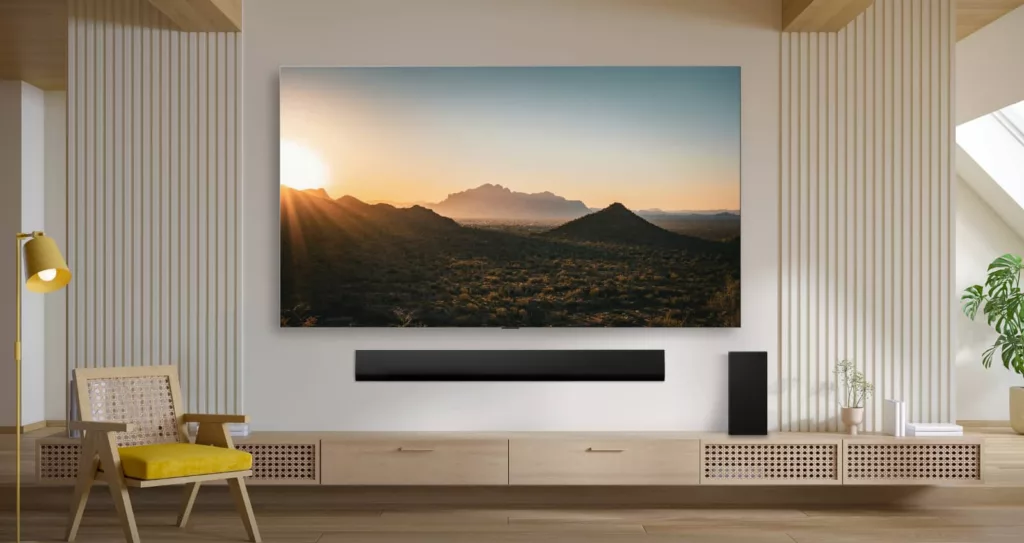
Not everyone wants a big TV in their home. If you’re after a sizeable screen, but can do without the obvious TV frame, the Hisense PX3 encourages you to think big against a wall.
The living room has changed, and mobile phones and tablets are why. That might seem like an odd way to start a review about a projector, but we have reason: big TVs no longer hold all the cache they once did.
While you can still pick up a big TV for the living room, and TVs are getting markedly more massive each and every year, our ability to consume content on phones, tablets, and computers from any location means the TV is no longer the heart of the home, and by extension, the living room with it.
You no longer have to rely on the TV for movies or shows or programming of any kind. Even Xbox Cloud Gaming makes it possible to game from outside the TV.
So where does that leave the sizeable screen of the tremendous TVs? They’re for proper film watching, the kind designed to rival going to the cinema.
These days, films don’t spend as long in the theatre as they once did, and what used to be a six month shift from cinemas to home is now closer to a max of two to four months. That means you can turn your home into a cinema of sorts and get films without heading to the theatre.
Your big TV is still being used for big movies, but the focus has changed. It’s there for that, and possibly for equally big events, like sports, live concerts, and so on. Entertainment that won’t feel as equally monumental when viewed on a small screen.
With size being seen as the big deal for big events, it wouldn’t surprise if you wanted that entertaining space to be massive with it. Unfortunately, huge TVs are still expensive, with the assortment of 80-odd inch screens commanding in excess of $4000, except when there are sales.
But what if you could deliver a big screen while keeping the price to a maximum of four grand? And what if it didn’t need to impact the style of your home too significantly?
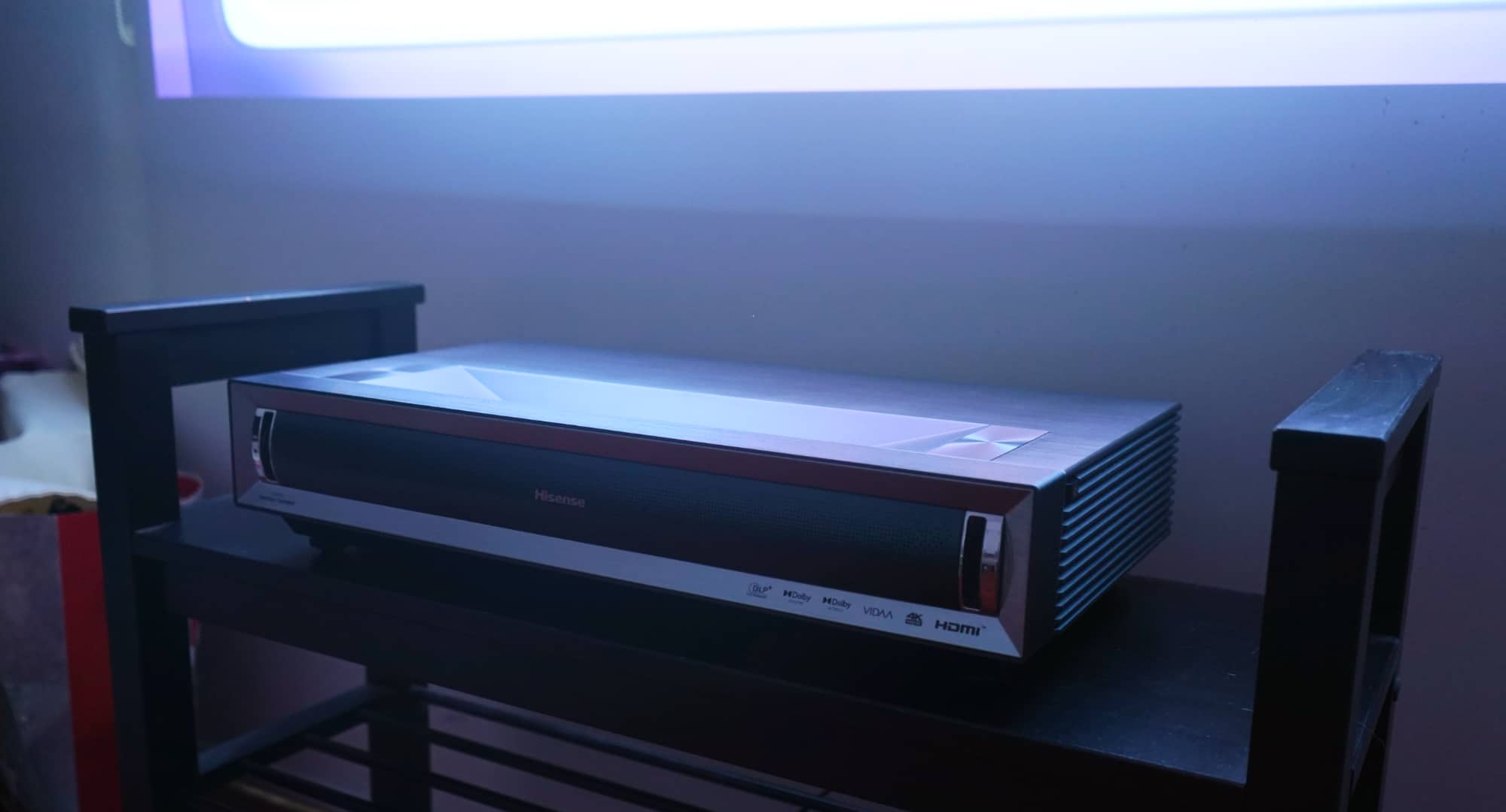
This is the world of laser projection, and where Hisense’s PX3 TriChroma 4K Laser Cinema is placed.
What is the Hisense PX3?
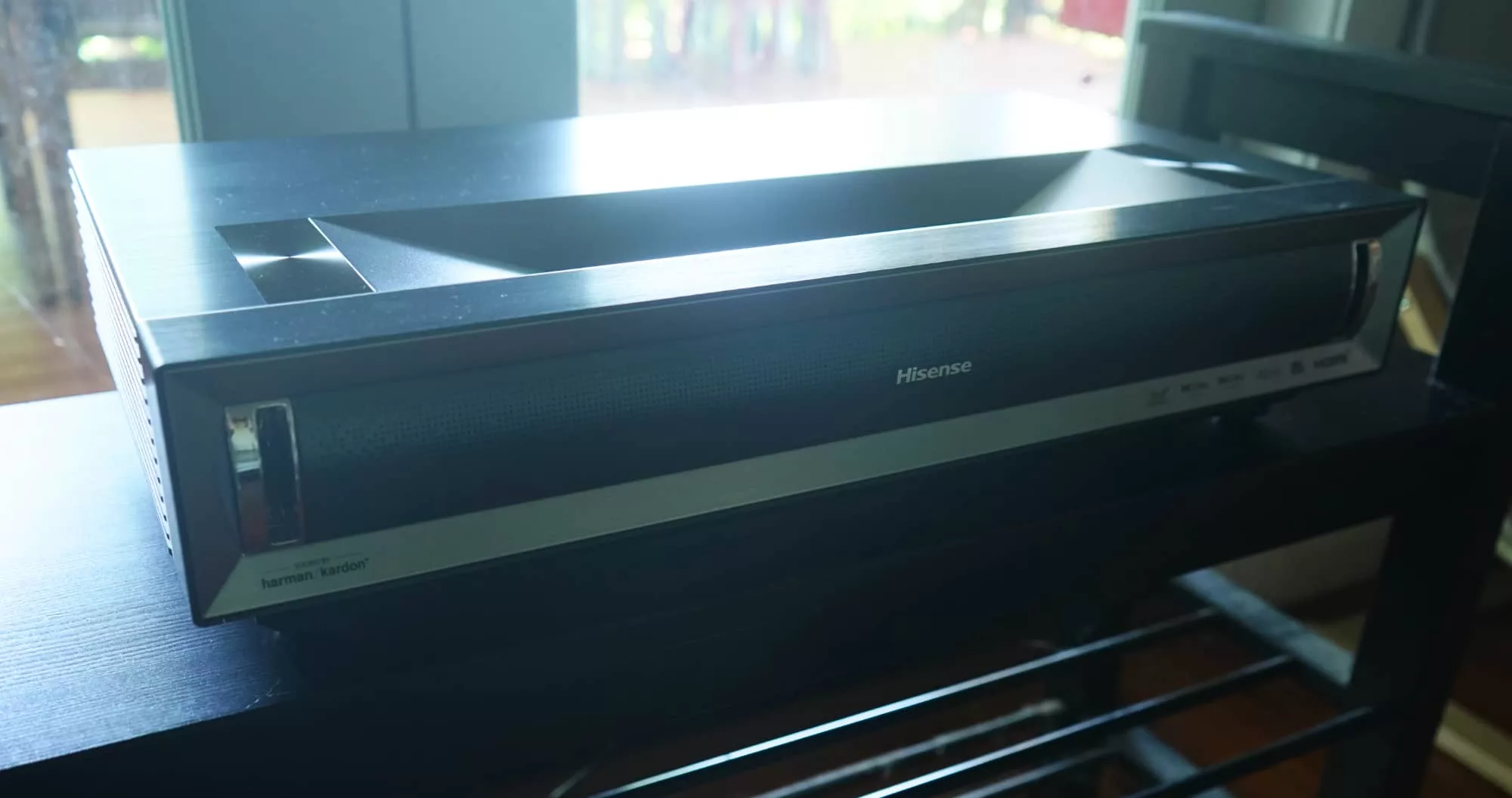
Built for entertainment, the Hisense PX3 is one of those heavy duty entertainment gadgets focused on replacing the TV. And that’s fair, because it also technically is a TV.
Both a laser projector and a laser TV, Hisense gets this screenless-system to qualify thanks to its connections, which we’ll get to shortly.
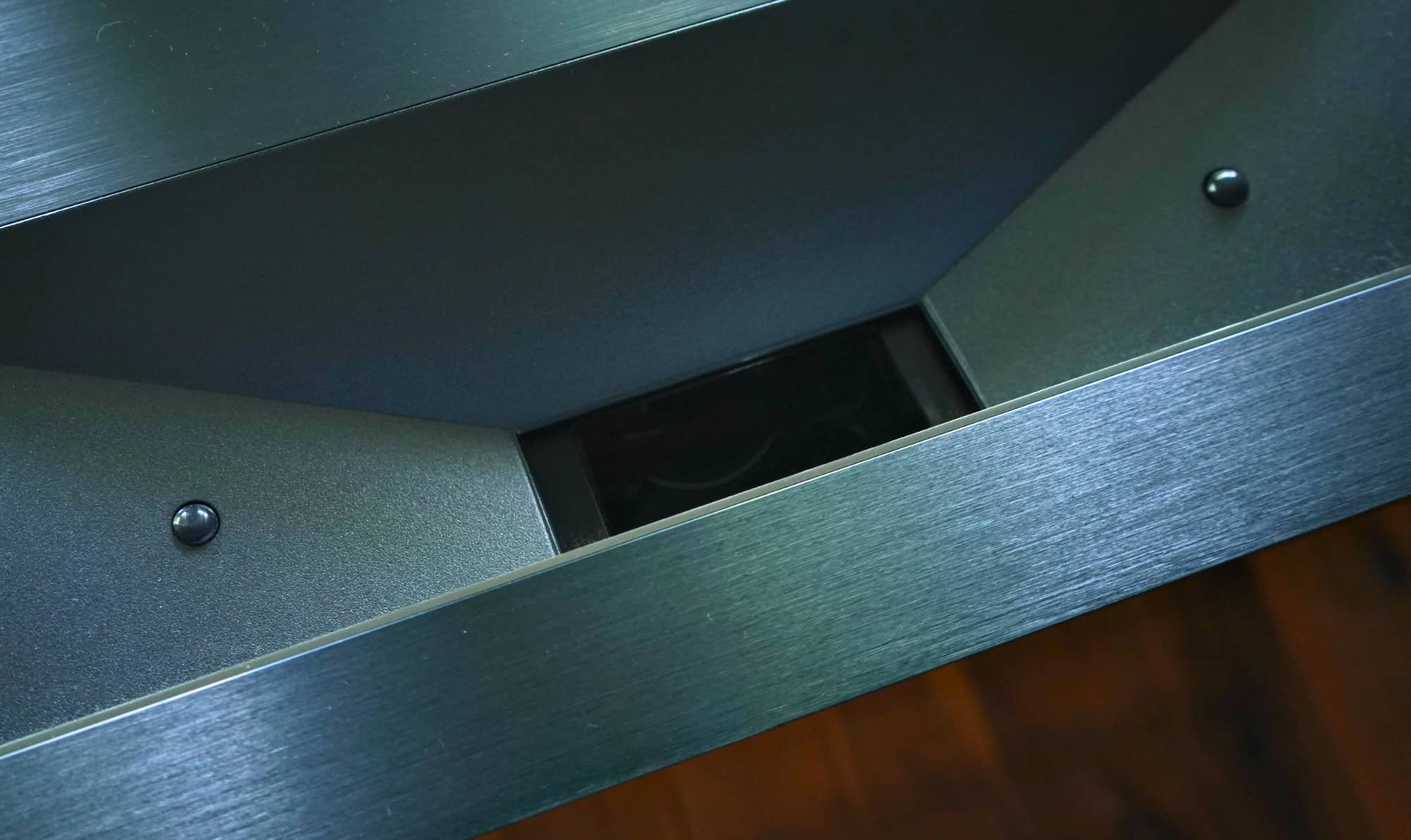
Inside, however, is a lighting system designed to deliver extreme brightness for a long amount of time, with a bunch of technologies making this work.
For starters, there’s the laser itself, which is expected to provide more than 25,000 hours of activity and performance, and if viewed for four hours per day (every day) would last over 18 years. Sufficed to say, you’re probably going to get more life out of this thing.
The laser system uses a three-colour laser light source for red, green, and blue called “LPU” (Laser Projection Unit) alongside AI-based algorithms. Those three colours come together for a system you might have seen from Hisense before as a “TriChroma” system.
Support for 4K Ultra HD is there as the native resolution, and AI is also there for upscaling, as it is with most TVs, pushing up content to match the 4K Ultra HD size.
Meanwhile a combination of HDR technologies deliver wide colour gamut. Support for beyond 100 percent of the BT.2020 colour gamut, with what Hisense calls 110% BT.2020, plus support for HDR10, Hybrid Log Gamma (HLG), and Dolby Vision with both dark and light modes.
Support for Xbox certification is also here, complete with smooth motion technologies switched on out of the box which you can turn down or off, provided you dig through menus, and then there’s the sound.
For that, Hisense turned to Harmon Kardon, embedding front-firing speakers into the design, but not exactly an Atmos system, even though the PX3 supports Dolby Atmos. That gives us an idea of what the sound system is actually using, and is likely virtual.
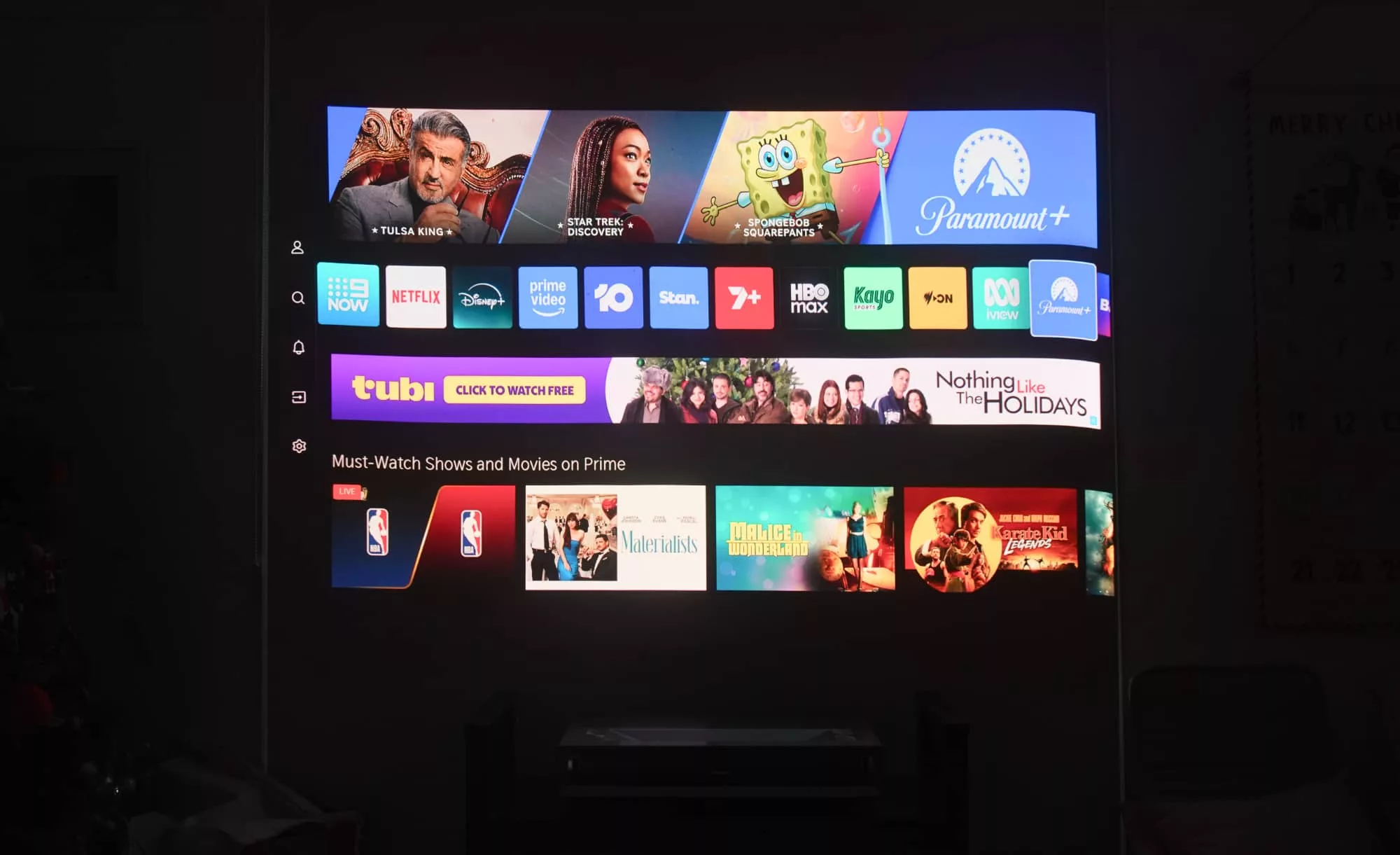
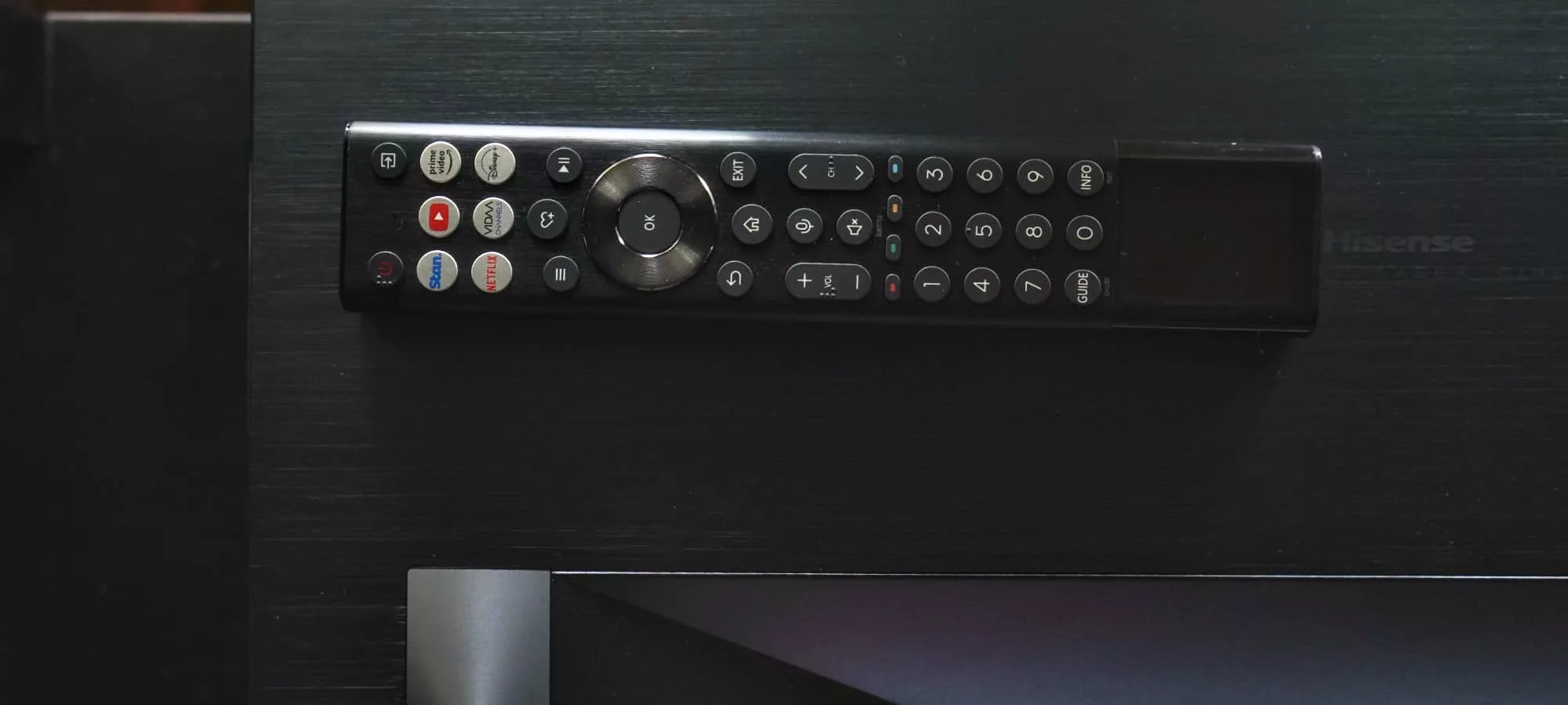
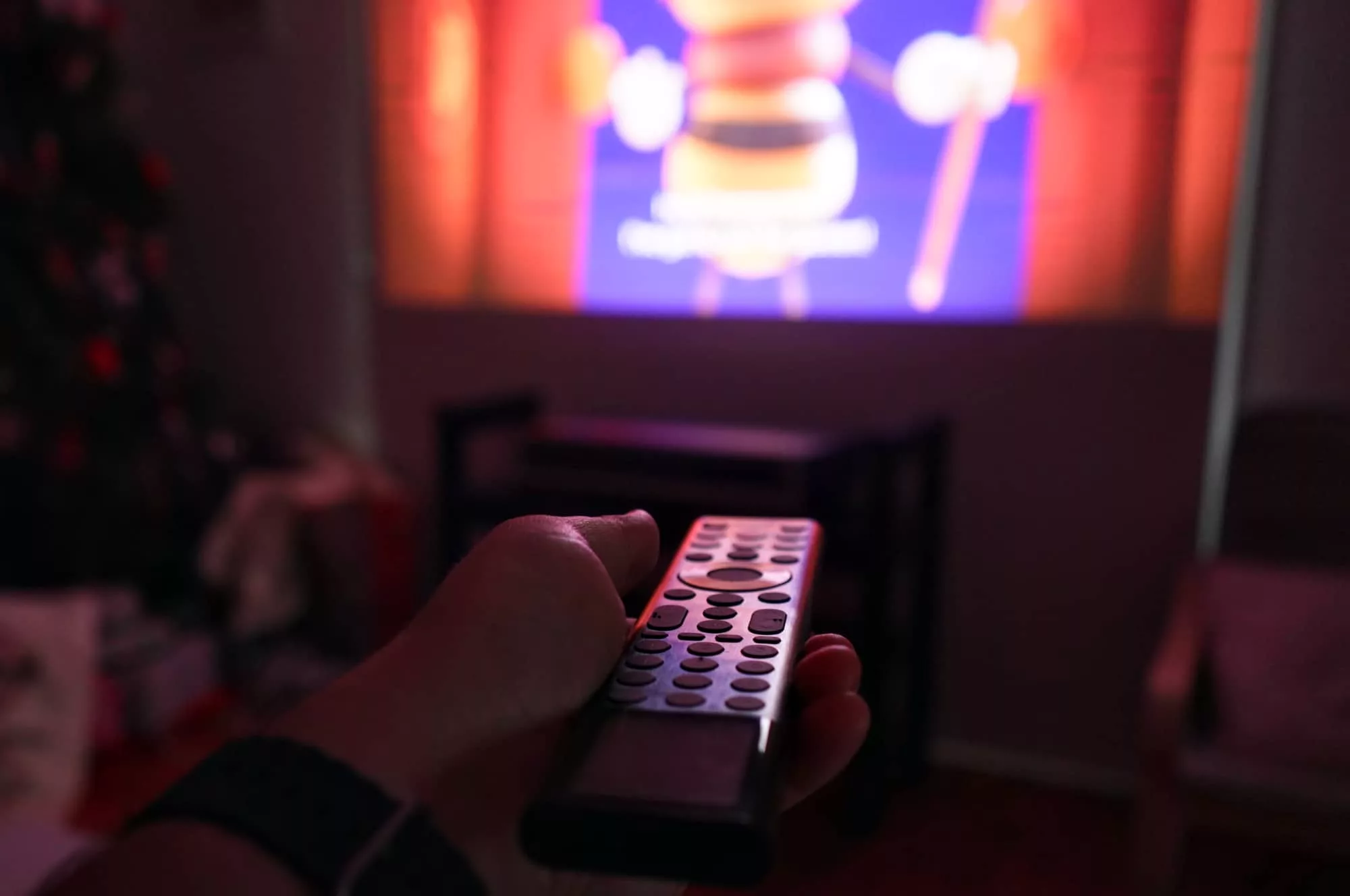
Inside, Hisense uses the same VIDAA operating system found on its TVs, complete with an assortment of apps and shortcut buttons on its rather long remote, which also has a solar panel to charge from and a faster USB-C charging port.
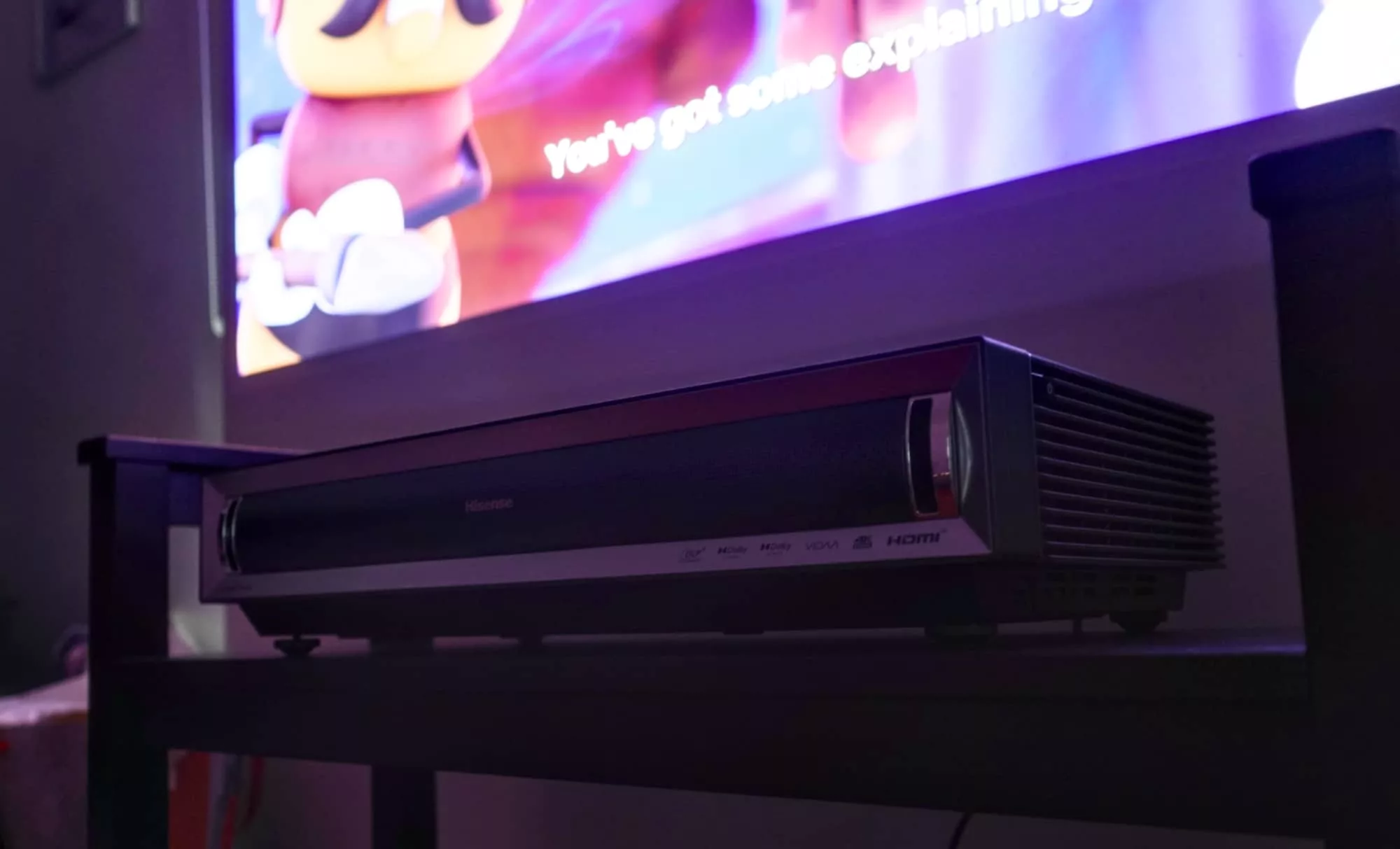
You’ll also find an assortment of ports on the back, handy if you want to plug in other sources, or even replace the sound with an eARC-capable soundbar. They include three HDMI ports, one headphone out, one optical audio out, one Ethernet port, a USB 2 power out (like for plugging in power to a Chromecast), and even a card-style interface.
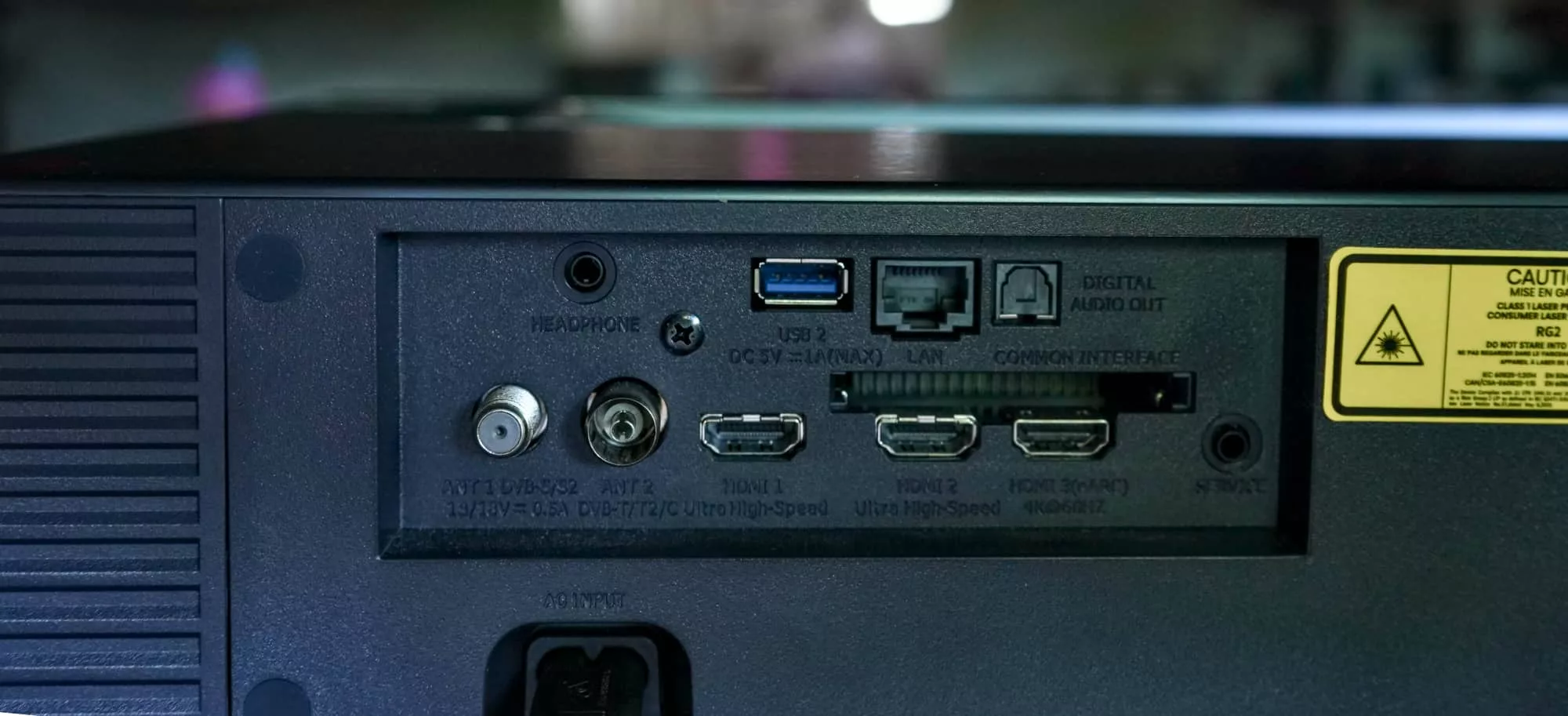
And then there are two ports you mightn’t expect on a laser projector: antenna ports a TV might normally have.
It’s what we mentioned at the start of this review, because the Hisense PX3 is also a TV, and those TV tuners make it possible to run TV channels grabbed from a digital terrestrial connection, not just the apps and internet services and game systems and other devices you plug in.
What does it do?
Not just a laser projector, the Hisense PX3 is also an ultra-short throw projector (UST), making it a gadget you don’t need to have a lot of space for. All you really need is a wall, or a wall and a screen.
We opted for a set of doors and a blackout blind coloured white, pressing the PX3 against the edge and shining it up at the curtain, which sent the image up high, projecting a large picture.
Technically, the PX3 can handle an image ranged from 80 inches all the way to 150 inches, but your projector’s position and screen will determine how big you go, as will the setup process.
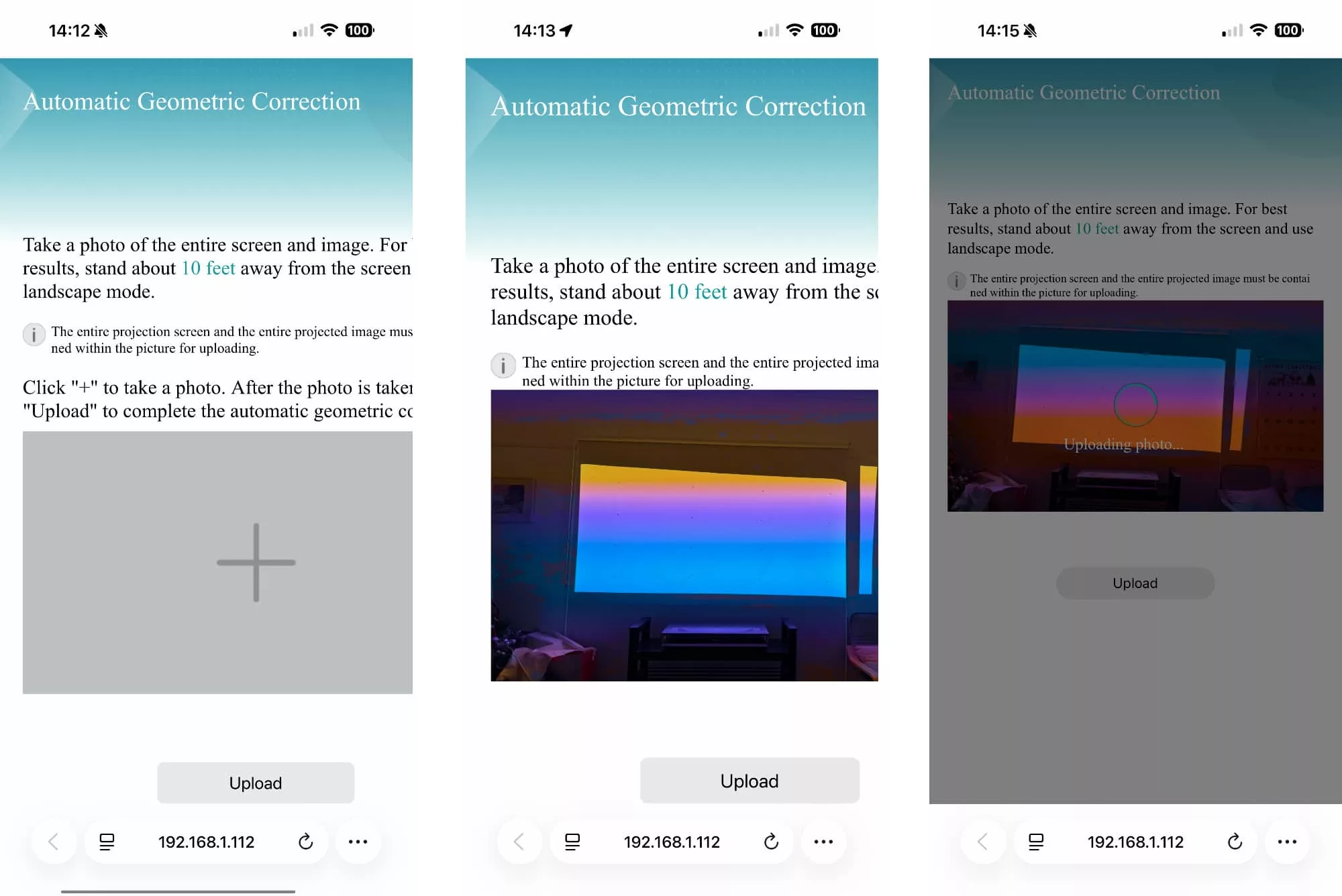
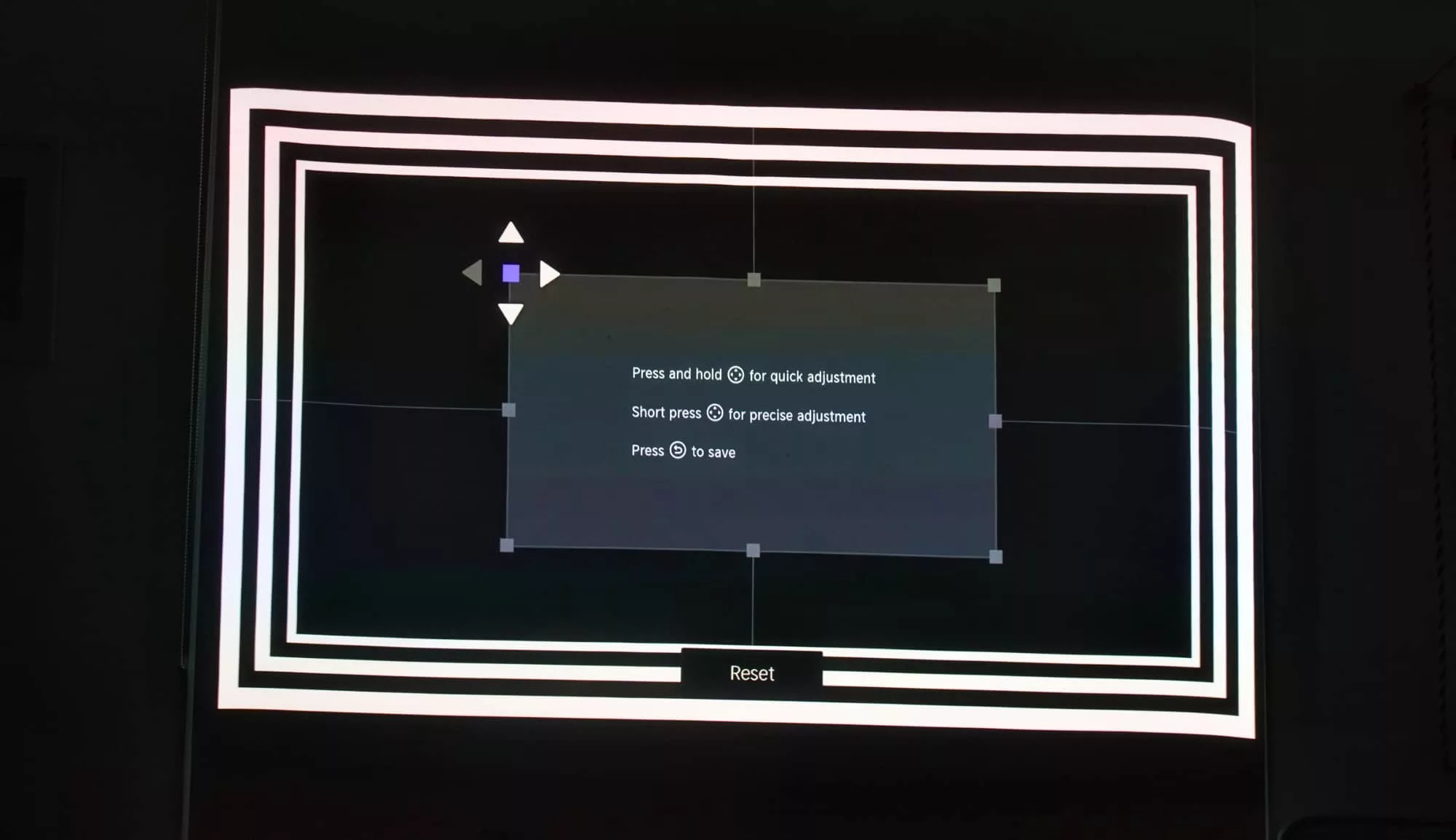
One of the more interesting aspects of the experience, setting up the Hisense PX3 involves connecting to it on your network, and then using your phone to take a picture of how it looks on your wall, which the system can auto-calibrate for. Doing this doesn’t always work, but fortunately you can quickly trigger the process again, and if it fails, map it by hand by moving the points of the frame using your remote.
From our tests, the flatter and more specialised the surface for the screen, the more likely it is to work.
If you’re just using a curtain or blinds like this reviewer was, the automatic keystone correction isn’t always stellar, but once it’s done, it is done. You are good to go. For everyone else, manual correction does the job better.
Does it do the job?
If watching movies in a huge ultra high-def size is what you want, the Hisense PX3 has your number, because this is what it does.
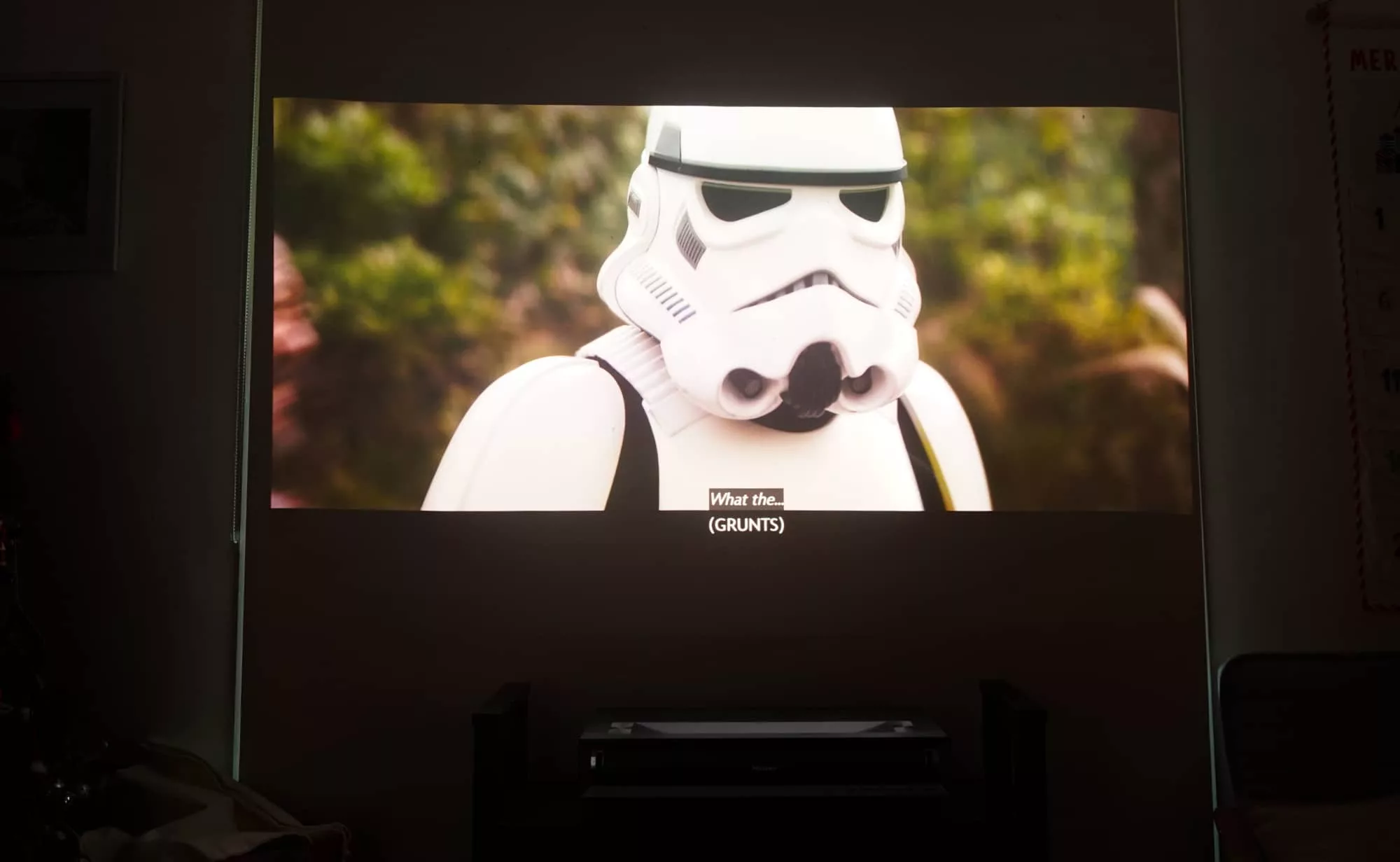
There’s a big picture on offer with an incredible amount of brightness, which at some points almost beggars belief. Even without a specialised screen, the 2800 lumens seems higher than it should be.
This projector is so bright, it can make your small darkened living room feel like an IMAX with the size and brightness and stage on offer.
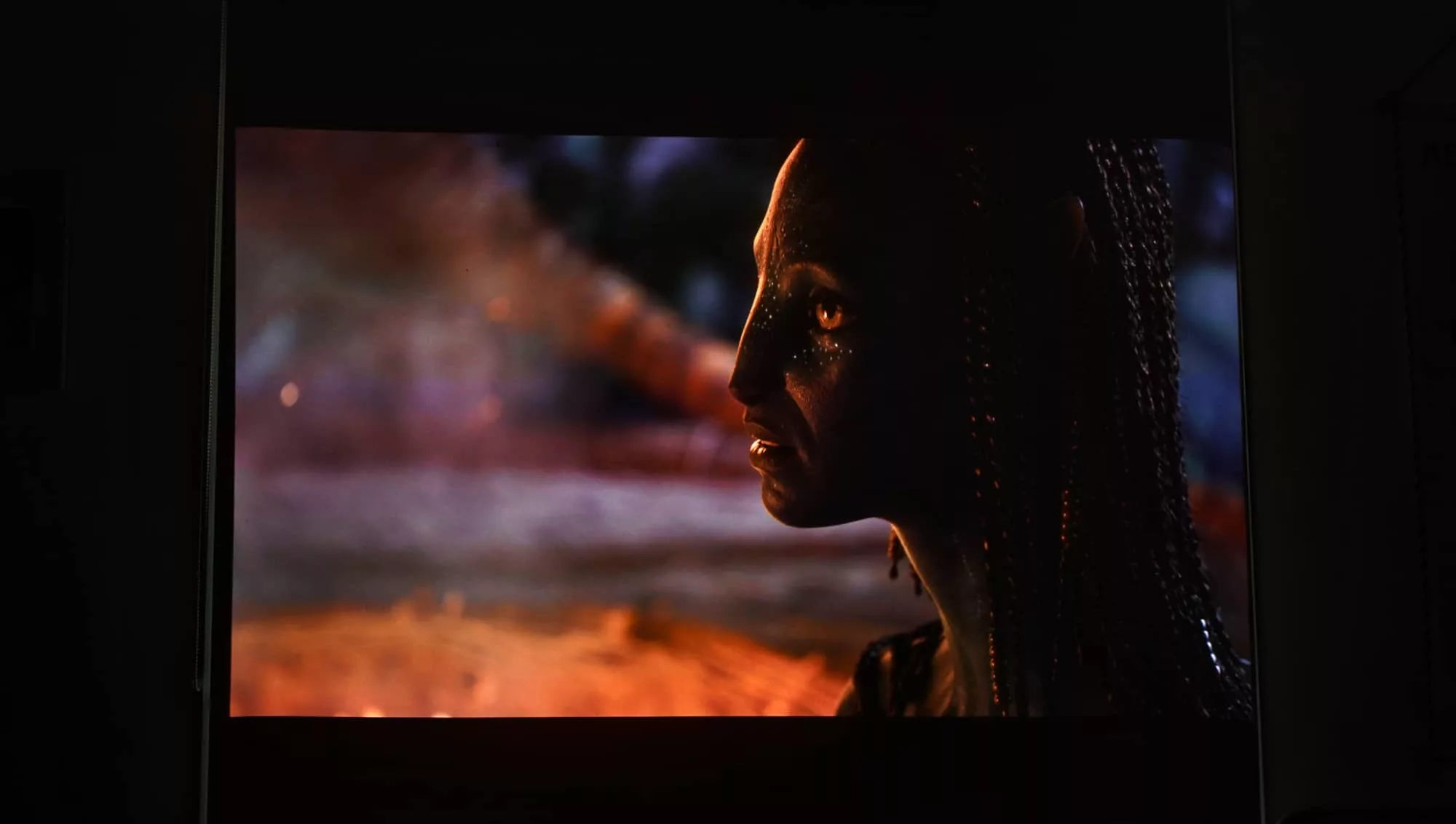
The colour is also solid alongside, with clear and what feels like accurate HDR when we checked out films.
Running recent films designed to take advantage of lovely colour, such as a recent Avatar flick, not to mention one of the soundbar test films, Rogue One, we found excellent colour and clarity, even if the smooth motion needed to be turned off to save our fragile little brain.
It’s not for everyone, and is primarily there for sports, so it shouldn’t be switched on for films.
For film watching, though, the experience is excellent, and if you have to give your kids their own experience, Hisense’s VIDAA U smart TV operating system even includes its own child-friendly programming, complete with Sesame Street episodes.
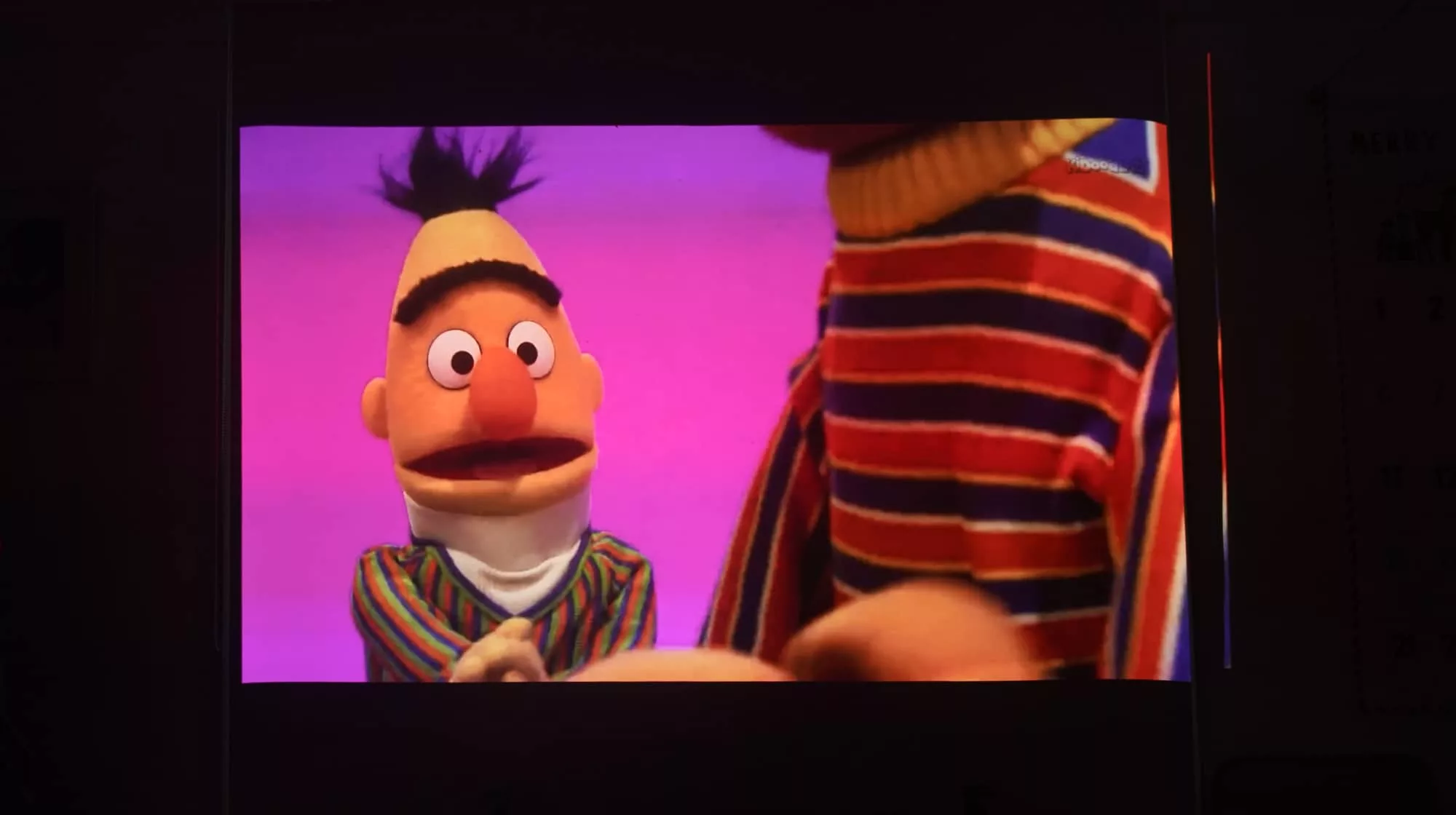
Hisense even includes little flourishes and touches that can help it stand out from being merely another projector, because there are heaps of those around.
Take the way the system turns on and off, with an animation of a digital curtain opening and closing. Blink and you’ll miss it, the sort of extra thing out of the corner of your eye, but it’s cute and adds to the experience of it all.
It’s an entertainment projector, so it has something extra that you might normally find on a Bang & Olufsen TV, rather than this more economical projector and laser TV.
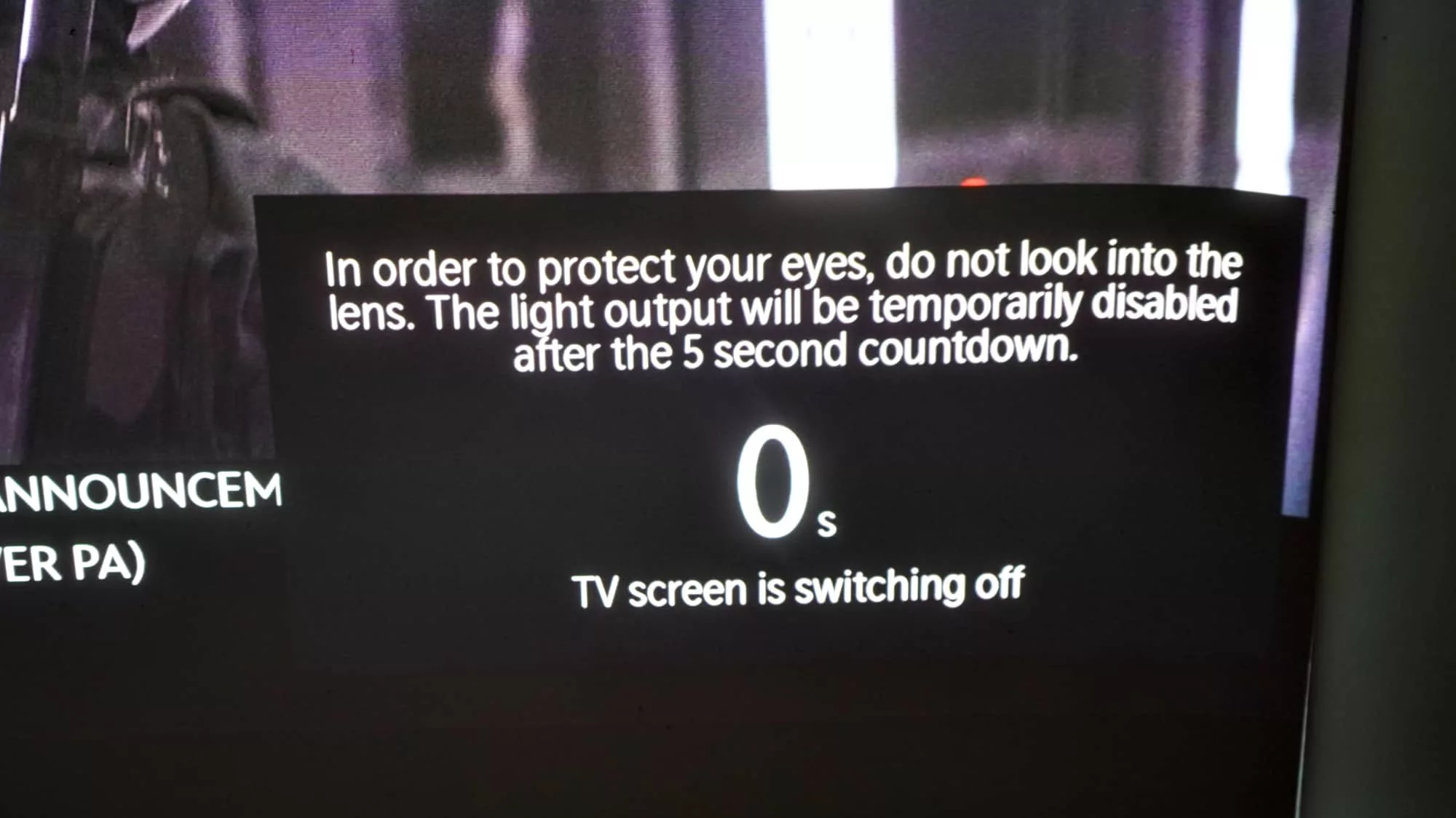
Or even the warning for you to not look at the sheer amount of laser light coming out of the system.
You definitely don’t want to do that — do not look at the laser light opening while it’s running — and Hisense even has a trick to stop you: when its sensor pick up that someone is standing over it doing just that, a warning appears on screen and will shut the lighting off. It’s not a sticker or some nonsense message your kids can just ignore in a moment of being silly and young; the Hisense PX3 prevents eye damage by switching itself off. That’s handy and clever.
Even the idea that the PX3 laser TV can just sit in with the rest of the decor without being a black TV is a bit of a win. Granted, that’s nothing new for any projector environment, particularly the ultra short throw variety.
It’s not as if Hisense is the only UST projector manufacturer, and every model designed to pitch a film at a severe angle gets the same treatment, delivering a picture to a wall without having a the black-encased frame of a TV in the way, the very thing devices like an expensive rollable OLED TV is designed to also fix.
What does it need?
Hisense’s PX3 is a fantastic system worthy of any dark rooms, but it mightn’t do as well in well-lit rooms, even with the impressive amount of brightness on offer from this system.
We let a bit of light in from a nearby room and the picture dulled slightly, even as the staggering laser light continued to put out extreme amounts of light.
That’s probably an issue with projection on the whole: while laser light is very, very good at delivering brightness en masse, it still has to deal with ambient light.
The problem is the light control could be better. That sheer amount of light almost feels like it could be restrained and controlled by a sensor.
For instance, if it was very dark, the sheer brightness mightn’t need to be so bright, and when there’s more ambient light in the room, the brightness is pumped up. All of this would be sound logic, and not unlike what our phones do when we’re outside, making the screen as bright as possible, and yet reducing it when we’re in the regularly-lit rooms.
Hisense doesn’t appear to be doing this. It’s not harnessing its brightness in a way that could achieve a better result.
It’s a similar situation with sound, which is loud and relatively clear, but lacks depth and dimensionality. You get the vibe quickly that the included Atmos is virtual because there are no upward firing speakers, only outward ones.
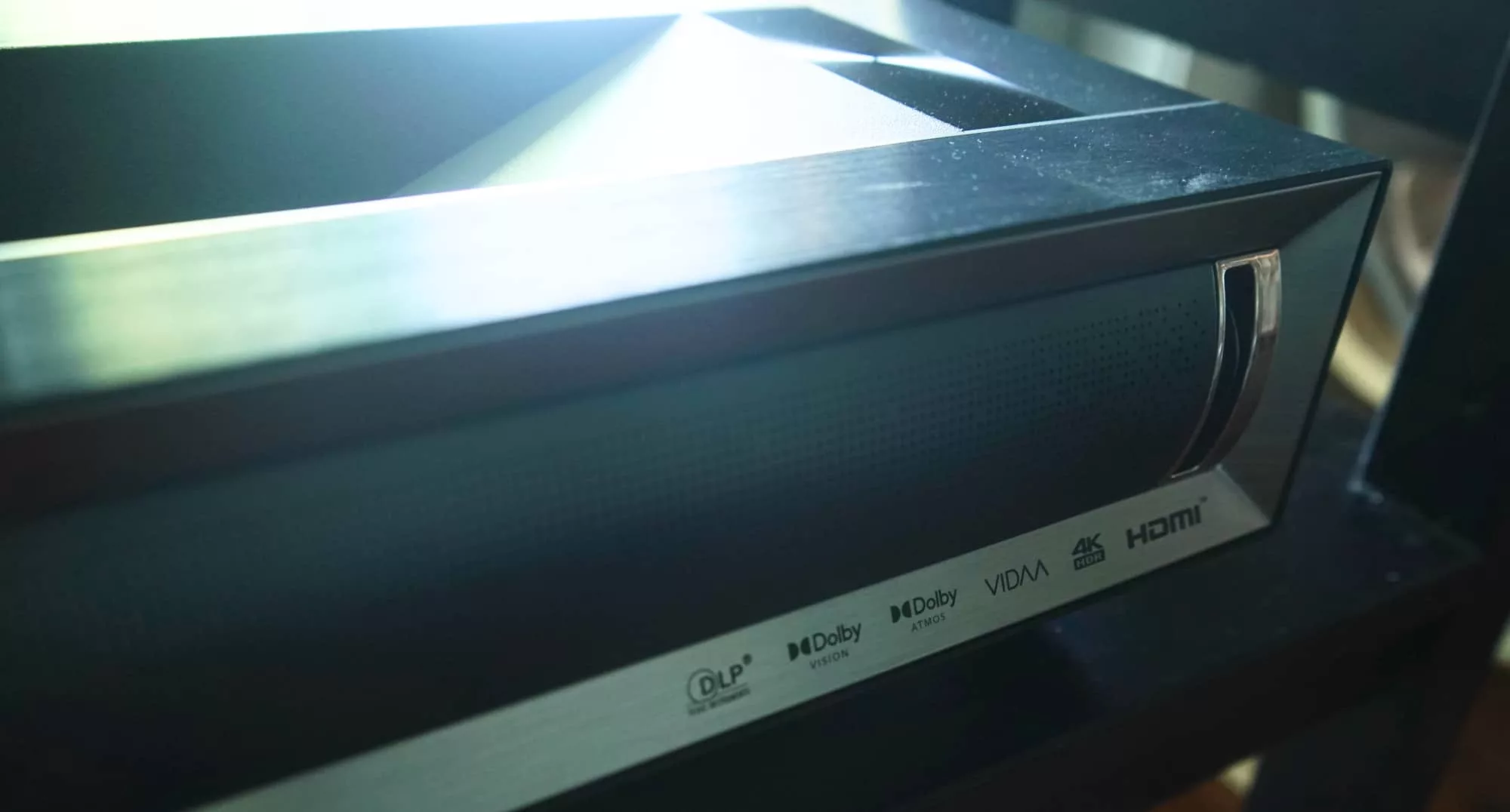
Officially there are four speakers, which isn’t quite enough to deliver a full dimensional sound, even if Hisense was channeling a virtual delivery like in the Sonos Beam Gen 2. The problem is even if virtualised Atmos was on the cards, the output just feels shallow and lacking.
The punch is mostly highs, and while you can hear dialogue clearly, the sound definitely isn’t the star of the show. At times, you’ll just want to unplug it and switch to a soundbar, any soundbar.
Make no mistake, the design of the Hisense PX3 more or less suggests the system is half-soundbar, but the reality couldn’t be further. While the video is the main focus of the PX3 and its powerful laser light engine, the speaker system is underwhelming by comparison.
It’s as bright as the rest of the package, and that’s not a good thing for a speaker to mainly be.
Is it worth your money?
The good news is you can easily switch the sound to something else, provided you have something else to begin with. The HDMI ports deliver eARC, which means a recent soundbar will improve the performance, especially if it happens to be an Atmos-capable soundbar, such as the Sonos Arc Ultra, or even its regular Arc predecessor, which we still use to this day.
In terms of value, we’re not even considering the sound system for worth, and you shouldn’t either. Think of the speakers on this $4K projector as not remarkably dissimilar from speakers on a TV: they do the job and are loud enough, but for proper dimensionality and sound delivery, look at something better.
No, we’ve come for the picture and the impressive laser light from the system. And in terms of that, Hisense nails the brief.
Whiled the $4000 price seems high for a projector, it’s also not so high that it’s out of the realm of possibility for anyone looking for a TV upgrade, which is really where the Hisense PX3 plays.
This isn’t just a projector, but a TV that doesn’t have to change your decor at home. Set it up against a wall without a TV and it’s fine, working as and when you need one, projecting to a feature wall if you have the space, or even a screen that can lower into place.
In terms of what it competes with, there aren’t a lot of inexpensive projectors in the laser TV space. Typically, laser light commands a higher price, and we’re not talking about the Laser-brand, which ironically doesn’t have laser light projectors (they’re LED-based).
Comparatively, Hisense’s laser light projectors compete with similarly priced models from Epson and LG, more expensive Hisense variants with better glass from Leica, and then less expensive and yet highly portable options from Anker’s Nebula brand, which don’t quite offer the same amount of brightness but are made to go and have a battery inside.
So in terms of price, the rough four thousand Hisense suggests for the PX3 isn’t out of kilter. It’s about normal.
But the good news is that you don’t need to do too much searching to find it on sale and further from its high price to get a decent bargain, it seems.
Around the time this review was published, which was admittedly later than the writer would have wanted it online, the Hisense PX3 could be found for over a thousand below its recommended retail pricing, and for below 3K price. That’s a better value altogether, and starts to make more economical sense.
At 4K, the Hisense PX3 is about standard for a solid laser TV and projector system. At below $3K, however, there’s a great bargain to be had.
Yay or nay?
Not everything is perfect about Hisense’s PX3, but for the price it delivers everything you might want for a big screen without borders.
If a big picture is what you crave and you can easily fix its middling sound — and you definitely can with any number of recent soundbars — the Hisense PX3 is a worthy projector for any room with a screen, a spare wall, or maybe just a rollable blockout blind in need of an extra use in your life. Recommended.