

A day Telstra would likely rather forget, a serious issue took out the country’s biggest telco one morning, leaving it difficult to connect to until much later. What happened?
The second Wednesday in July of 2026 will likely be one of those days engineers and executives at the nation’s biggest telco would rather wake up from, hoping it was merely a nightmare rather than a nightmarish reality.
Whether you were a Telstra customer or not, chances are you faced a situation where a connection didn’t work the way it should.
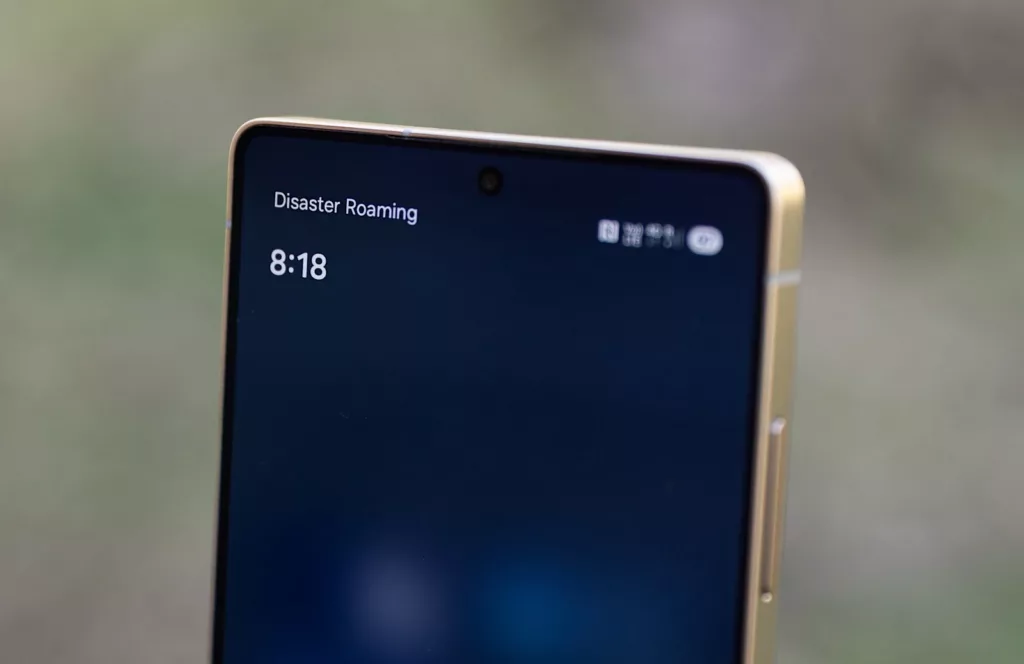
Paying customers of Telstra itself could sort themselves into one of two categories on the morning of July 8: those who could connect with no issues, and those who had no service and simply an “SOS” symbol on their phone.
The amount dealing with that last one likely started in the thousands, and possibly hit into the millions, spanning across the country beyond simply one or two cities.
It went everywhere. Australians grappled with a lack of connection, whether it was on their phone, their tablets, their watches, or simply at the business end for mobile payment terminals.
Public transport was even affected, as trains went down in parts of the country. It was a big deal.
If that wasn’t bad enough, the issue also affected customers using mobile operators that also happened to lean on Telstra’s service. Mobile virtual network operators (MVNOs) such as Belong, Boost, Mate, Woolworths, and others were all affected, as well, leaving their customers in much the same problematic world.
There was no connection. There was no service. There was only an SOS symbol where once a bar or five of mobile connection once sat.
It was a problem where the obvious solution of turning it off and on again might have fixed it on the phone’s end (maybe), but definitely wouldn’t have done anything at the telco’s end, as engineers rushed to find out just what had happened.
By the afternoon, that had happened, and we have a rough idea of the cause.

The rough problem
While Telstra is still investigating the situation, the telco has noted that software was the likely culprit, something this journalist noted on air beforehand because of how the problem was coming to life.
Any telco can have an outage, and there are a multitude of reasons why and how. But for a service failure to affect a carrier across every major city, it’s unlikely to be a hardware issue because of how widespread it is.
Indeed, Telstra has noted the problem came down to “a software defect”, and was able to isolate it, affecting nodes responsible for timing.
At approximately 4.30am (AEDT) we identified an issue affecting a number of nodes that help keep time across our mobile network. When these nodes are not operating as expected, other parts of the network can be affected, resulting in intermittent issues with some mobile calls and data services. We began investigating immediately and started work to restore services.
Michael Ackland, Chief Financial Officer, Telstra
Timing is everything
To understand why timing matters so much for a mobile network, you need to think about how important the time is.
There’s an accurate time your phone sees, and also an accurate time on servers at the telco’s end. These need to line up due to how data transmits back and forth, allowing the two systems to synchronise easily and prove that the time on each is connected with each other.
But when a server goes out of time against what your other servers and nodes say, that connection can’t work. The differences seem small, but become a major issue, preventing a mobile service and device from maintaining a connection between each other.
Almost crazily, the phone is actually a minor player here. It could probably connect even when slightly out, or set up with a different time zone. But when mobile nodes are out of sync between each other, the timing doesn’t work, and everything can fail.
Calls can’t work because the times are out. Data and downloads aren’t synchronised to send information between server and service, a problem of node and nuisance. Overall, the connection is a mess, and nothing works.
If that sounds familiar, it’s roughly what happened. A system lost its ability to synchronise the time across the network, and everything failed.
A demo of what went wrong
Most nodes fell out of sync after a software glitch, but some nodes maintained the correct time allowing some devices to stay connected. In this demo, the phones show the current and correct time, as does one of the nodes. But other nodes are clearly out of sync, and struggling to maintain the right time with the rest of the network, causing failures.
Could it happen again?
While our animation shows what has happened, a bigger question is more whether it could happen again. Unfortunately, we just don’t know.
The problem reportedly followed an update to one of Telstra’s services, affecting time synchronisation on a GPS node, and taking everything out.
It’s not the first time an update has taken out a network, and it clearly won’t be the last. The Optus outage of 2023 was caused by an update, and technically so was the Crowdstrike outage a year later in 2024. Granted, they had different reasons and totally distinct rollouts, but an update was the cause for each.
Software updates are a clear problem when it comes to these sorts of outages, and while it can happen to anyone, the hope is that the updates have been more rigorously tested to prevent these sorts of failures.
Unfortunately, it is entirely possible that this sort of failure could rear its ugly head again at a later date.
Perhaps curiously, it is the type of problem that may find its way to being solved faster on an eventual 6G network, particularly one where the service is built with AI in mind (AI-native), and could even find ways to repair itself using built-in AI monitoring and repair systems.
It’s worth noting, however, that while in testing, 6G services are at least two years away, and likely closer to around four. That means while a solution could eventually be on the cards, right now the better result is that telcos work even more diligently to ensure its updates roll out even more smoothly.