

Sometimes it takes a different approach to really stand out. In a world where there are usually a lot of brands fighting in each gadget category creating what can be a crowded workplace, standing up and standing out can be even more important. It’s not just a matter of making something either excellent or amazing. Sometimes you need more.
For Anker, a brand that has its fingers in various technological pies, that approach could be to make earbuds more interesting with internal tech, rather than simply use the same chip as every other brand.
Technically it’s coming from the Anker’s Soundcore division, the part of the company that looks at earbuds and speakers, distinct from the Anker power banks and Nebula projectors the company is also known for.
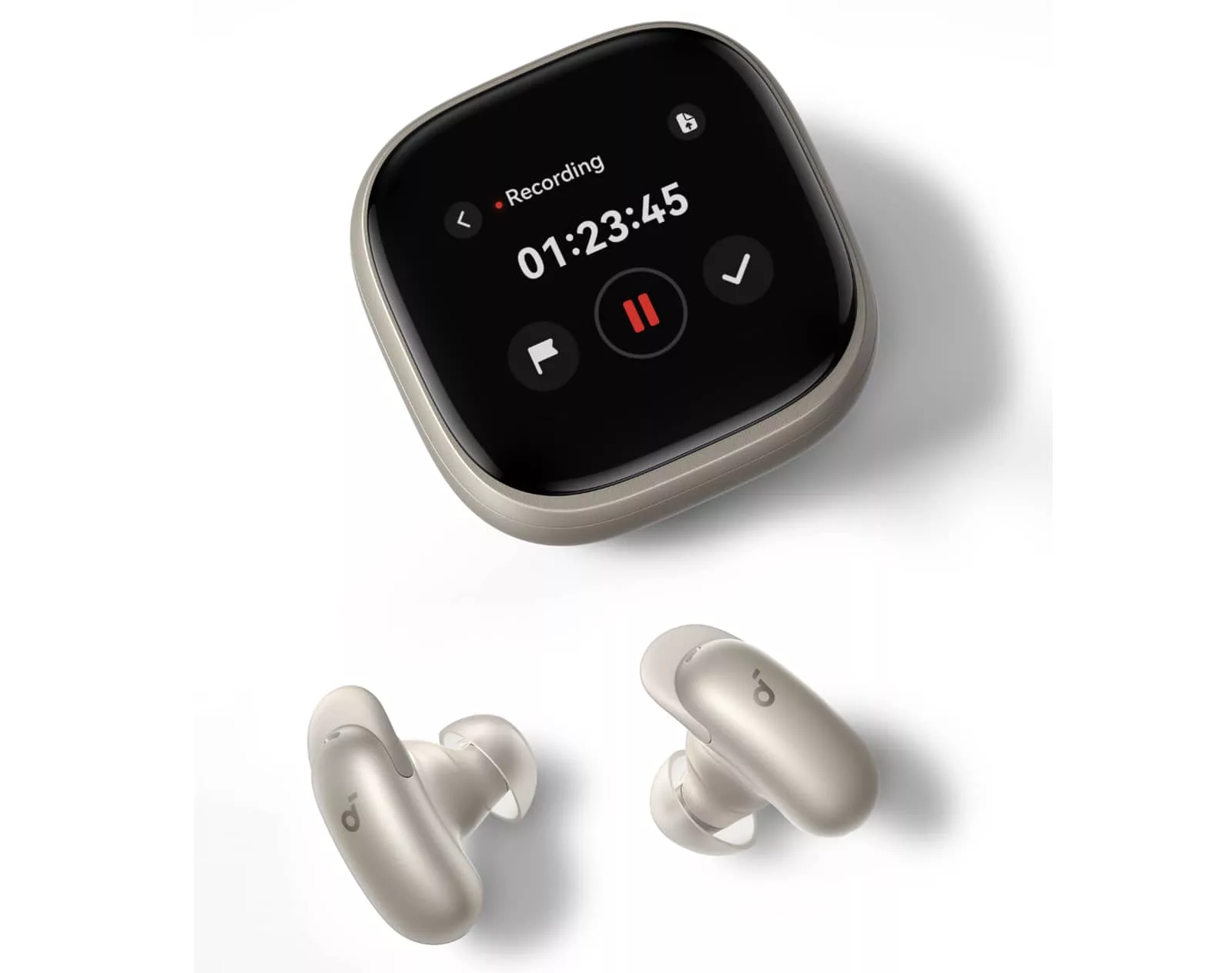
The latest gadget is the Liberty 5 Pro, a pair of earbuds that continues some of what we’ve seen in previous Liberty buds, complete with active noise cancellation in a small size.
They’ll get up to 6.5 hours of playback with noise cancelling switched on, with a total of 28 hours in the case, and even support the newer Bluetooth 6 standard, as well as the Apple Find My tracker network, handy if you’re worried you might lose another pair of earbuds, or even a first.
But the real change in technology is in processors Anker has made for the Liberty 5 Pro, sporting an AI chip inside that uses its own computational system without having to access the cloud. In short, it’s what we would call a “local” AI, meaning it’s found in the earbuds and runs its own little model with computational power, talking to the memory.
The system is called “THUS”, and while Anker hasn’t stated what it stands for, it has said the concept was inspired by the human brain, connecting the storage and computational power in the same place, much like how your brain deals with information and memory, processing the result.
“Every AI chip built until now stores the model on one side and does the computation on the other,” said Steven Yang, Founder and CEO of Anker.
“To think, the device has to carry all those parameters across, many times per second, every single inference. THUS puts the computation where the model already lives,” he said. “The model never has to move again.”
The theory is this should speed the system up, making the AI more efficient while also spending less energy to do its job.

In terms of what the AI will do, the answer is to improve the call clarity overall, essentially using AI to isolate the voice from background noise, separating the speech in real time, and working with bone conduction sensors and the microphone to make call quality sound better.
As it is, most of the best earbuds and headphones struggle with call quality, with the feature often feel like it’s relegated to just something they have to have, rather than being a main aspect.
Apparently the call quality is so good, Anker’s Liberty 5 Pro earbuds have achieved a Guinness World Record for “World’s Clearest Earbuds for Calls”, a category that probably didn’t exist up until this point (it still might not, but it’s an interesting observation all the same).
The AI also supports sound enhancements for what you’re listening to, aiming to improve clarity and detail in the music, while also working with a personalised hearing analysis, for folks who want to tailor the earbuds to match their own experience.
What hasn’t been mentioned is whether the AI for is the noise cancellation, which is reportedly adaptive and processes data up to 384,000 times per second. It seems likely, however, since there are reportedly ten sensors and that neat little neural network built in, with all of it likely contributing to the ANC feature.
Anker also hasn’t talked about the price in Australia, with no word on that at launch. Two models will be released, separated only really by the case they come in and a small feature difference: the Liberty 5 Pro will be the earbuds come with a 0.96 inch screen on the case, while the Liberty 5 Pro Max includes a slightly bigger 1.78 inch AMOLED touchscreen on the case and support for AI note-taking functionality.
Both models are expected in June, with pricing starting from $279.99 for the standard Liberty 5 Pro, while the Max edition will cost $359.99 locally.