
Quick review
The good
The not-so-good
Supporting subtitles, language translation, map directions, and an AI assistant, the Rokid Glasses could just be the heads-up display of the future.
It’s 2026 and if there’s one constant in your life, it’s that you never leave home without your phone. The indispensable gadget for the modern era, your phone is with you where ever you go. And there’s little wonder as to why.
Your phone is for calls, for texts, for websites and emails and social and music and photos and music and shopping and practically everything. Your phone is your universe.
But then there are also the things that extend our mobiles, expanding their capabilities, and allowing us to use them in other ways. Watches and earphones and wearables aplenty, oh my.
Some are very today, but others feel like they take a page from the future. As if you’ve suddenly walked into a sci-fi flick.
Built into a pair of glasses, Rokid’s technology is exactly what you think when you hear the sci-fi concept of “smart glasses”.
They’re clearly not the first of their kind, but they could be one of the most curious and forward-thinking yet, integrating a screen so that you can view both the world and the digital world through glasses. That’s not something we’ve seen a lot of yet.
And yet that’s what the Rokid Glasses are, as a relatively unknown company launches something genuinely intriguing and exciting to Australia.
Design and features
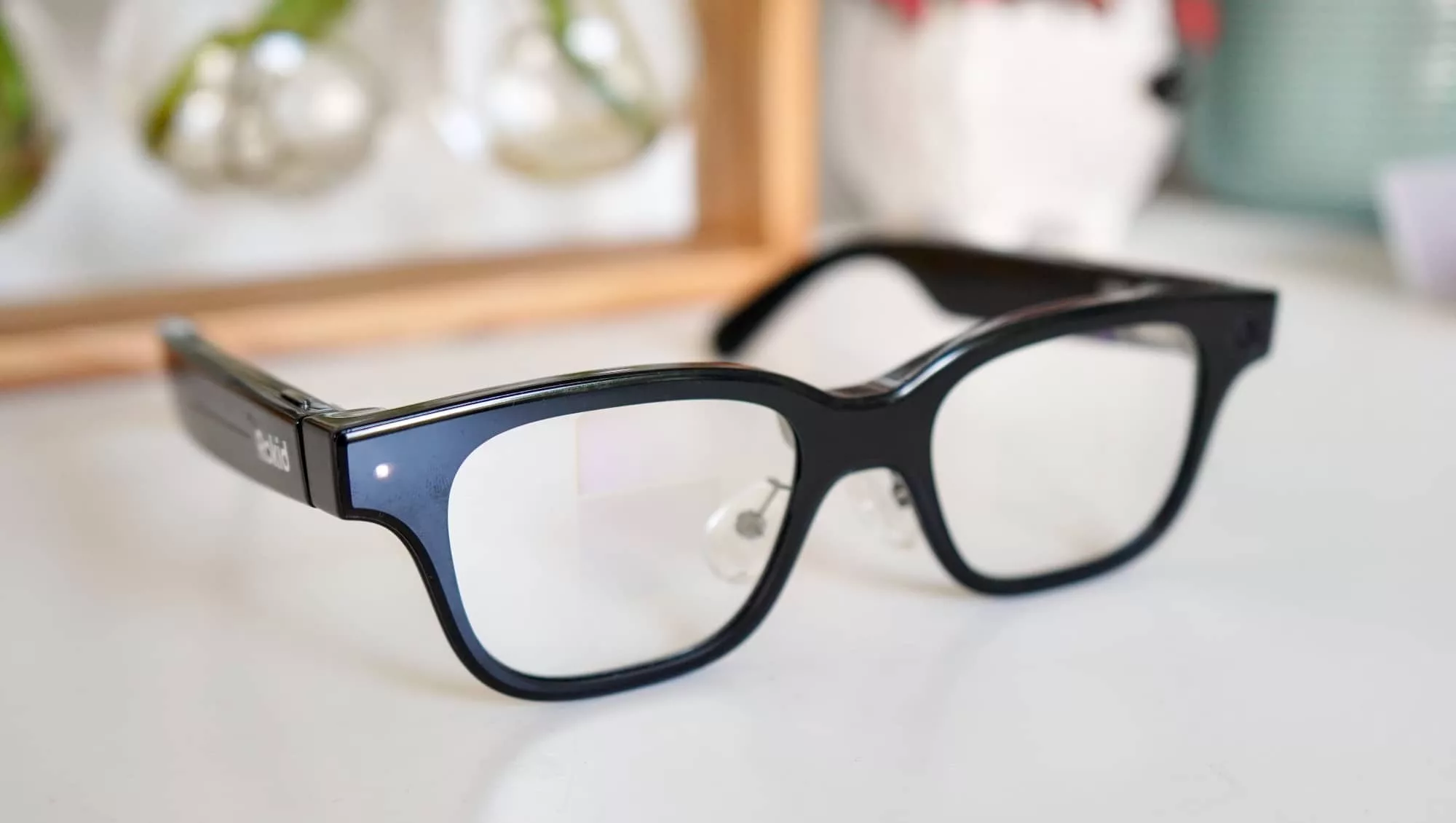
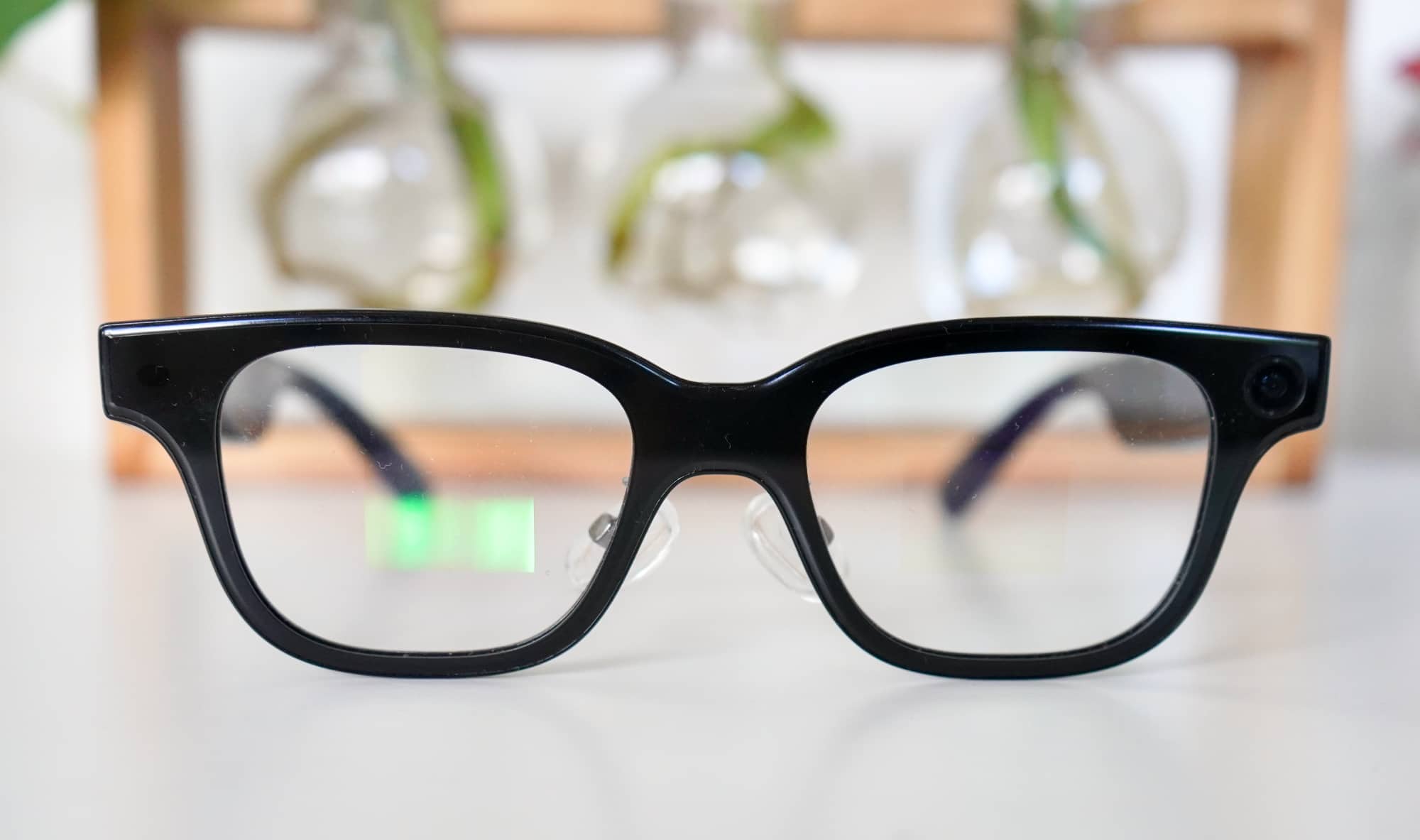
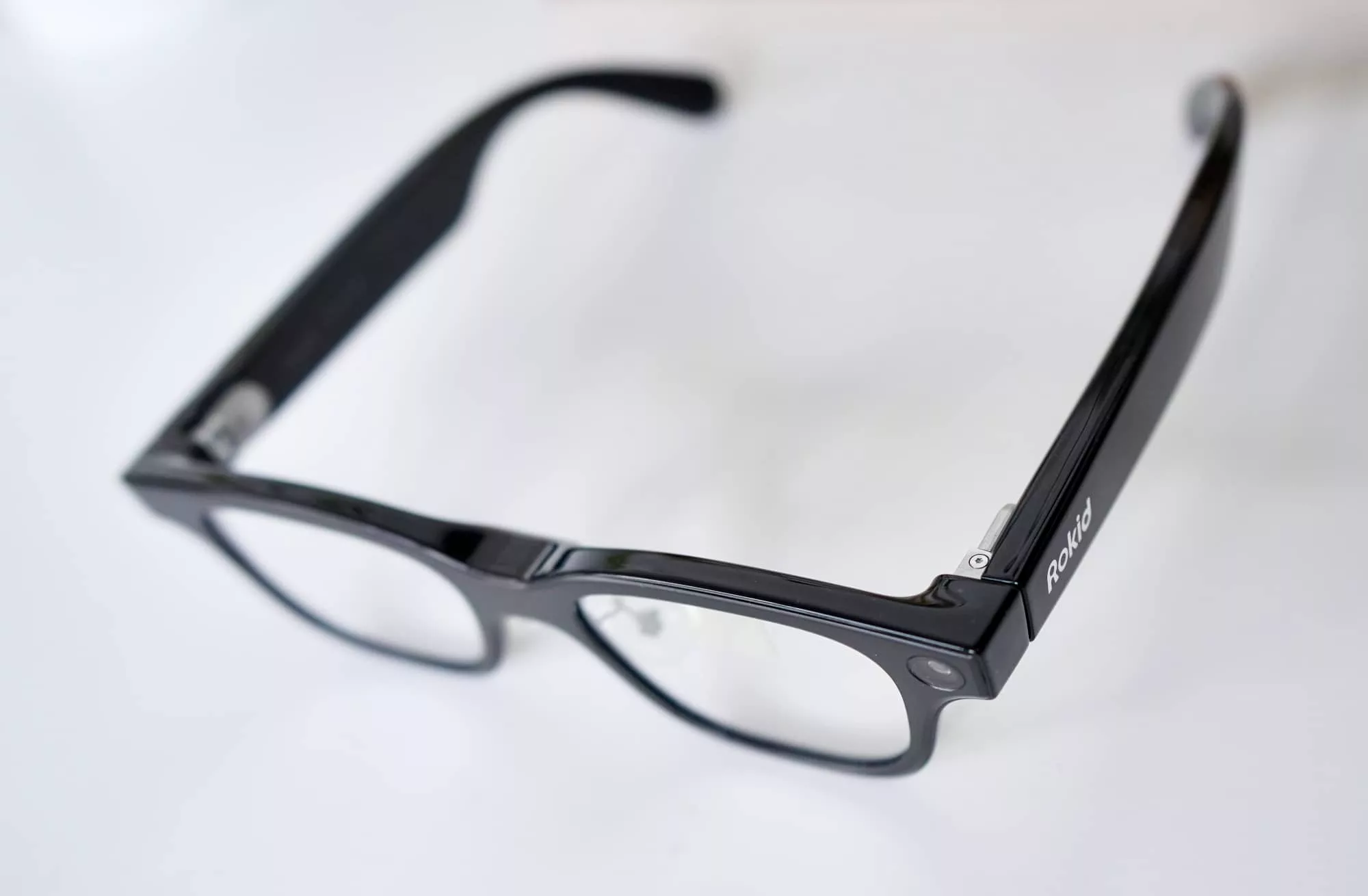
Designed like a pair of glasses — because they are a pair of glasses — the Rokid Glasses seem pretty self-explanatory.
One of the new types of wearables, Rokid’s take on the burgeoning category is a little different from the wearables that talk to you solely from speakers. They have cameras and they can see the world, sure, but in that variety you’re talking with an AI through a microphone and speaker system.
Rokid is trying something different. Rokid is trying something innovative and very future-focused.
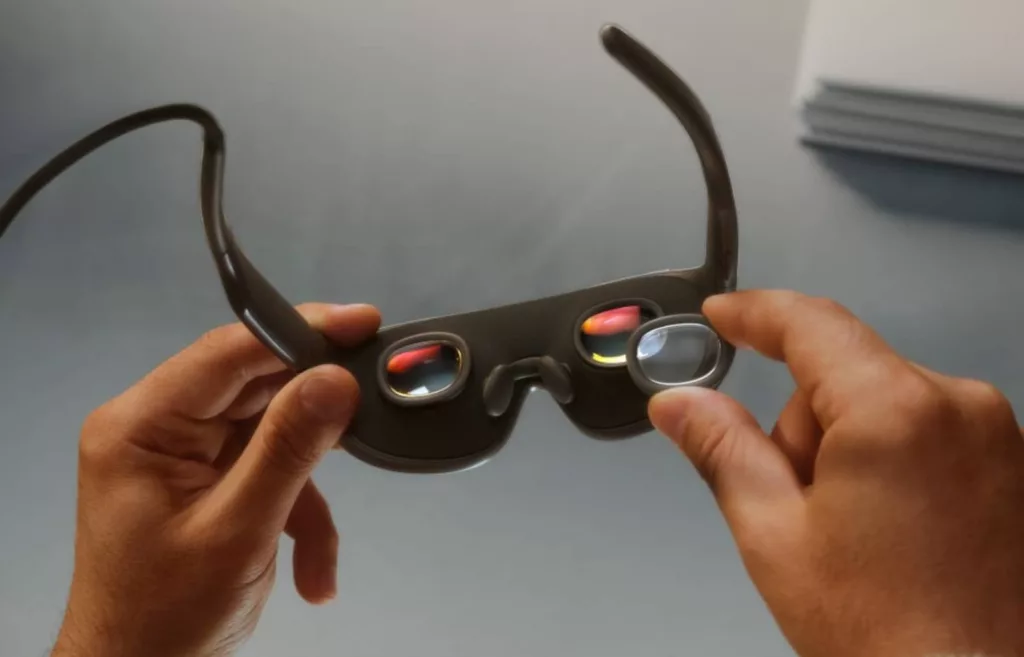
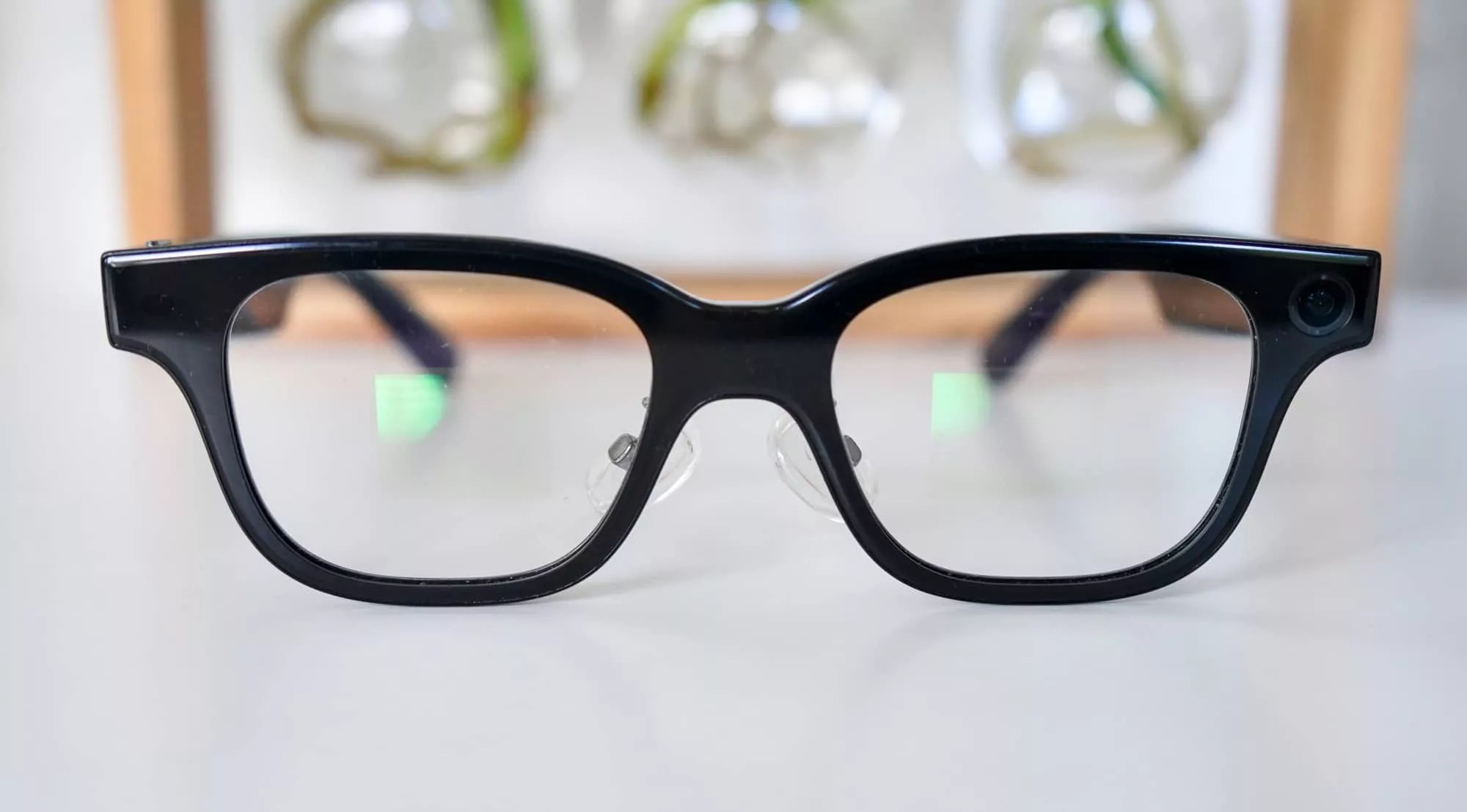
While you will still talk to an AI through microphone and speaker, the Rokid Glasses also have little screens on each lens and for each eye.
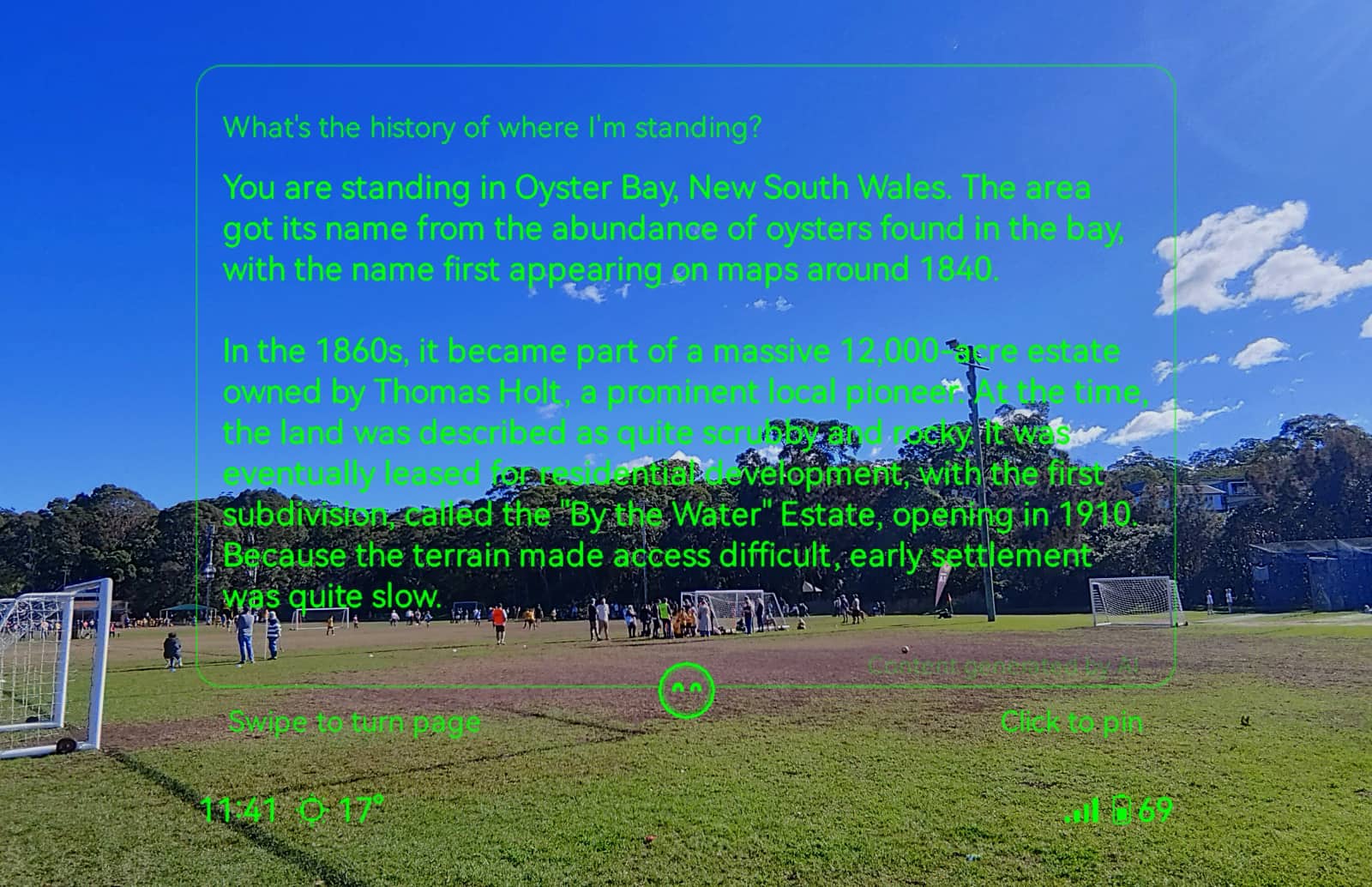
Capable of showing images and text, the screens aren’t full colour, but rather bright green, almost like a neon sense of lights and text to draw your eye, but still let you see through them.
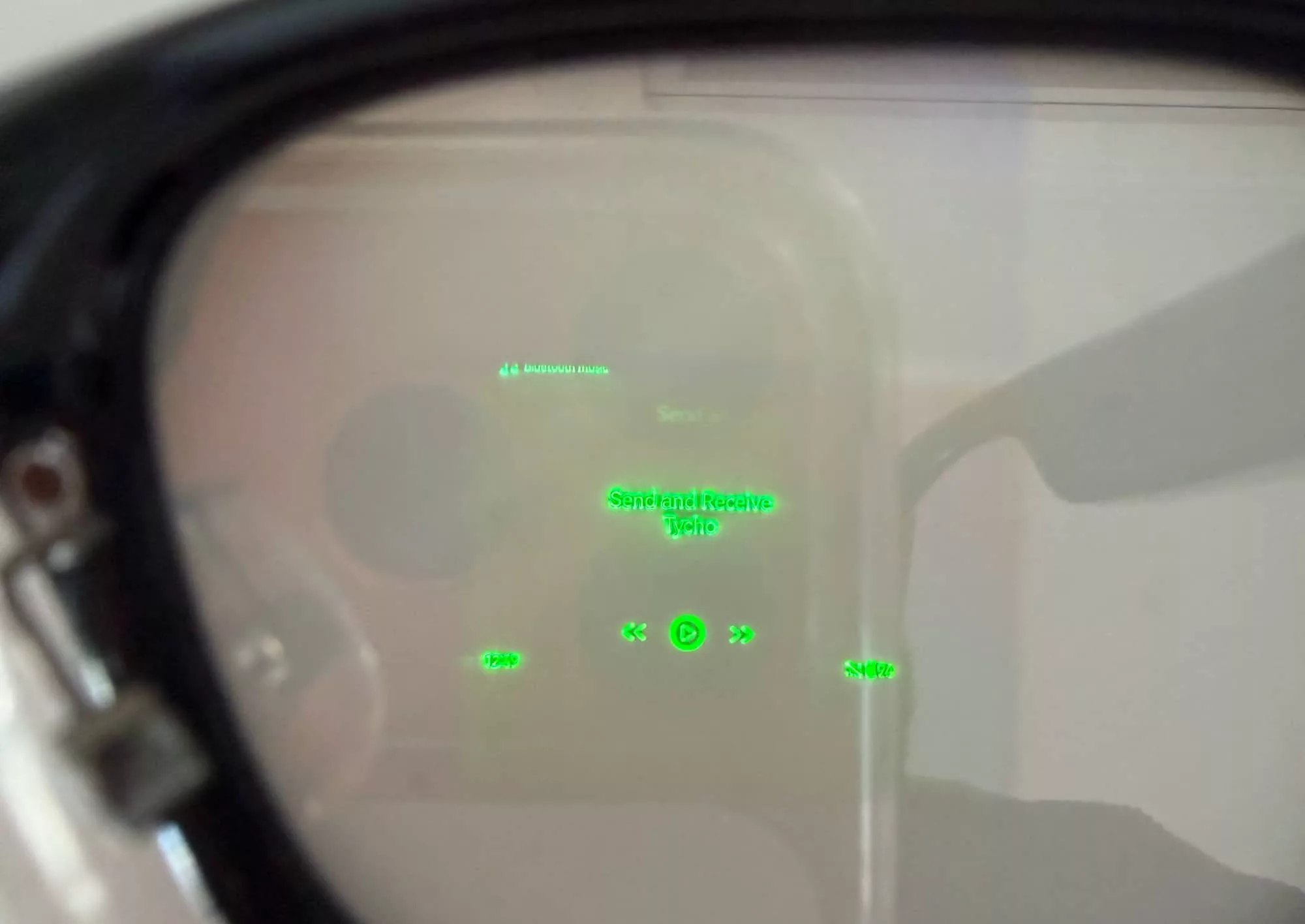
The technology uses Micro-LED to work, and still manages to fit in an almost transparent way; look at the lenses from one angle, and you’ll see them, but glance another direction and you’ll miss them completely.
They’re not alone, either. To use them, Rokid is using a Qualcomm Snapdragon AR1 Gen 1 processor, working alongside 2GB RAM, 32GB storage, and a Linux-based operating system largely built for wearables called “YodaOS”.
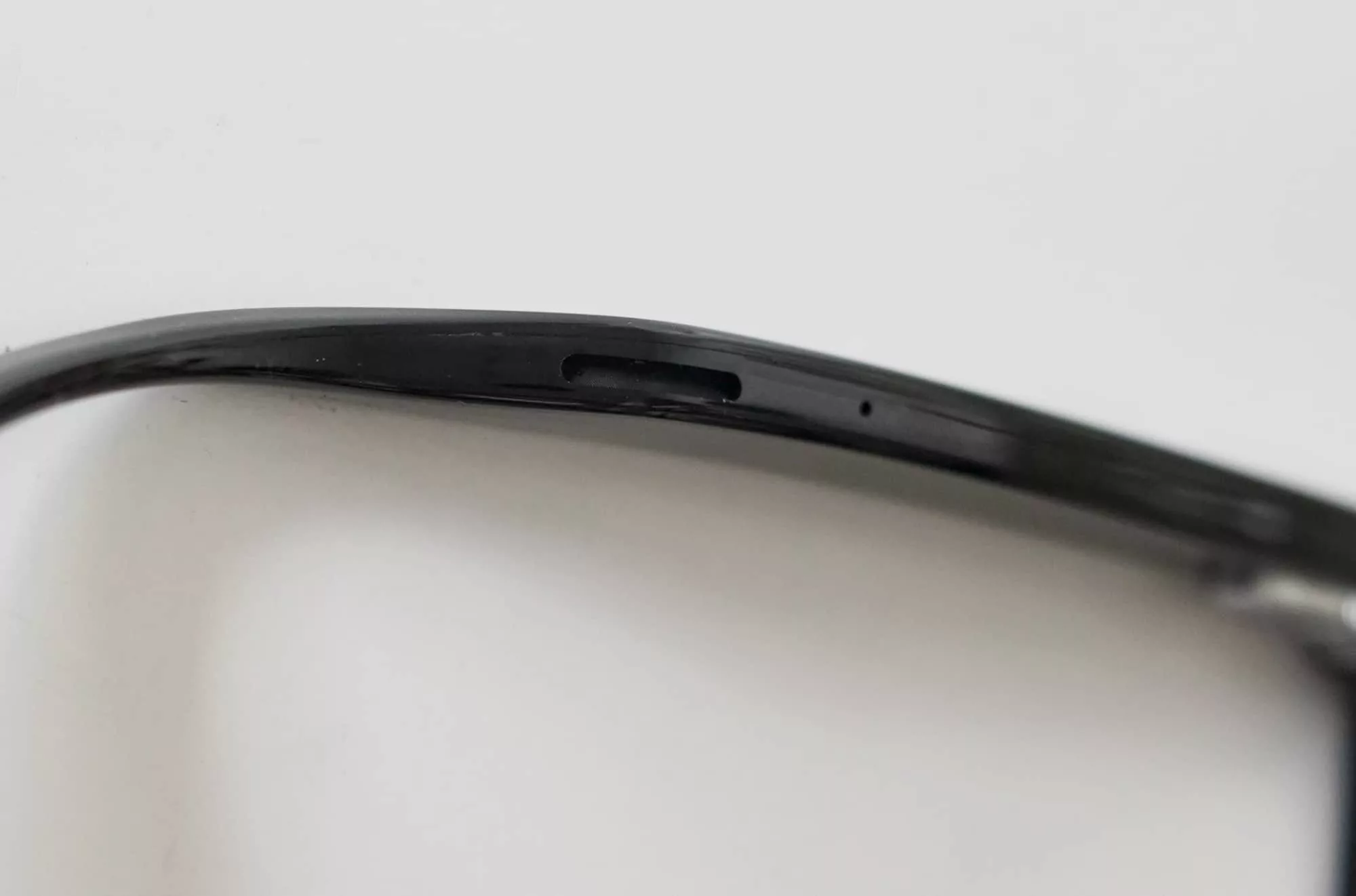
There is also a 12 megapixel camera using a Sony sensor set to F2.25, two speakers (one on each ear), and four microphones across the glasses, plus a custom charge port on the side, though the USB cable to keep it topped up does at least include a USB-C connector on the end.
Weighing just under 50 grams, you’d never really pick the Rokid Glasses to be anything other than a pair at first glance. They just look normal.
But these are anything other than normal. These are AI glasses. They’re technically Rokid AI Glasses.

In-use
Don the glasses and start talking to them, and aside for looking a little weird even by today’s standards of talking to yourself, you’ll find you’ve basically begun using the glasses.
There are two ways to do this, actually; a control trip can be found on the right arm, allowing you to slide your finger back and forth to sort through the menus and select items, or simply just talk to the AI assistant on the glasses to do things, as well.
Unsurprisingly, it’s called “Rokid” — as in “Hey Rokid” — but we found it’s much easier to just call it “Rocket”. Feel free to think of a space-faring racoon with a different voice. We sure did.
You can call out to Rocket (Rokid) to ask it questions, and you can talk to it like anything else and it will respond in its rather obvious American accent. Even though this publication is found in Australia, you can’t seem to change it out of a North American accent, at least that’s what the AI confirmed.
To work, the app connects to AI models, but it at least gives you the choice. Ours was set to use Google Gemini, but we suspect you could dig in and use others.
From there, you’ll be able to ask the AI questions, which will patch them through to the AI model of choice, and bring it back to your personal on-screen AI. And when we say “on-screen AI”, we mean it.
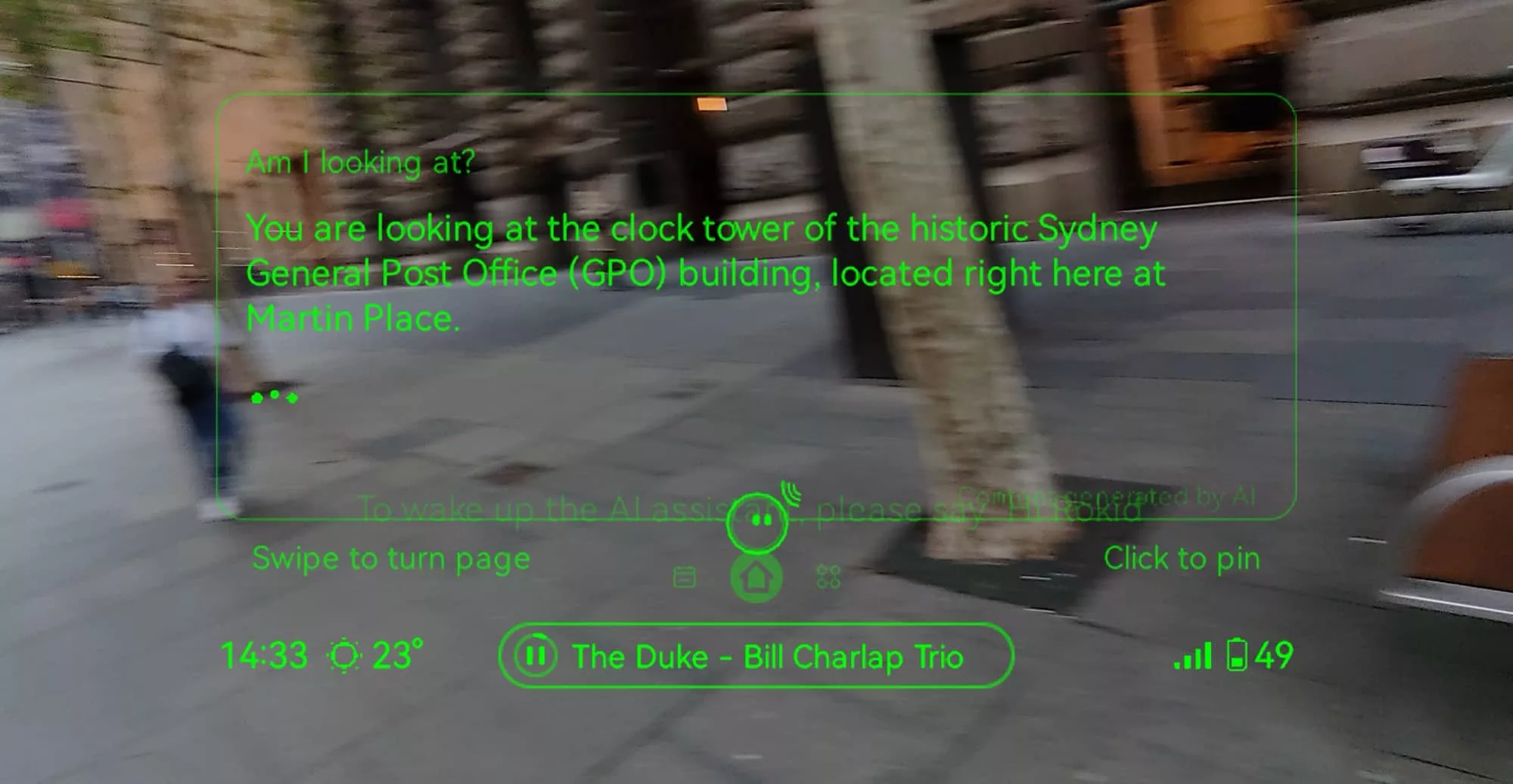
This is a conversation with an AI that you can see in front of your eyes, at least in text.
You can see the words and hear the conversation, switching between a male and female voice, but not the accent it speaks. Your vision will see the green LEDs of text in front, but no one else will, almost as if your glasses were projecting the text and imagery out of your eye sockets.
It’s a surreal experience and very sci-fi. The whole thing can feel like you have a computer in your head, and the reality isn’t far from that. You definitely have one on your head, and your phone is helping it to do some heavy lifting.
Performance
Performance can be a little weird at times, though, partly because the Rokid Glasses and its app can be very, very buggy. You can tell they’re very much a first-gen product, and it shows.
For starters to really do anything, they need an app on your phone, which is largely to be expected with anything these days. The problem is they also need to make the connection to the phone, and it can be buggy just making sure it’s stable.
The glasses tend to use the position of sitting on your nose as a sign they’re on, and yet it will connect and disconnect regularly, making it difficult to use the glasses. There are updates, and with each and every one, it gets a little easier, but there are times when using the Rokid Glasses can be a very trying experience.
When they connect, they work well enough.

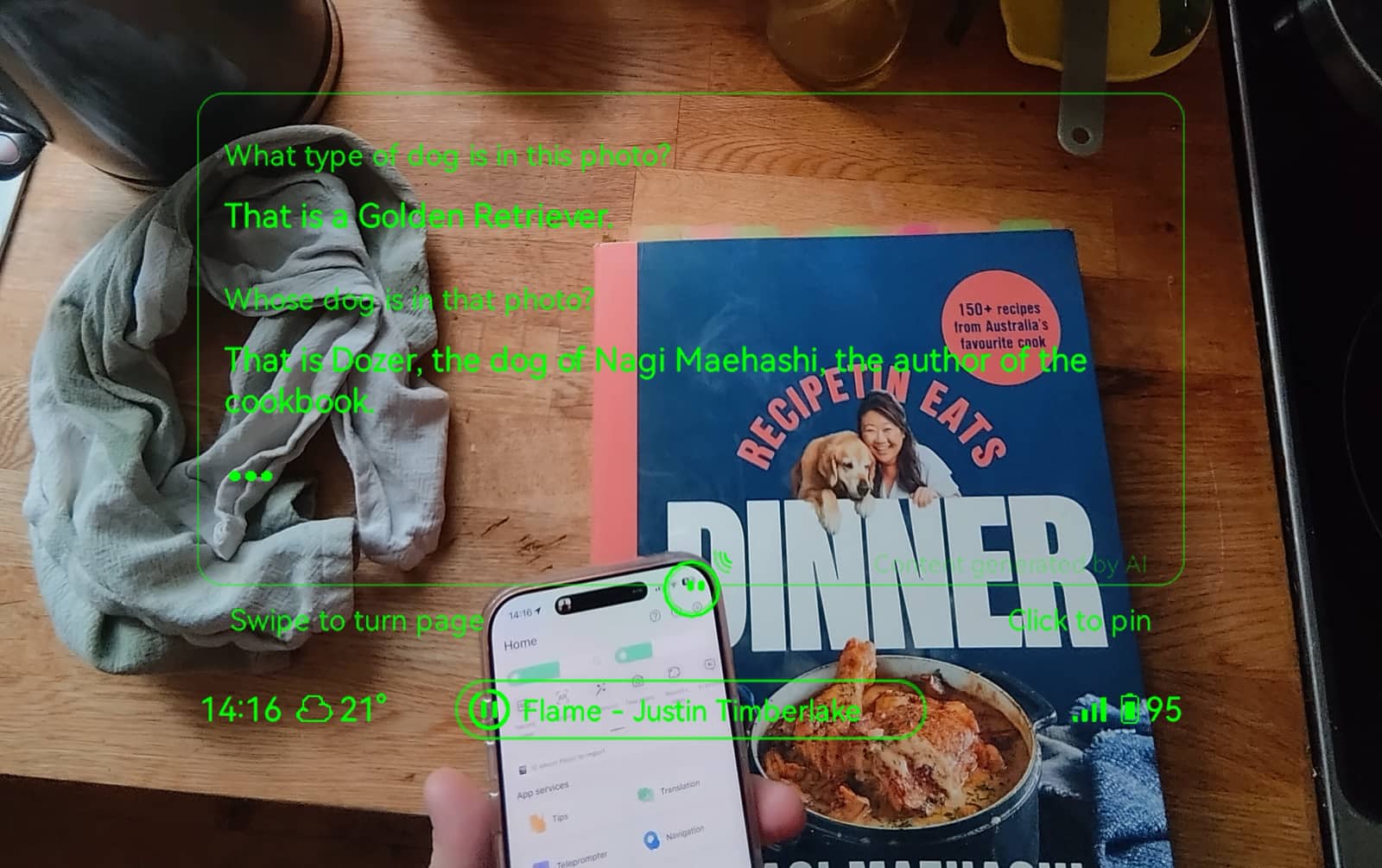
You can talk to the AI back and forth, triggering the conversation with “Hey Rokid” or “Hey Rocket” (since it doesn’t know the difference), and ask questions, talk, have it analyse what you see, and so on.
You can ask what the news is, what the weather is expected to be, ask for the price of homes in the area, or how old a tree is, or if there’s a good place to eat nearby.
It’s a conversational AI using another platform and service, and basically feeding it to the Rokid AI. For our tests, it appeared to be Gemini, and there’s even a choice of voices.
While the AI is one of the features, there are others that actually make the experience of using a wearable heads-up display a lot more useful and enjoyable.
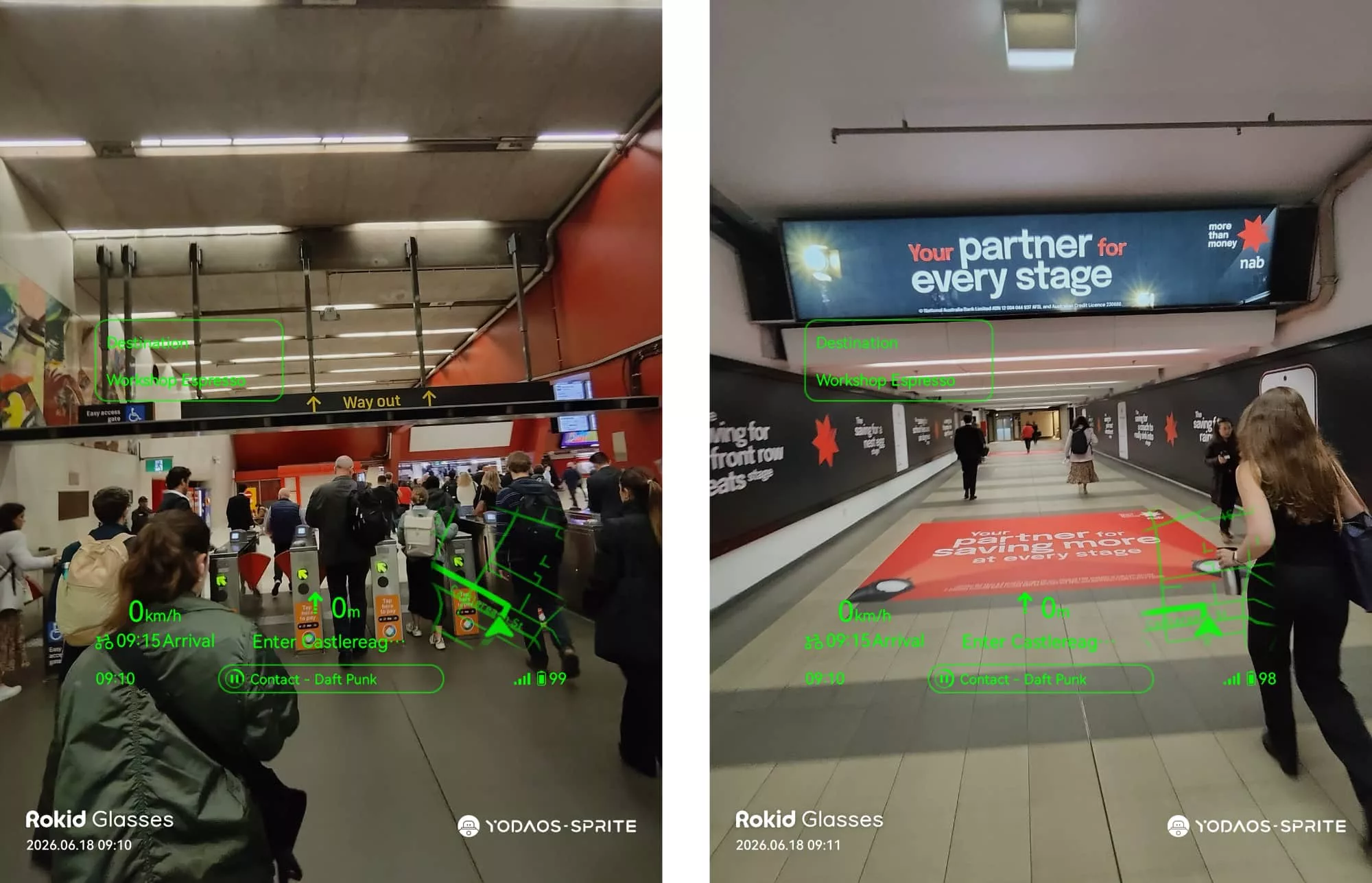
For instance, it becomes a clever turn-by-turn navigation system, showing you a map of where to do and directing you easily, provided it heard where you wanted properly and could work out where your location was.
Both of those are very much caveated, because it almost never heard properly; “work” became “workshop”, and so it directed this reviewer to a coffee shop in the city, while location permissions were always activated and the Rokid Glasses had trouble working out whether they were or not, and that I should activate them when they already were.
Some of the other more useful (and less buggy) approaches include using them to translate people talking around in another language, a feature that works but can be a little slow. Subtitles is probably a better incarnation, which turns words from around you into words on a screen.
For several meetings, this journalist simply sat facing a totally different direction reading the subtitles on the inside of his glasses, taking part in the conversation without actively looking at anyone. It was a genuinely interesting experience.
When it worked.
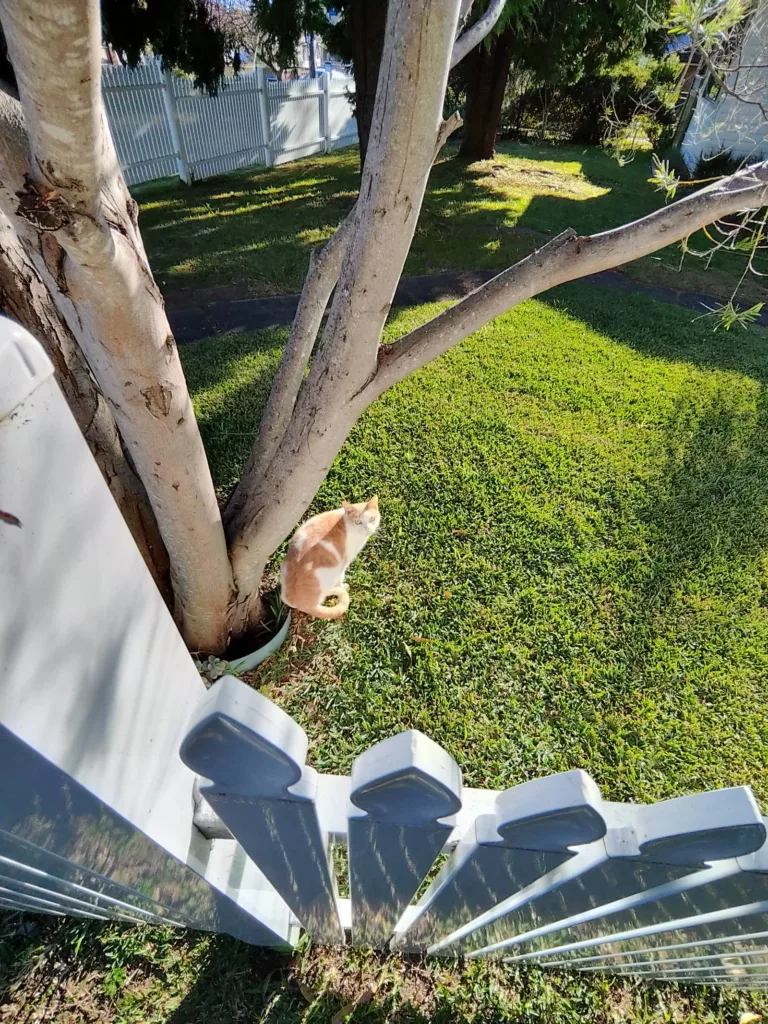

The camera is probably one of the more reliable features, and even allows you to capture images at most times. Pictures are bright and clear, but quite wide. Your phone will definitely do a better job, but in a pinch and when you can’t get your phone out, the glasses will snap a decent shot, too.
One other use worth testing is the sound because these are technically speakers, so you can play your music directly from iPhone or Android, and just use them as glasses.
They probably won’t replace a decent pair of earbuds, though.
Testing with the Pickr Sound Test, most tracks fell flat as far as balanced audio went. The electronics sounds of Tycho and Daft Punk lacked the lows almost complete, delivering a rather hollow sound, with an empty stage for the modern pop of today.
Some sounds were tolerable, and light jazz and classical were acceptable, but not amazing. Podcasts would totally be fine on these glasses. It’s pretty clear music wasn’t front of mind for the engineering team, as they lack the extra audio care we’ve seen from some open audio specialists, such as Bose and Shokz.
They’ll definitely do in a pinch, however. If all you had was the Rokid Glasses, they’d do the job, though sound quality clearly isn’t their forte.
Battery
Alongside a very hit and miss performance is an equally matched battery, which probably won’t last the day, but should be acceptable if you wear your glasses intermittently.
The 210mAh battery inside isn’t large, and that’s to be expected: these are glasses, and the last thing you want is a large battery making them heavier. We have no doubt that’s partially why there’s a different operating system, helping to give the system a bit of a lighter weight overall.
Overall, we found the battery life really topped at around 4 to 6 hours, though you’d likely land closer to the 5 hour mark. That’s not terrible, but it’s also not amazing for something clearly designed to stay on your person all day.

Value
The price is where things become a little more difficult to argue for, thanks in part to just how high it is. Rokid’s tech is still quite new, as is the category of smart glasses, and so we’re not surprised the tech is costly. Still the $999 price tag can be a hefty pill to swallow, or even a strong lens to look through, to more accurately apply the lingo.
Just under a thousand dollars isn’t inexpensive at all, especially for an accessory that still arguably needs your phone to work. Without your phone, the glasses basically just take photos and nothing else. With your phone, however, and the tech and its uses open up much more so.
It’s worth noting that the Rokid AI Glasses are technically twice the price of Meta’s own Ray-Ban-less glasses announced recently, which offers AI without the screen. But what makes the Rokid Glasses so compelling is what Meta misses out on: the screen.
Integrating a display into your eye-line makes the hardware stand out significantly. All of a sudden, you’re not just talking to an AI through headphones, but you’re able to translate what it sees and hears, and really view information as if you had your own heads-up display.
Yes, the Rokid Glasses are technically twice the price of the Meta equivalent and not far from the Oakley Meta incarnation, but in this case, they’re actually better and worth more.
It’s difficult to know still whether the Rokid Glasses have achieved value, but the launch pack of the glasses, a recharge box, and clip on sunglasses certainly makes a better play for the glasses alone for the same price. That said, you’ll have to really decide whether living with future-focused tech makes the near $1K price worth it.
For our money, they should probably be closer to $800, and take on Meta’s Oakley Vanguard directly. A thousand might be too difficult for many to argue with, while a couple hundred less seems just right.
What needs work?
The price could use an adjustment, and so could the reliability, which is definitely a concern.
In what clearly comes across as a first-gen product, the bugs are consistent and regular. It connects and then it doesn’t. The AI listens and transcribes, but then does nothing. Some questions work, some don’t. Some information doesn’t seem relevant, and if the location information works, great. But most of the time it doesn’t.
For all the good intentions of the Rokid Glasses, they really feel first gen with bugs galore.
And don’t you dare get caught in a spot of rain.
When we asked the Rokid AI assistant whether there was going to be any rain, it politely told us the glasses weren’t waterproof, and to keep them away from the rain. So that’s handy. Time to run inside and get an umbrella.
What we love
A lack of water resistance aside, Rokid’s glasses can feel like you’re wearing an experiment for the future that actually works. Yes, it’s buggy, and yes, the frames are nice while still looking a touch dorky.
And yet despite those niggles, the system works really well when it does work.
When it connects, the language translation option is clever, because all of a sudden you can start reading what people are saying in a different language. And if you need a bit of assistance simply listening to people, you can quickly translate spoken words into on-screen words, as well. Subtitles is actually a bit of a game changer, and makes it easy to see what’s being said.
All of these features are stored and logged, with translations and subtitles held on your phone for later, and there’s even an included teleprompter option, as well. Why read off a large teleprompter when you can aim a phone or camera your way, wear the glasses, and read off a screen?
There are some genuinely clever uses when it works, and there’s even a bit of a retro vibe.
If you grew up in the 90s when toys were trying to be clever with the idea of science-fiction and heads-up displays, you might recall the weird red LED wearable HUD that was the R-Zone. The Rokid has vibes of that, but with an actually useful principle.
Final thoughts (TLDR)
There are plenty of good reasons to like what Rokid’s glasses are doing, but there are also just as many reasons to stay cautious.
The glasses are clever. The technology works well when it does work. And overall, it might be the first pair of smart glasses this journalist can actively see being used in his life.
Sure, they’re not perfect, but they deliver that futuristic vision now, rather than ten years from now. And when they work, the work surprisingly well. You can ask questions, get directions, take photos, and essentially upgrade your glass-wearing experience.
Perhaps crazily, this reviewer doesn’t wear glasses because he hasn’t ever needed to, so this experience was doubly unique. On the one hand, he suddenly had to wear glasses, while on the other, the glasses did something more than make the world more legible. They did more, and they can even curiously do so with a prescription lens, handy if you do need glasses.
And even if you don’t, you can still use these all the same. They’re an intriguing step into the future, where you just know more people will have something just like these.
In today’s world, Rokid’s Glasses stand out because of what they deliver: a vision of tomorrow, today.
They’re the future now without the wait. And they’re a better experience that what you might expect. You may need to endure a bug or three, but the result will leave you impressed most of the time, and keep the jaws of your friends open. It’s just too surreal to be real.
They might just be the first pair of smartglasses you’ll want to wear. And this reviewer probably will.