


Ever since AI-enhanced coding became a thing a couple of years ago, the whole knowledge gap for building stuff on computers has been changing. Not closing per se; you still should definitely know how to read code, understand software development cycles, and research what you want in your app, but it’s definitely changing.
You actually don’t need to speak a language completely to build something anymore. Much like how the mere prompt can start image or AI-led music, so too can it also kickstart app, software, and website. It’s a crazy time out there.
We’ve even given AI coding systems a Best Pick just given how useful they can be, turning technical knowledge into creations without the same of theft some other platforms can feel like they impart.
There’s Cursor and there’s Google Antigravity and Windsurf and Copilot and Claude and so on. Clearly there’s no shortage.
Apple’s Xcode looks to be the next one, as the maker of iPhone, iPad, and Mac apps becomes the place for agentic additions courtesy of the next version of macOS version 27 “Golden Gate”.
While most of the attention from Apple’s Worldwide Developers Conference last week was on what Apple was cooking up for consumer devices, it was a “developers” conference, and the announcements of the developer tech was just as interesting.
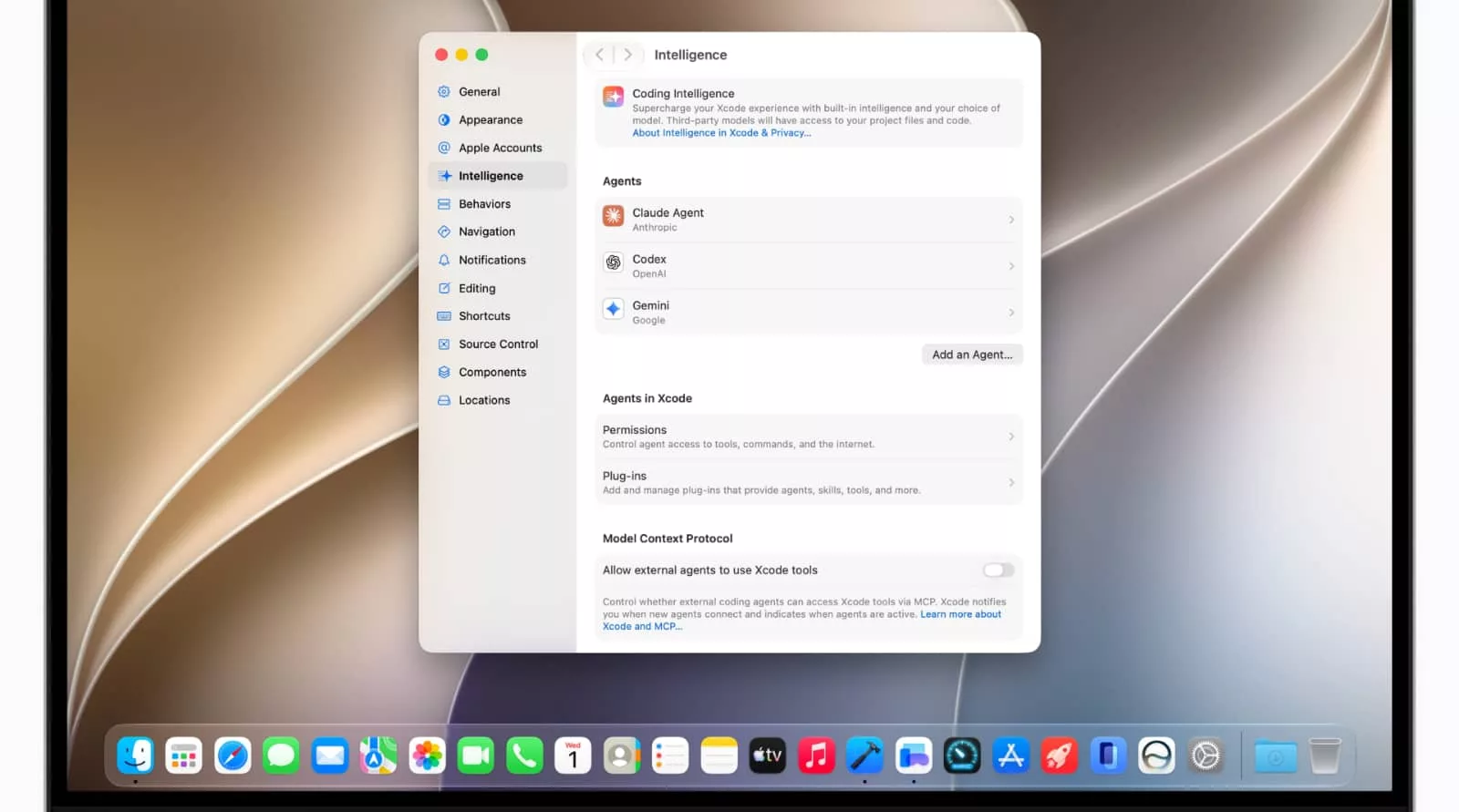
For instance, while Xcode 27 will require Golden Gate (macOS 27), it will allow direct chat to AI models from Anthropic (Claude), Google, and OpenAI (ChatGPT) from inside the system, allowing you to prompt and build apps without necessarily understanding every part of the build process.
That means the idea of anyone being able to build an app will literally become a thing, and may not require starting with the likes of Swift Playgrounds, Apple’s training app to teach people the basics of coding.
It’s not the first time agentic coding has been connected with Xcode, but it does appear to be the most advanced, directly connecting the AI models with Xcode supporting planning, answering questions, and a way to show the changes while the conversations are playing out.
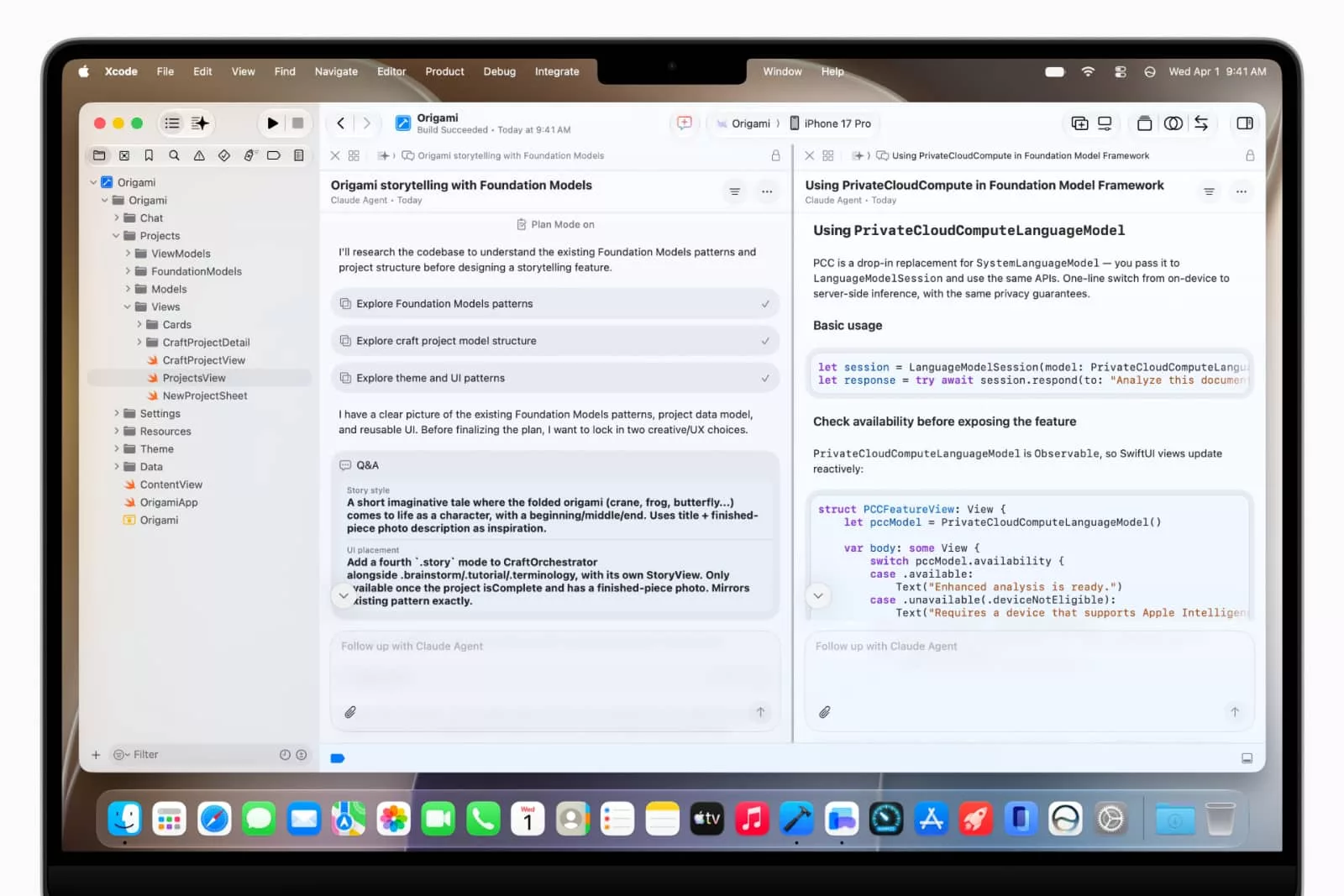
The system will also give agentic tools the ability to validate their work, allowing them to build and keep building for longer, provided they’re building apps for iPhone, iPad, Mac, watchOS, Apple TV, and the Vision Pro headset, given Xcode is specifically an Apple platform. That said, the system will talk to Figma and Github, as well as supporting Model Context Protocol (MCP) platforms, essentially expanding the tools on offer.
“Developers are at the heart of the Apple ecosystem, and our goal is to provide them with the best possible tools and technologies to build the future,” said Susan Prescott, Vice president of Worldwide Developer Relations at Apple.
“With new intelligence frameworks and agentic coding in Xcode 27, developers have the tools they need to focus on what they do best: bringing their incredible ideas to life,” she said.
There is a catch: developers will need Apple Silicon to make it work, meaning a minimum of an M1 MacBook Air, M1 MacBook Pro or M1 Mac Mini, computers that are roughly six years old, with Intel now off the list of supported platforms for macOS 27.
However, that will also mean modern features are supported, such as the changes to Apple’s “Liquid Glass” design, as well as support for the Apple Foundation Models to let people dive into AI uses for their apps.
Game developers will also get a bit of a hand, with a new version of the Game Porting Toolkit (now at version four) to help bring more games to the Mac, as well as a Steam Asset Converter to adapt PC games to Apple environments.
In short, a bunch of things look set to happen for app and game makers, whether they’re skilled already, or just keen to dabble and see what happens.