

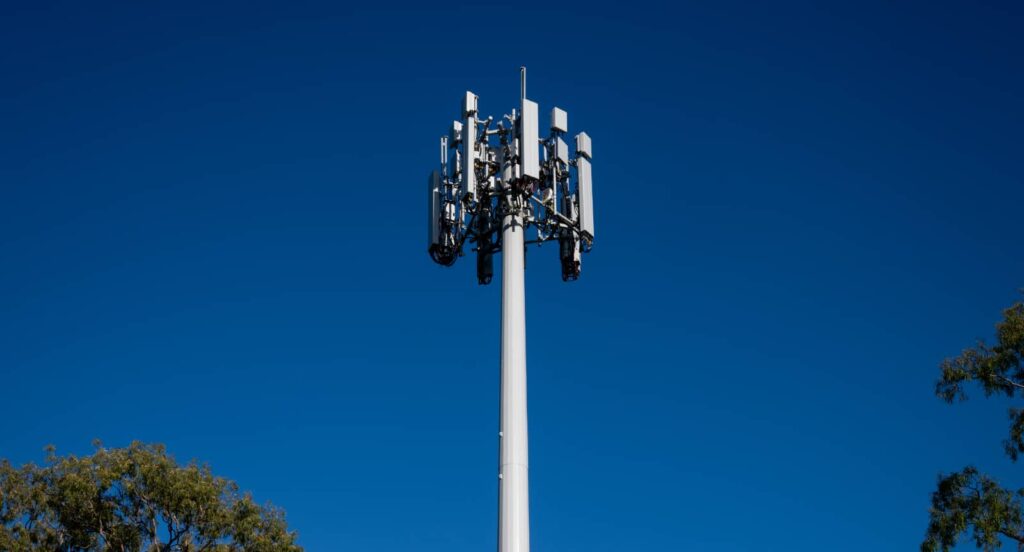
Network range isn’t the same across carriers leading to new maps, and networks have gone down at every major mobile carrier in the past year.
Being a mobile user of any network isn’t always as easy as “pay and get good service”, especially with how many issues we’ve all seen as of late.
Two of the biggest issues across Australia have sent the country’s consumer watchdog to investigate how both could potentially be improved, and the answer appears to be a concept that Vodafone suggested years ago: the ability to jump to another carrier when needed.
The idea is called “domestic roaming”, and like its international counterpart, affords the option for customers to jump to a new network when they need to.
When you’re travelling, international roaming essentially sees you join another network to continue using it, often at a cost. By comparison, domestic roaming would have you join a network because yours has issues.
There are clear reasons why you might want to roam using another carrier from within your country, though most point to problems with the mobile network you typically pay for. If the network goes down, you might make the jump to another because you need mobile access ASAP, and your carrier is down for whatever reason. It might simply be that your carrier isn’t fast enough. And over in rural parts of the country, it also could be simply that you have no reception, and you need another carrier to fill in the gap.
The concept of domestic roaming could help alleviate some of the issues Australians have dealt with for the past year, including when Telstra went down, when Optus went down, and when Vodafone went down. If either carrier went down and a customer needed access immediately, domestic roaming could make it possible to simply join another as and when you need it.
That’s the idea, anyway. And it’s one the Australian Competition & Consumer Commission — the ACCC — has decided to investigate.
Over the next year, the ACCC will run an inquiry into whether domestic roaming could end up being a remedy to the issues, delving into whether roaming could improve the situation for many Australians, or whether it could just add to the costs and complexity.
As it stands, even with the new maps, Telstra still has a greater footprint than the other two telcos put together, though they are beginning to work together to share network capabilities.
While that covers much of where the greater population is, rural Australia is still largely left out of the loop, and means they’ll likely be left with one carrier: Telstra.
Domestic roaming would theoretically be able to give customers of other telcos the ability to switch to Telstra when they need to, potentially keeping prices down while still accessing the Telstra network.
We can’t imagine Telstra would be too thrilled with the idea, largely because it would eat into its profits, though it’s also possible that its network (or any network) might go under strain with how many people may use it at one time.
There are lots of variables for this one, and a yearlong investigation could provide some of the answers needed to work out whether domestic roaming would improve things.
However, there are also other possibilities later on down the track that could change things, such as whether low-earth orbiting satellites could change how mobile calls are made, something Telstra is experimenting with more and more complete with app support on its network. Likewise, there’s the option of 6G expected sometime in the next four or five years, which could improve reception and reach depending on its multiple uses of technology.
For now, it is very much firmly in the camp of “watch this space”, with the next year likely to be very interesting to see what the ACCC has to say.