
2PM Sydney time on July 27 was an interesting one, but also a moment in time many would have shared. For a brief moment, their phones were all beacons of information and alerts, drawing their attention with a message from the government.
It was a test. Had this been a real emergency, the message would have told you what to do. And it might have been something specific and local to you.
That’s one of the advantages of this technology over others, with the government and emergency authorities able to direct mobile towers in certain places with specific instructions relevant to them.
Ahead of bushfire season, its use couldn’t be more relevant. Set to roll out in October, AusAlert would potentially give the authorities ways to contact people directly on their phones, tell them to check their mobiles, and pay attention to the instructions that matter directly for their position.
But before it rolls out, the technology needs to work. It needs to get through to Australian phones, appearing when it triggers.
And to do that, it needs a test, which is what 2PM AEST on July 27 was for.
Targets met
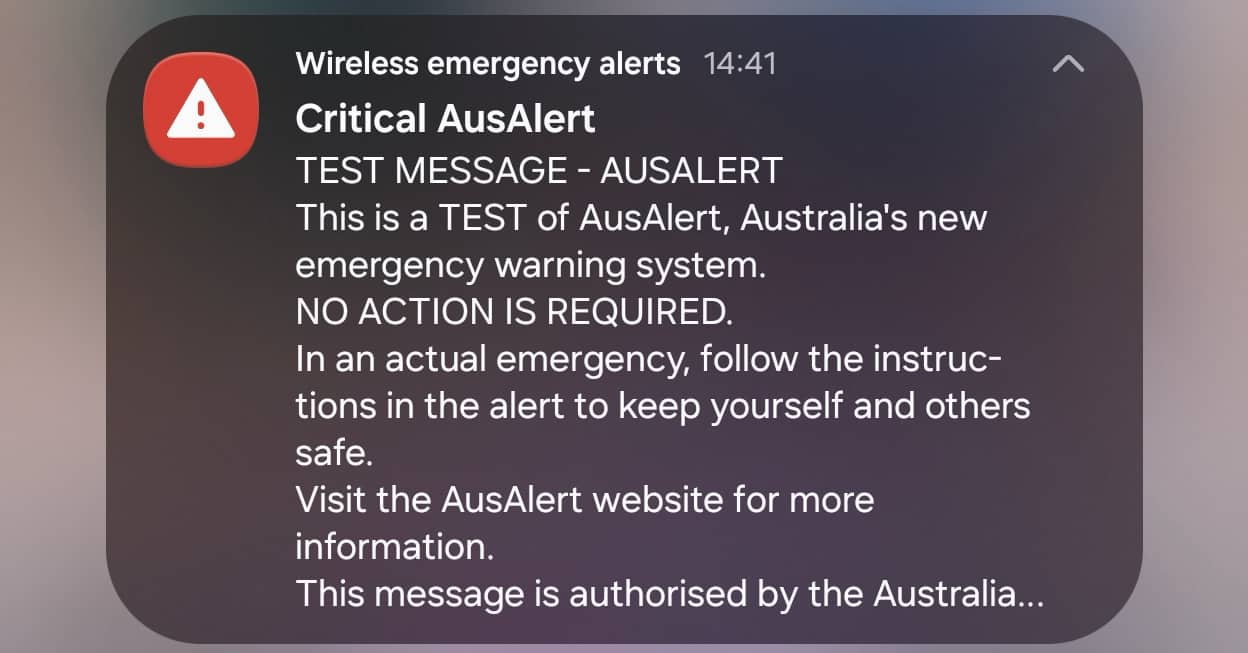
The test fired, and between 2PM and roughly 2:10, Australian phones and select wearables received a sound and message. Some devices even read the message out.
Some messages were delayed, while others were staggeringly fast, and the mobile towers by and large did their job.
According to the government, the targets were met when the system made its test this week. While that sounds good, when the government talks about the technology meeting its targets, what it’s referring to isn’t phones, but rather towers.
“This has been a very successful test,” said Kristy McBain, Emergency Management Minister at a conference regarding the roll out.
“We have reached more towers than we anticipated in this test,” noting the amount reaching 94 percent of towers.
That means when the. government ran the AusAlert test, the sending of messages to the towers worked, and the system allowed 94 percent of the towers to receive and transmit the message in question.
That is theoretically good.
Phones didn’t always receive the message
What’s bad, however, is that frustratingly not every mobile received the message.
Some did, sure, but others did not, and it may have come down to lots of problems.
It could be due to the tower just being overloaded at the time, or it could be you just weren’t in range of one of the six percent that didn’t get the signal, despite the government meeting its targets.
You might not have received the update if your phone came from a different country, because while its operating system may have been totally up to date, it’s entirely possible that it didn’t have everything it needed to trigger the alert with the right messaging.
A support problem
Perhaps one of the biggest problems Australia has to deal with right now is compatibility, and more specifically, the support problem a bunch of mobile owners may not be able to easily fix.
Officially, AusAlert needs iOS 26.4 and higher to run on an iPhone, watchOS 26.4 and higher to run on an Apple Watch, and Android running on version 12 and higher to appear there.
While those are the official requirements, other devices may receive the alerts because the technology uses Cell Broadcast, which has been around since it was demoed nearly 30 years ago. It’s not exactly new.
Despite this, you do appear to need pretty recently updated software in order to receive the alerts, and even then, you still might not get the alerts.
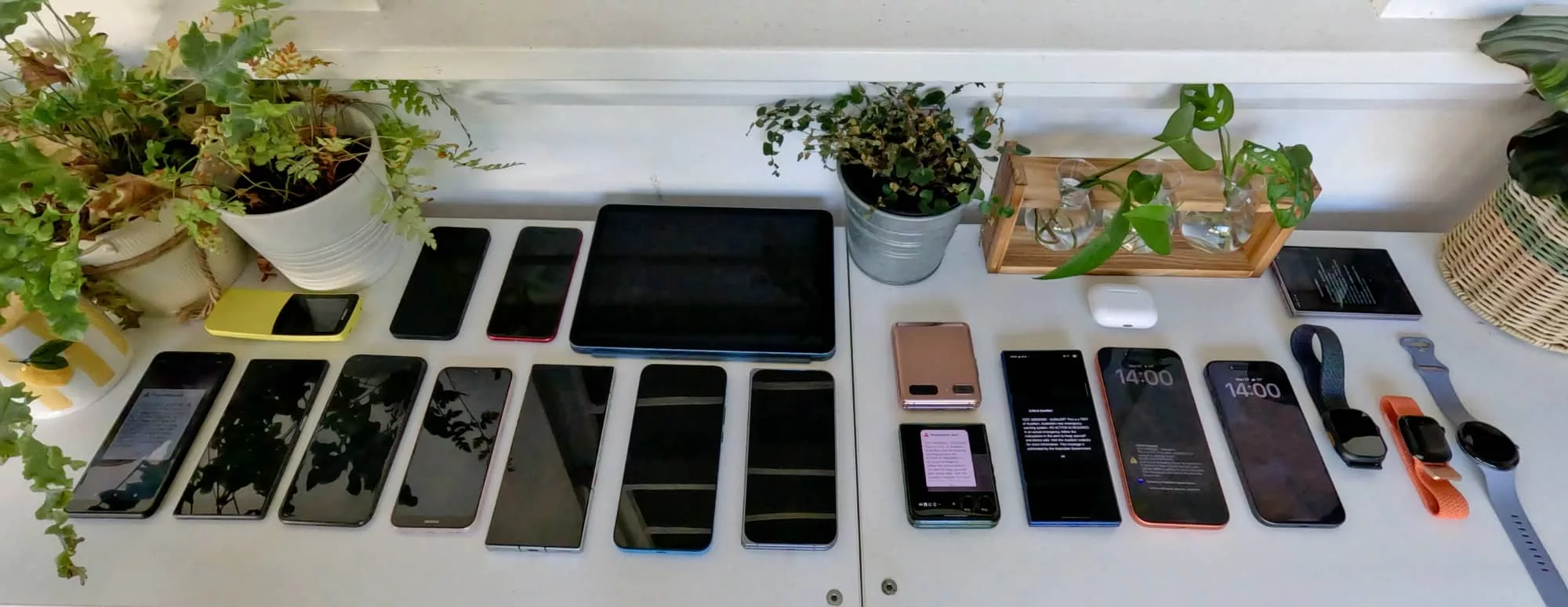
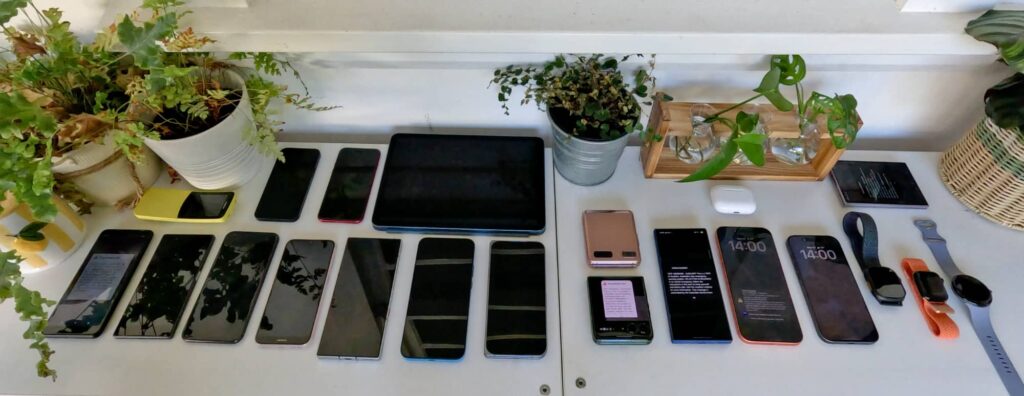
In our tests of nearly 30 devices, while some devices didn’t get the alert that were old, many that were new also did not.
Some devices were never going to work, but were part of the test all the same, such as a Nokia banana phone and the first-generation Google Pixel, neither of which would have worked. They’re just too old.
However, phones that were also really new didn’t see the message, either.
Nothing’s recently launched Phone 4b missed out in our tests, as did a device from Honor, Xiaomi’s equivalent of the Leica Leitzphone, and even the Google Pixel 10 Pro Fold. Crazily, a device that wasn’t a phone did receive the alert, as the G-Mee media player picked up on the alert even though it’s not actually set up as a phone.
While these are confusing, the part that surprises this journalist is just how specific the AusAlert requirements are, and why a lot of iPhone owners wouldn’t have seen the message.
The requirement of iOS 26.4 is interesting, because it’s a version of the Apple iPhone operating system that only came out in March. While there have been a few versions in between then (and as of the time of publishing, Apple is on iOS 26.6), the problem is most people don’t update their phone, and you needed to be on a fairly recent OS to see the message.
For instance, if you ran iOS 26.3 — just one behind — such as we did on the iPhone SE we tested it on, you missed out. And if you ran iOS 18, such as we did on an iPhone 13 Mini, you also missed out despite Cell Broadcast technology appearing in iOS since version 6.
The requirements for AusAlert may have been the most recent operating system layer for iOS, but Cell Broadcast has been supported for well over a decade in iOS, and yet that didn’t trigger here.
In Android, you might have seen Cell Broadcast work as a “Presidential Alert”, a sign that the operating system version you’re using may not have been tweaked or changed to support AusAlert’s specific naming strings. It would have been the same message, but with a different name, given there’s clearly no president in this country.
@pickrau The AusAlert system went off… but in our test only 9 of 26 devices triggered. Watch the whole thing and relive the alarm.
♬ original sound – pickrau
What next?
While the government paints this test as a success because of the towers, it’s difficult to agree from this journalist’s point of view.
The towers may have received the message, and millions of Australian mobiles also did, too. But millions more may have missed it because of other problems.
Because of towers. Because of mobiles. Because of updates they needed as part of the requirement which they probably should not have. Expecting people to have a freshly updated phone (fresh in the space of several months) for an emergency alert is a huge failing of the government, and a total misinterpretation of how people use and maintain their phones.
An emergency alert is supposed to a critical alert that doesn’t need the latest and greatest, which is why SMS works so well. Every mobile can receive it.
Technically, Cell Broadcast technology should have worked this way, too, but for some reason, AusAlert wasn’t made to.
For people who didn’t receive the message, leaving comments for AusAlert and the National Emergency Management Agency will be utterly important, because this was just a test, and these minor inconveniences are needed to ensure the system will be ready.
For the government, however, more tests are clearly needed, and improvements to the system supporting more operating systems.
You shouldn’t need the latest phone update to get a critical alert, and expecting that everyone has one is just silly.