
Regardless of how much you spend, one of the more frustrating aspects of owning practically any mobile phone is that of battery life. Somehow, it’s just never enough, and the more you spend, the less the battery life seems to be.
It’s a problem everyone knows and feels, and you only need to glance at how many people walk around armed with a power bank to see the problem affecting so many. Phones only last so long, and as they age, the battery life tends to get progressively worse.
There are lots of possible solutions: bigger batteries, better battery chemistry, operating system optimisations, and so forth. The best approaches are usually a combination of all three, and we are definitely seeing changes over the past year.
Shifts to different battery chemistry, jumping from lithium-ion to silicon-carbon is one such approach, packing in more volume into a battery and making the batteries bigger, all the while tweaking an operating system and the processors inside to somehow use less in the process.
We’ve seen a few brands do it, so much that if you see silicon in a battery, there’s almost an expectation that you’ll get better battery life than if you didn’t.
Xiaomi looks set to challenge those expectations further with an announcement that could just make the battery argument obsolete, offering a range of phones with more battery life than any before it.

The Xiaomi Redmi Note 17 Pro Max 5G looks set to launch with a staggering 9210mAh battery, nearly twice the size of the Galaxy S26 Ultra battery and larger than the 7290mAh battery we experienced in the Oppo Find X9 Pro last year.
It is a staggeringly-sized battery, as close to 10,000mAh as we’ve seen in a phone and complete with silicon inside, supporting a 100 watt wired charge if you need to get that battery filled quickly. A slightly lower-end model will be found in the Redmi Note 17 Pro 5G — no “max” in the name — offering an 8340mAh battery with a 67 watt charge.
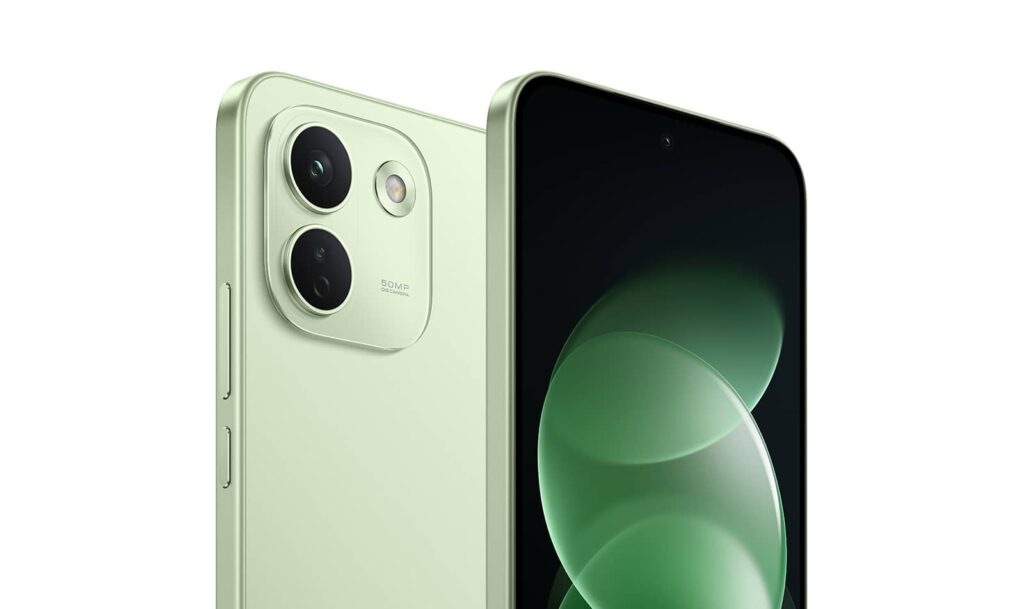
Both are built to be quite similar, each offering a 6.83 inch AMOLED screen, Gorilla Glass Victus 2 protection, but a difference in the hardware driving it. The non-Max edition will use a Qualcomm Snapdragon 6s Gen 4 processor with 6GB RAM, while the Max edition gets a slightly faster Snapdragon 6 Gen 5 with 8GB RAM by comparison.
They’ll both get Android running Xiaomi’s HyperOS 3 overlay, plus three cameras on the back: a 50 megapixel wide main, an 8 megapixel ultra-wide, and a front-facing camera. You’ll get slightly better cameras on the Max model, but the differences aren’t massive.

While the big battery is one places the Redmi Note 17 range aims to be big, the price actually keeps things relatively modest, fetching a starting price of $599 for the Redmi Note 17 Pro in 128GB and $699 for the 256GB variant, while the 256GB Note 17 Pro Max 5G will cost a hundred more at $799 for the 256GB model. Clearly Xiaomi is going for the upsell.
The battery is clearly the most intriguing part of the Xiaomi Redmi Note 17 Pro Max 5G, and is a lot easier to take in than its rather long almost comical name mentioning every possible term associated with a phone.
However, the support and lifespan does give this reviewer pause. Largely because of how it’s worded.
Xiaomi has said the phones offer a “six-year like-new software experience”, but upon checking, that doesn’t actually mean six years worth of operating system updates. Quite the contrary.
Officially, the Redmi Note 17 models offer six years of security updates and four years of operating system updates, with that “six year like-new software experience” essentially referring to an ageing test Xiaomi says will basically make the phone feel new for the next six years.
That’s possibly because phones don’t always seem as fast as they once did when updates occur, and can leave owners feeling a little short-changed. Essentially, Xiaomi is providing some sort of speed guarantee based on its own software testing, though only for the bigger Pro Max model, with that magic “six” number also applied to battery health, too.

What that means for the Redmi Note 17 buyer is that the phone should last several years, just like any other phone, and that Xiaomi is essentially providing some sense of guarantee from testing that it should manage to feel new for the next four years.
But that doesn’t mean you’ll get updates in a timely way, nor does it mean the standard non-Max model is rated for any of this.
One thing is certain: the promise of four generation of operating system updates is a little better than most phones in the mid-range. Very few devices outside of the iPhone 17e and Google’s Pixel 10a at this price point get close to that level of OS support, and that could give Xiaomi another feather in its cap.
Australians can expect the Redmi Note 17 range in stores shortly, priced from $599 and available from select stockists.