
Evolving a product in technology is a perpetual game of “what next”, and so, too, is working in it.
There’s a constant beckoning of the question no matter what you do, and a consistent hope that the answer will be enough to drive what follows. What will do you next, and will it be enough to garner followers? What will a company make next, and will it be enough to make sales?
The “what next” question is one that drives pretty much every company in technology, and pushes out subsequent iterations of pretty much every gadget. What next in phones leads to cameras and privacy screens and satellite communication and so on and so on.
So what’s next for content creators armed with their voice, a microphone, and some controls at their fingertips?
Rode looks set to find out, as it brings a gadget made to evolve audio podcasting into something that looks a whole lot more like video making, as well.
The idea is one Rode calls the Rodecaster Video Core, and provides a video making solution to plug into computers and its podcaster mixing terminals, devices which were built for audio production. Rodecaster’s Duo and Pro 2 units were basically all-in-one podcast recording gadgets combining soundcard, mixing terminal, physical controller, with XLR jacks for meaty microphones, basically offering a studio in a box.
That’s great if you want audio, but if you want to expand to video, you probably need a different piece of kit.
From what we understand, that’s precisely what Rode is targeting with the “Core” concept.
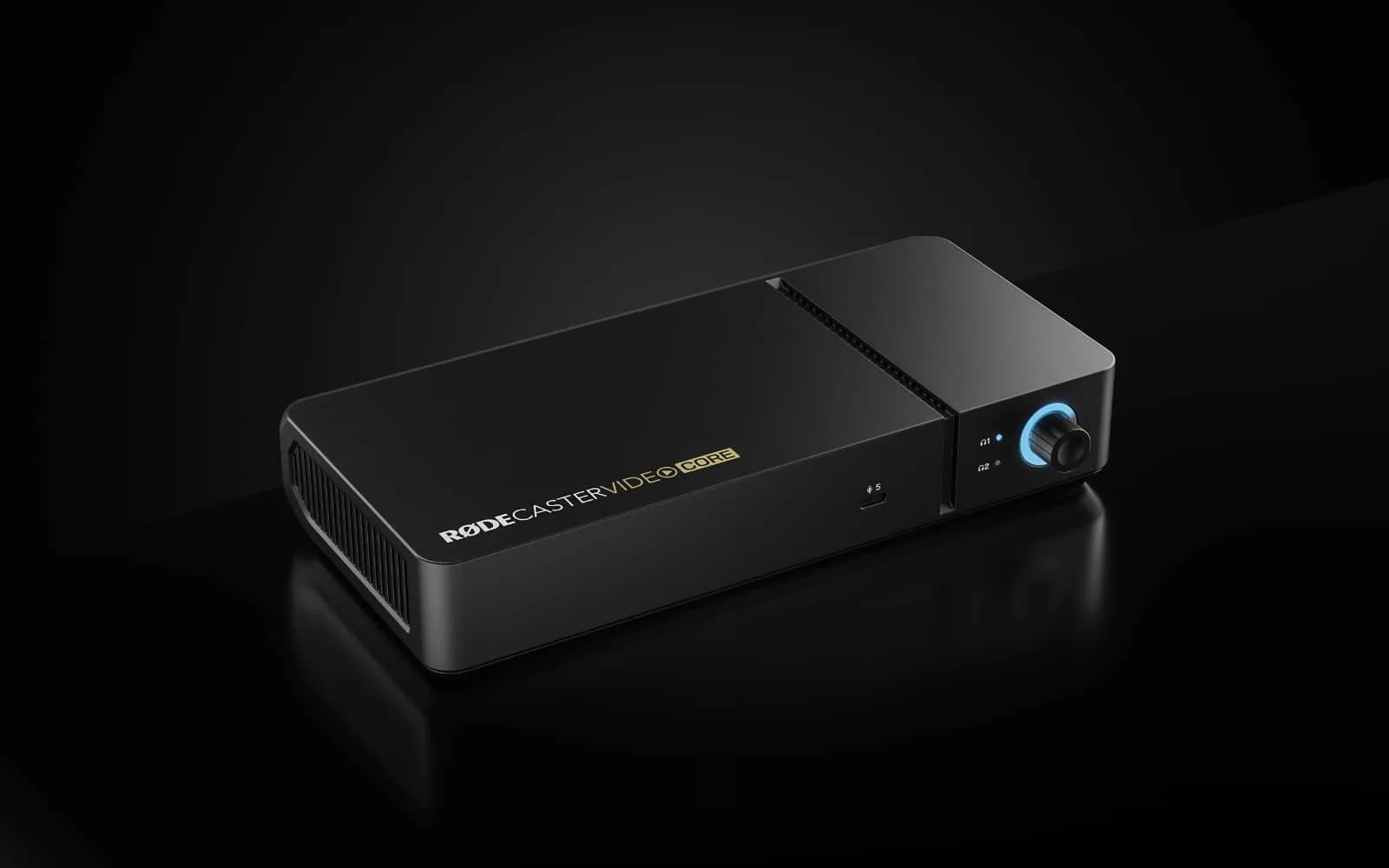
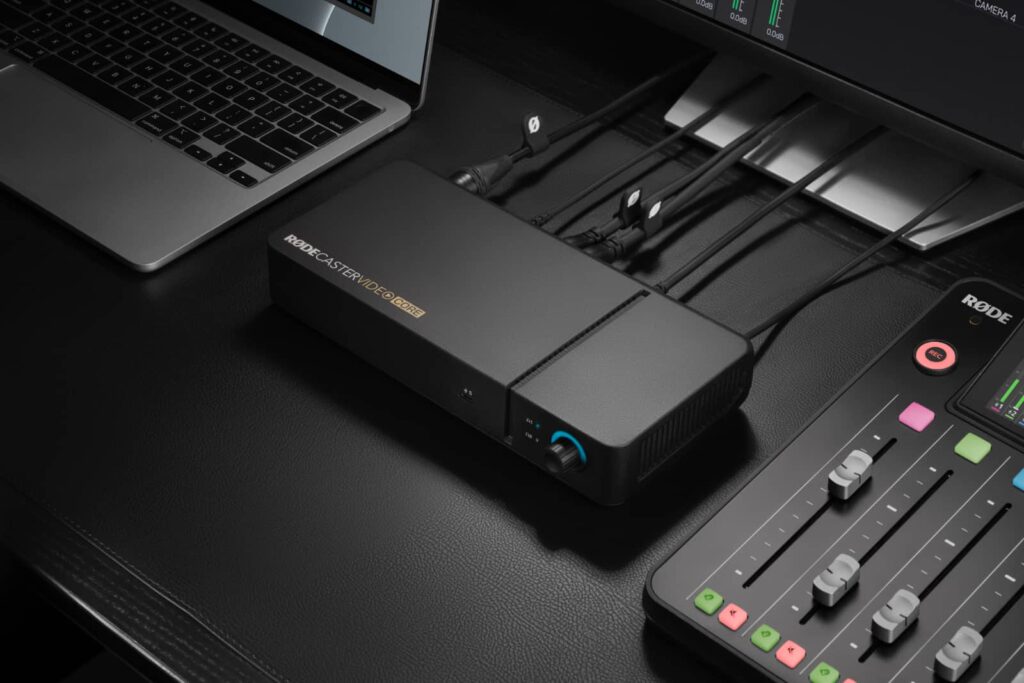
Built to sit in the middle, think of Rodecaster Video Core as a box to let you bring in multiple video sources and audio inputs, and then have software or the Rodecaster audio systems control the output.
The system can record the video directly to an SSD using a USB port, or even go straight to a computer, and if you don’t have the Rodecaster Pro or Duo, you can use a piece of software to control things, as well.
The system includes three 1080p HDMI inputs, two USB-C ports for video and audio devices you may want to use, two XLR inputs with preamps, support for networked cameras, and also support for streaming using Ethernet. Rode says the Rodecaster Video Core can switch between up to four video sources and five customisable scenes, making the whole thing feel a little like a TV broadcasting room in a box, a little like the audio production suite that its Rodecaster Duo and Pro were designed to be.
If anything, it’s a bit of an upgrade from Rode’s other recent play in this space, the Rodecaster S, which was a combination of the controllers and video capture box, but in the one device. The “Core” seems to go a little further, all things considered.
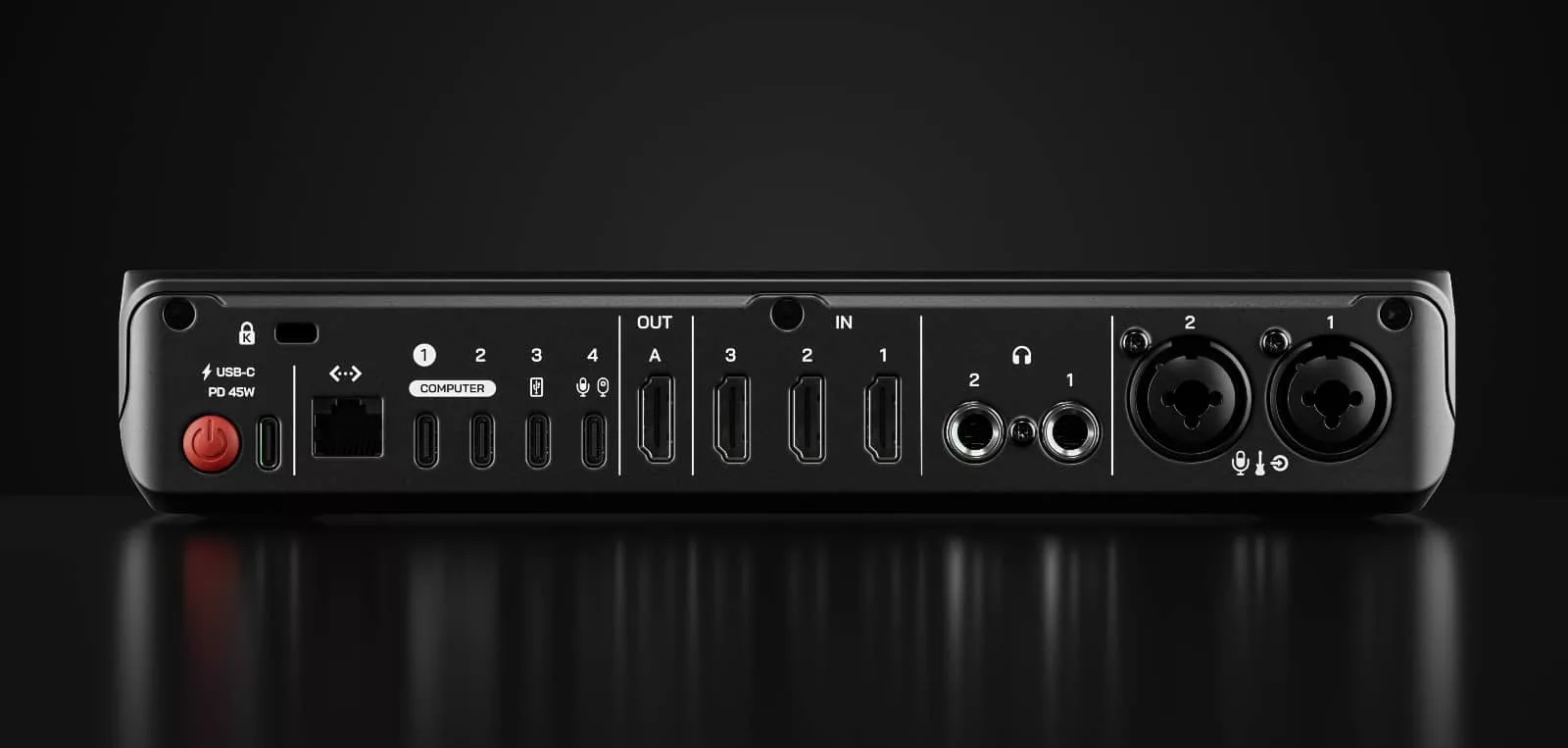
Rode will also include the Rodecaster Sync feature to link its audio and video interfaces, though only if you happen to have one of its audio systems to begin with.
“The launch of the RodeCaster Video Core and RodeCaster Sync marks a pivotal moment in the evolution of content creation,” said Damien Wilson, CEO of Rode.
“With the RodeCaster range, every creator, no matter their skill level or workflow, is supported by a complete ecosystem that makes professional production more accessible than ever,” he said.
Part of the reason video is likely being targeted comes from the world we live in: while podcasting is still big, video plays a huge part, as well, and podcasting can easily be converted to video with a camera or two, and sharing to social platforms such as TikTok and YouTube.
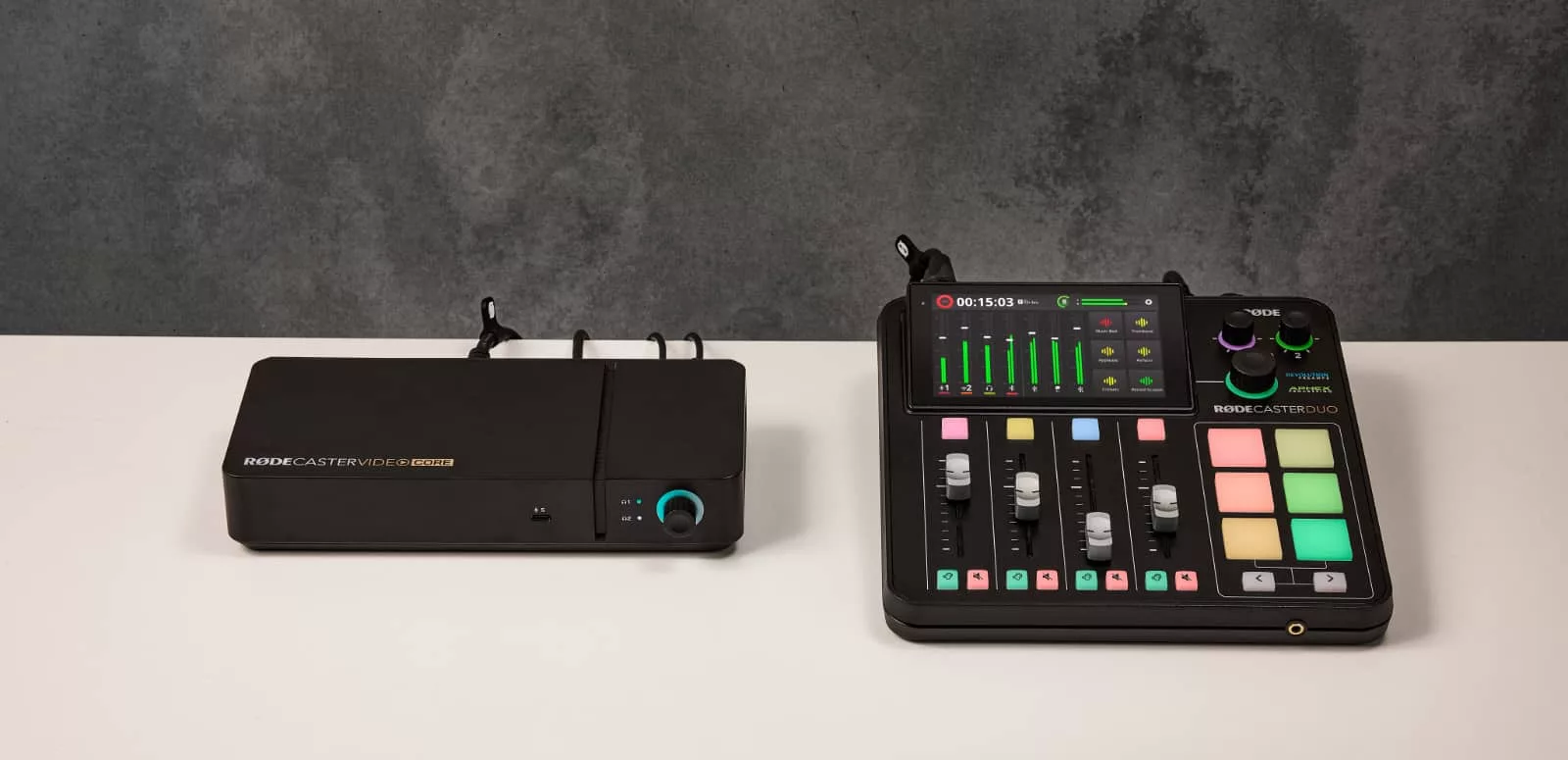
Of course, Rode isn’t alone in this space, with fellow Aussies over at Blackmagic building similar concepts in the Atem range, which is to a degree what it feels like Rode is targeting in the Videocore.
One thing Rode hasn’t confirmed in Australia is pricing, with a US price of $599, though no local pricing just yet. However, based on that price, our expectation is Australians can expect the Rodecaster Video Core for closer to $899 or $999 when it launches later on.