
Quick review
The good
The not-so-good
There’s no substitute for a real retro video game console, but today’s tech can transform it. Except when it doesn’t, such as is the case with the Laser Portable Gaming Projector.
When I reviewed Laser’s Retro Lava Lamp with Bluetooth Speaker I noted that I’m something of a fan of all things retro.
That’s not true for everything retro – I’ll happily never wear flares or eat cottage cheese again in my lifetime, because why would you – but the one area of retro content I’m most passionate about is retro gaming.
Yes, I’m that guy who kept his consoles to this day… and also the guy who bemoans the ridiculous prices that many retro titles go for in 2026, driven largely by investment speculators.
As such, I am 100% the absolute market for another retro Laser gadget, its “Portable Gaming Projector with ROM emulator”, but also quite likely to be its fiercest critic.
I never stopped playing old games, and as such I have very specific standards and expectations.
I do have to temper that against the fact that Laser’s whole pitch is on affordability, and I recognise that; I’m not looking for the kinds of presentation that you might get out of, say, Analogue’s gear, or that other one I’m loathe to mention for lots of reasons publications with a bigger legal team can say out loud.
Design and features
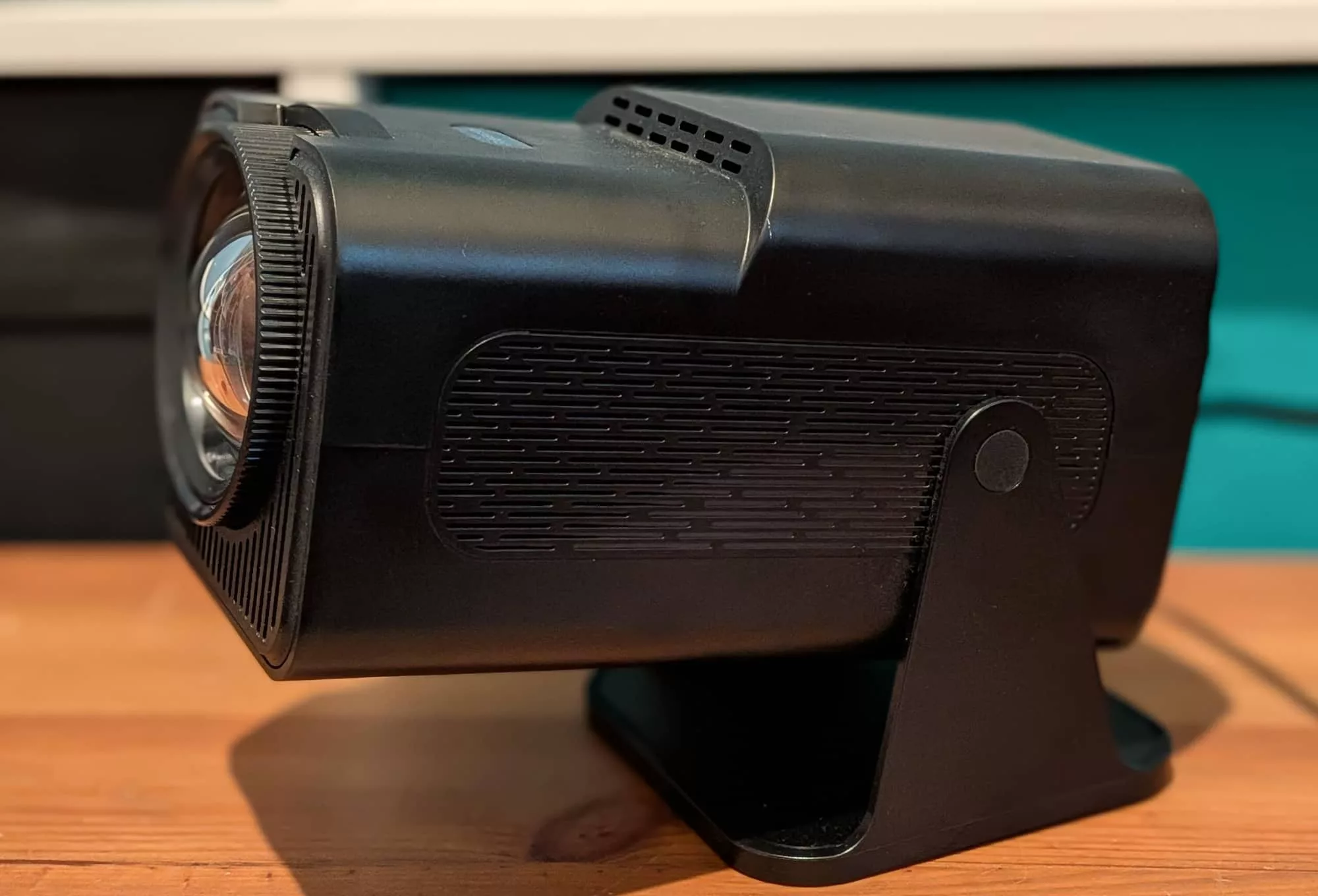
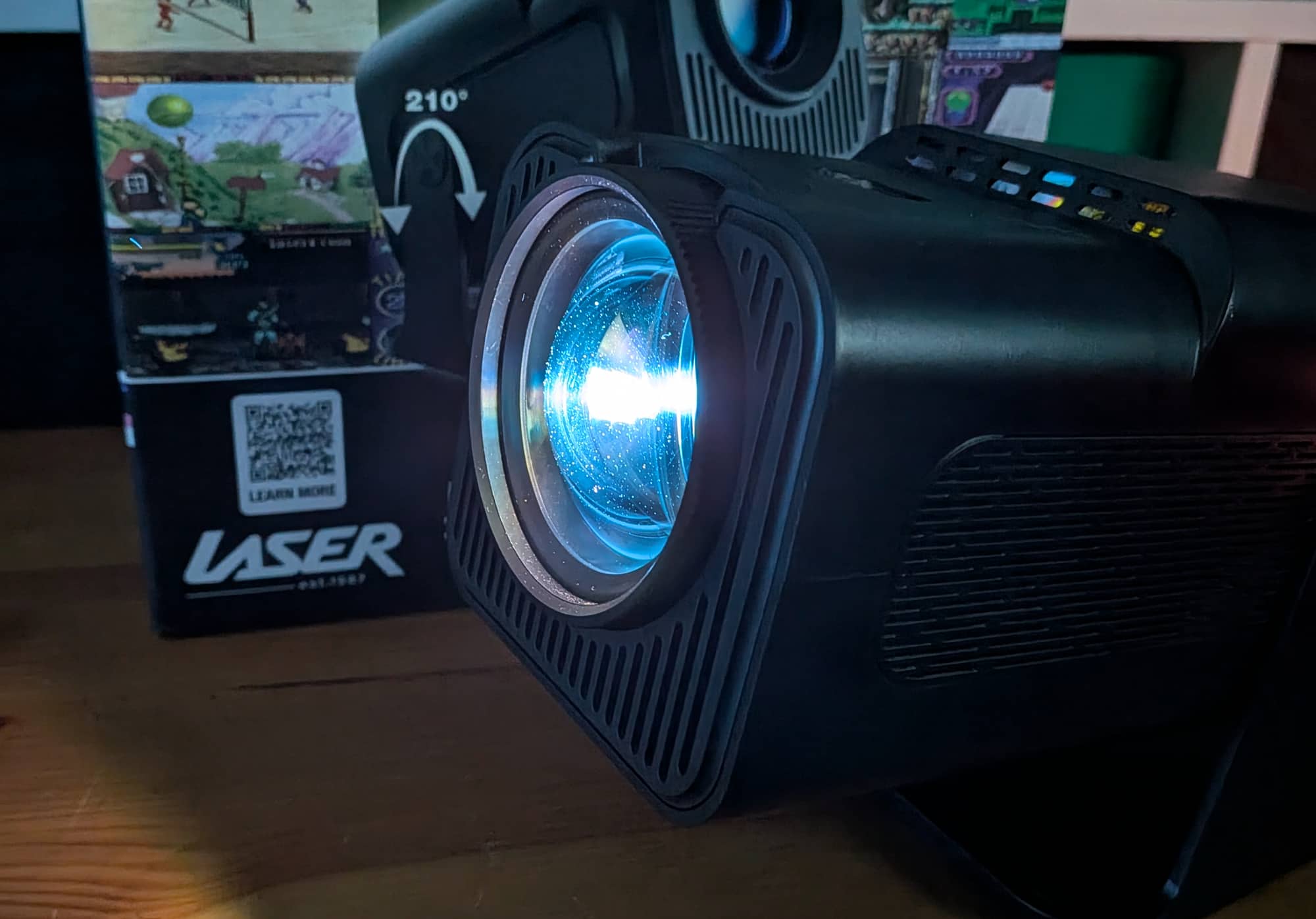
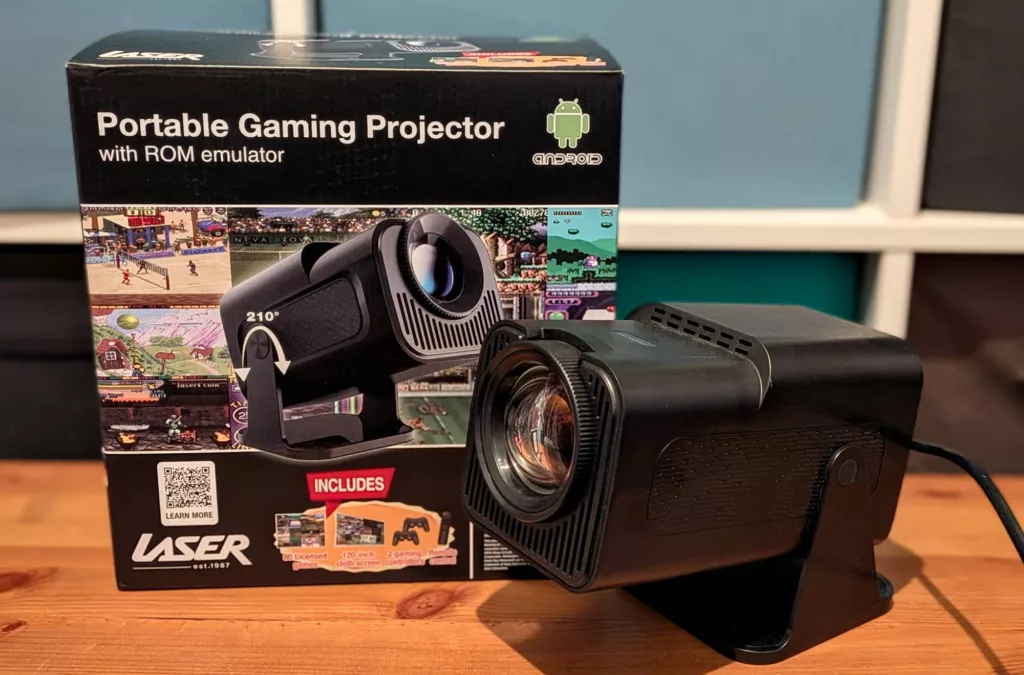
Out of the box, the Laser Portable Gaming Projector is a pretty standard self-standing projector built with its own rotating base, which means that you can easily project up a wall or onto the ceiling if you so desire.
At 166x136x126mm and weighing in at 1.38kg, it’s relatively portable and not difficult to set up, either.
That’s not surprising for a projector at this level in 2026, however, because you can buy much cheaper projectors than this if all you want is a device that will throw an image up onto a wall.
Laser has lower-cost projectors than this if you want one, though my experiences with other brands delving down into the ridiculously cheap do suggest that you rather quickly get what you pay for.
At $299, while it’s way below what you might pay for a cutting-edge high-end cinemaphile projector, you should still expect a little more.
This is still a basic projector, with a resolution of just 1280×720, which means that it’s an effective 720p projector, capable of projecting up to a 120 inch display if desired albeit only at a resolution lower than Full HD’s 1080p.
At 300 lumens, I also wasn’t expecting much, but then this is pitched much more as a retro gaming projector… and if you looked at the projectors available back then, this would have seemed like wild future technology!
The Laser Portable Gaming Projector with ROM emulator doesn’t just fly solo in its box, however.
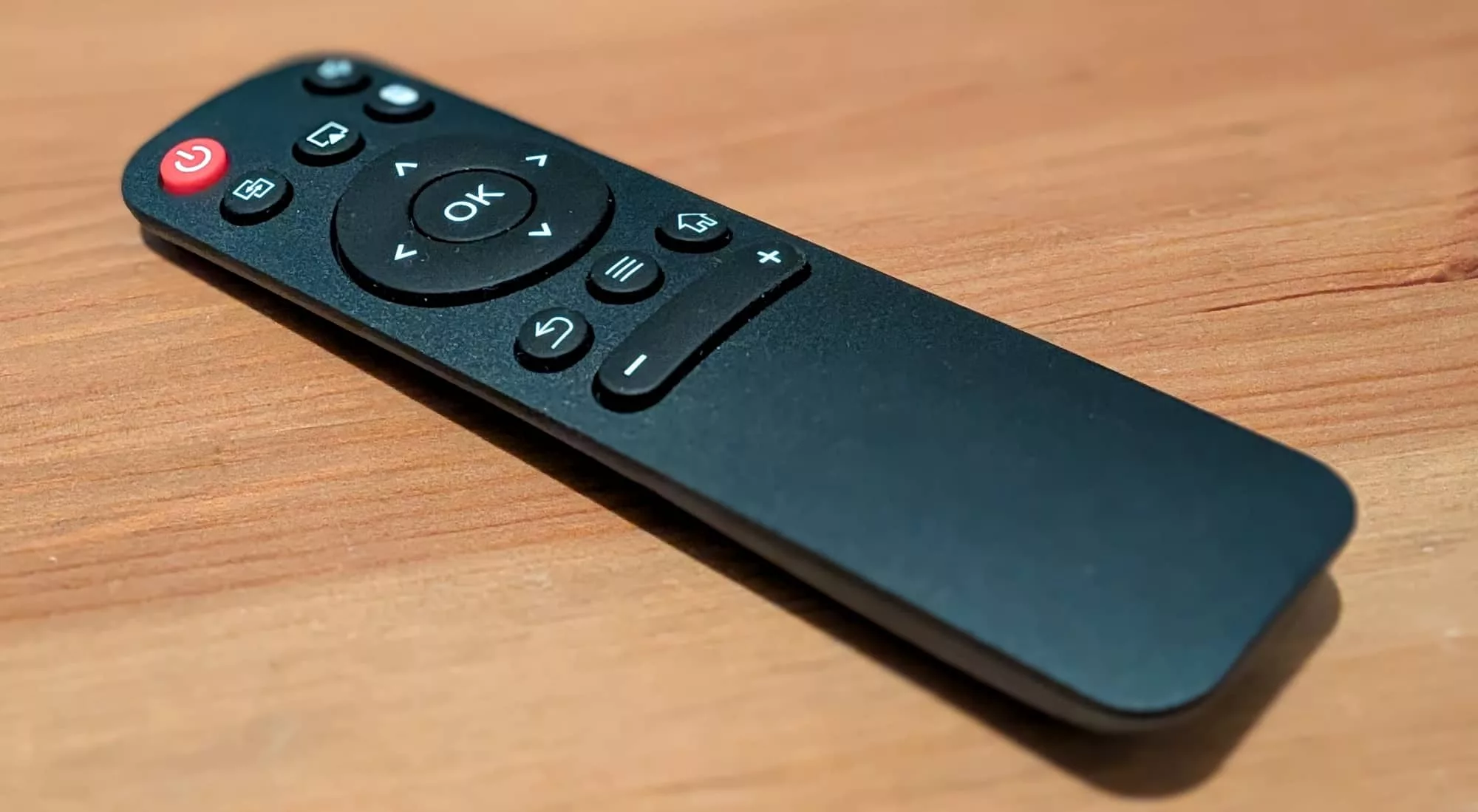
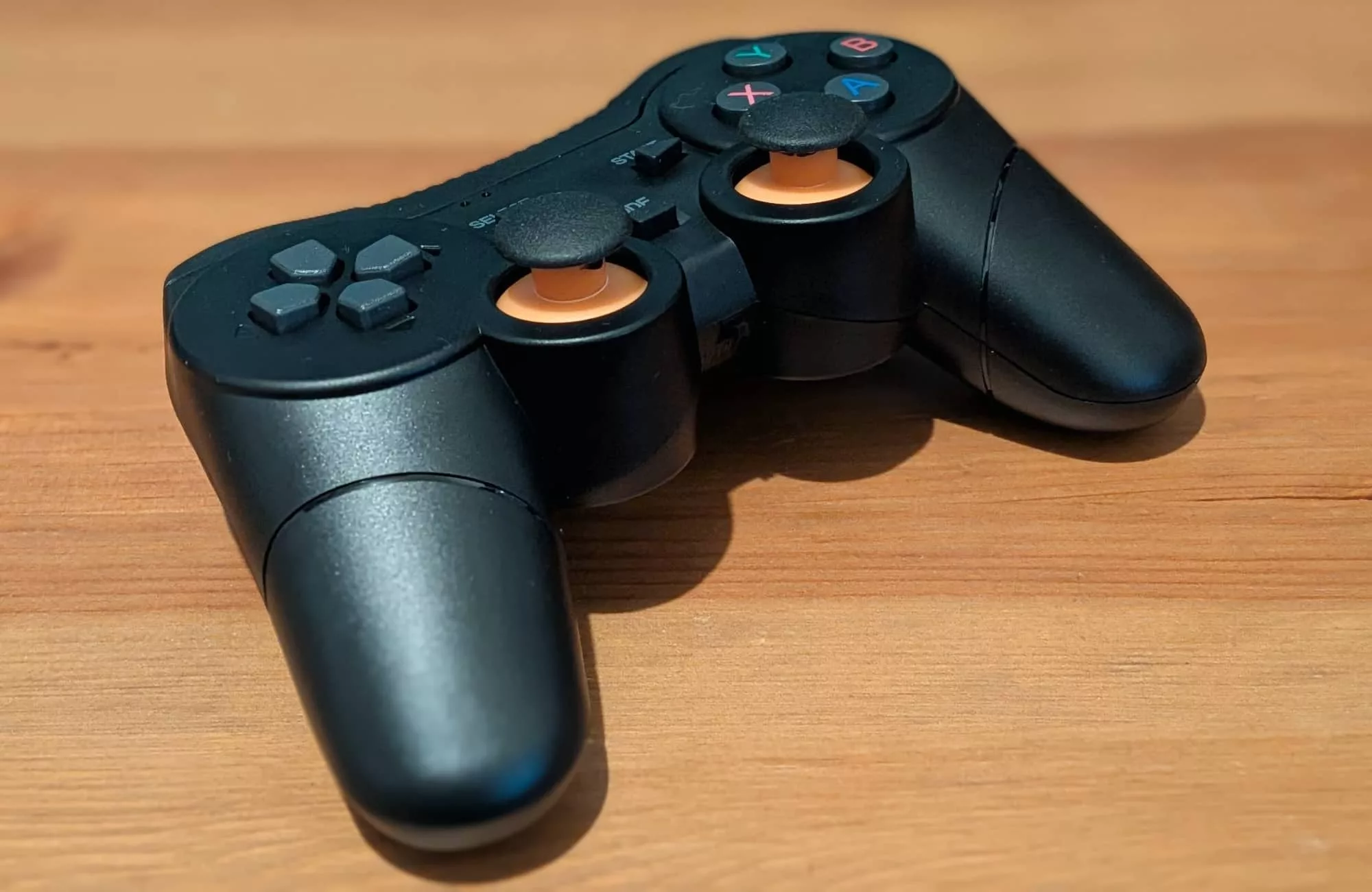
You also get a very simple generic remote, and a pair of even more simple wireless game controllers that steer as close as I’m sure it’s legally possible to the Sony DualShock design as any lawyer might want to sail… only nowhere near as good.
They have a cheap plastic feel in the hand and are amazingly lightweight, which doesn’t bode well for their likely survival if you were to give them to the kids to play with, and they require a pair of AAA batteries each to run, as does the remote control. These do not come in the box. Some things apparently are optional.
What does come in the box is a basic white projection curtain. It’s a simple and obviously fairly cheap bit of kit, but I was genuinely surprised at how well it managed with basic gaming images. Again, this is very much within the Laser wheelhouse; it’s not fancy but it gets the job done, and you do get a set of sticky hooks for helping to put it up in place as needed.
For the purposes of clarity in this review; while I tested with the screen against a wall for best results, the photos taken here are in my home office instead for reasons of privacy, which means it may look better in your home living room, though it is close to what it can do optimally.
At the rear of Laser’s Portable Gaming Projector, you’ll finda single HDMI input port, a USB-A port that’s pre-filled with an adaptor for the included game controllers, a single 3.5mm headphone jack and a microSD card with a warranty sticker on it that’s very clearly the included storage for the projector.
In-Use
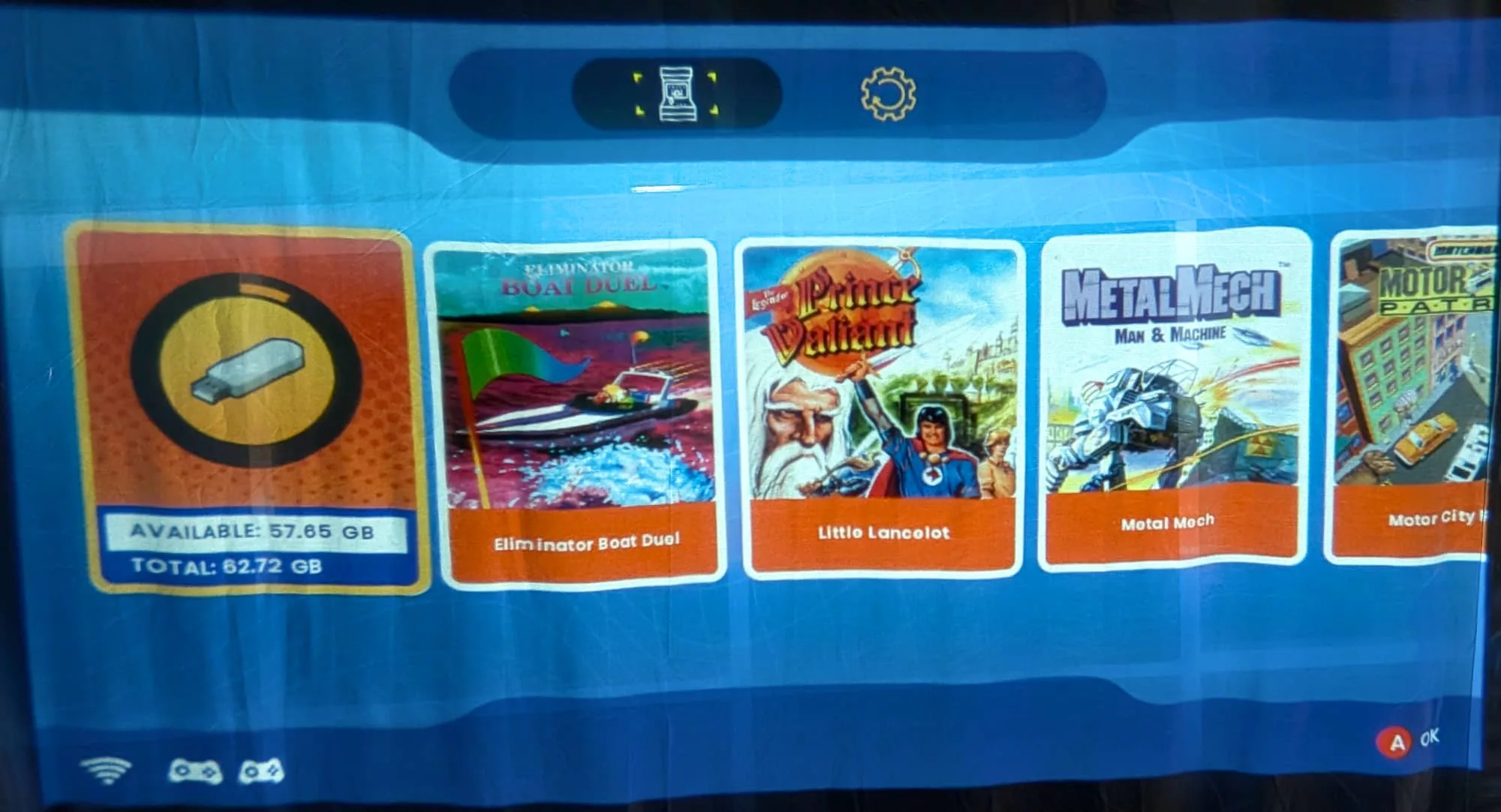
The Laser Portable Gaming Projector with ROM emulator doesn’t just magically run those games, using an Android 13 operating system with a custom front-end that itself looks a little retro compared to what, say, the Google TV Streamer 4K presents.
Strictly speaking you don’t have to connect up the projector to Wi-Fi, but if you do it supports Wi-Fi 6 out of the box, which means it’s both 2.4GHz and 5GHz compatible, and is nice to see. Hooking into Wi-Fi does enable connectivity to major streaming services, and it does work with the Google Play store for TV-compatible apps… which is to say that while it’s Android, don’t expect every Android app to be available.
At just 720p and with 300 lumen brightness, however, this isn’t a spectacular movie, TV or sports projector, and that’s made markedly worse by the integrated 2 watt speakers.
They are – and there’s no more accurate term to use here – bad. The speakers are really quite painful to hear, and my one bit of advice here, no matter what you’re using the Laser Portable Gaming Projector for is to invest in a simple external speaker with a standard 3.5mm connector, because the audio out of this thing is just woeful.
There’s also a potential future catch here, because being only Android 13 based, and with the strong likelihood that it’ll never see an official update, there could come future dates where updated streaming apps look for a minimum Android version higher than that, at which point its utility as a general-purpose projector may drop.
That’s not the point of the Laser Portable Gaming Projector with ROM emulator, though, is it?
No, it’s about gaming, so let’s get into that.
Retro gaming
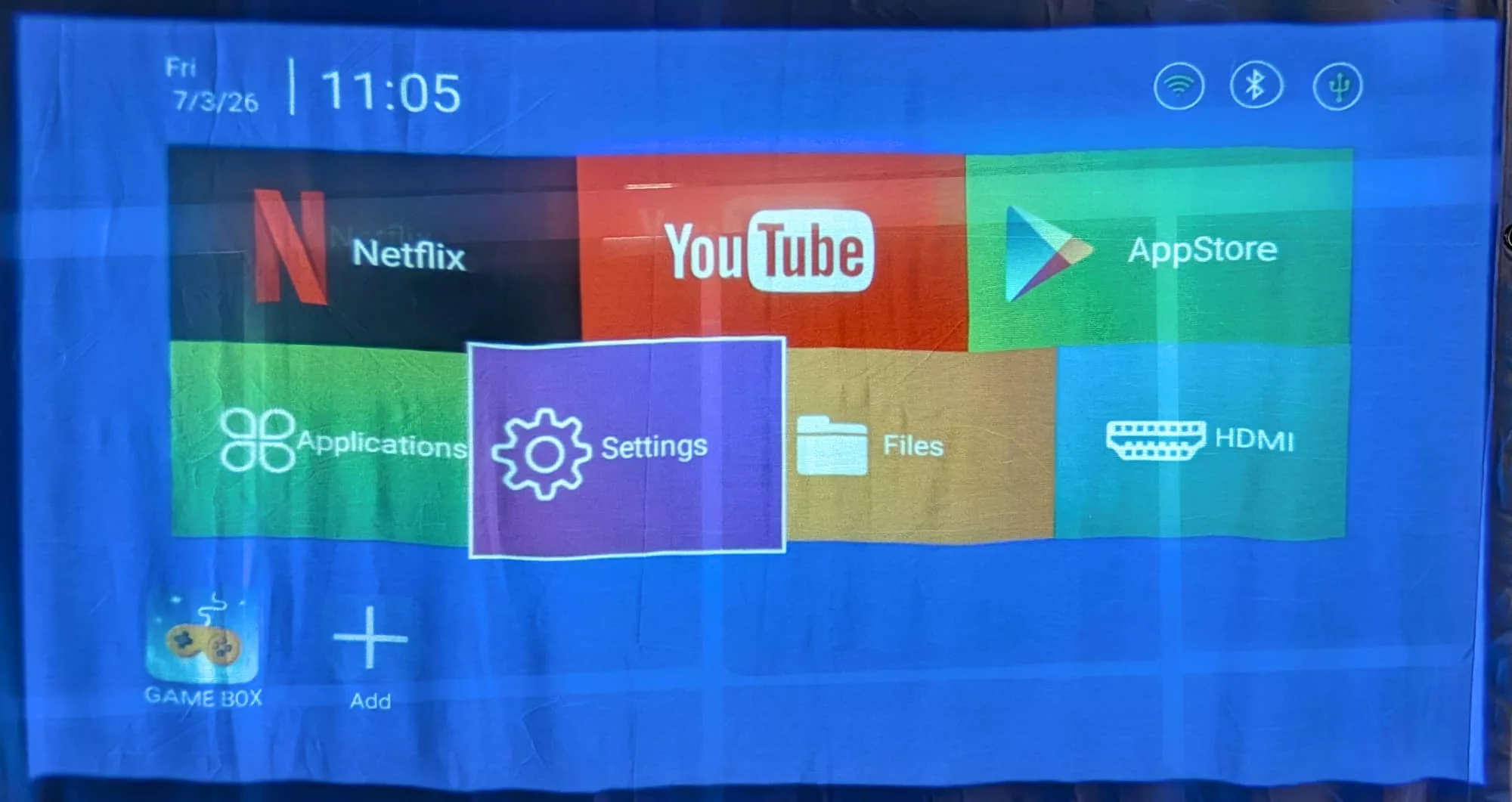
The Laser Portable Gaming Projector handles its gaming through what it calls the “Game Box” app, which is functionally a launcher app for the various emulators that it relies on under the hood.
It’s simple and functional, but it also is quite slow in response whether you’re using the supplied remote, included controllers, or even a third-party Bluetooth controller, which is the route I went down for most of this review, because the included controllers are quite poor.
What about the included games – can you play the classics like Super Mario World, Sonic the Hedgehog or Street Fighter II from the included games set?
Laser is… I’ll be charitable and say “cheeky” when it comes to the promotion of this projector, because its hype reel video for it includes the line “80 licensed games”… and it’s not, strictly speaking, lying there.
However, it then goes on to show fare such as Metal Slug, Mortal Kombat and Street Fighter II running on the projector… and none of those stellar titles are included. Far from it.
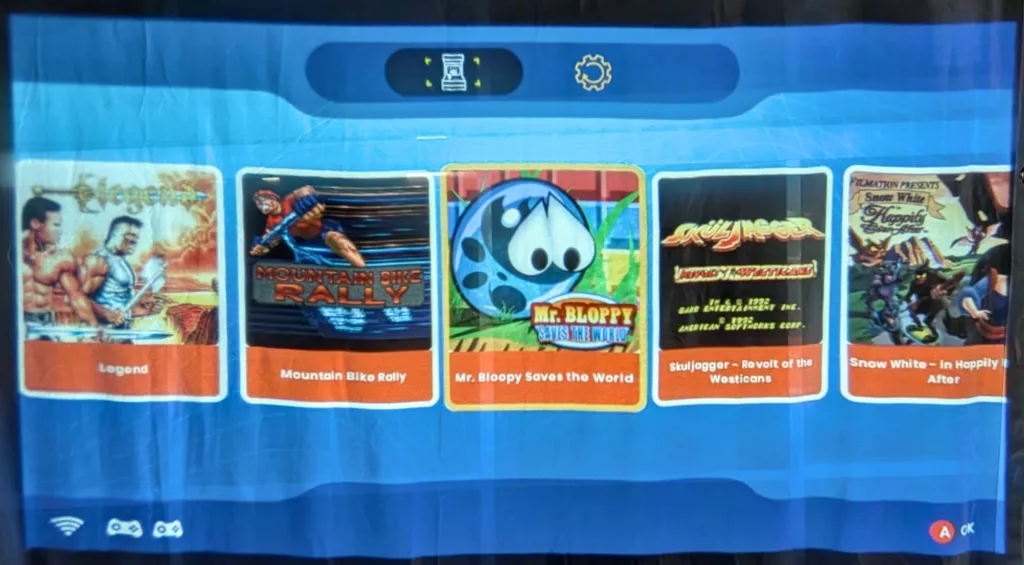
Instead, largely, it appears that whoever built the gaming projector for Laser in the first place struck up a licencing deal with PIKO Interactive.
Chances are, you’ve never heard of PIKO Interactive, and don’t recall them from the good old retro days.
There’s a good reason for that; rather than being a classic gaming developer in its own right, PIKO Interactive instead has legitimately bought the rights to a number of classic gaming developers’ titles, and released them across multiple formats.
On one hand, I love what PIKO Interactive does, because it’s keeping the retro games flame alive without the whole pesky retro-speculators-driving-game-prices-up nonsense in play.
On the other hand… I can’t ignore the fact that a lot of what PIKO Interactive has picked up… isn’t very good, or hasn’t aged well… or both.
The best example of this that I can give is that the Laser Portable Gaming Projector includes the full run of Wisdom Tree’s output.
Wisdom Tree was a developer of specifically Christian-themed games in the 1990s, producing unlicensed games for the NES and SNES, and sold through Christian bookstores.
I do not in any way wish to disparage anyone’s faith, but the reality of the Wisdom Tree games is that they were awful back in the 1990s, and outside their light meme status, they haven’t aged well at all.
As an example, you get Super 3D Noah’s Ark, a first-person shooter built on the Wolfenstein 3D engine, but without that game’s notable Nazi themes or violence. Instead, as Noah, you wander around the ark, lightly sedating various creatures… and that’s all. You’d get more joy wandering around the house cleaning up after your pets, and likely better graphics.
Fun trivial fact: The game that would become Super 3D Noah’s Ark was originally going to be a licenced game based on Clive Barker’s Hellraiser, back when Wisdom Tree was known as Color Dreams and before it decided to target the lucrative US Christian market.
If there’s a more profound 180 degree genre and theme shift for a game in development than that, I’ve never come across it… but I digress.
There are some games that work well enough here, but the reality is that it’s a case of finding the gems amongst the dross… and there’s way more dross than gems here.
I also have to give the Laser Portable Gaming Projector with ROM Emulator some local credit here, though I suspect I’m the only reviewer on the planet who will have noticed this.
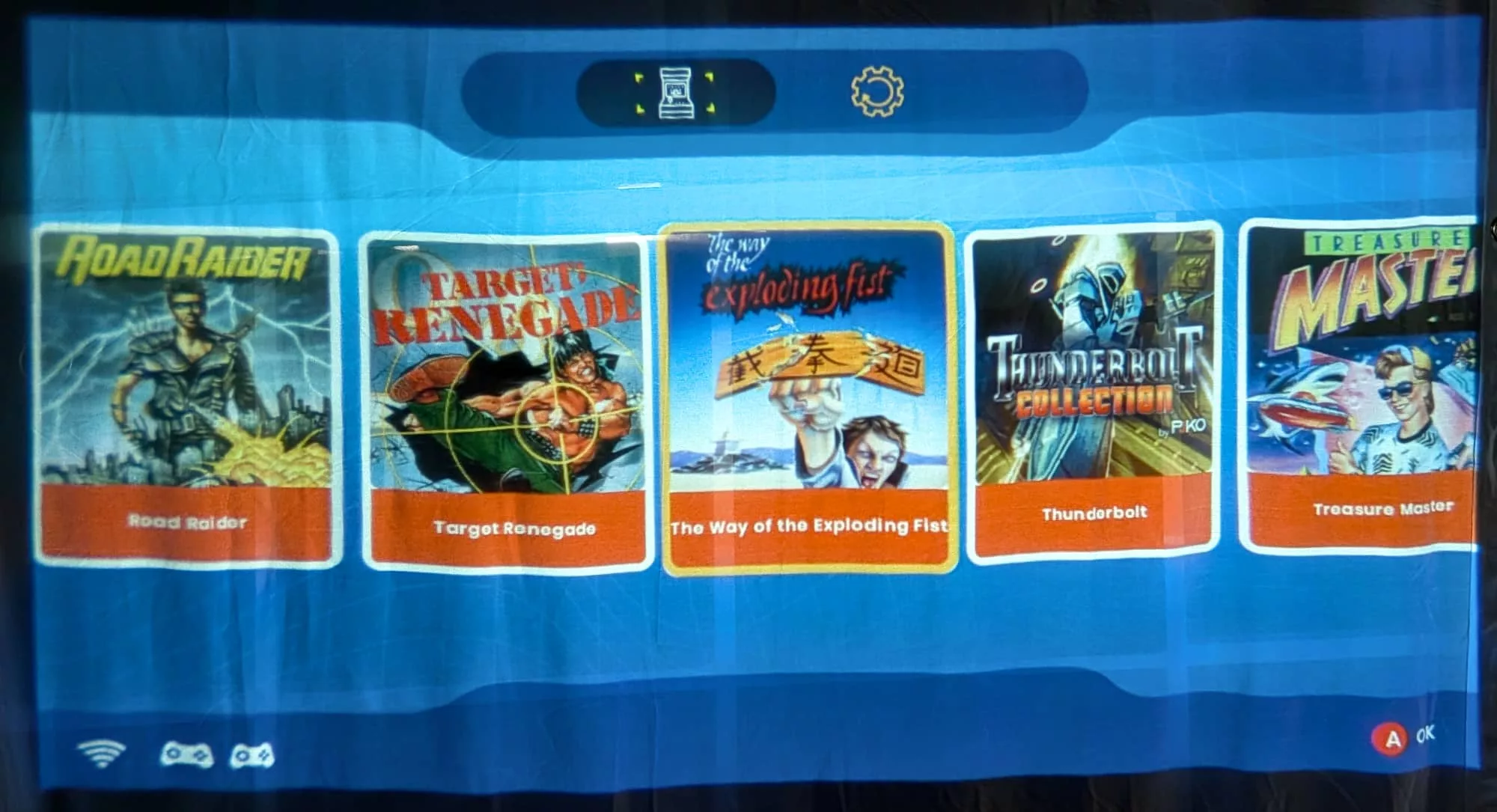
A lot of the games that PIKO Interactive has included on here were originally programmed by Beam Software, also known as Melbourne House. This means that there’s a number of original games here – The Way of The Exploding Fist being the most obvious – that are home-grown!
You may now, if you wish, chant “Aussie Aussie Aussie” if you wish.
I’ll wait.
It’s also kind of odd; PIKO Interactive has licenced these games elsewhere – I have a number of them on Everdrive cartridges – and there, they make considerable effort to scrub out the copyrights they don’t own, which typically means they remove the lines indicating original platforms or that they were licenced by Nintendo or Sega for those consoles.
Yet on the Laser Portable Gaming Projector with ROM Emulator, those licence details are still there. I’m not saying they’re not properly licensed, but clearly somebody got lazy and just loaded up the regular ROMS into Laser’s gaming projector when its factory image was being loaded up.
They also did a sloppy job with game titles, too, with a quite a few typos and some games represented by names they no longer hold. The SNES-era Top Gear game got a name change to Top Racer when PIKO Interactive picked it up to avoid the ire of the BBC, but it’s present under both names here!
Performance
Sadly, even once you get past strange naming and licensing conventions, you hit the problem that the basic emulation of titles is not particularly good.
There are a number of games in this list that I do have legally via the Evercade, so I can directly compare how they work as official PIKO Interactive software.
The difference in response, audio lag and frame rates is highly noticeable, even though the Evercade platform itself isn’t exactly a high-speed marvel.
Presentation is also highly variable, not helped in some cases by the fact that some games were originally for the GameBoy Advance platform with its much smaller screen, but the default is to try to present a 16:9 style image fairly badly blown up.
You can adjust this in the emulator settings for the game to a more pixel accurate style, thankfully, but only if you notice that the option is there.
Playing with the included games also isn’t helped by emulators that are a little slow and sludgy when it comes time to access save states or exit out. More than once I found myself stuck in a game with the controller not recognising the START+SELECT key combination that should bring up the emulator menu, forced to fully power cycle the projector before I could change games.
I found myself in a curious reviewer’s dilemma with regards to the projector. The included games are mostly on the mediocre side to be honest about it, but I did spend quite some time with them, because I’m genuinely curious about all corners of the retro gaming scene, and there’s always more to find where a diamond in the rough could be hiding.
Will the average gamer, or older gamer wanting a glimpse back into the titles of their youth persist as long as I did?
I doubt it. Matters aren’t helped by there being a lot of some specific game types in the set. You probably don’t need multiple older soccer titles, or racing titles, or variants on Punch-Out to play, but you’re getting them, like it or not.
The promise of the “ROM emulator” in Laser’s Portable Gaming Projector with ROM emulator is that you can use your “own” games on it, and here I have to once again point out that while Laser’s own promotional material does indeed show Street Fighter II running on it, if that was filmed in Australia, then it is 100% illegal, even if somebody at Laser does still own an original Street Fighter II SNES cartridge.
I think it’s a pity, but the reality of Australian copyright law is even if you do own an original copy of a cartridge or disc game, you do not have the rights to create or use ROMs or disc images of those games.
Period.
Will this stop anyone? Probably not, and let’s be realistic about this: as was the case with the GameSir Pocket Taco I recently reviewed, most will merrily go on their way with pirated ROM files. What happens on your device probably won’t be seen by anyone else.
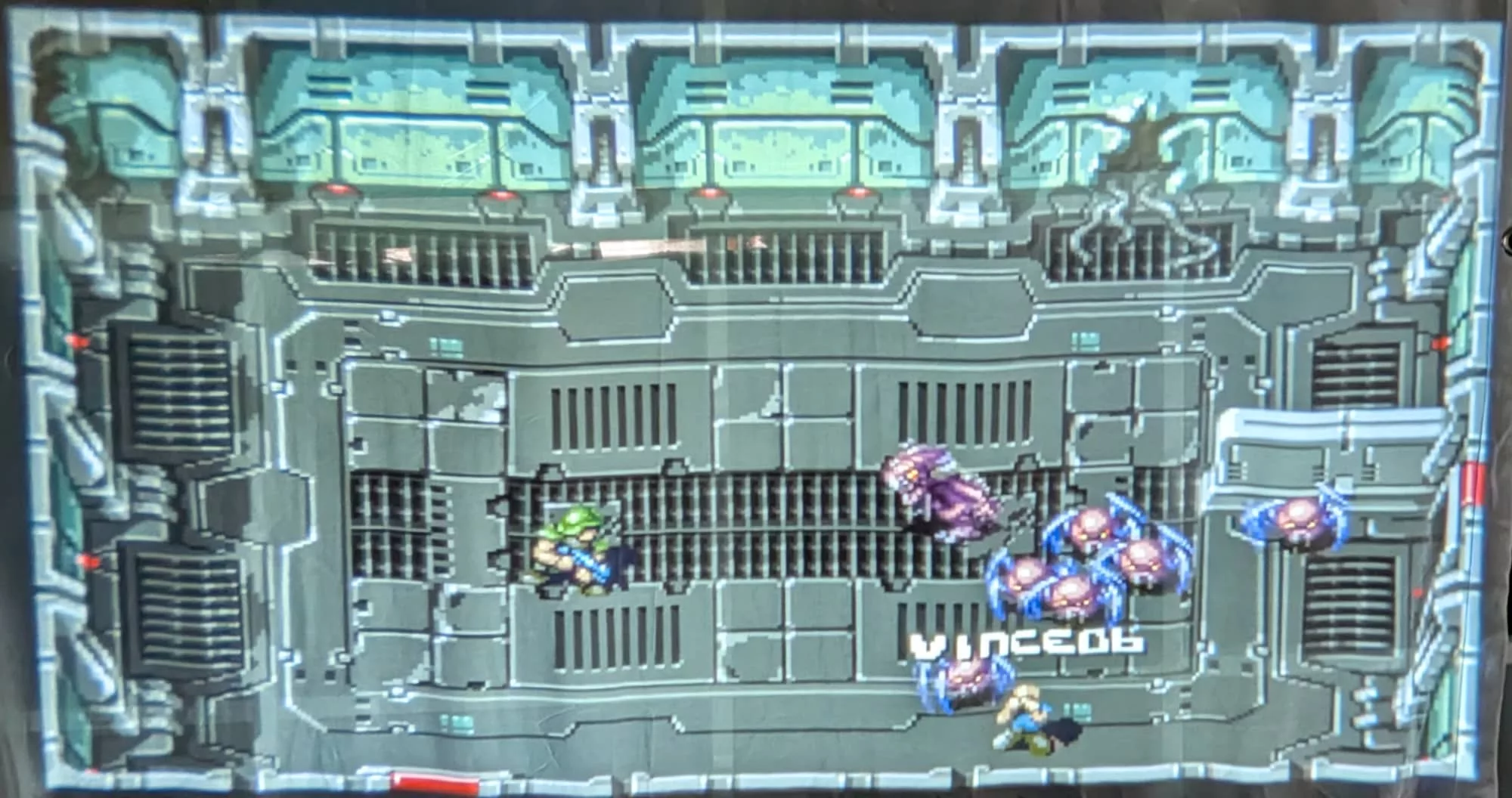
Because Laser’s Portable Gaming Projector with ROM emulator does support a number of different systems, I was able to fully legally test it with some homebrew titles; I have a copy of Bitmap Bureau’s rather excellent Xenocrisis for the Mega Drive that I 100% legally own, because it was part of the supporter’s bundle for the Retro Collective a year or so ago.
Xenocrisis is a fast action game that demands precision response and here, sadly, Laser’s projector simply struggled to keep up, with noticeable input lag while playing.
You can somewhat adjust your own reactions as you play to compensate for this by playing slightly more predictively, but ideally you shouldn’t have to do so.
So if you did fire up a classic like Sonic The Hedgehog or Super Mario World and wonder why you kept dying, for once it’s not because your ageing reflexes aren’t what they used to be – it genuinely is because the system is rather slower than it should be at interpreting input commands.
Value
The value equation for the Laser Portable Gaming Projector with ROM emulator is therefore a tricky one. Found in Australia for $299, the price is on the very high side for a basic 720p projector, and if that was all you wanted, you could get one for much less than this.
However, it’s also a full Android TV system and it does come with those licensed games on board. Buying all of those in their various forms would cost you more than the $299 asking price, so there’s maybe some value if you’re super keen for those specific titles.
I do feel that more regular gamers after a simple retro gaming hit are probably more chasing the true classics in the Mario/Street Fighter/Sonic scale… and those you won’t find here, undermining the value somewhat.
What needs work?
I do love the idea of an all-in-one retro gaming projector, because it’d be such an easy way to introduce more and more people to the joys of retro gaming.
However, it ultimately needs better hardware than this. Not so much on the 720p side of matters, because that’s workable enough, but on the processing power and emulation side, because this is where the whole thing is rather sorely lacking.
What we love
Retro games.
I may have already made that clear, no?
While the retro games argument is clearly what could make Laser’s retro-focused game projector good, the retro games here don’t really stack up. It’s probably not what you think it is, and if you don’t believe me, go back and re-read those sections.
Final thoughts (TLDR)
The Laser Portable Gaming Projector with ROM emulator is a genuinely interesting device, and for some it might provide enough of a simple gaming fix to be worth it if it’s been a long time since you looked at any retro titles and you just wanted something basic and legit.
However, you don’t have to test it out for long before the cracks appear. The integrated speaker does no content, gaming or otherwise any favours. The included controllers are lightweight and feel bad. The onboard emulation, either of its own titles or ones you load on is laggy.
There’s the germ of a great idea here that I would 100% recommend if it were a little more slick…but this isn’t it. You might simply be better off reaching for your older retro console and playing that. At least it’s made to play games. This is not ideal for gamers, and difficult to recommend.