
Quick review
The good
The not-so-good
A pair of open audio earphones that won’t break the bank? JLab could be onto something in the Epic Open Sport.
Earphones can feel like a lot for everyone, what with pieces that go inside the ear, and not everyone wants that. While earbuds can feel like they’ve become less of a thing in recent years, a style has emerged and it has earbud fans in focus: open ear.
A pair of earbuds that technically sits outside the ear, open audio and open ear offerings provide a speaker just on the periphery of your ear opening to let you get the sound without necessarily having anything sitting in your ear.
If you go for a run and need to listen to the world, build up wax all too easily, or just find earphones uncomfortable, it’s a style that can feel immediately appealing because they’re different, and they don’t really affect the ear in the same way.
But new styles also tend to come with higher prices, and that can be unappealing, also leaving room for new entrants to challenge the typically high-priced status quo.
Enter JLab, an American audio specialised from California, which has begun offering a pair distinct from the like of Shokz and Beats and Bose and others, with the Epic Open Sport. Priced at $199, they appear less expensive than the rest, but does that mean you’re getting value, a bargain, or something else entirely?
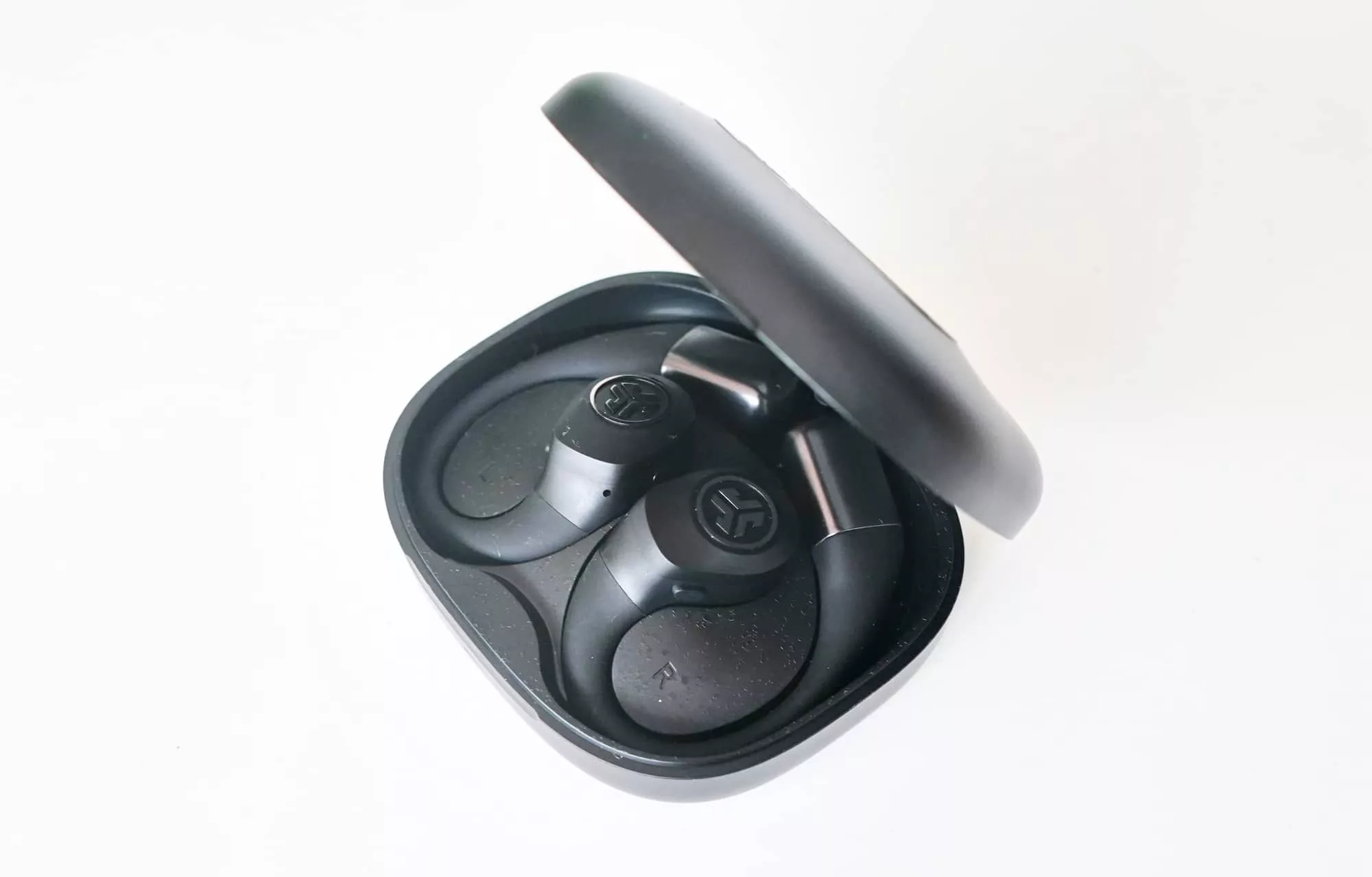
Design and features
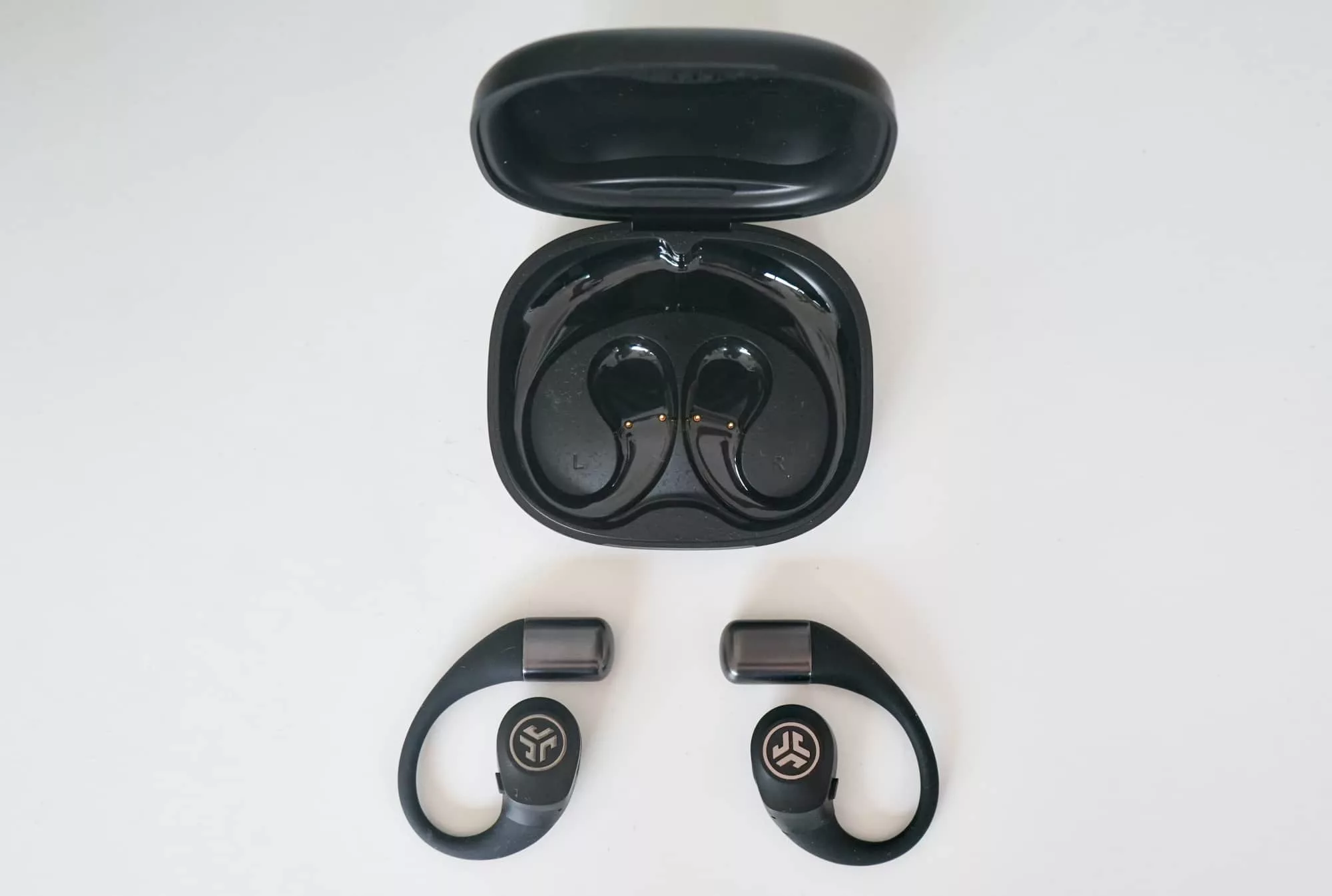
While JLab’s Epic Open Sport clearly aren’t made by Shokz, there’s a general vibe that reminds of them. There may be only a few ways to design this style of earbud, and so the JLab Epic Open follow that approach:
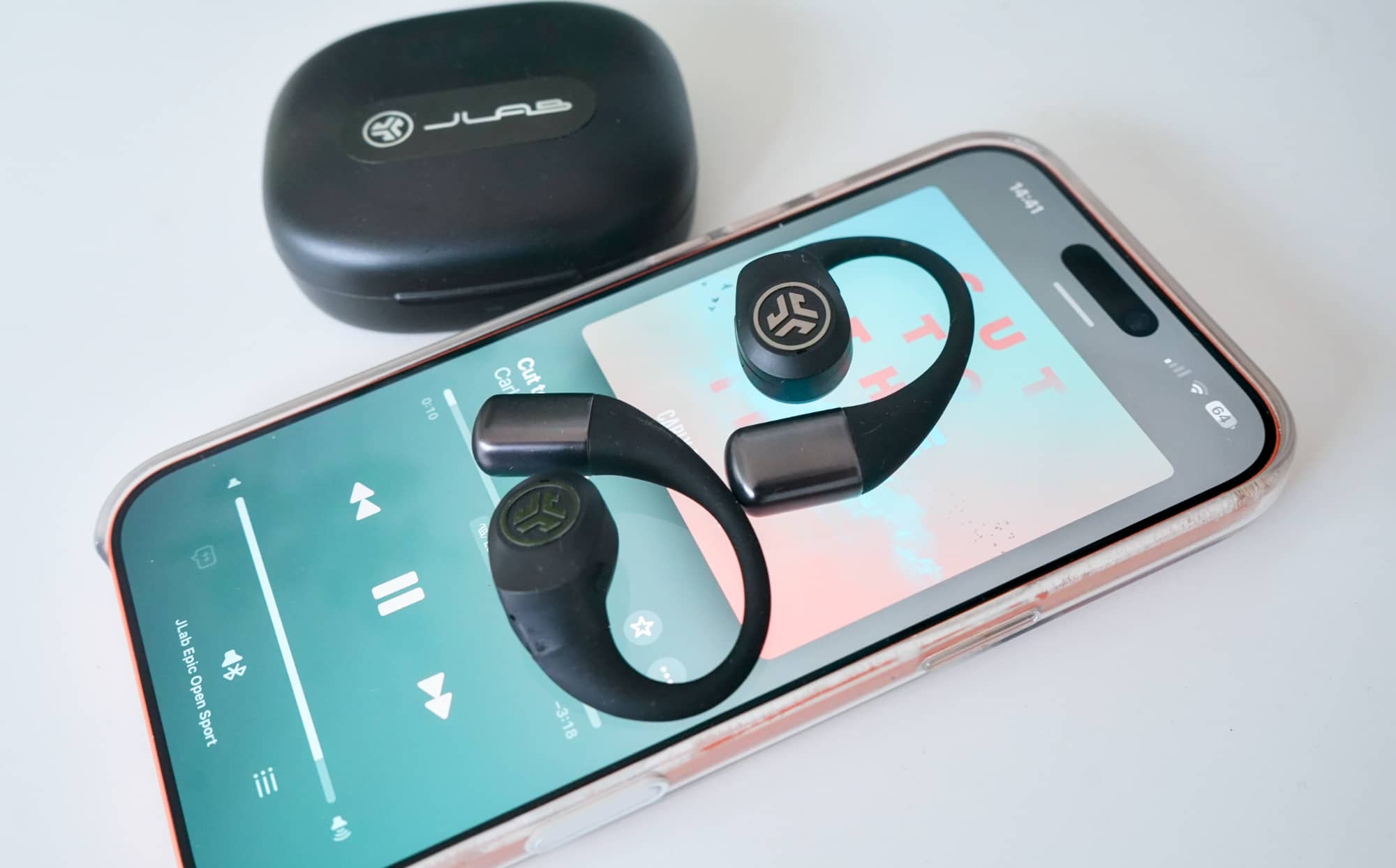
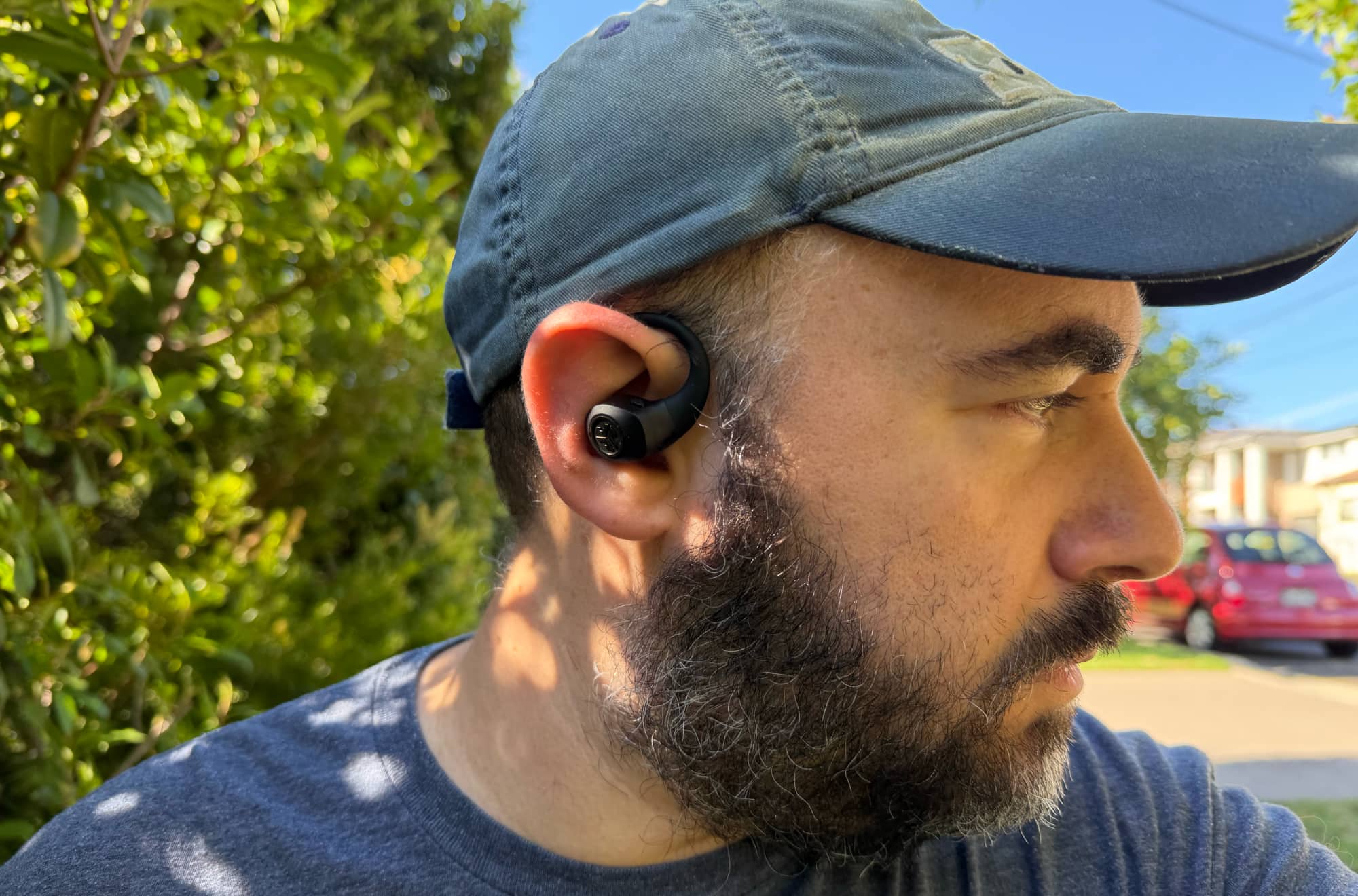
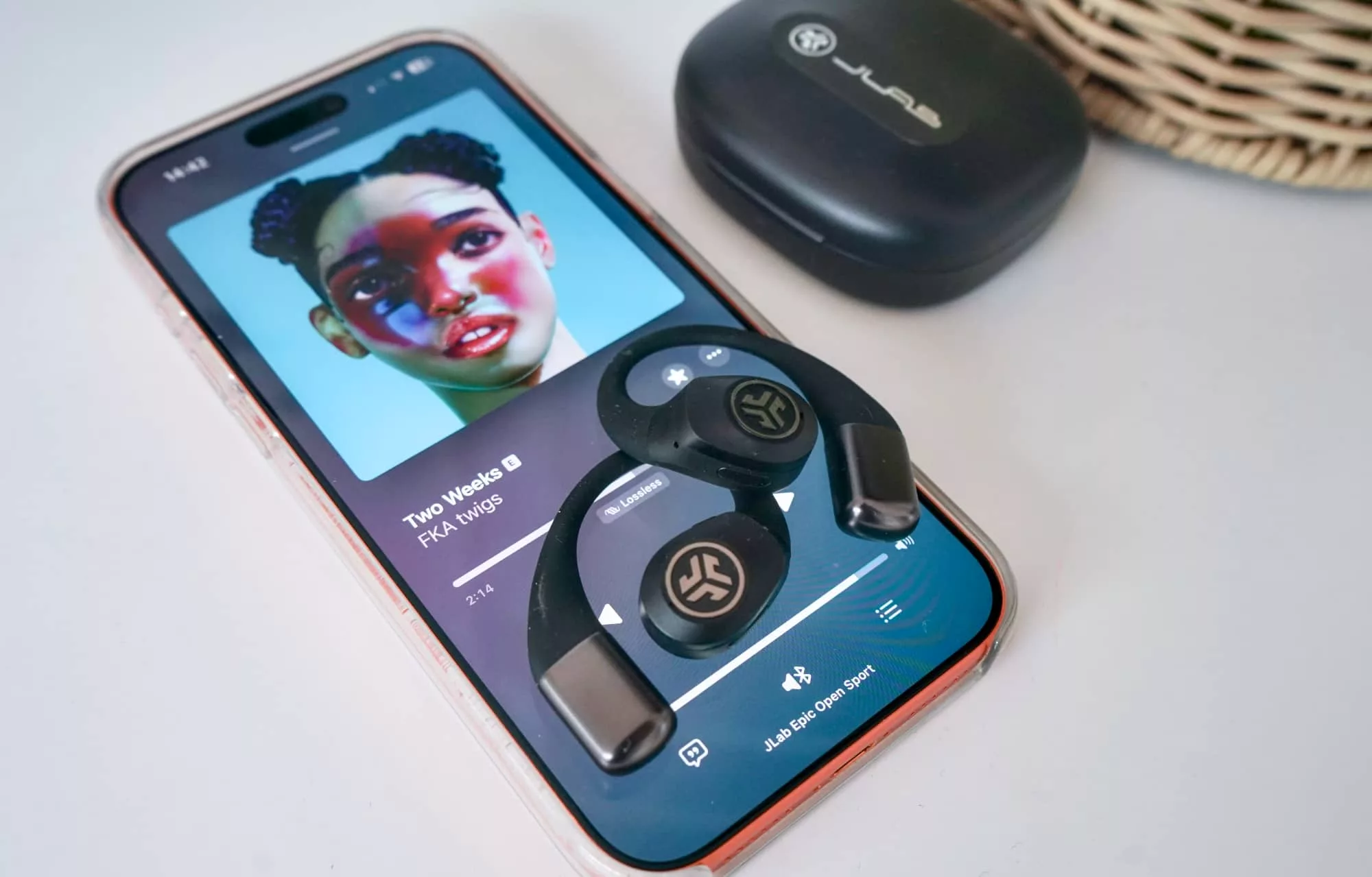
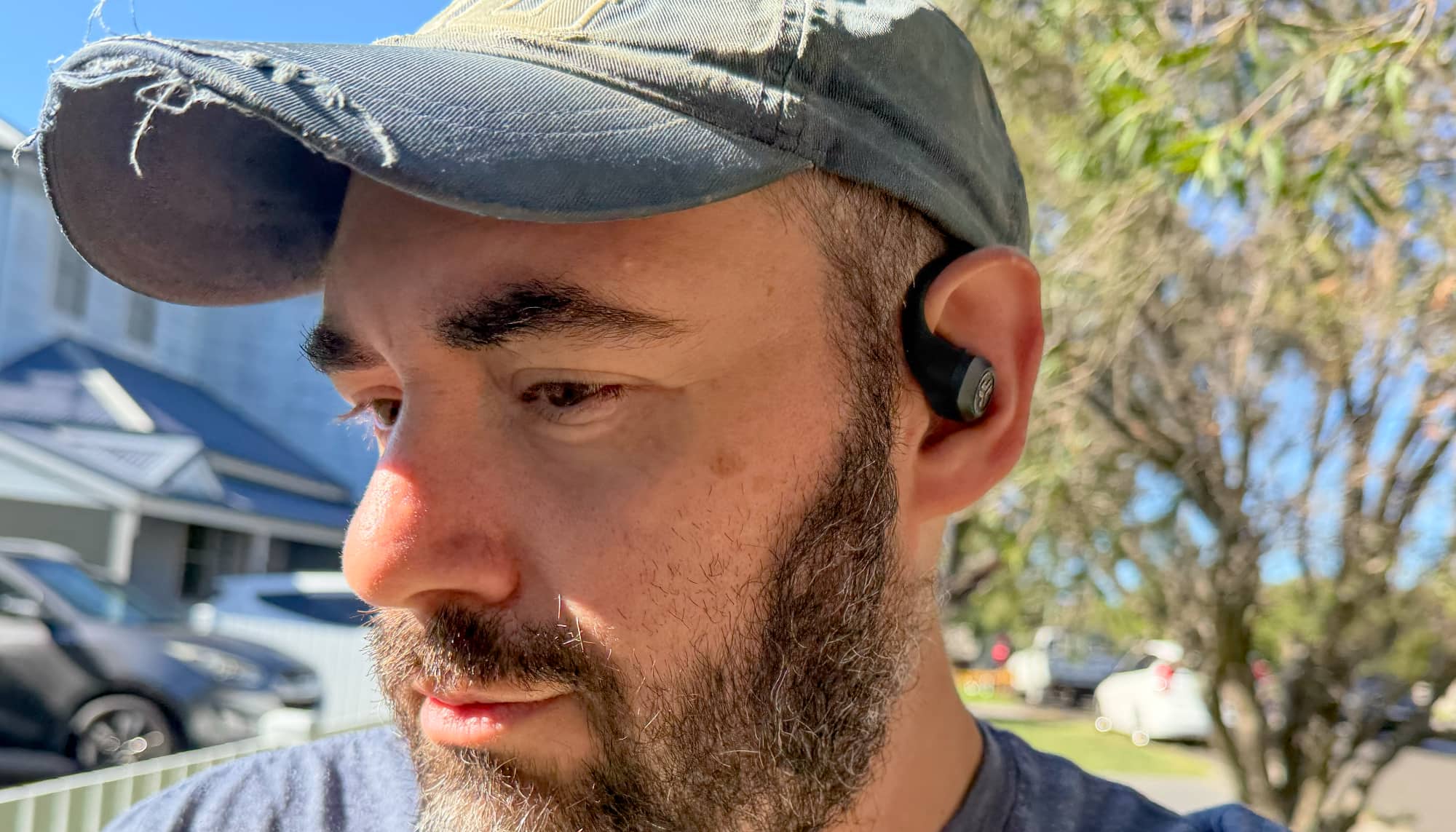
A pair of earbuds that wraps around the top loose flesh of outer ear, the helix, resting against your head, while a speaker rests just outside of the opening to your ear. It’s like a pair of earphones, but it’s also a little like a speaker, and one using 14mm drivers.
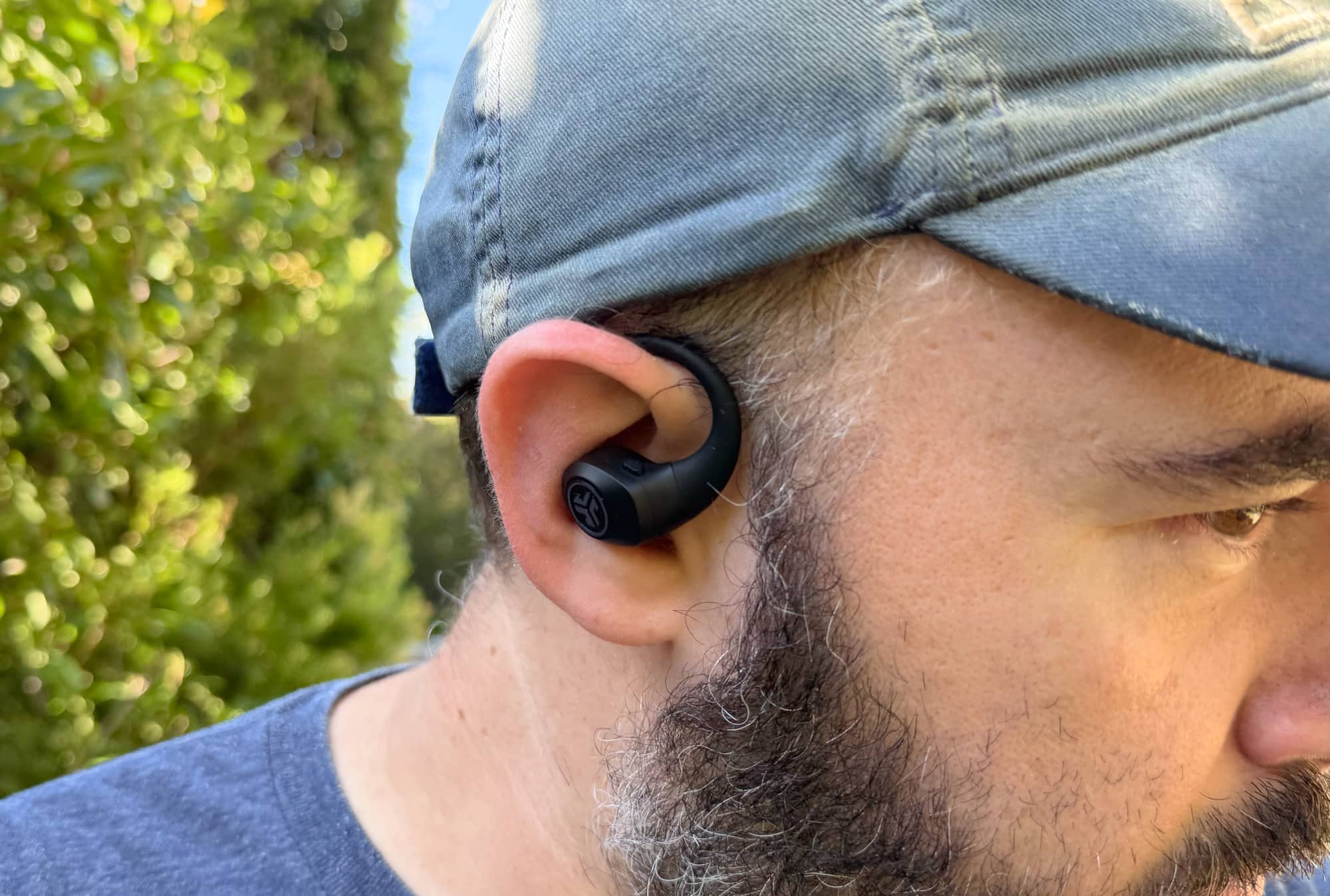
Encased in a combination of plastic and rubbery silicone, they’re a fairly basic design that feels good on the ears, though can feel a little on the cheap side. These aren’t the titanium framed earbuds of other brands.
Technically, JLab says there’s support for hi-res audio on the Epic Open Sport, which is more of a technical qualification than a formal notice of “these are good” (we’ll be the judge of that), with customisable controls and sound in the JLab app.
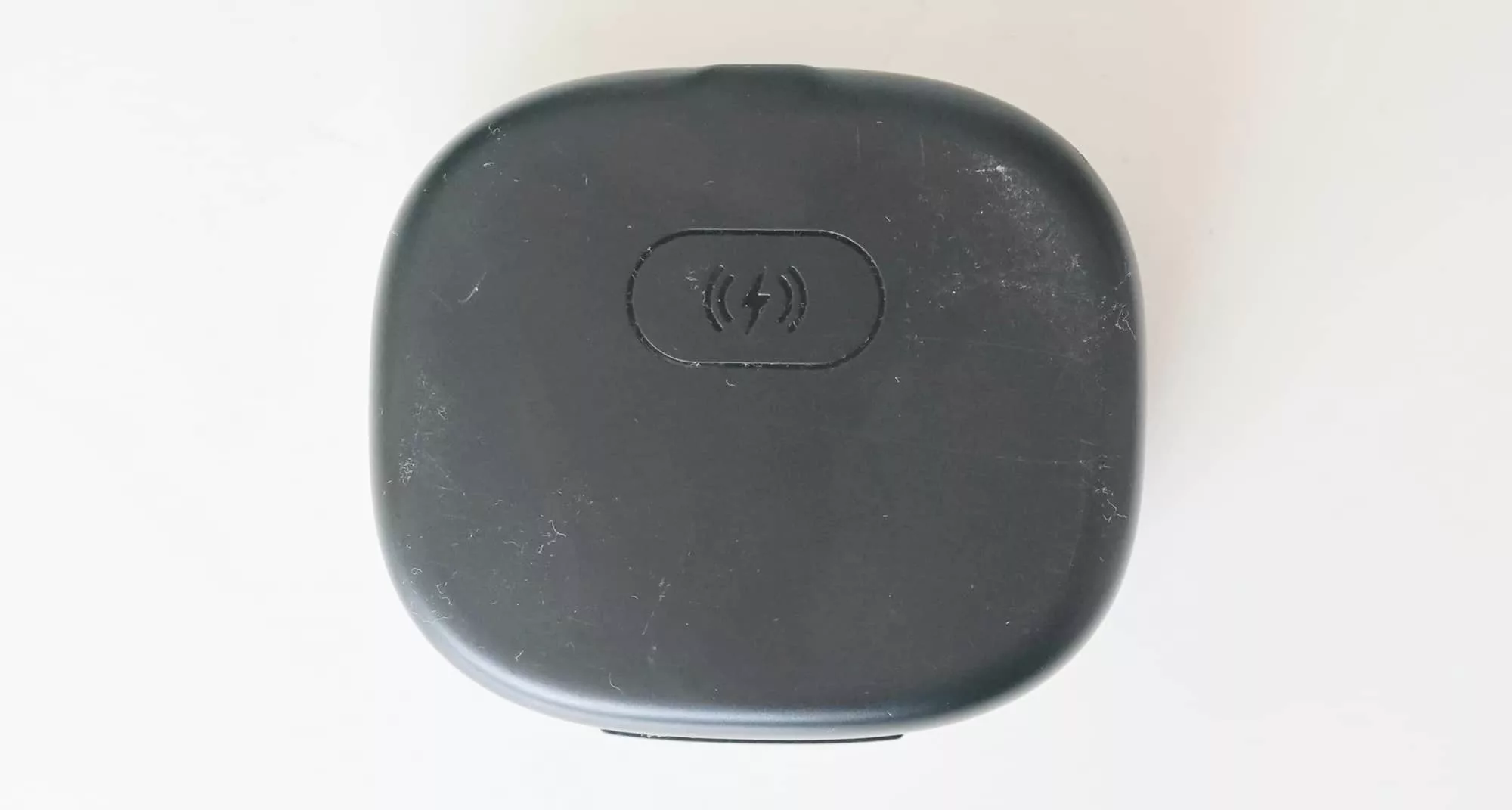
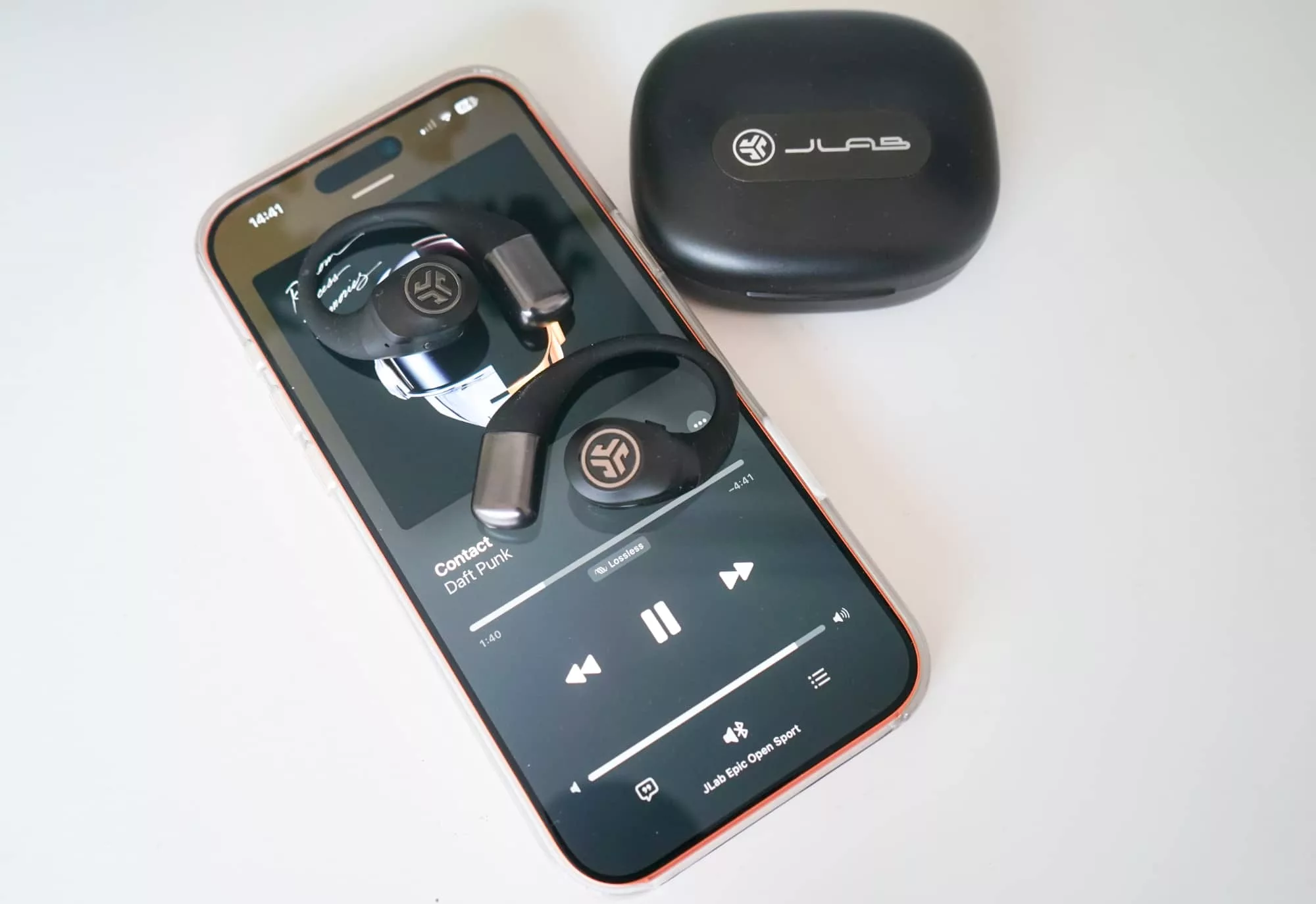
Battery life is marked at 7 hours until you need to recharge them, with 23 hours more in the charging case, totalling a maximum of 30, and the charger can be recharged using either USB-C or Qi wireless.
Like many other fitness focused earbuds, the JLab Epic Open Sport are rated for IP55 water resistance, making them a little more than sweat resistant.
In-use
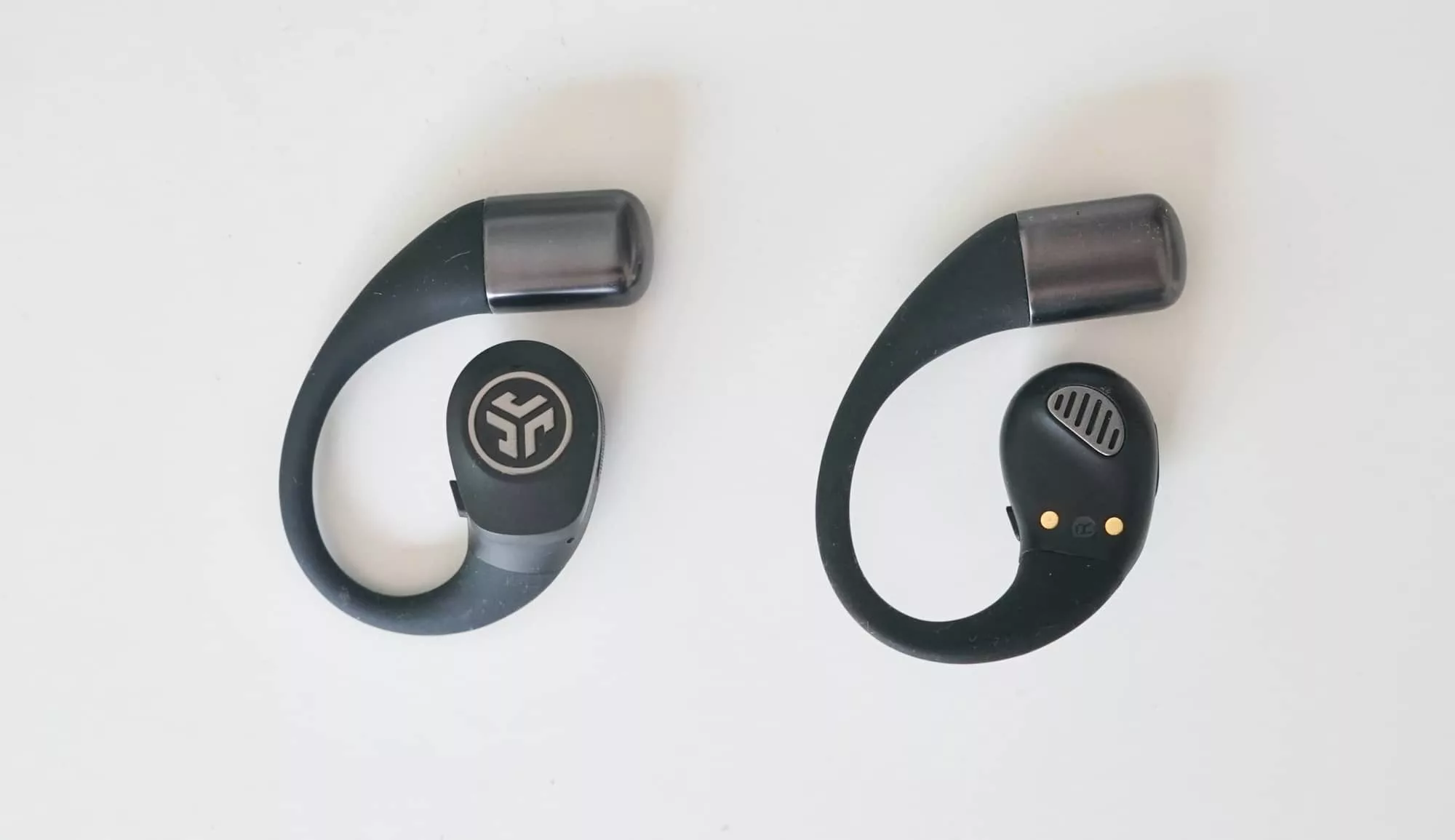
Take the pair out of the case and wrap them around your ear, and you’ll find a pair of buds primed for easy wearability.
That’s one of the advantages of most truly wireless open ear styles, and the JLab Epic Open Sport is no different. They’re easy to wear, and generally hold quite comfortably, though they do sit outside the ear, so can feel like you’re not going to get the full sound, so to speak.
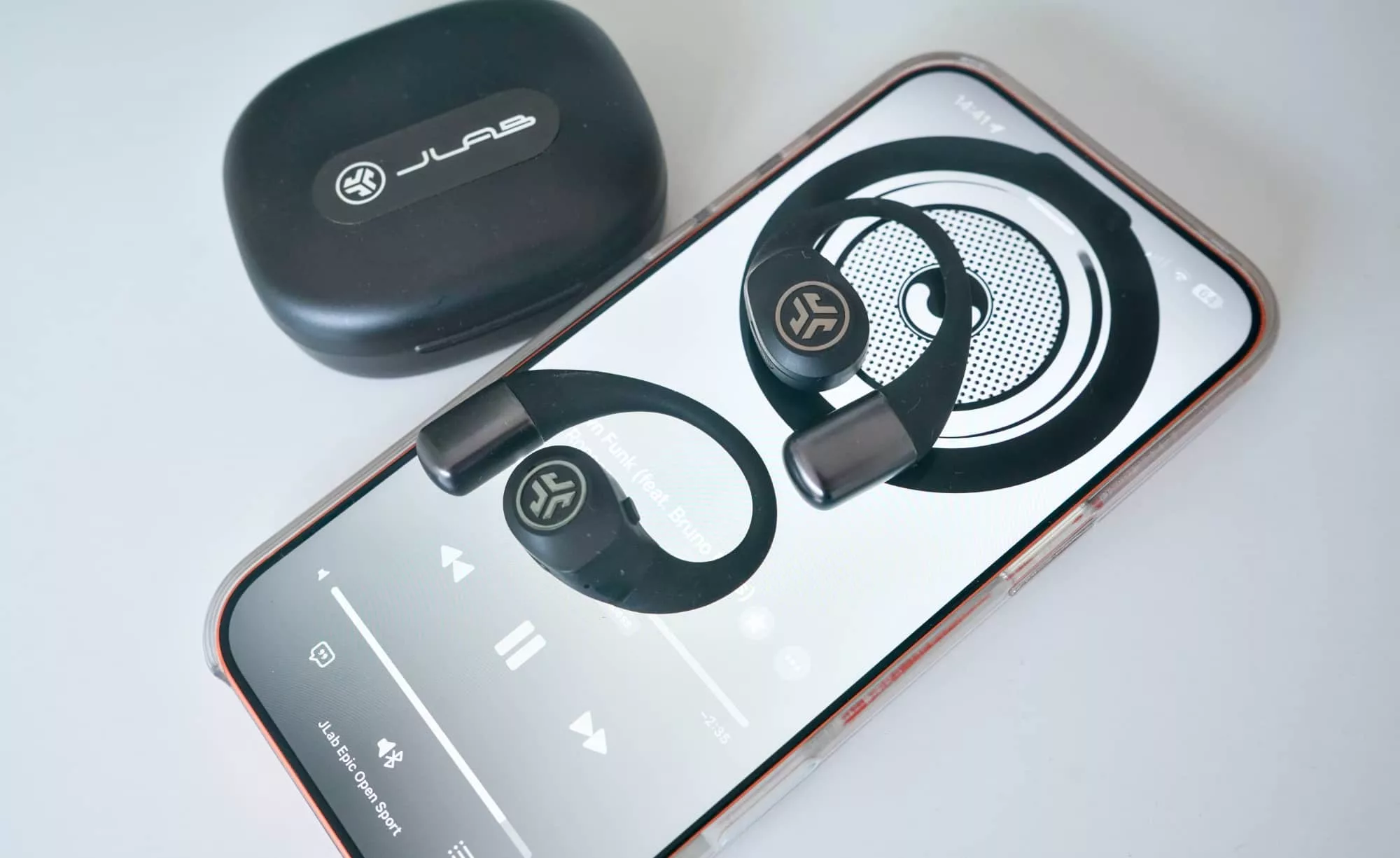
Controlling the Epic Open Sport, JLab has effectively offered two control surfaces per earbuds, and it’s an interesting combination. There’s a button on the inside of the earbuds, and there’s the circular logo for JLab which is a touch panel. You won’t be swiping that touch panel, but more just tapping it (it should really be called a “tap panel”).
It essentially means you have two ways to control the earbuds, and the app offers a fair amount of customisation, meaning you can control left and right and multiple taps, and then presses.
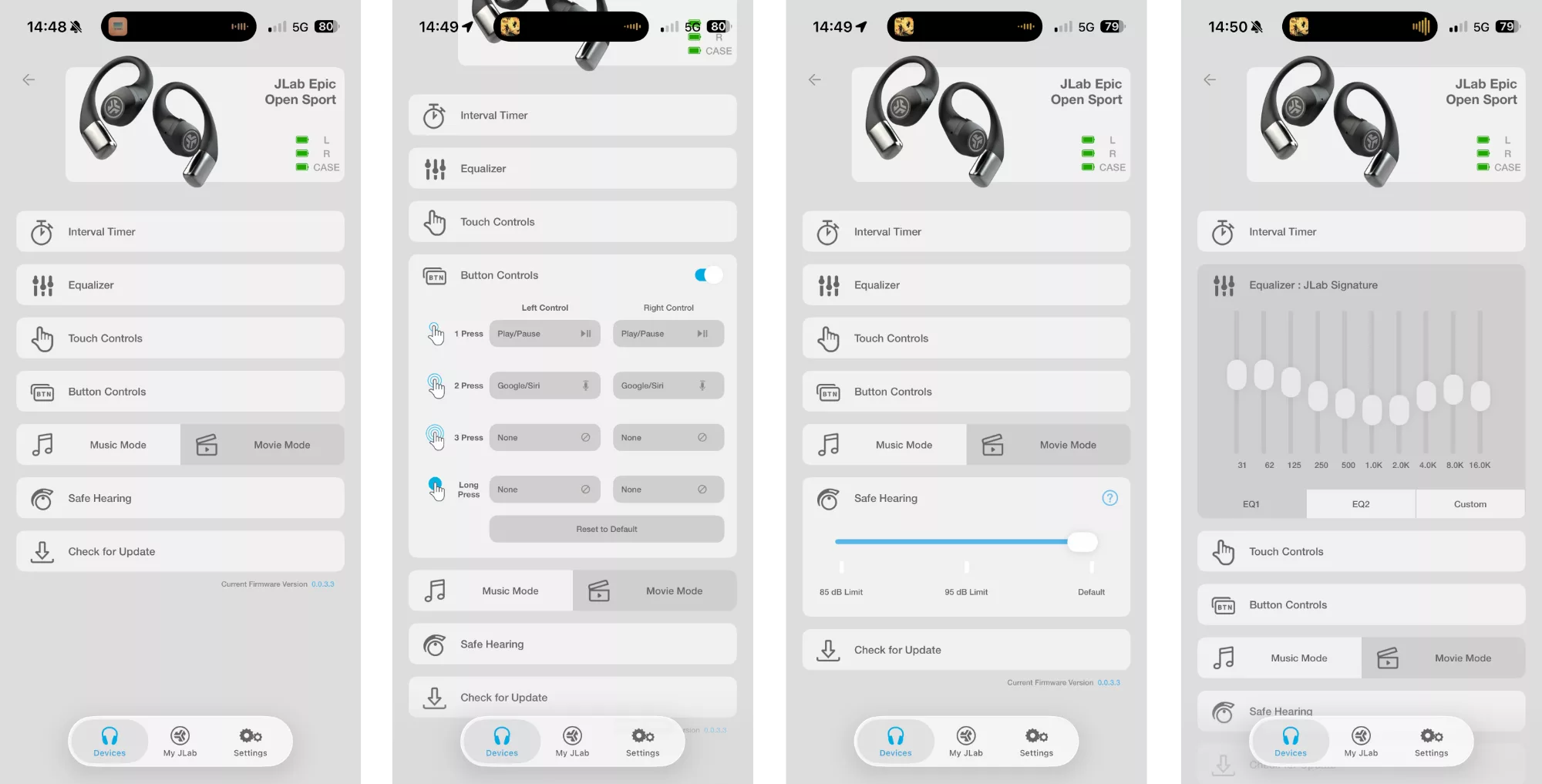
Sometimes, those controls can feel like they’re a little slow or poor to respond, though it can also feel like the sort of problems expected on a new product. Not everything works the way you expect it.
The other somewhat less obvious problem then becomes remembering what exactly you set the controls for, an issue we encountered when we’d forgotten which control we’d mapped for pause and play and volume.
Fortunately, you can always take out your phone and override, but it is neat to see just how many control options a pair of earbuds can have.
Performance
Wearing the Epic Open Sport is easy, but listening to them is the point. So let’s do that.
Testing the JLab open audio earbuds with the Pickr Sound Test (which you can use yourself), we found a reasonably comfortable sound, though one where the lows were largely missing in action. As in good luck finding a whole lot of bass. This sort of thing is often common with this type of earbud, often because of the type of speaker and loose fit, but it needs to be noted.
For instance, while the rendition of sound in electronic from Tycho and Daft Punk was bright and loud, you couldn’t hear big bassy drops or punch from the bass. It was as if the sound was just missing the full strength of what either artist intended.
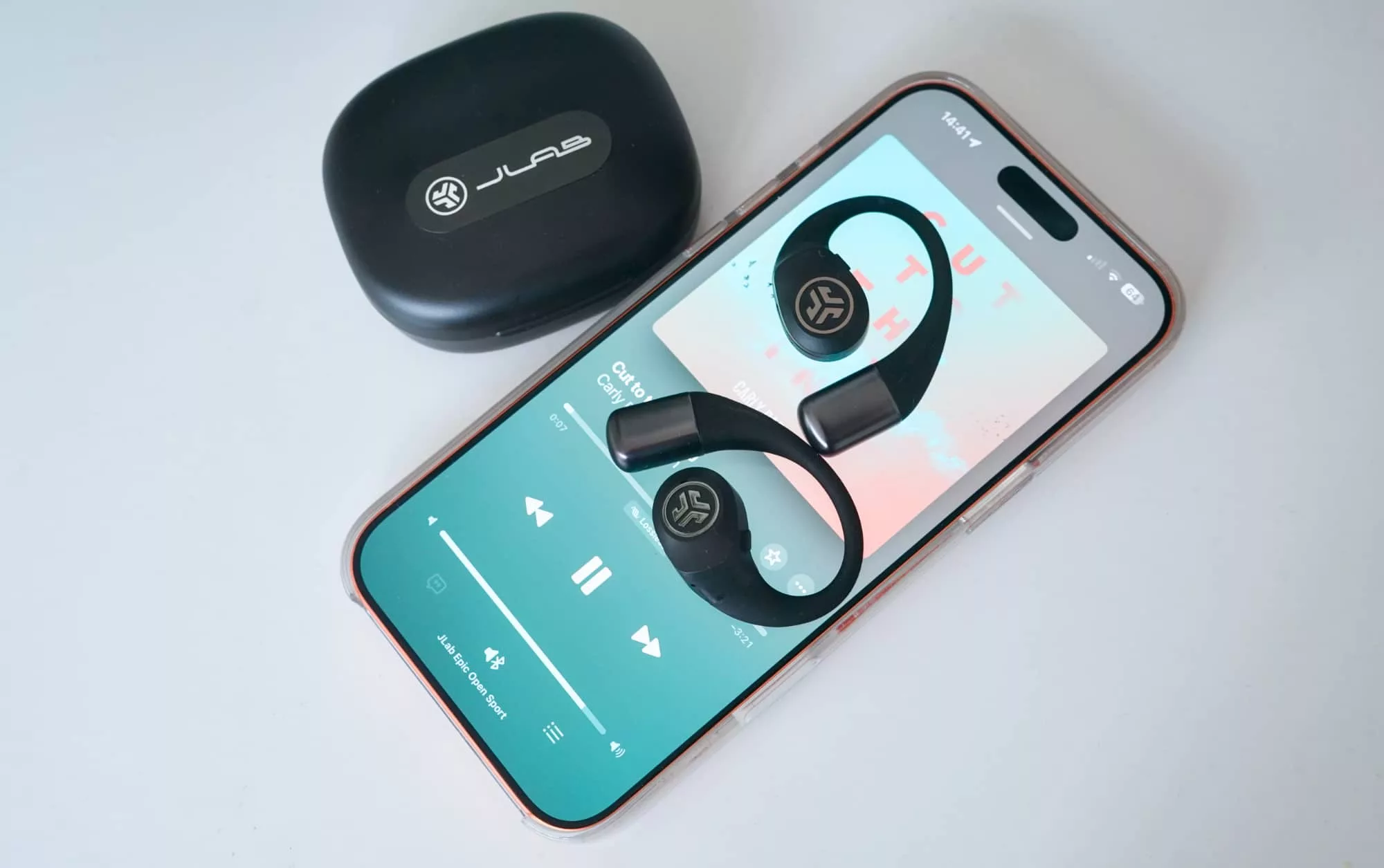
Even the punch and hits of pop and R&B could feel a little absent. The hits of the drum and instruments in Carly Rae Jepsen’s “Cut To The Feeling” felt hollow and empty, leaving everything bright and restrained.
Meanwhile, the lack of bass means tracks from the likes of Ariana Grande and Mark Ronson don’t hit the mark they should. The stage lacks any presence and the overall sound is underwhelming.
You can hear the lack of dimensionality in nearly everything. Maroon 5 is bright-as, and it sounds as if every punch as been pulled. It’s not as bad as listening to your mum’s old radio from the bedroom a few doors down, and it’s definitely louder than that, but it’s not up to the quality standards we expect from a recent pair of earbuds.
Don’t even start on something with as much bass control as FKA Twigs, because you won’t get any of the vibe.
If Australia’s Love Tattoo was all about the bass getting you moving in 2001, 25 years later, JLab is desperately trying to find it, and it ain’t here in the Epic Open Sport.
About the only genres and styles where the lack of bass isn’t as noticeable a problem appears to be rock, classical, and jazz.
Tracks from David Bowie and Paul Simon don’t surface the issues anywhere near as much, and the sound can be comfortable albeit a little unsteady, while jazz and classical can deliver much of what the track is, though any amount of bassy impact is lost in translation.
Battery
The battery life can make up for some of the low-end shortcomings, providing a good 6 to 7 hours of use, meaning you can walk and run and generally not think about the battery life in the back of your mind (truthfully, you’ll be wondering where the bass is instead).
That’s good because it basically means you can wear them all day, and still hear music and the outside world with ease.
When you do decide to take a break and throw them back in the case, an extra three charges roughly will mean the earphones can keep going, providing a few days of concurrent use.
Charging over USB-C is our recommendation here, though the addition of wireless charging is nice.
The downside may be the case design: it feels cheap, and it doesn’t take long for the JLab Epic Open Sport to pick up scratches and to start looking like a pair you’ve had for years.
Value
Fortunately, the price is one of those things that makes it seem as if JLab had a specific focus: budgets.
Priced at $199 in Australia, the Epic Open Sport appear focused on undercutting the competition and providing a less expensive take on open ear offerings.
It’s difficult to argue with or against the pricing here, and anything that offers a good value is always a bonus in our books, but that doesn’t mean it’s all gravy.
What needs work?
While our introduction to JLab is a little better than we expected, there are some obvious issues, the biggest being the bass, or the total lack thereof.
There is virtually none in the Epic Open Sport, and that’s a shame, because the sound isn’t awful outside of this, but is made worse because of it.
In fairness to JLab, open audio earbuds tend to have a more difficult time getting bass. It’s a more complex issue that typically sees rivals like Shokz use a combination of speakers and bone conduction to really nail that balance, some of which get it incredibly well.
JLab’s approach appears to be just the speaker, and that’s a problem because the earbuds are bass-less. As in there is none.
Bass is alluded to, rather than enjoyed, and for athletes, that could be a serious problem. If you run to the sound of the doof doof or love a bit of oomph from any soundtrack, you won’t get it here at all.
It can actually be a little jarring just how weird music is sans-bass, and it’s a little frustrating, too.
If the JLab Epic Open Sport had any sense of bass, they’d be much easier to recommend, especially since the omission of bass is difficult to get past. It’s one of those things that kind of haunts you, and reminds you of the price.
Less expensive earphones tend to lack overall balance of sound spectrums, and as good as parts of the JLab package are, the overall sound balance for every sort of music style (because every type of music has bass) is difficult to get past.
What we love
If you can excuse the lack of bass, the sound is fine. But that’s not what we love, largely because we can’t excuse missing out on a key part of the sound spectrum.
However, what we can admire is the price, as JLabs gets the cost of open audio earbuds down.
With a recommended retail price of $199, they’re good value, but if you look around, the value is better. A simple glance found this pair for $139, making them stellar value.
Sure, the bass isn’t great, though for this price, we’re not shocked. Really, it’s the fact that you can find this style of earbud for below $150 if you look. That is surprising.
JLab Epic Open Sport vs the competition
The biggest argument for their value is just where JLab’s Epic Open Sport are priced against competitors. While you might think that’s Shokz specifically, there’s more out there in open audio land.
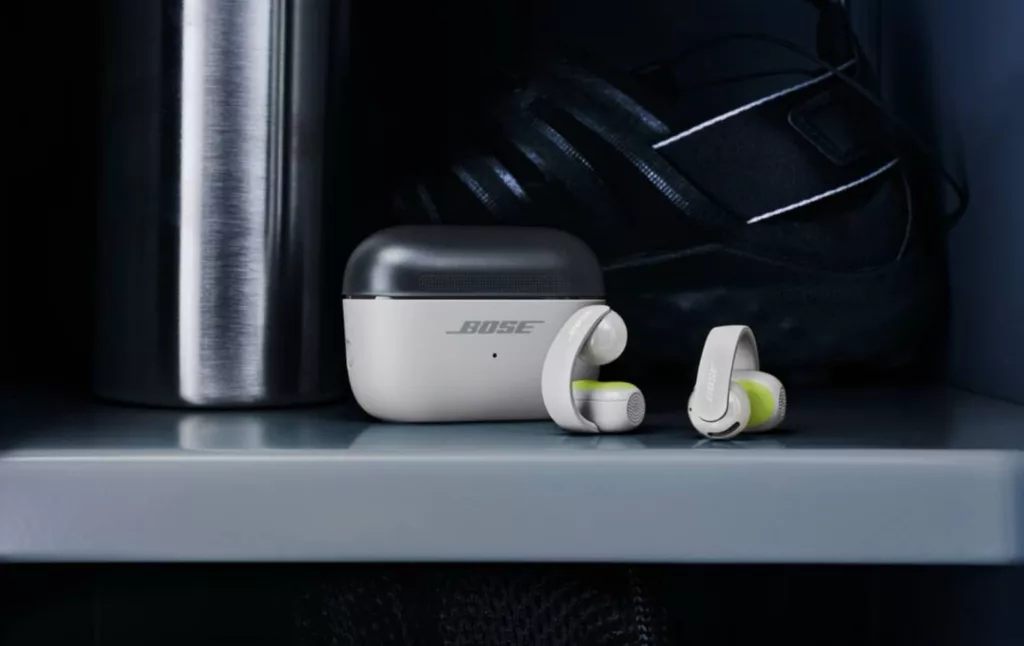
There’s Beats. There’s Bose. There’s JBL and Belkin and BlueAnt and Sony, among others. Truth be told, we’ve not played with every open ear offering, but most retail for $299 and higher. The fact that these don’t is a win.
The lack of bass markedly less so, but for the price, compromises aren’t a total surprise. The fact that you can save money for something else is.
If you want better sound, consider something from Shokz, such as the more pricey OpenFit varieties, including the recent OpenFit Pro, or if you want proper noise cancellation as you run, maybe a pair of Beats Powerbeats Pro 2 or the largely renamed Fit Pro Powerbeats Fit. But if you want to save money, JLab has your name, and potentially your price.
Final thoughts (TLDR)
While we love a good bargain, one of the problems with bargains is they can feel priced for a reason.
A good bargain should also be great value, offering a solid well-rounded feature set and performance, and while you get the former with the JLab Epic Open Sport, you don’t really get the latter.
These are priced to be inexpensive, but they’re not priced that way because they’re great. Rather, they do the job and for a better price than expected. But that doesn’t mean we’d prefer using the $139 to $199 Epic Open Sport over say a $299 pair of anything else.
Given the sound different, we’d absolutely choose the more expensive option over the less expensive one.
That doesn’t mean the JLab Epic Open Sport are bad earphones. They’re not, they’re just not as good as they could be.
What they are is an inexpensive entrance to open ear, and that’s something many will find alluring.
If all you have is a max of $200 and a need to go open ear, the JLab Epic Open Sport will suit. But we’d recommend saving just a little bit more for something better. Your ears and your taste in music will thank us.