
Quick review
The good
The not-so-good

Designed like the also-excellent Momentum 4 headphones, the Sennheiser HDB impresses with great sound and comfort, albeit a clear bug or two.
Everyone makes a pair of headphones, but some companies really make headphones, building something designed to be better. A pair where the goal isn’t just to be balanced or warm, qualities that matter greatly to reviewers and fans of great sound, but also to deliver something you’d want to wear instead of speakers.
Speakers are bigger. They move more air and make more sound, and depending on the hardware they’re connected to, they can deliver a better experience for your ears. The goal of most great headphones is to rival a speaker, or even outclass it (if they can).
High-end headphones are usually striving to offer a comparable experience to high-end speakers, a lofty goal they don’t always hit.
But in Sennheiser’s latest pair, we might be getting close. The HDB 630 are made to service a more discerning listener, and someone who wants to squeeze a little more quality from their experience. Built with high-end audio in mind, the Sennheiser HDB 630 are a slightly more premium take, even if it comes with the occasional quirk.
Design and features
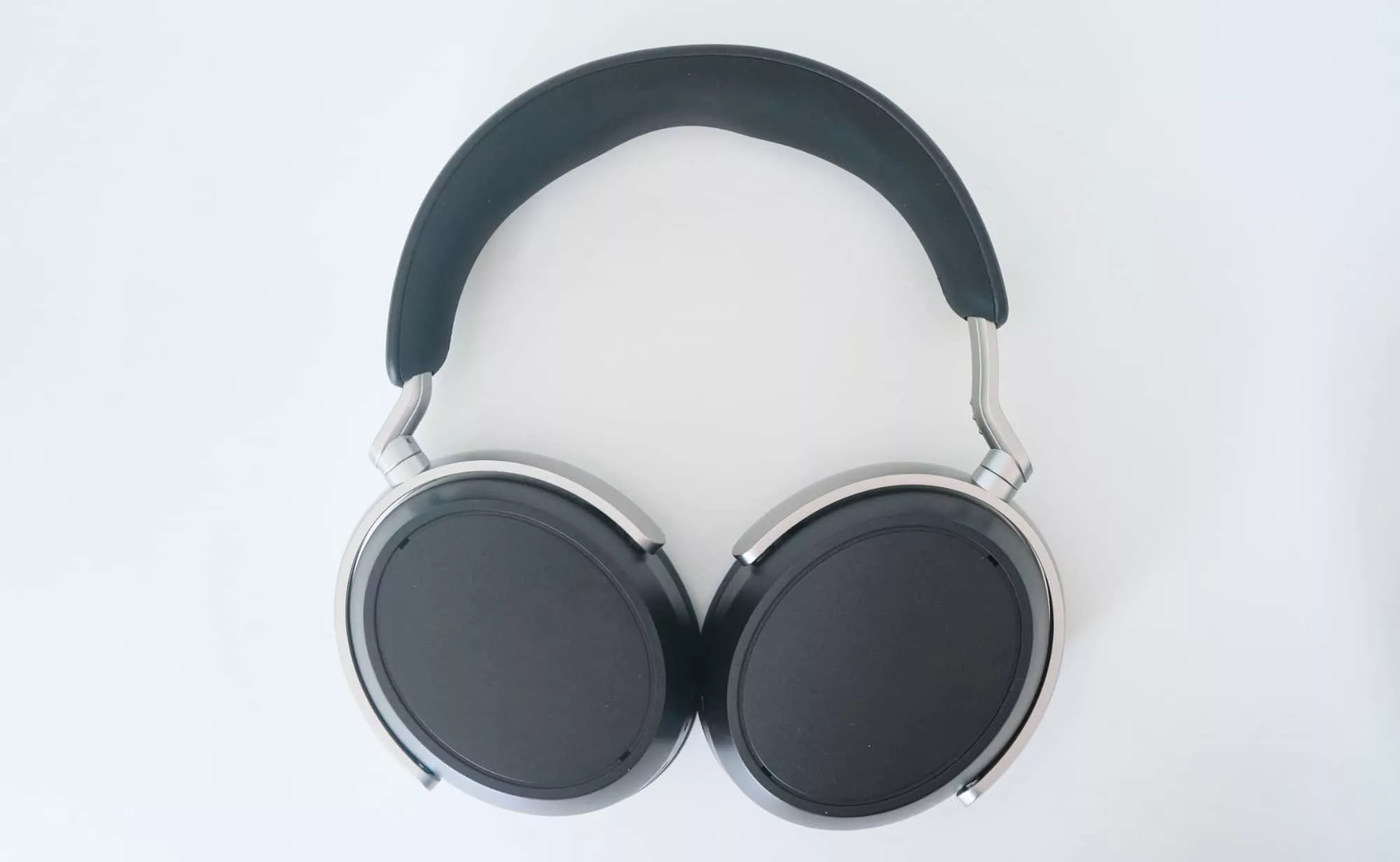
Sennheiser’s latest pair may be a little different from its previous models, focusing well and truly on the high-end, but you’d never realise it from the design, as this pair borrows from the Momentum 4 playbook.
It’s more or less the same idea: large and spacious over-ear circumaural design with a touch panel for you to swipe and tap on.
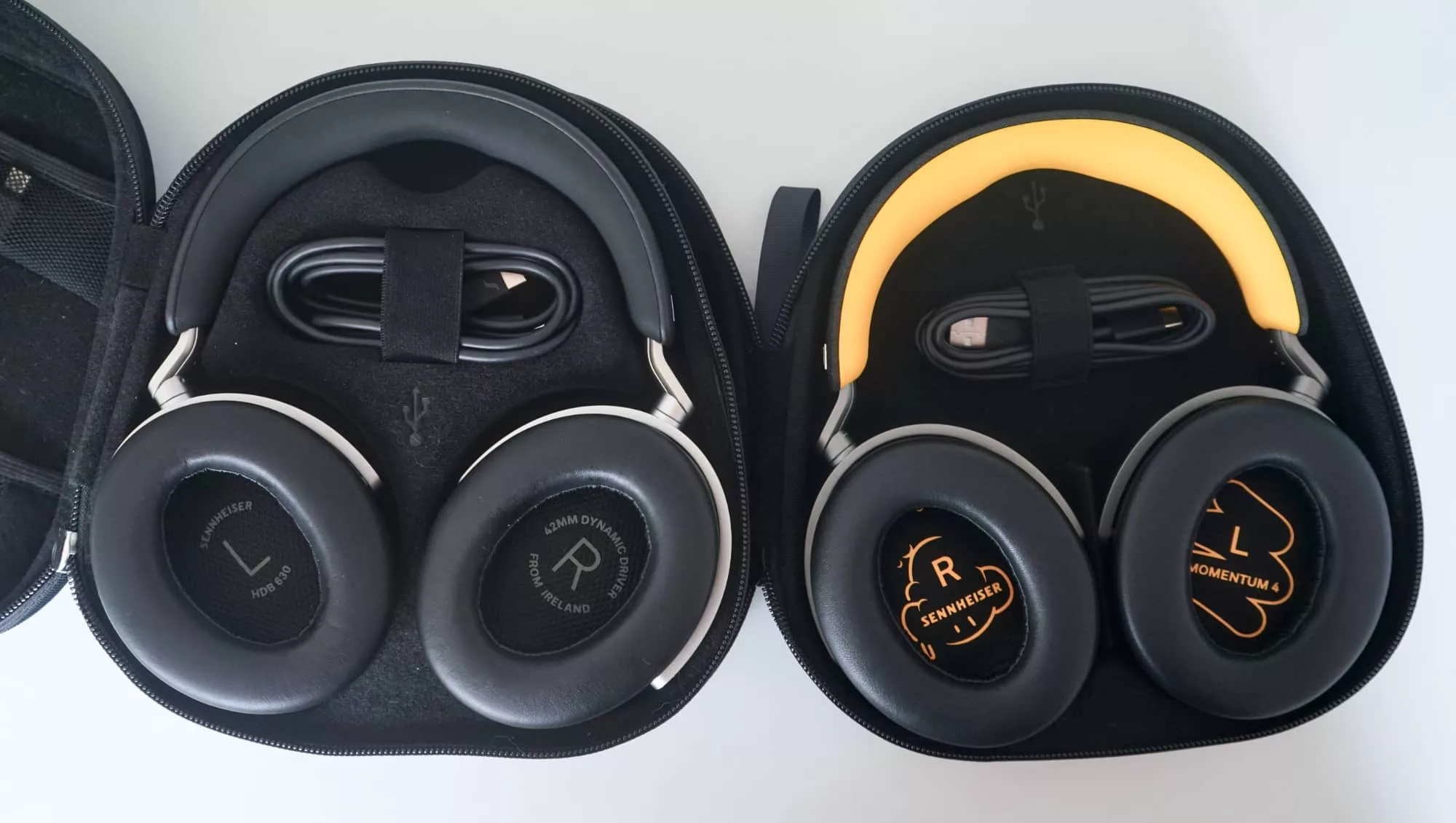
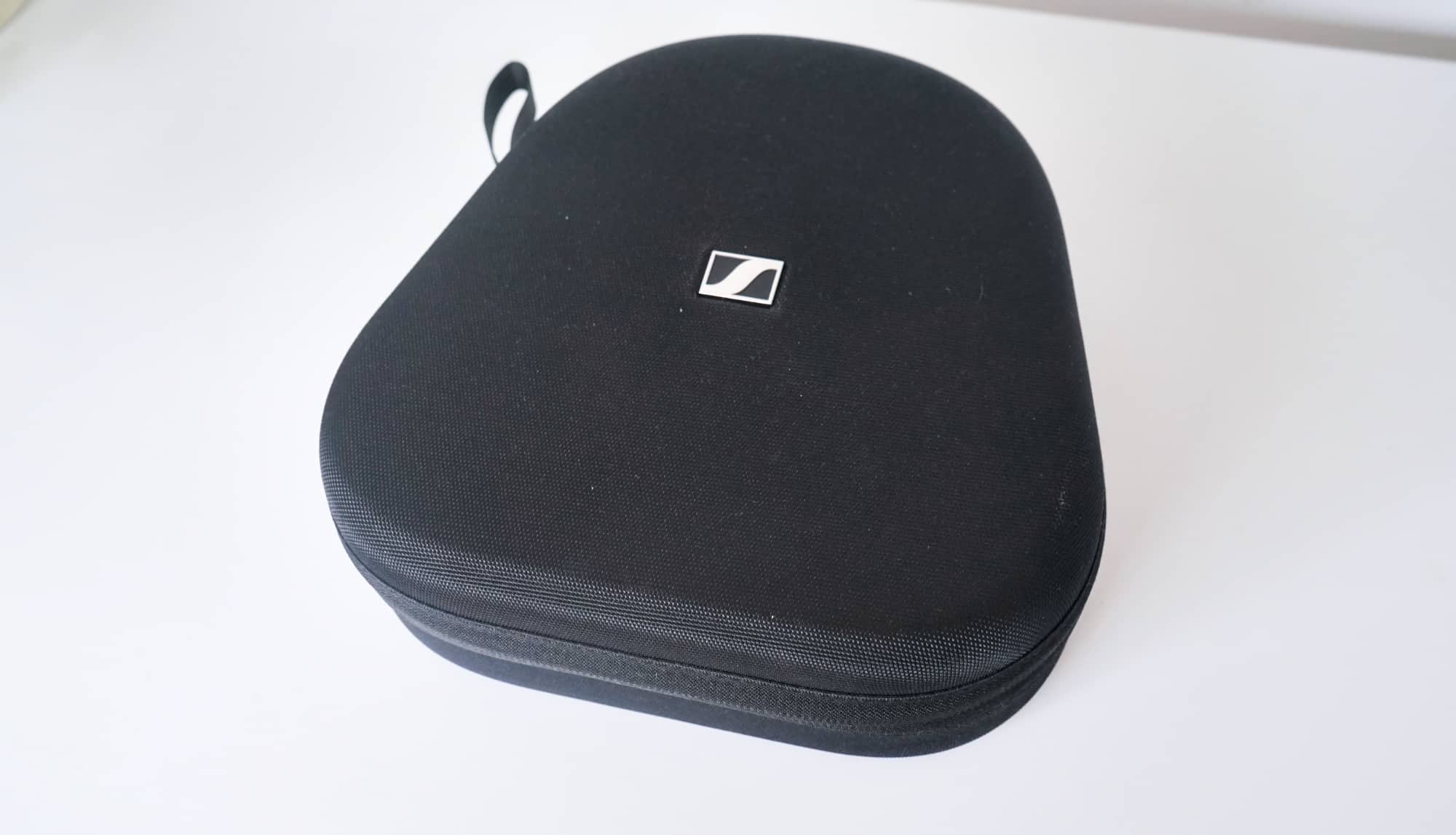
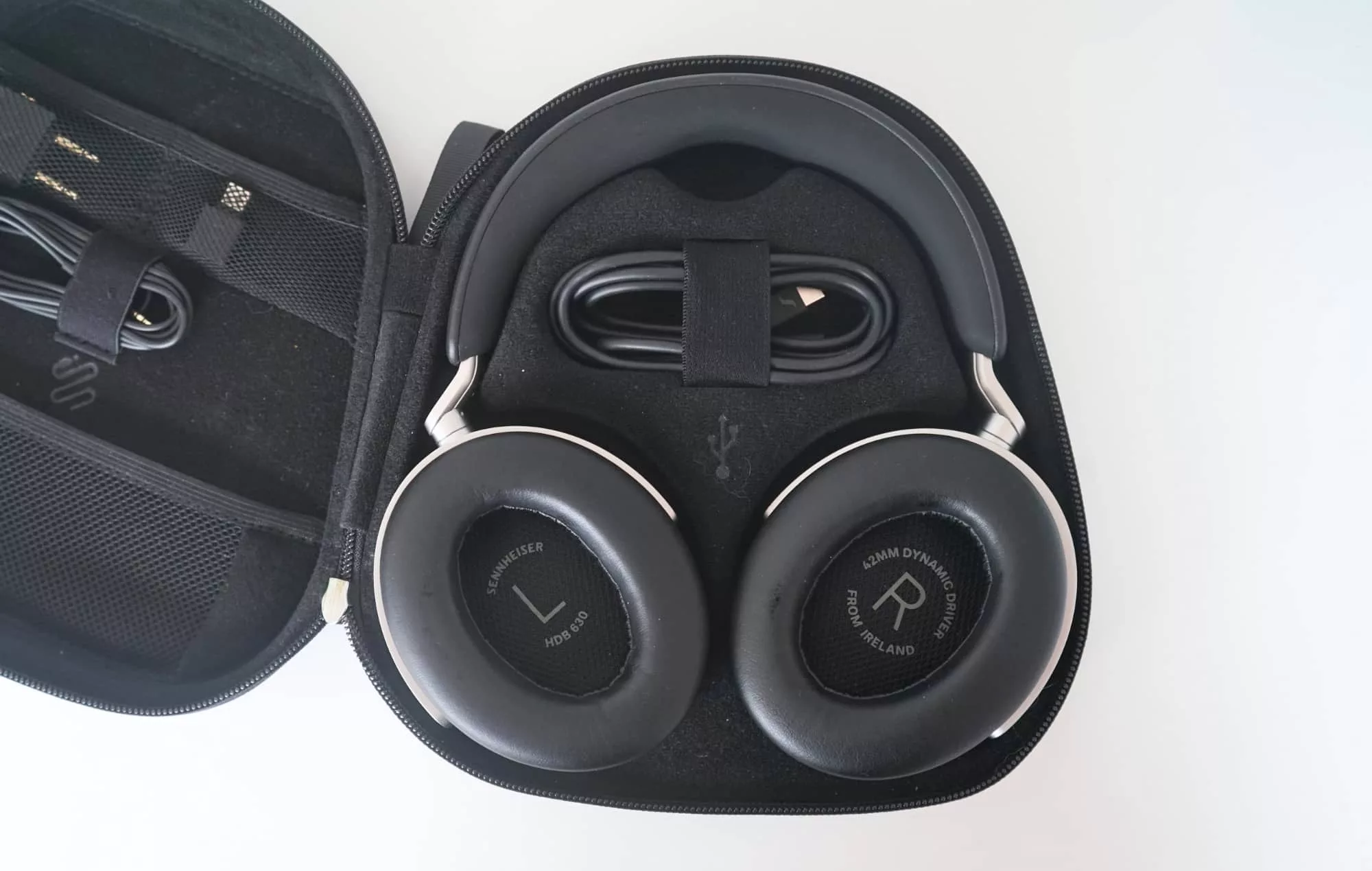
There are some differences, with the HDB 630 slightly more padded and therefore slightly heavier, which also extends to the case, providing more padding and chunk to make the headphones all that more protected in its case.
Inside, the HDB 630 includes a 42mm driver, support for aptX Adaptive and aptX HD codecs, and a tweaked sound compared to its Momentum 4 sibling.
They may look similar, but they’re not the same, and that’s a clear point.
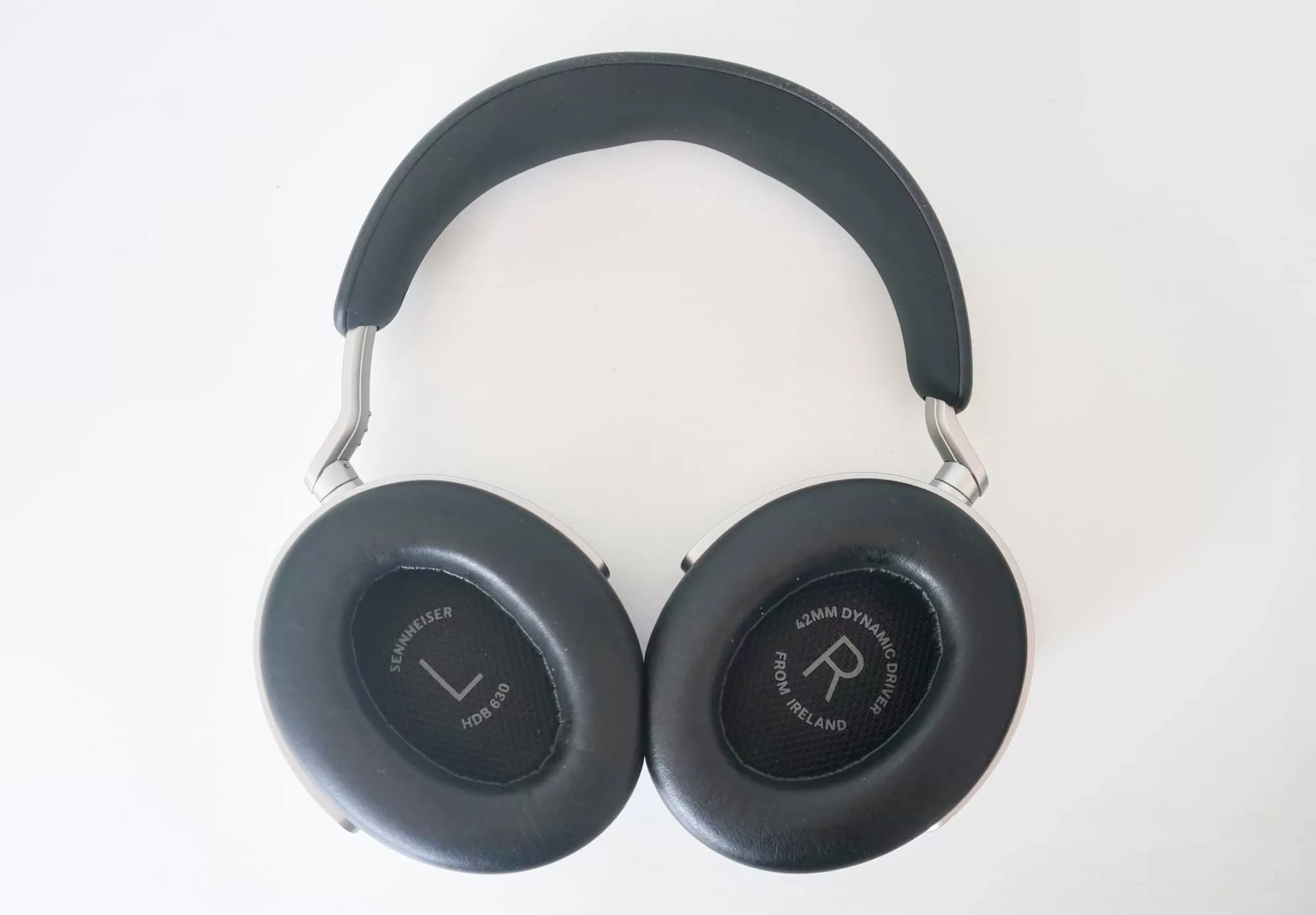
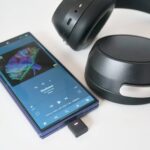
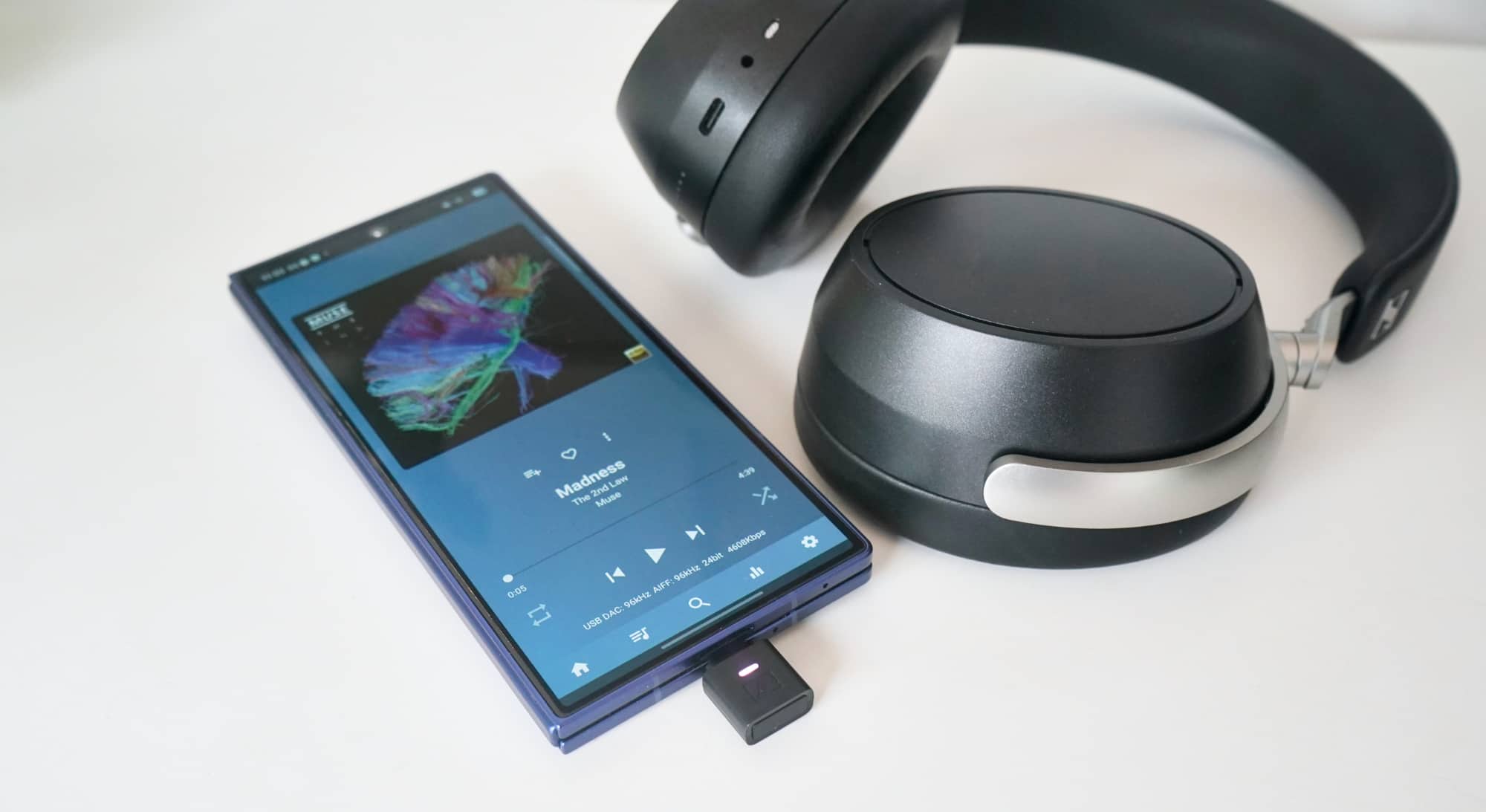
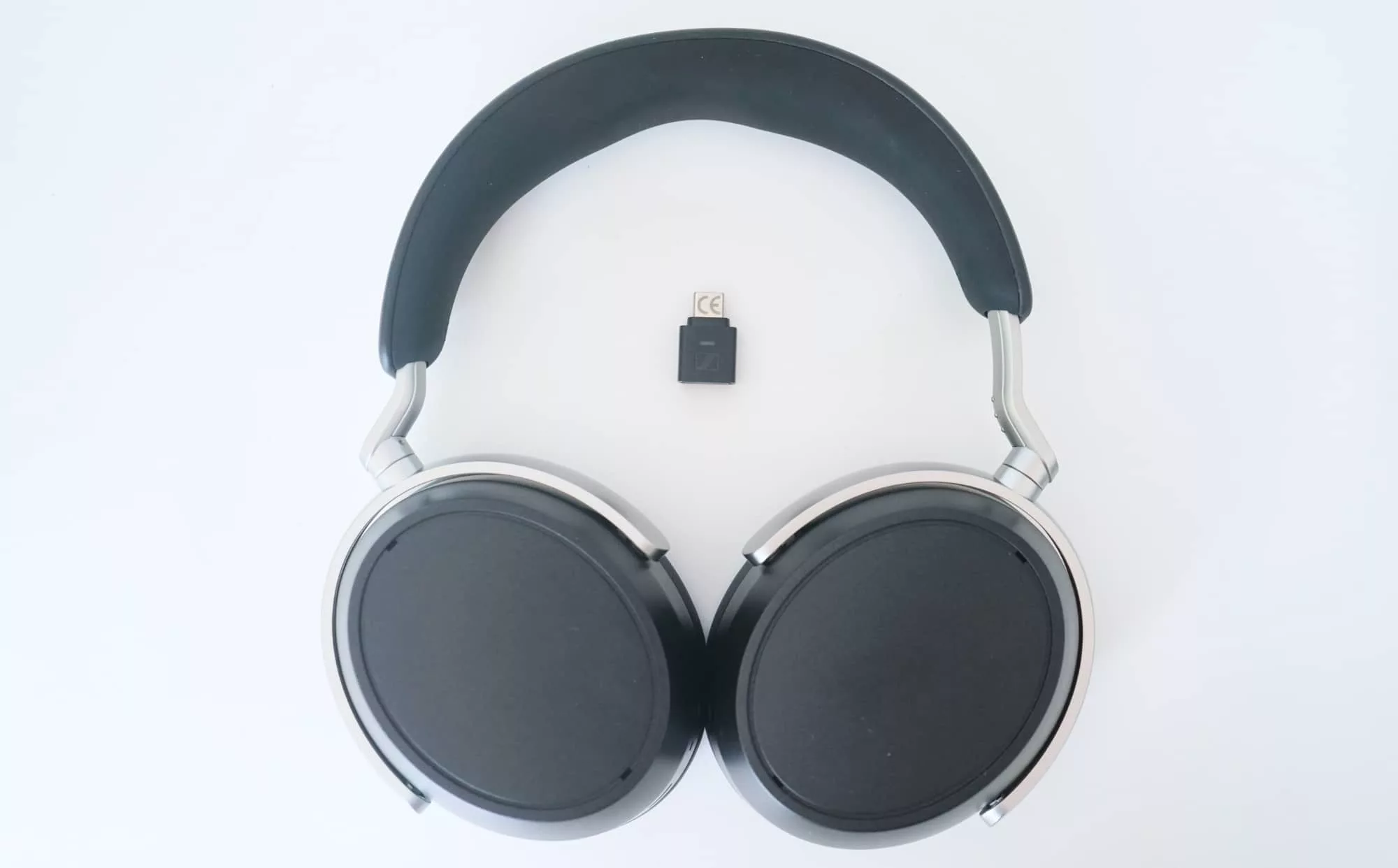
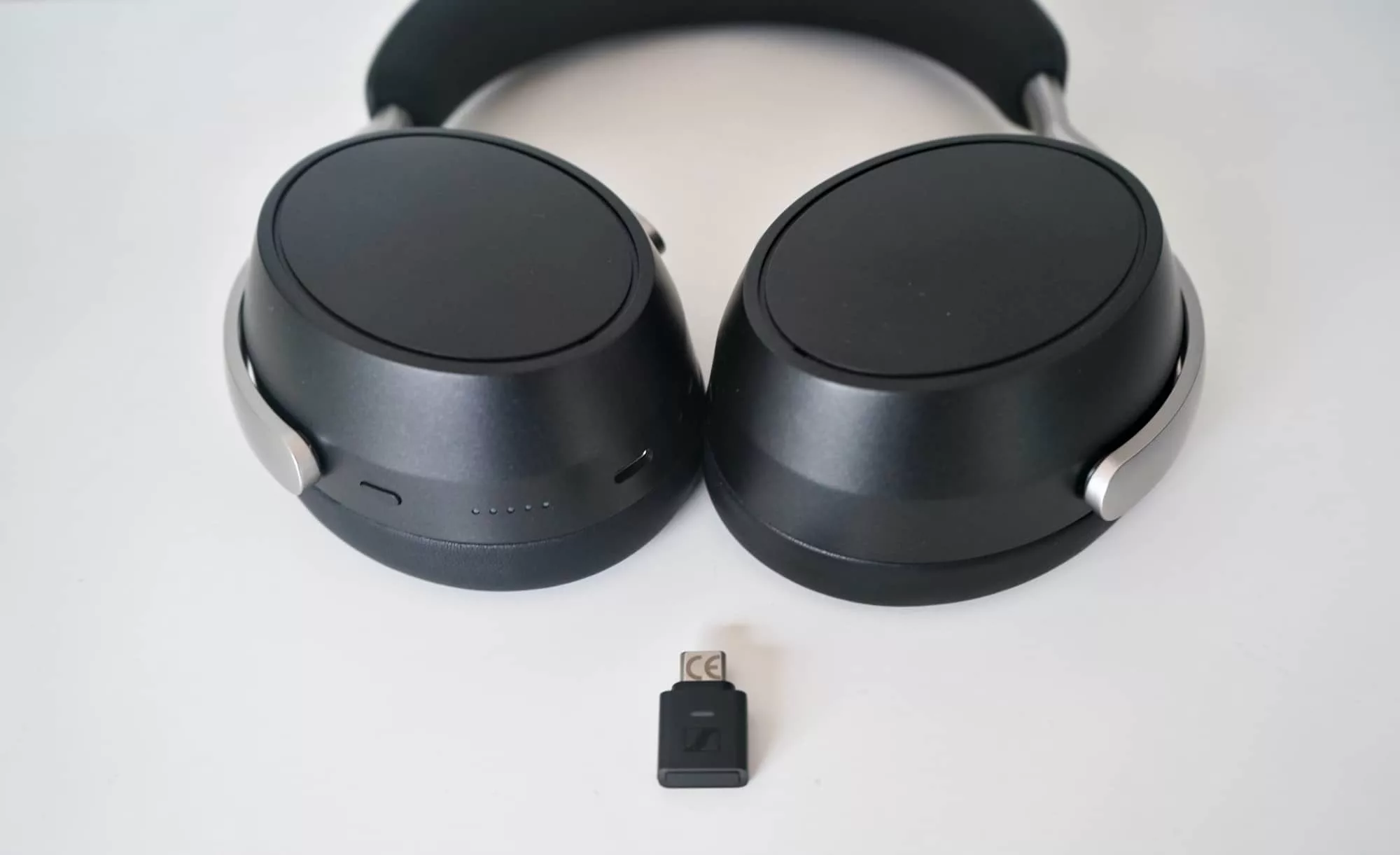
In fact, one part of the package that is new is the USB-C dongle, a wireless transmitter that you get in the headphone case, the BTD 700. This is possibly the unexpected star of the show, because it brings the ability to transmit high-res 24-bit audio wirelessly where Bluetooth might typically struggle to do so if the codec wasn’t supported.
It’s a tiny dongle, and very easy to lose — so try not to — but it basically grants the power to open up the sound on offer to what high-res can actually do. Now that lossless can be found across the likes of Apple Music and Tidal, not to mention buying high-res files outright, it’s a win for people who love their sound.
In-use
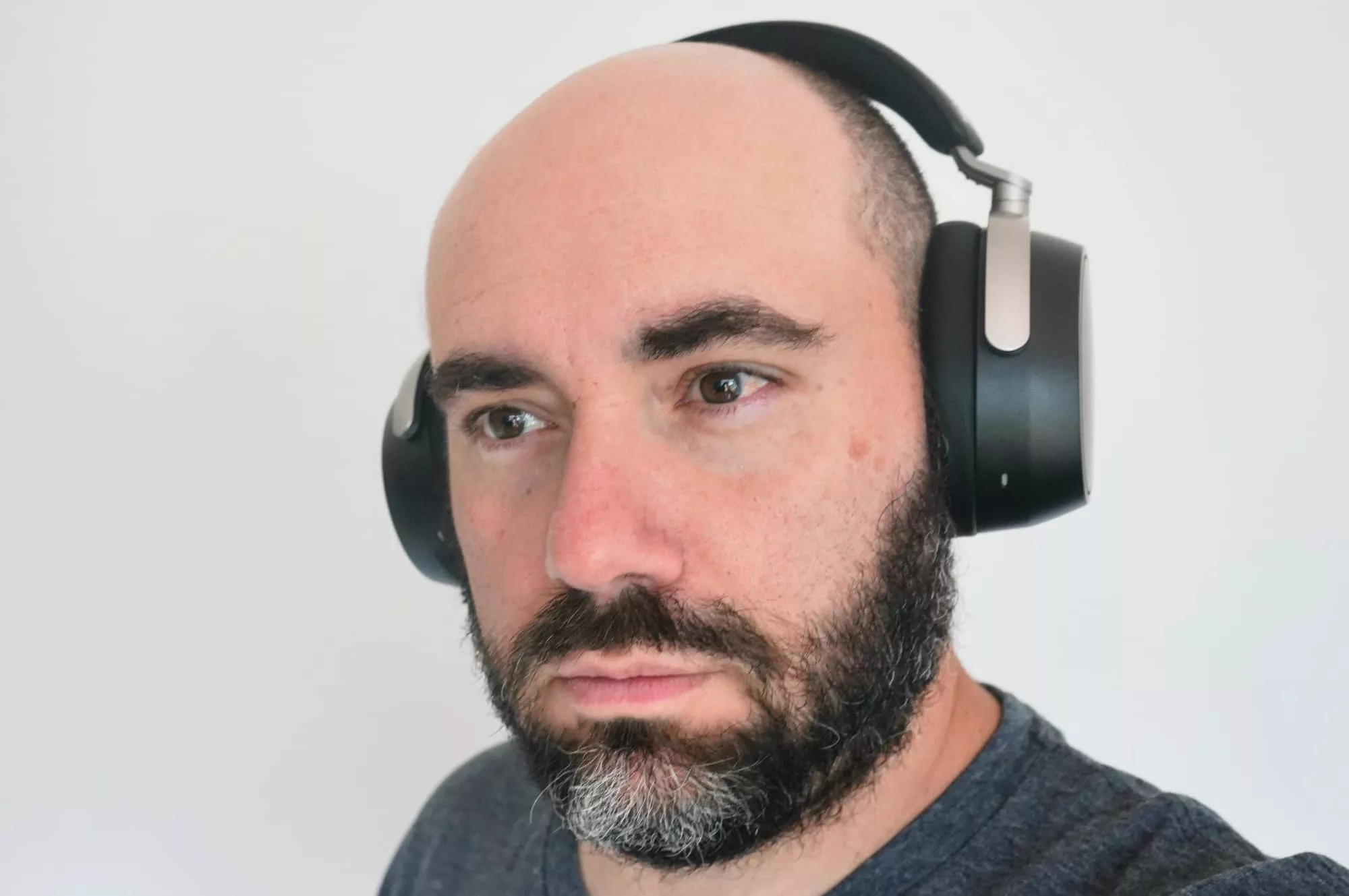
So grab the pair out of the case and throw them on. You’ll feel them tighten around your ears, the circumaural around-ear design being more like close padding than the airy large over-sized pads some of Sennheiser’s more HiFi-focused pairs provide.
That’s not a bad thing, though. It simply tells you that you’ll be blocking out the world, while giving your ears more sound.
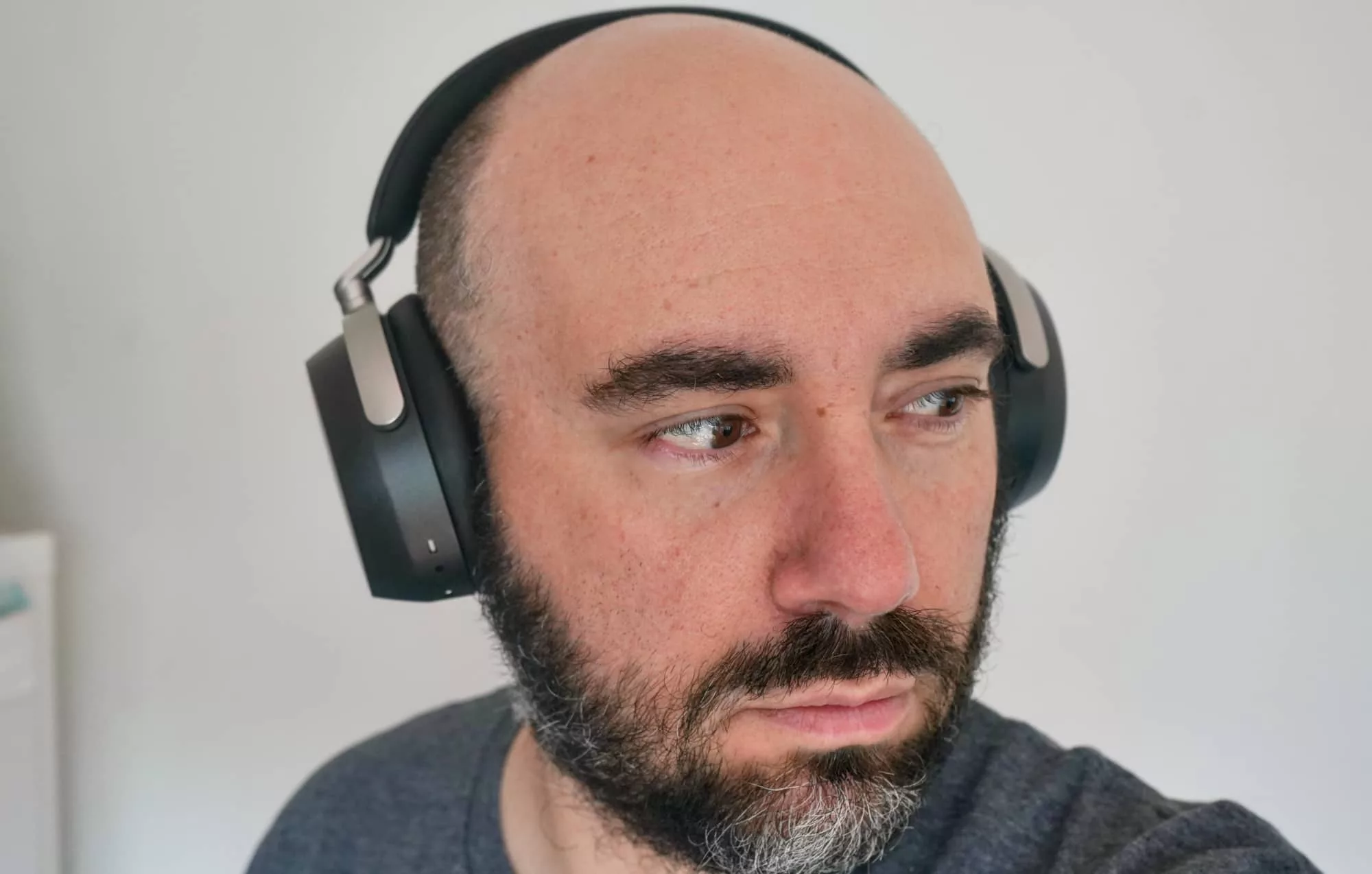
There’s also the 311 gram weight, which seems like it might be heavy, and yet comes off being fine. Rather, the HDB 630 are actually a comfy carry, affixing to the head and ears surprisingly well.
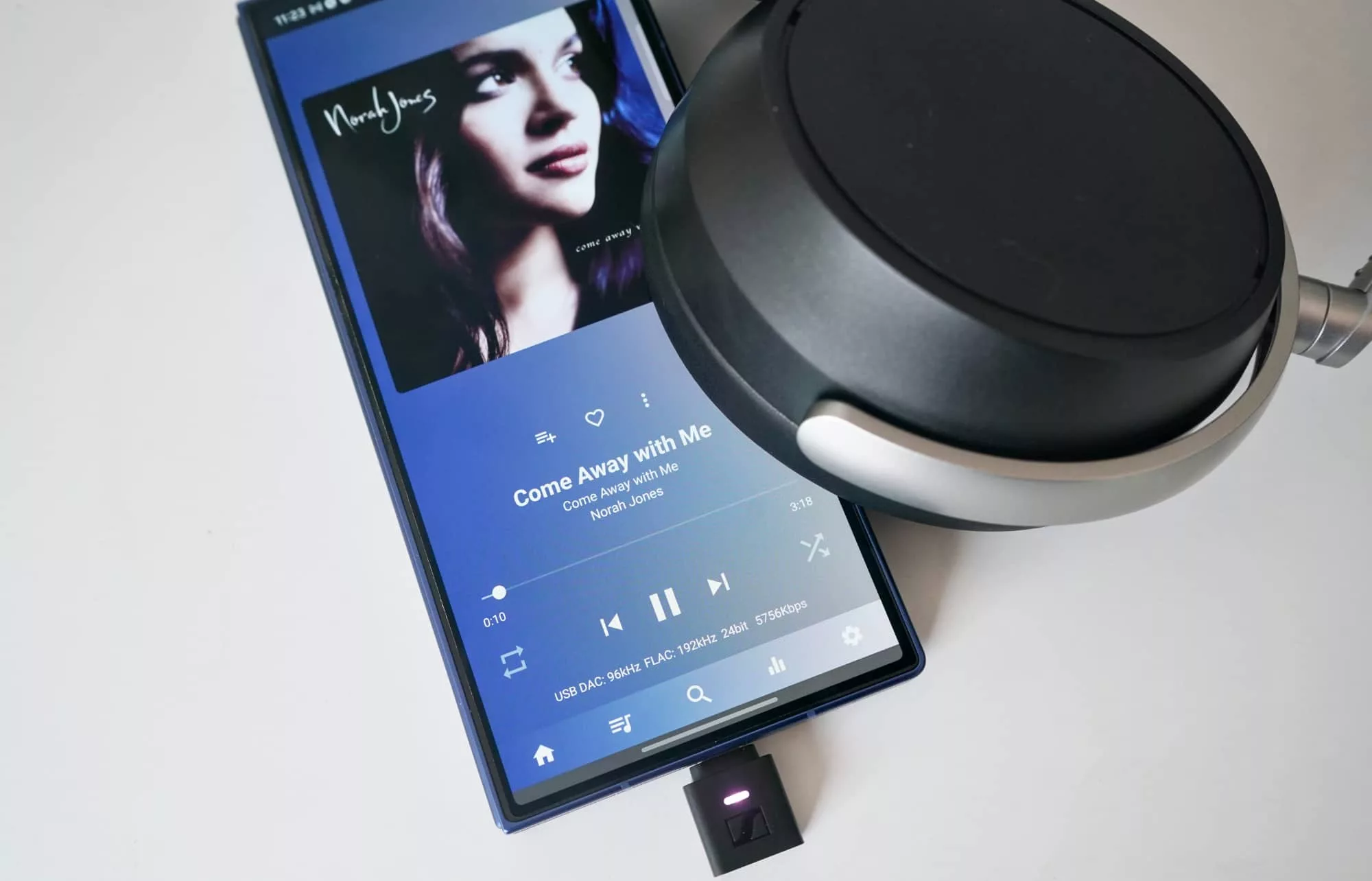
When it comes time to how you get your sound, it’s a choice between the standard Bluetooth of your phone, and the BTD 700 Bluetooth transmitter USB dongle Sennheiser includes. The former will suit most people, while the latter is for when you want to go high-res, and your device can handle it.
We found both an iPhone and Android handled the USB dongle, but Android gave us that little bit more control, given we had lossless files to test with. Interestingly, it is paired ahead of time, and there’s a button on the dongle to switch between modes, with a gaming mode also on the dongle.
Controls
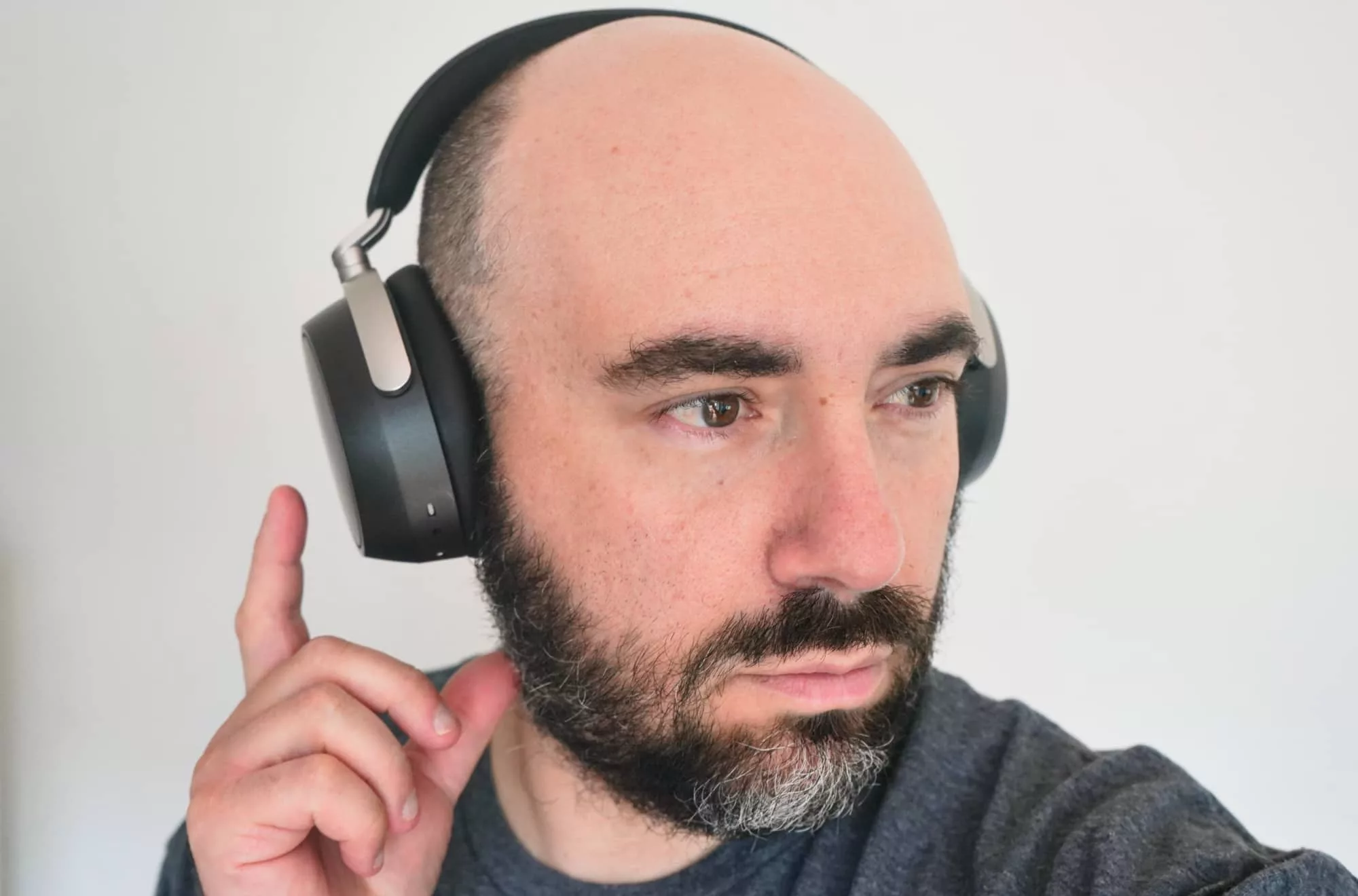
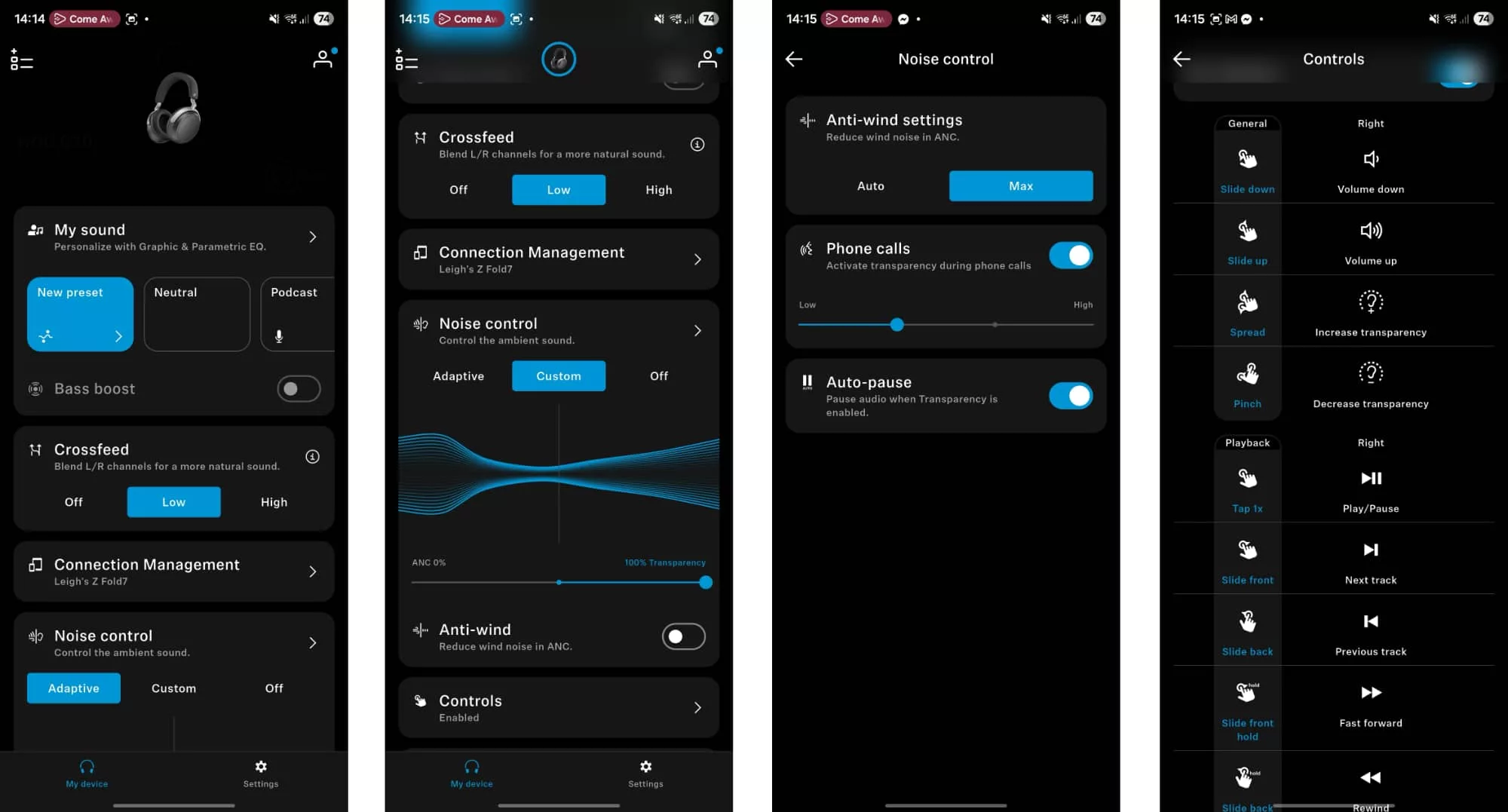
Using the headset is mostly easy, though. Swipe on the outside of the right ear let you control things, such swipes forward to skip to the next track and backward to go back.
Volume up and down are swipes up and down, while a tap pauses and plays… most of the time. We found the touch controls weren’t always reliable, but worked most of the time.
Take the way to switch between noise cancellation and transparency, which is more like a pinch or push-pull action with your fingers, but on the touchpad. It’s just not always reliable, and neither is the volume, which sometimes blows out when used with the BTD 700 transmitter.
It has some bugs, for sure.
The app
But it also has some wins, and the Sennheiser Smart Control+ app may well be why.
The app is a little like the regular Smart Control app we’ve seen on Sennheiser’s other devices, including the Momentum True Wireless earphones, but with some tweaks and changes.
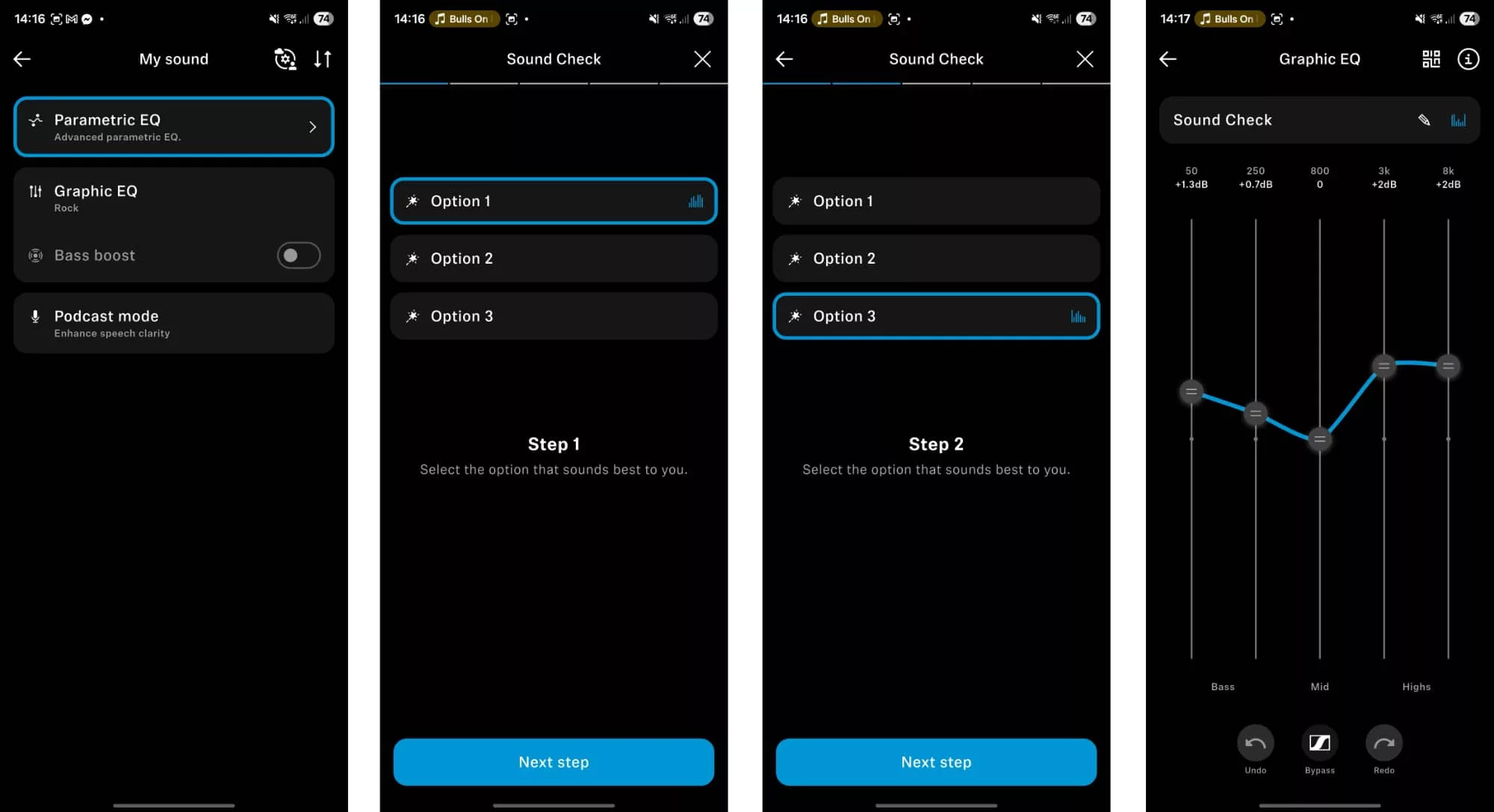
You’ll find support for blending left and right channels using crossfeed, a controller for how much noise is limited using the noise control setting (or to leave it on adaptive), area-based sound zones, a bass boost toggle, and even the ability to tweak the equaliser using either graphic or parametric equaliser.
Personalised sound’s use of EQ tweaking takes this further by encouraging you to hear a song you like, and testing various options to basically create a custom equaliser setting for your musical tastes.
It’s an approach that makes equaliser changes a little easier to comprehend, and starts you in the right direction, particularly if you’ve never made changes to an equaliser before. The HDB 630’s audience may have already tried — they probably love sound — but this is great to see all the same.
Performance
Tested with the Pickr Sound Test using Apple Music, we start with electronic, where the likes of Tycho and Daft Punk (but not together) deliver a clear and sharp sound with plenty of space and an open soundstage. The delivery of the mids and lows is excellent, and the sound inviting and clear, the bass reverberating just enough to please our picky ears.
Switching genres, the punch and snap of Mark Ronson’s “Uptown Funk” delivers a great snap and a strong sense of dynamics, and there’s warmth across much of what we hear.
The listening experience is reminiscent of a great speaker, with great detail, a wide stage, and just a lot to the sound. It’s balanced yet warm, a vibe we had from listening to the Deftones, and even the typical guttural bass of FKA Twigs’ “Two Weeks” thumped the lows nicely.
Whether jazz, rock, classical, or something else, no matter what we played, the sound from the HDB 630 was solid. These are lovely headphones, regardless of the track.
High-res testing
And then there’s the other capability of the headphones, something few pairs need to line up.
Not many headphones need proper high-res testing, but the Sennheiser HDB 630 do. They’re made for high-resolution audio, so we got out the FLACs and lossless files of the Pickr Sound Test, which actually has physical files, too.
Testing on Android with USB Audio Player and a library of high-res files, we found the HDB 630 transmitter topped out at 96/24, pushing a 176kHz version of Dave Brubeck’s Take Five through a 96kHz conversion, while doing the same sort of conversion with a 192kHz rendition of Miles Davis’ Kind of Blue.
We tried forcing a higher resolution through the USB transmitter, and were cut off — 96 and 24 is all you’re going to get wirelessly — and it’s the same with USB wired, it seems.
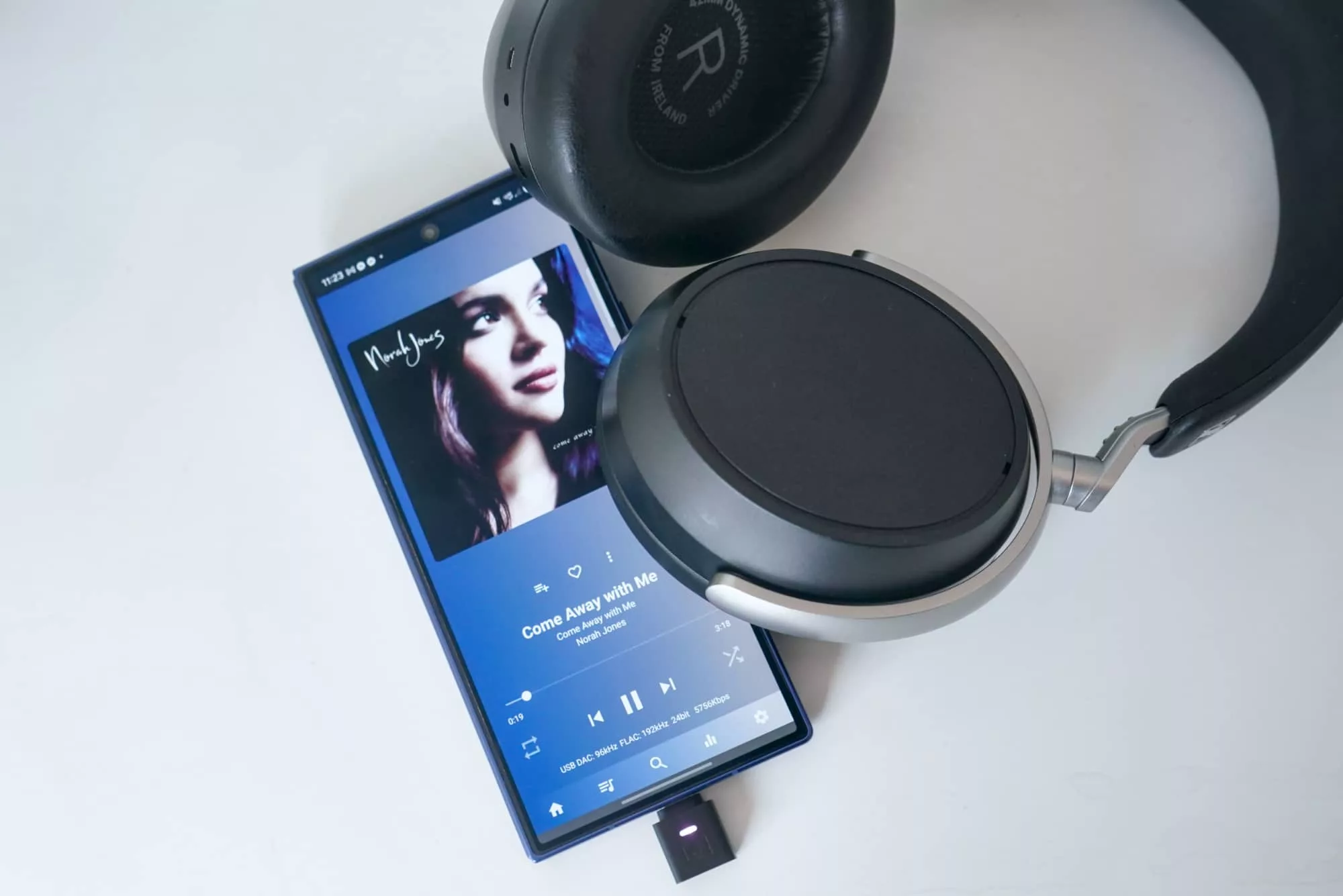
That’s not a total surprise, either; 24-bit 96kHz is a perfectly fine maximum, with USB-C DACs really the only devices we’ve seen beat that beyond dedicated high-res music players. And that’s before you get to the question of whether anyone would be able to tell the difference.
While the limitation might give you a bit of an eye roll, the result is still excellent. These headphones really deliver high-res, handy for people who love it.
On iPhone, the delivery manages to feel a little better, too, pushing out a lossless track when you want it, but also delivering Dolby Atmos support, something that surprised us.
You won’t get the head-tracked Atmos audio when used with the HDB 630, though; not only is that an Apple-headphone feature, it also doesn’t seem to be supported by Sennheiser for tracking. But you do get the sound, and it is excellent.
Frankly, if an iPhone buyer is considering the Sennheiser HDB 630, we’d probably recommend turning off the Atmos and keeping the files high-res where you can. That’ll likely make a big difference.
Noise cancellation
Noise cancellation is a part of the HDB 630 feature set, and it is largely taken from what you can find in the Momentum 4, so it’s definitely not bad.
We’re not going to say it’s quite on the level of other pairs of high-end ANC headphone models, but it will do a good job blocking most of the world out, particularly where noise is concerned. Helping this is the padding on the ears, which is just that little bit better than what we recall on the Momentum 4.
We had to pull out a pair, and grabbed the recent 80th anniversary, where there’s a clear difference and just slightly more to work with.
To be clear, Sony and Bose do better ANC, but this isn’t bad for the purpose, either. You even get a neat little slider in the app to precisely control how much cancellation the headphones are doing.
Battery
Even the battery life is up there, as Sennheiser continues one of the better features of the Momentum 4. Back in that model, you could expect up to a staggering 50 hours of battery life over wireless.
In this model, you get up to 60, which is fine, though may change based on the level of sound quality you push their way. We tested several hours and found the best part was not needing to think about the battery when they worked.
Value
The price is where things can get a little confusing, at least for most people, because the $999 price tag is more expensive than most noise cancelling headphones reach. With $700 normally the high-end mark for headphones, a buck shy of a thousand dollars will seem steep.
But the thing is, these could actually be worth it.
The sound is great, the battery life technically sound, and the package does feel premium. The near thousand dollar price tag doesn’t seem like as much of an ask as you’d think.
What needs work?
We actually don’t have much of a problem with the price. The thousand dollar tag may seem high, but it’s not a staggering push for audiophile headphones, and the price will probably come down a hundred or two in the not too distant future.
But there there is something really grinds at us and really made the HDB 630 review arduous at times: bugs.
Numerous bugs
The biggest problem with Sennheiser’s near-perfect pair of headphones is the bugs, of which there seem to be numerous ones. Lots of bugs. More than any pair of headphones should have, particularly headphones that cost this much.
Our experience with bugs on the HDB 630 included:
- A red light blinking at you when you charge it
- The headphones refusing to power on at times when they have heaps of battery life
- The headphones deciding to turn off, even though they have heaps of battery life, and
- Disconnections between it and the dedicated USB transmitter.
One of the most frustrating bugs is that the power button didn’t always work, even when the headphones have plenty of battery life.
You’ll plug them in, the red light will blink suggesting there’s no power, and all of a sudden the power supply will act as a bit of a jumpstart. This happened consistently with the pair of HDB 630 we were reviewing, adding frustration to the mix. There was a point where we charged for what seemed like hours, only to find the battery finally worked.
It’s a shame what are an otherwise brilliant pair of headphones is marred by these problems, with the headphones just turning off at times, even when there was plenty of power. The USB transmitter kept on working, and the moment we were able to power them back on, the cans kept on going.
But the bugs are noticeable, and it’s not just us.
What we love
Despite the bugs, what we love about the HDB 630 is the sound.
When they work, the combination between wireless transmitter and sound recreation capability is just phenomenal, putting the headphones on another level really above everything else.
This is kind of like when we first wore the Focal Bathys, and were treated to an audiophile’s approach to ANC headphones. It was only a few years ago, but back then, the sound was the star, and it is here, too.
Granted, there’s a full difference between wired and wireless, and this model offers both 24/96 as a maximum for high-res over wired USB-C cable and wireless using the transmitter.
It’s just about what an audiophile would always love, if not for those bugs.
Sennheiser HDB 630 vs the competition
We’ve not experienced bugs this severe in practically any headphone review prior, and this was at the tail end of the review, suggesting maybe the hardware had been mistreated throughout its review period. That can happen as gear changes hands, and not every reviewer is as kind as others (we love all gear equally, and treat and clean things properly).
However, even without the comment on bugs and reliability, Sennheiser’s HDB 630 are competing against more than just a more rigorous quality assurance process of testing and more testing.
At the $999 price point, they’ll be compared to the $899 Apple AirPods Max USB-C, the $1199 Focal Bathys, and potentially any other pair of wireless headphones where audiophiles are considered, such as the $799 Bowers & Wilkins PX8, $899 Dali IO-8, $999 Noble Fokus Apollo, and the $1100 Bang & Olufsen Beoplay HX. We’ve not reviewed this last assortment, but the AirPods Max USB-C and Bathys have both come through the Pickr reviews desk, and we have comments.
Specifically, the AirPods Max USB-C are lovely, but really play to owners of Apple gear alone. And the Focal Bathys are excellent, but are several years old and miss out on the clever wireless transmission feature Sennheiser brings with the BTD 700 USB plug.
If you don’t need the high-res support, the obvious competitors include the Sony WH-1000XM6 and Bose QuietComfort Ultra 2nd-gen headphones, both models that deliver stunning sound and better noise cancellation, but which Sennheiser feels like it caters more to audiophile better. As it is, the USB-C audio of the Bose offering isn’t quite where Sennheiser puts it.
All of this can sound like a lot, but what it boils down to is this: if you’re an audiophile with lossless to play, the Sennheiser HDB 630 make a lot of sense. And if you’re not, there are a bunch of other headphones that are better valued and deliver just as solid a sound, but with a decent saving, as well.
Final thoughts (TLDR)
If you’re lucky enough to not have problems and issues aplenty in your pair of Sennheiser HDB 630, you’ll end up better than we did. And if you can, you’ll love what Sennheiser delivers.
Beyond the bugs, these headphones are fantastic. The Sennheiser HDB 630 is a stellar pair of headphones, delivering warmth, balance, and crystal clear clarity suited for people who love their sound.
Our experience with the bugs was unfortunate, and we have to hope it’s limited to our own. If the pair you grab charges right, switches on, and stays connected to its nifty little transmitter, the Sennheiser HDB 630 will treat you with some of the best sound you can find at its price point.
When they work, the HDB 630 are universally excellent, delivering awesome-sauce sound for any operating system. They’re even better than some headphones that cost more. Recommended.