


It’s not easy when things you’re trying to do refuse to work, and for much of the web, that’s exactly what has happened on Friday, November 13. This may forever be known as the day Outlook went down, but it’s a little deeper than that.
Australians might have woken up to the news that their Outlook accounts had stopped working or their Teams meetings had been broken, but things are more complex. Multiple apps and services have been disrupted, and things are not easy if you lean on Microsoft for your platforms.
Outages can happen to anything, and these days they tend to be more common than anyone would like, but this one is hugely significant just because of how far it has gone.
Many of Microsoft’s apps and services appear to have been affected, including Outlook and Exchange (both consumer and business), Copilot 365, Defender, Teams, Power BI, and more.
What happened to Microsoft?
There’s a joke from the excellent comic XKCD which basically implies that all good technology is resting on the shoulders of something so small, it will probably be a disaster if it fails.
This just about represents what might have happened to Microsoft.

Microsoft hasn’t provided a complete analysis just yet, and has been updating its guidance throughout the day, but did say “our investigation has found that a process on the affected servers responsible for establishing secure connections becomes overwhelmed, causing the servers to stop processing requests.”
There will no doubt be more to it than that, but Microsoft is rolling out improvements to fix the infrastructure and gradually bring things back online.
The precise trigger remains unclear. Microsoft says it is testing a configuration change and reversing a recent network change that coincided with the start of the disruption. These can also be similar to other things, such as server strain caused by something small.
Like the comic, it might be something so small that simply cascaded to several servers and blew up under the stress, resulting in disaster for the millions relying on Microsoft’s platforms.
“The outage affecting Outlook and other major Microsoft services like Microsoft Teams is incredibly widespread, and its ramifications extend well beyond being able to send and receive work emails,” said Professor Toby Murray, Professor for the School of Computing and Information Systems at the University of Melbourne.
“At this stage, there is no evidence that this is a cyber attack. We have seen from past outages like those involving Optus or those caused by CrowdStrike that widespread outages can result from simple configuration changes, even in the absence of malicious activity,” he said.
Has it affected anything else?
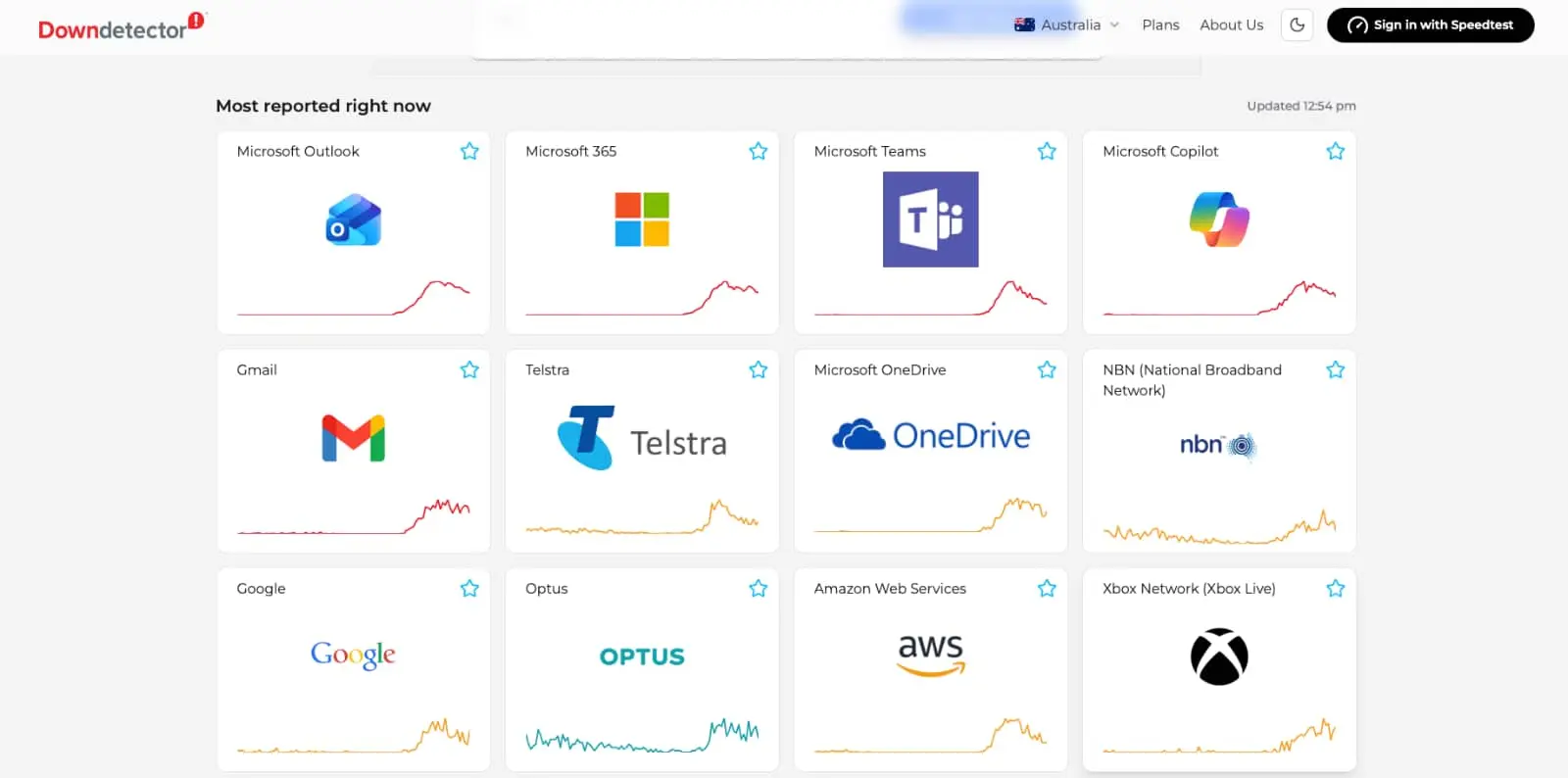
If the web feels a little slow at times, it could be a combination of things affecting it. However, reports appearing on outage tracking site Downdetector may not say where those problems originate, or even if they’re related.
Earlier on radio, this journalist mentioned a possible AWS connection based on user reports on Downdetector. Amazon has since told Pickr AWS is operating normally, with no broad service issues. An Amazon Web Services spokesperson said:
“Currently there are no broad services issues with AWS. Our services are operating normally. The only resource on the internet that provides accurate data on the availability of our services is the AWS Health Dashboard.”
AWS Spokesperson
Meanwhile, Google’s Cloud Status Dashboard also showed no broad severe incidents at the time of writing.
When will it all come back up?
The million-dollar question is more “when will everything return to its regularly scheduled program”, and the answer is we just don’t know.
It can take time, and Microsoft is working on the solution. In fact, as of 1:30 PM AEDT, Microsoft’s update read:
“We’re applying infrastructure capacity improvements where possible in an effort to help support traffic in regions coming online. We’re continuing to monitor the results of changes applied so we can identify strategic actions that can help to improve service health across all affected regions.”
The hope from here is that by the end of Friday in Australia, your work day — and everyone else’s in the world — should be able to get back on track again, and potentially bring up the services once more.