

AI is everywhere right now. It’s in your phone, your computer, your online services, your document writers, your code, your music, and potentially your toothbrush or oven or other appliances found around the home. It is everywhere.
We’ve even heard of AI making its way into the car by way of GPS technology, but next year, it’ll begin to appear in more vehicle cabins, as automakers team up with device makers normally building computers and phones to make a more connected car.
LG used to do the phone thing, but got out of that a few years ago. However, it is still building decent laptops in the LG Gram series, and its next area could see car manufacturers use LG and chipmaker Qualcomm to build a new generation of in-car experience.
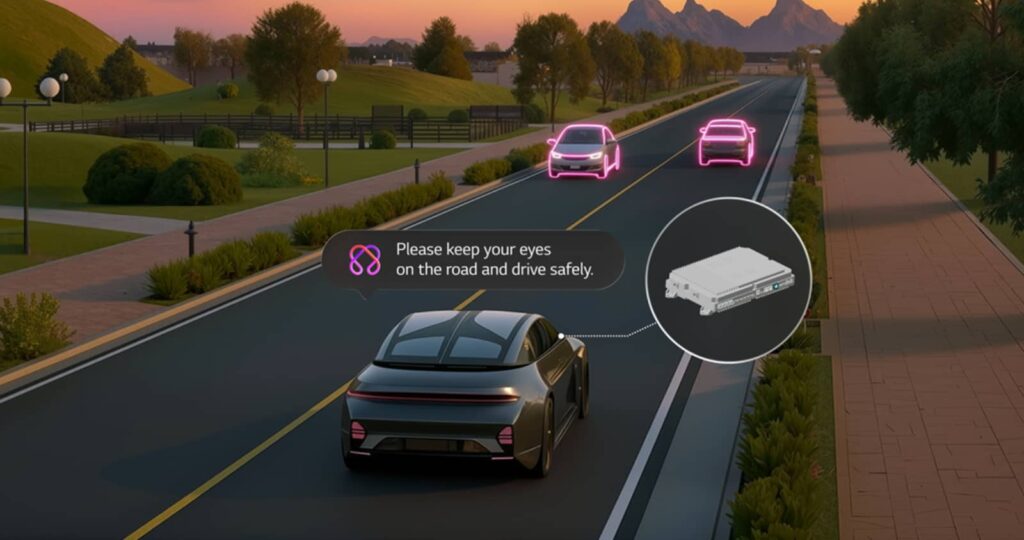
The concept is called an “AI Cabin Platform”, what is basically a computer system inside of a car designed to work with AI for another acronym (actually an initialism) likely to gain attention next year: AIDV.
Also known as an “AI-Defined Vehicle”, an AI-based car will use AI models to connected the driving experience to some of the things AI can do.
Take visual analysis, because self-driving systems use that sort of technology already. With an AIDV, it should be possible to use image models and cameras track whether vehicles merge unexpectedly from a nearby lane, and for the car to issue an alert, or even possibly respond depending on the setup of the vehicle.
Inside the car, an entertainment system could adapt to the environment, suggesting music or information based on seasonality shifts and changes.
While one of these seems a “nice to have”, an AI alerting its driver of important changes in road conditions definitely seems more useful, and could be something internal AI systems will be faster to process, instead of relying on remote AI services in the cloud.
It could also mean better power usage, with AI local to the car itself, something laptops and some phones have offered for a few years, but which we see little in the way of use for most people. The technology could go further, with car functions built into the same chips, bringing the size of car computers down, and potentially leaving more room for those big batteries electric vehicles need.
For LG, the AI Cabin Platform concept will see it work with chip maker Qualcomm, and possibly find its way into actual cars in the future. Right now, though, it’s just a concept, and like the entertainment system, a nice to have or even a nice to know about, which we suspect we’ll learn more about at CES 2026 in the new year.