
Quick review
The good
The not-so-good
A minimalist look makes the Roborock Saros 20 a little slicker than most of the robo-vacs you might see, but does it have the tech to go with it?
The future is always just around the corner, and so too might be the next job you give to the machines. While there’s probably a philosophical debate about some tasks you want to keep going, the chores of the everyday are definitely something many of us don’t mind handing off.
Namely cleaning, and the problem of needing more cleaning.
But thanks to a combination of cameras, depth sensors, and robotised moving parts, you can now get the machines to do this for you. It just might not look good doing so.
Robotic cleaners aren’t that new, but over the past few years, they’ve started looking good doing it. The base stations are no longer the clunky boxes you expect them to be, and the round robotic cleaners can be somewhat stylish and slim to match. Better, the technology can also do a lot more.
It can climb small steps and ledge. It can identify obstacles and come back later. And it can mop, cleaning the floor in more ways than one.
In Roborock’s Saros 20, the robotic vacuum cleaner aims to bring all of those together in a device that looks less like the clunky cleaner and more like the minimalist maid. Is it all you really need?
What is the Saros 20?
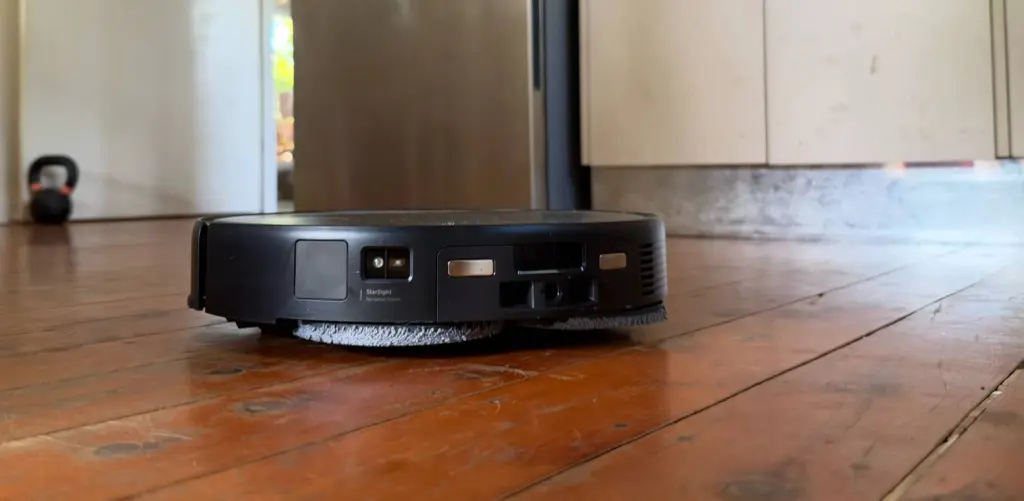
Another of Roborock’s robotic vacuum cleaners, the Saros range largely represents models in the flagship. They’re slim and stylish, or as stylish as a robotic vacuum can be, and loaded with the technology that matters.
In the case of the Saros 20, that includes a high-powered 36,000 Pascal suction system and a 100 degree Celsius hot water mopping system, essentially covering vacuuming and mopping, plus the robotic moving parts to get it around your house.
To do that, you’ll find Roborock’s “StarSight Autonomous System 2.0”, which is a fun marketing-focused way of using LiDAR’s depth-sensing capabilities with an RGB camera to create 3D mapping, complete with AI to see obstacles and recognise them, snapping photos for you as it happens.
That allows it to find its way, map where it’s going, send the information back to the app (which you need to use), and then suck in dust and debris before wiping it down with the mopping system. An arm can come out to move items within its path of suction, and if the Saros 20 encounters a step or ledge it can’t deal with, it features a lifting system to climb up a maximum of 8.8 centimetres.
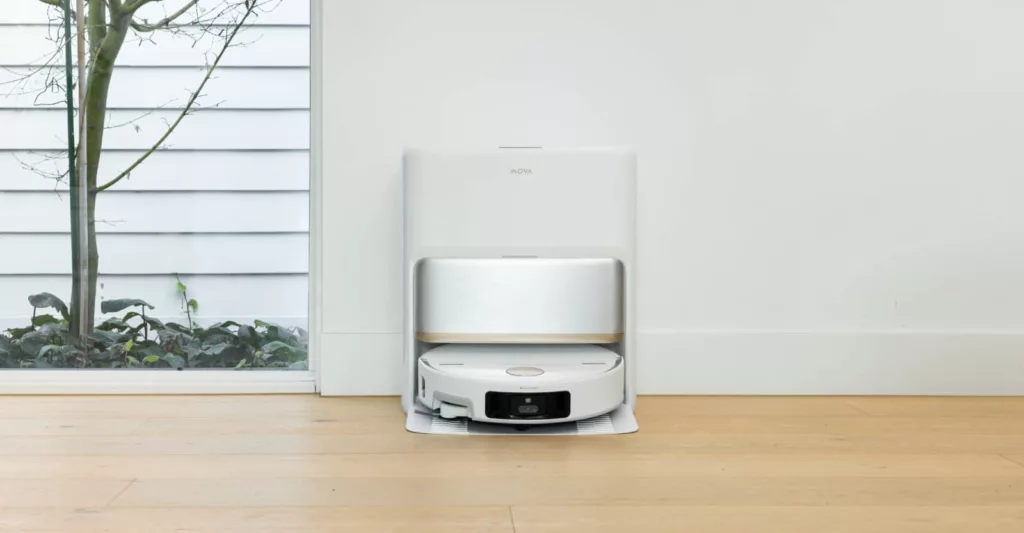
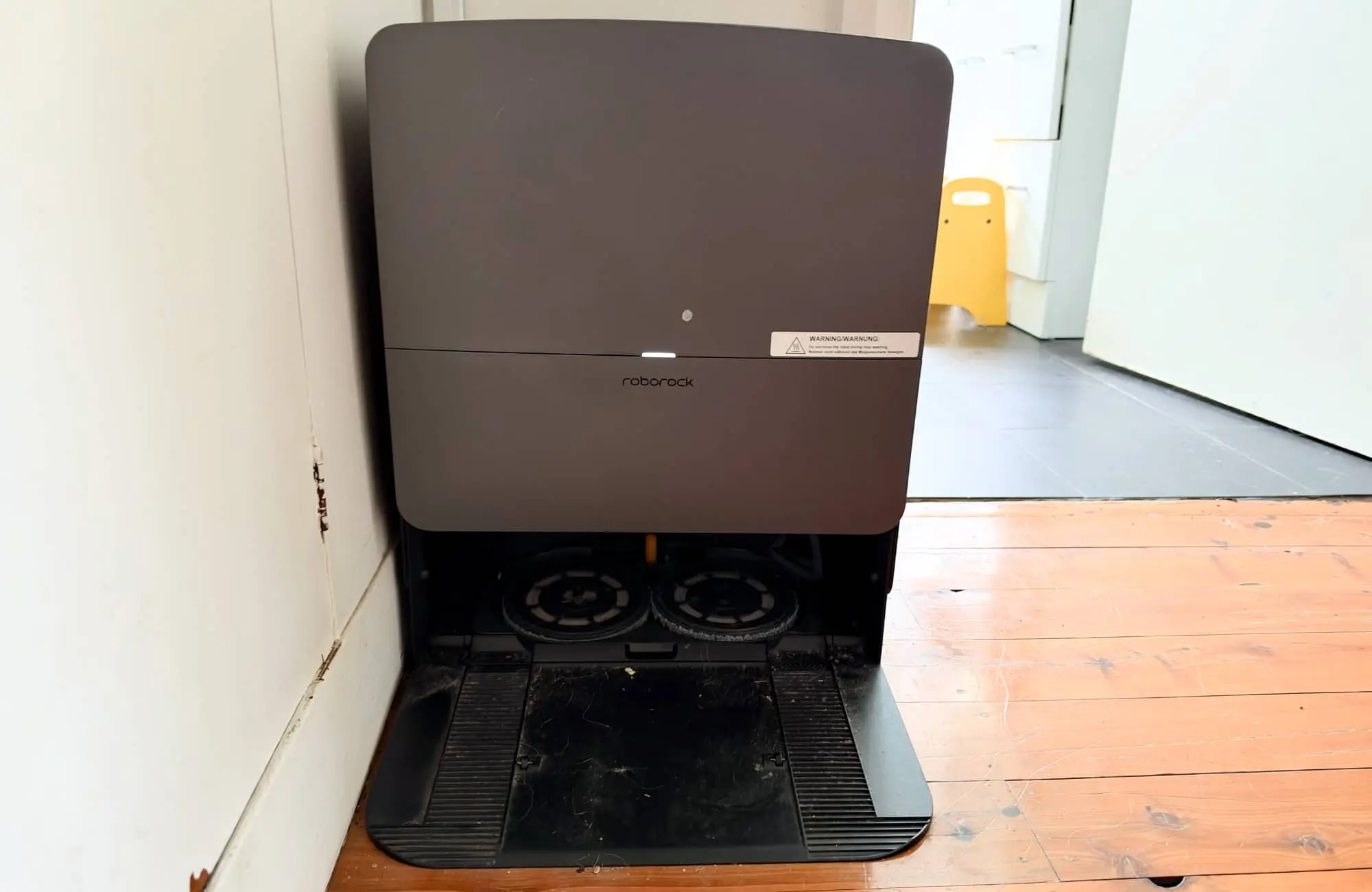
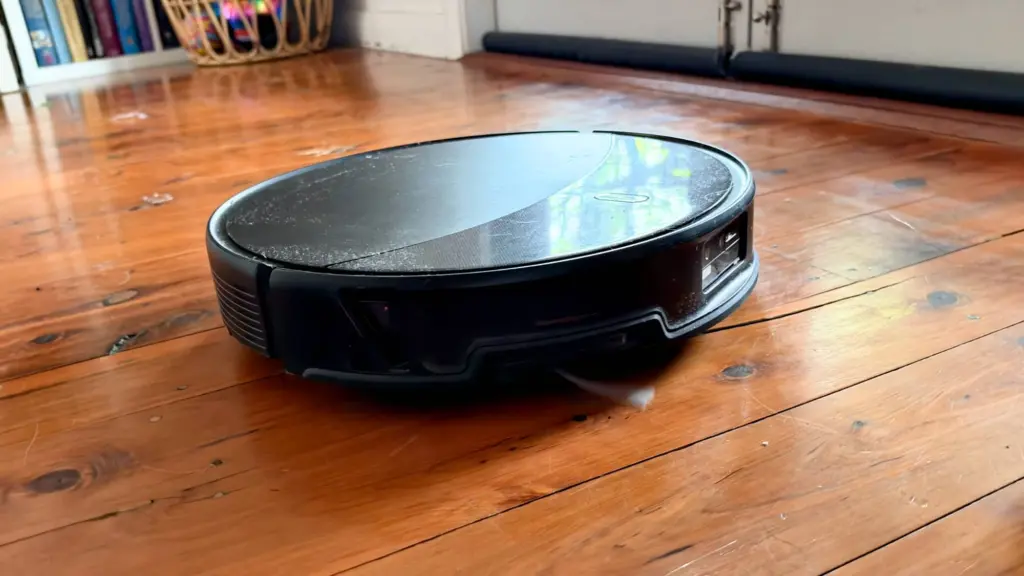
All of this is incased in a 7.98cm body, making it thicker than your laptop, but slimmer than a bunch of other robotic vacuums. It’s better looking than the last Roborock we checked out, the Qrevo Edge, but a good year or so later and a total model line difference, this isn’t all that surprising.
When it needs to empty itself or recharge, it will find its way back to the base station, which includes two tanks, including one for clean water and one for dirty, allowing you to easily pull them out, unlock their container, and deal with the liquids for each (fill the clean, empty the dirty). Under the compartment at the front, you’ll also find a vacuum bag, which is where all the debris and gunk goes, and which will need a replacement every so often.
Your robotic vacuum will make this its home and even leave its mop pads there at times, depending on just what it’s doing around your home. However, it will also dry mop pads at 55 degrees Celsius and charge fully in a little under three hours.
What does it do?
Like every circular robotic cleaner, this one is a self-guided machine designed to map your home, work out where to go, have you section off places it can’t, and then clean every space it officially has access to.
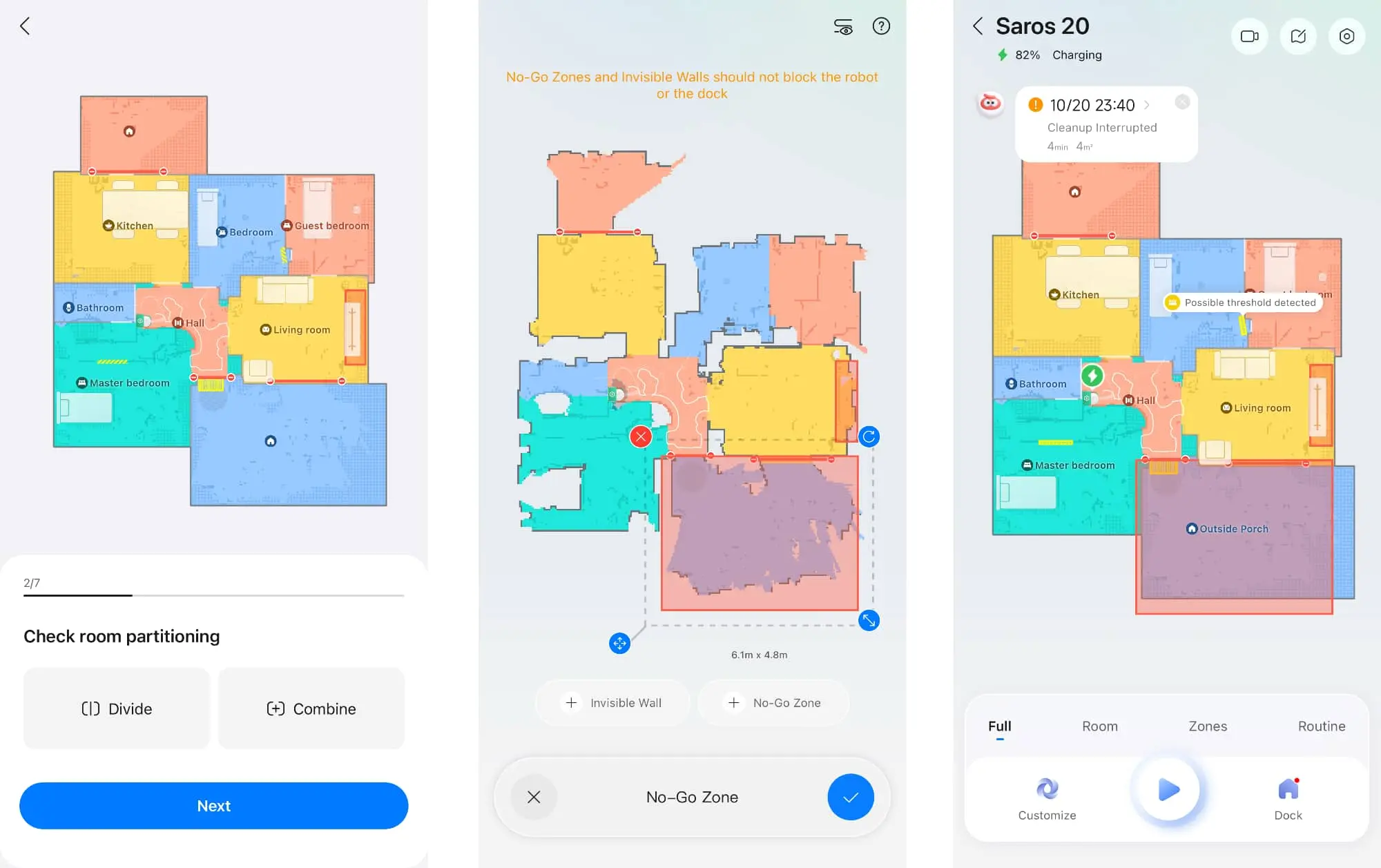
It’s easy to set up and fairly easy to get started, with the combination of sensors and app control providing a way to map your home, the robot taking itself around and getting a lay of the land, so to speak.
You may need to do it more than once, and you’ll probably want to dive into the map editing in the Roborock app to edit the map to your liking, including naming rooms and closing off sections because sometimes robots may think open wardrobes are also rooms.
Does it do the job?
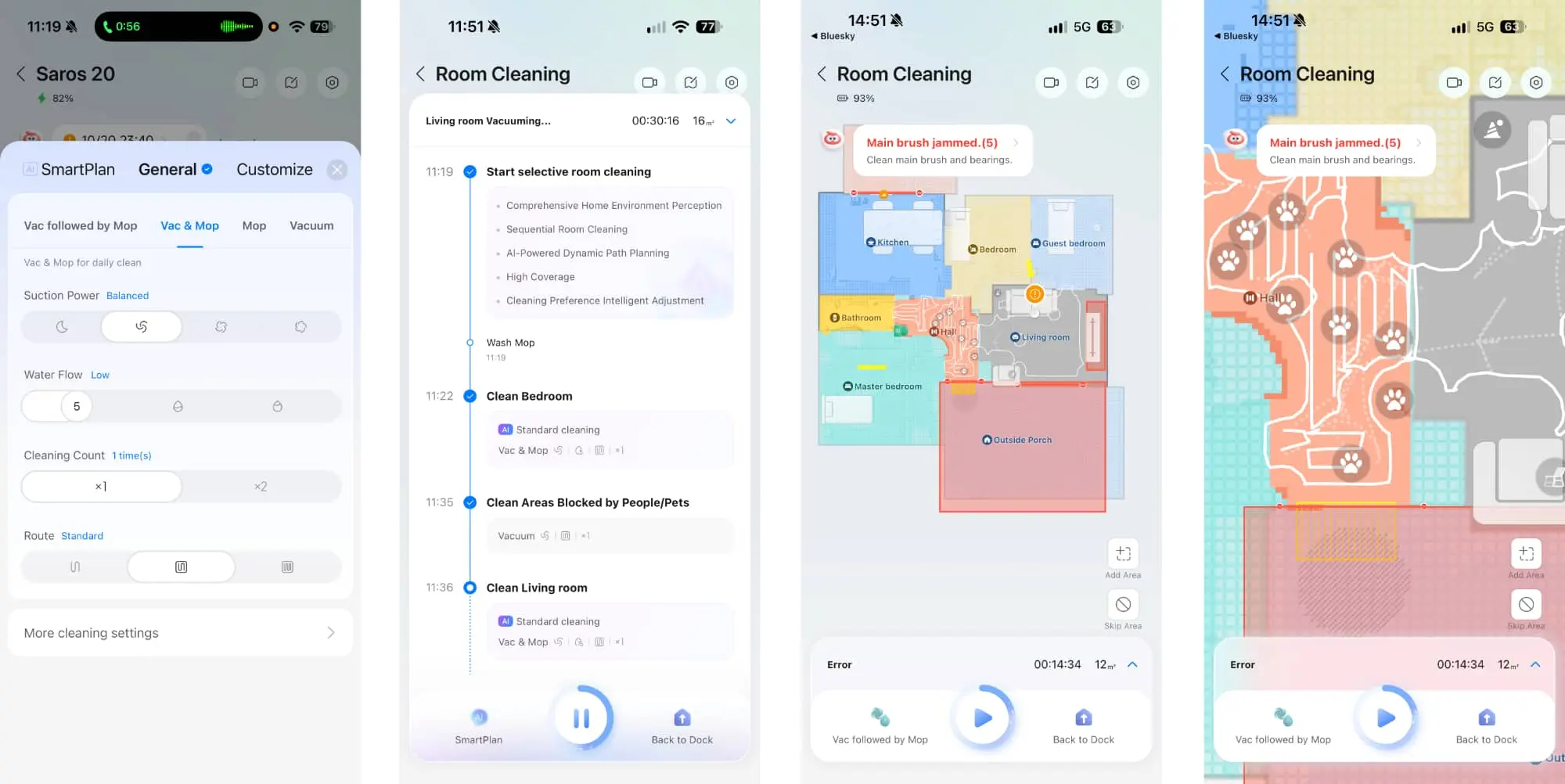
The good news is that house mapping doesn’t take long, and you can get into cleaning quickly, diving into the app to see your choices: there’s vacuuming, mopping, vacuuming and mopping at the same time (basically mopping on the same drive as the vacuuming), and then a vacuuming run followed by a mopping run.
You can do this room-by-room, or do it to the full house. You can set it up on a schedule and trigger it at specific times. It’s like having a robot clean the house, and the only thing you need to worry about is if it gets stuck, or when you need to clean the parts that do need your human hands for, such as adding fresh water, cleaning out the gross used water, or replacing the vacuum bag, one of those things that seems to be a regular consumable in the era of robotic cleaning.
There are definitely things the Saros 20 does right. For instance, it won’t hurtle itself off a ledge and come crashing on a floor beneath it, largely because its sensors and lifting legs seem to identify drops very well.
Officially, Roborock’s “AdaptiLift” leg raising system — which is basically a robotic leg that pushes the vacuum up — makes it handy to go up small ledges and see what’s on the other side, which is also typically nothing.
The sensors must be reporting the right information, because this is one vacuum that has no problem with not throwing itself over edges. That is unbelievably a slight win.
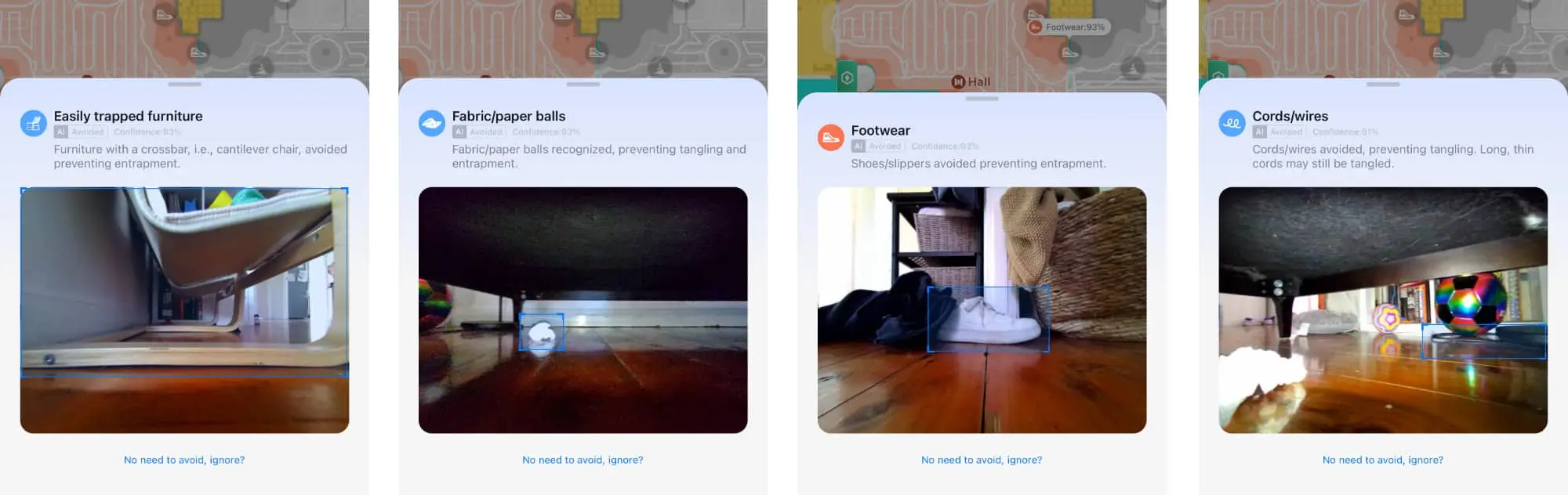
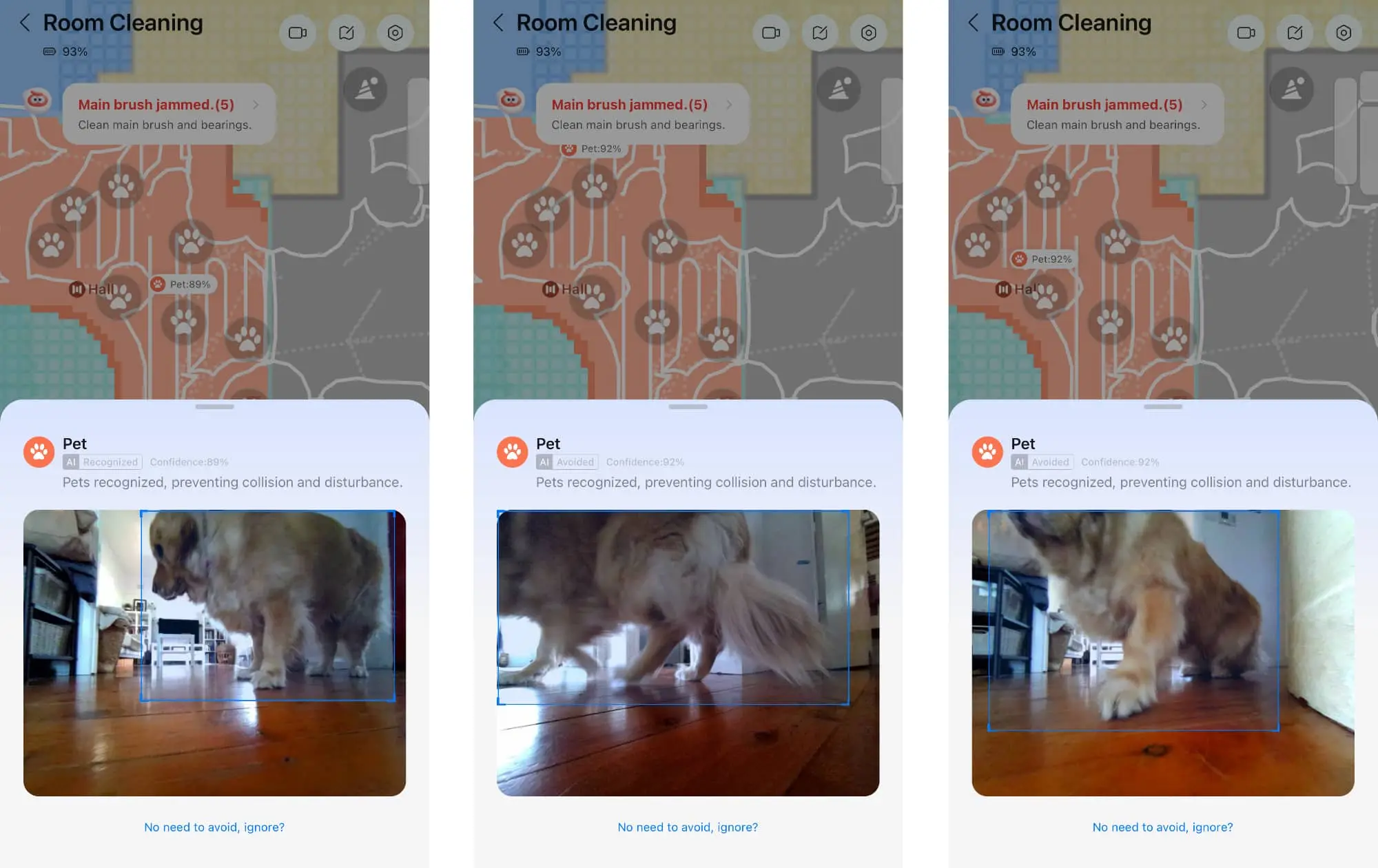
Cameras along the front of the robot do a good job of snapping obstacles, while AI on the system goes further to identify the obstacles, citing what they are to various degrees of accuracy. The results are pretty good. It knows shoes, cables, dogs, and even furniture design that will prevent it from getting across and will definitely lead the machine to being stuck.
Knowing that ahead of time is a win, and the Saros 20 doesn’t need to get itself caught in a quagmire. Good job, robo-vac.
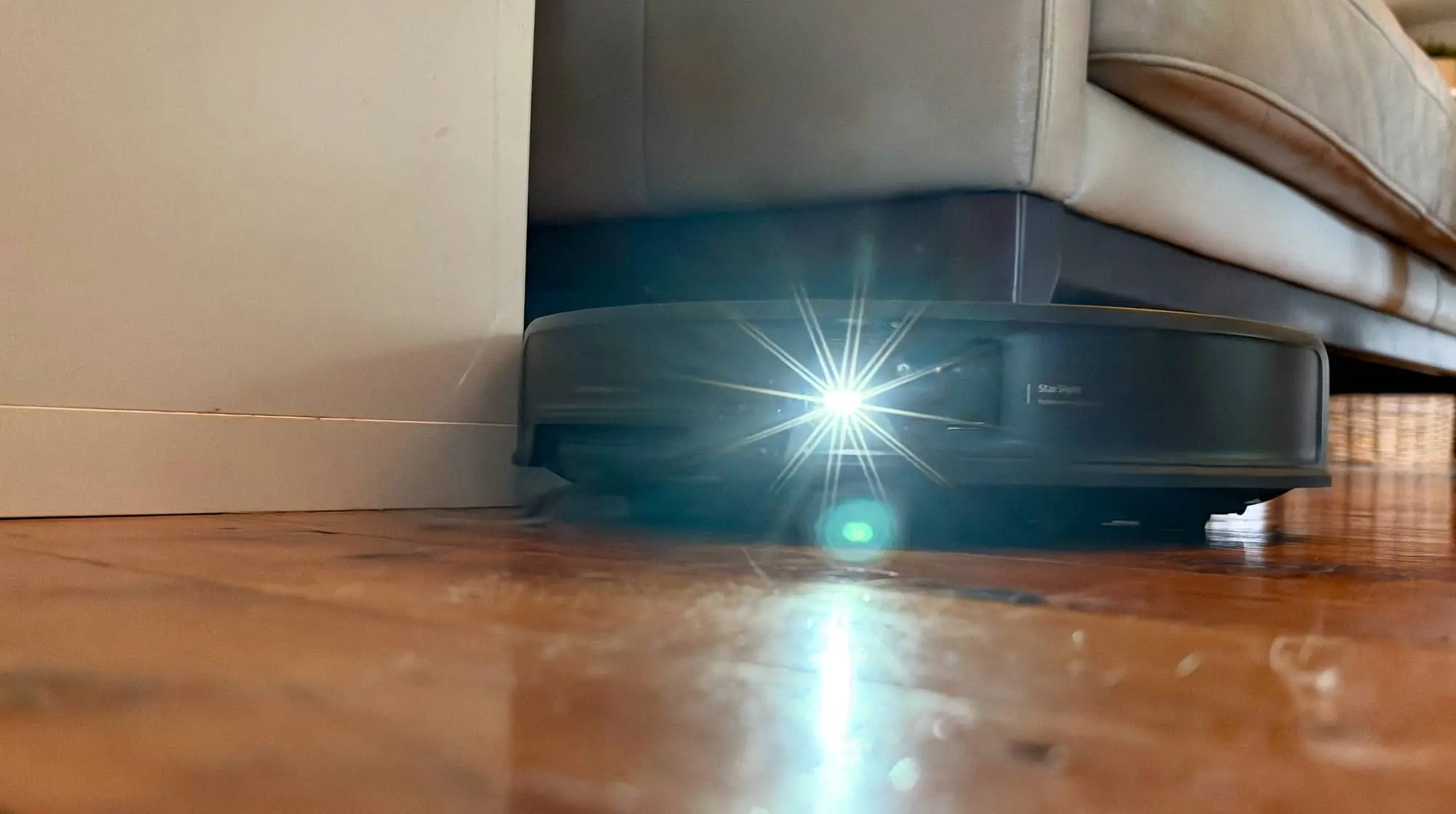
And thanks to the fairly slim size, it can make its way under a couch or bed, supporting just under 8 centimetres of clearance max, which makes for some cleaning in tight spots. Little wins.
It can suck the gunk and clean the floor, and depending on just how dirty everything is, it might end up being a bit of a godsend in your life.
Except for the catch or two, because there are definitely some of those.
If you let the AI features do their thing, your clean-up job might be a little more hit and miss. Potentially more miss.
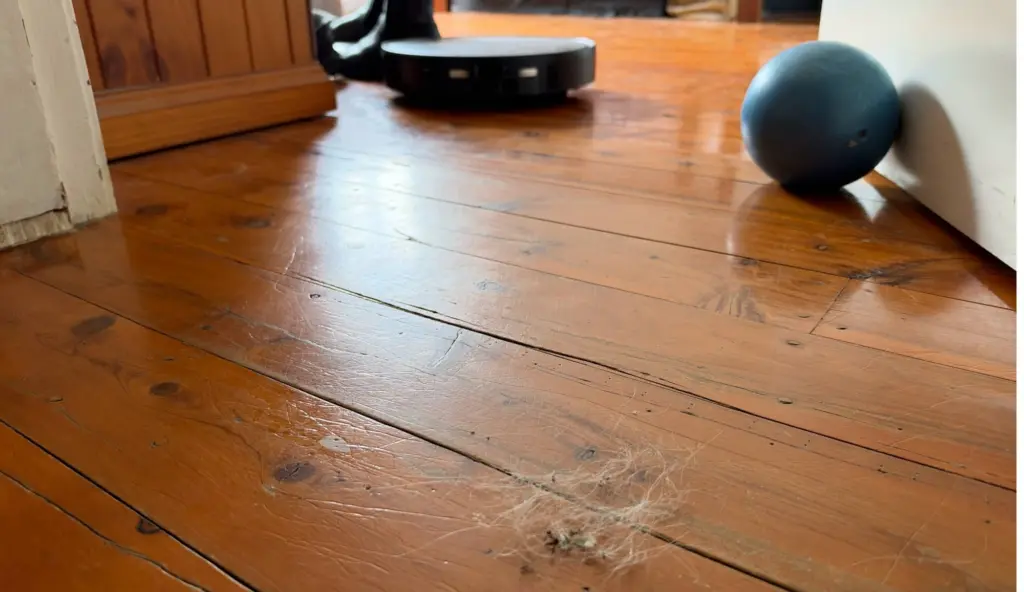
Testing both, we found that having the Saros 20 focus on vacuuming in a single pass or vacuuming and mopping at the same time regularly resulted in parts of the clean remaining. It was almost always hair, thanks in part to a house of girls and a large golden retriever, but often the vacuum simply struggled and would get stuck.
The vac and mop setting is technically among the fastest, but also one of the least reliable, and the system doesn’t end up telling you where it’s had problems cleaning, only where obstacles were found. That’s a shame, because it means the app’s reporting of cleanliness isn’t quite up to scratch, or at the very least lacks an element of truthfulness.
Things work a little better when you opt for the vac then mop mode, and possibly because it’s technically having a minimum of two passes. That change basically guarantees the robotic vacuum has two chances to clean the gunk from the floor, coming back for the second time when the machine needs to mop and clean.
It takes longer to the tune of roughly twice as long, but it sure does a better job, that’s for sure.
What does it need?
The Saros 20 does appear to have it all: slim base station and a similarly slim robotic vac, complete with enough sensors and software smarts to clean the home with the best of them.
Where it gets problematic sometimes is with the vacuuming, particularly when it comes to hair. Sometimes it’s great, other times less so. Consistently, this reviewer found it was one of the weaker parts of the package.
Run the vacuum and it will drive the course of your home, roaming and using its combination of sight sensors to pick up on dust and hair and furniture and items that get in its way.
It can see pets and cords and generally does a great job of identifying both. It can remove its mop pads when it’s not going to mop, and it can raise them at times when it’s vacuuming before mopping. It can handle wood and tile and carpet in different ways.
But we regular found the Saros 20 would act like the old sweeper vacs and sometimes merely sweep clumps of hair to the side, almost as if it was waiting until a subsequent pass later on to actually finish the job. As if it knew that the mop mode — which it would do later — would get that.
Sure enough, it eventually did, but if we had just left the robot on vacuum only, it would have also left patches of hair and debris in places, which it sure enough did in other runs. Having it run the vacuum with the mop mode seems to fix this, more or less telling you that you’re mopping every time you’re vacuuming if you want a truly complete job.
And while the Saros 20 is supposed to be among the best, the feeling you get when it gets jammed all too easily can be jarring at times.
It could be that the regular shedding of a golden retriever is just too much for the vacuum to handle. However, the main brush regularly would get stuck from the excess long hair that retrievers leave, as if the brush was winding the hair on rather than simply into its cleaning tank.
It’s a problem, though it’s one Dyson has found solutions to in the past with a conical brush and filter, winding the hair on only to have it gradually work its way off.
This isn’t a new solution, but the top-of-the-line Roborock doesn’t have it or anything like it. Rather, it gets jammed up rather easily, thanks in part to that brush section feeling a lot like the less expensive models.
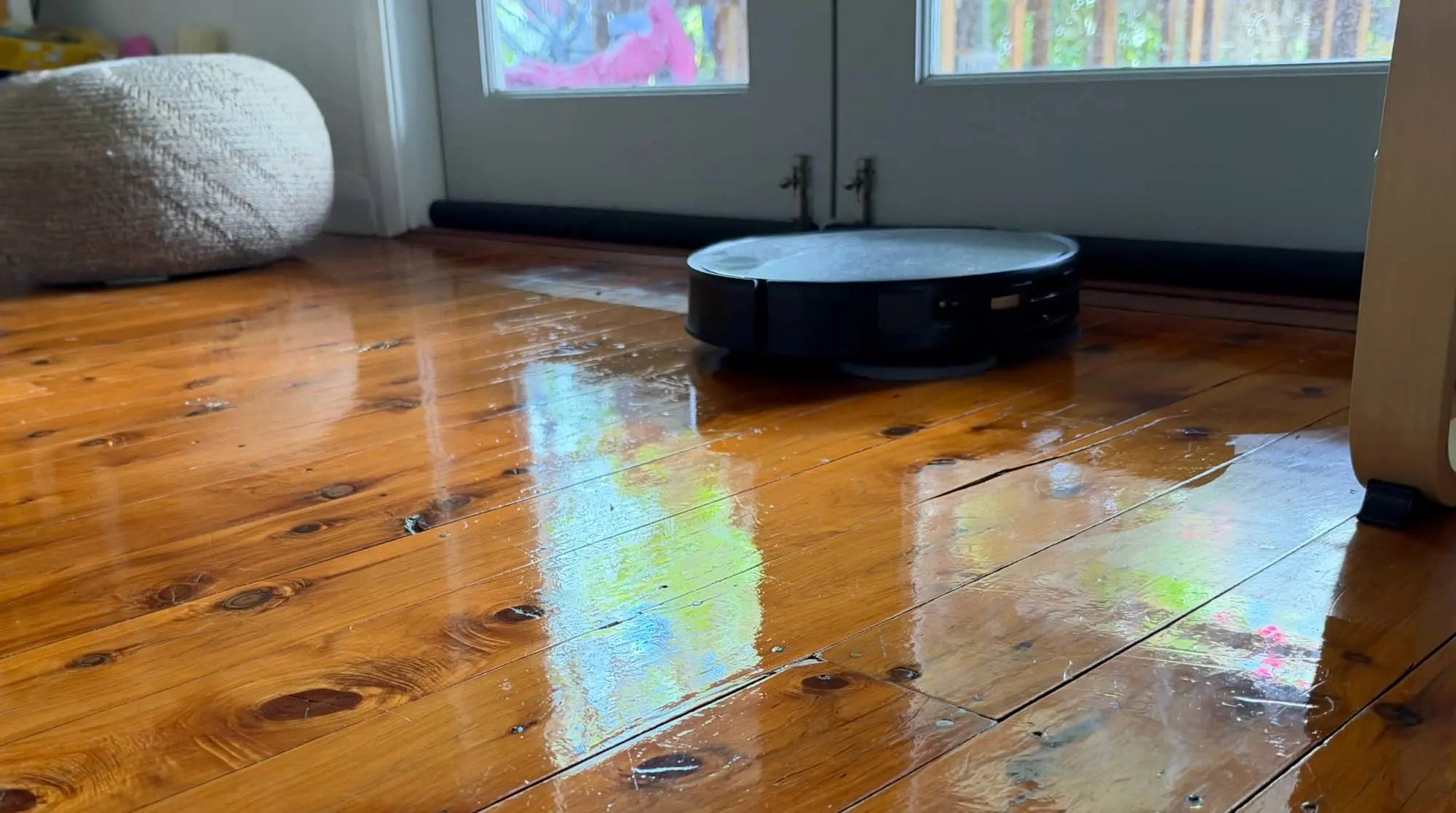
Even the mopping pads don’t give off the impression of a truly clean floor. Compare that to the Narwal cleaners, which use the longer mops and really focus on delivering a cleaning mop experience that keeps on working until it’s clean, sometimes to the point of ridiculousness. By comparison, Roborock’s mopping can feel like it’s wiping, but not necessarily cleaning fully.
All the cool improvements are in the body and tech, allowing the Saros 20 to make its way up small steps and ledges, and under couches and shelves. The technology is very clever in this way, and Roborock has clearly made progress in building a neat robot that can get under everything and do its job.
But it just doesn’t always do the best job, and maybe leave the odd spot of hair until it comes back for that mopping pass, which itself could also be a little cleaner.
Is it worth your money?
Perhaps the biggest question is whether the Saros 20 is worth the money, and at $2999 in Australia, it’s not a very cut-and-dry sort of thing. It will dry its mopping pads, sure, and it will cut your cleaning time down significantly, but $3K is a lot to pay for a robotic vacuum that can get jarred quite easily on fur and hair.
On the one hand, the sleek design and slim styling of the robotic vacuum easily show off the premium vibe the vacuum has. Yet on the other, the performance just doesn’t match the price tag. It’s good, but you get the feeling you’re paying big for the design, which is svelte and slim, and generally looks a little nicer than other models it competes with.
Editor’s note: While our Saros 20 review unit lacked the cleaning product in the box, Roborock’s website indicates your should come with the cleaning solution, so at least you know your floors will be spick and span when the mop works.
Yay or nay?
It’s a shame that the Saros 20 has so many problems with hair, because otherwise it can be a great little cleaner. It’s almost an assuming addition to your home, and lacks a grand “look at me” style, focused entirely on being minimalist.
The problem is it just won’t match every household, particularly those where hair is a problem. An excess of hair and hirsuteness isn’t a situation every household will succumb to, but if that’s you, it may be ideal to look elsewhere.
If you do have hair in your home, the Saros 20 is minimalist but amiss, and may simply struggle. And if not, you may have a slightly better time, particularly if you can find this cleaner for a better price.
It’s almost a win, Roborock. Frankly, we can’t wait to see the next model after it. Neither can the golden retriever, which may see it as a bit of a challenge.