
Quick review
The good
The not-so-good
Can the humble game of chess benefit from an app and some AI smarts? The Particula GoChess Mini makes the classic game a little more modern. Is it the right move?
It’s difficult to imagine that chess could change, but here we are with technology’s attempt to make things different. Chess as a game has more than a thousand years of history behind it, but it retains its iconic status due to being one of very few board games that has no element of luck behind it.
At its purest form, chess is all about the strategy, and while you might luck out because your opponent makes a colossal blunder at some point in the game, that’s quite different from games where a roll of the dice or delivery of particular types of cards can shift the entire experience.
Chess is something I’ve liked all my life, but I can’t say that I’m particularly good at it. I do have some friends who are frighteningly good at working out longer-term strategies and calculating moves in advance, and what goes on in their heads often mystifies me. You absolutely can learn chess, and it’s something worth teaching to kids, but that kind of logical thinking is, I feel, at some levels quite innate.
But when you start to get into that kind of logical thinking, adding technology feels like an obvious step.
And it’s long been so, too; the history of computer chess stretches back before modern computers to devices like Leonardo Torres Quevedo’s El Ajedrecista, but once actual computing power came into play, it wasn’t long before chess-loving programmers took to the challenge of making smart chess computers with gusto.
While the first rudimentary chess programs from more than 60 years ago weren’t up to much, computers took over from human players in terms of skill in the late 1990s. Depending on how old you go back (and I go back quite a bit), you might recall the furore around IBM’s Deep Blue beating Garry Kasparov back in 1996, the first time that a computer had bested a Chess grandmaster.
These days, computing chess is an essentially solved AI problem, but where does that leave the field of chess computers for the rest of us who don’t happen to be chess grandmasters?
Enter the Particula GoChess Mini, which spruiks itself as “The world’s smartest chess board”.
I’m very clearly not a chess grandmaster, so it probably won’t have any problems beating me. While there are aspects of the GoChess Mini that are very smart and appealing indeed, in other aspects it’s not actually that smart at all – and it’s also quite expensive for what it is.
Design
Particula makes a number of GoChess boards at different levels, including a Harry Potter one, though for my own personal reasons I’m very glad that model wasn’t sent my way for review.
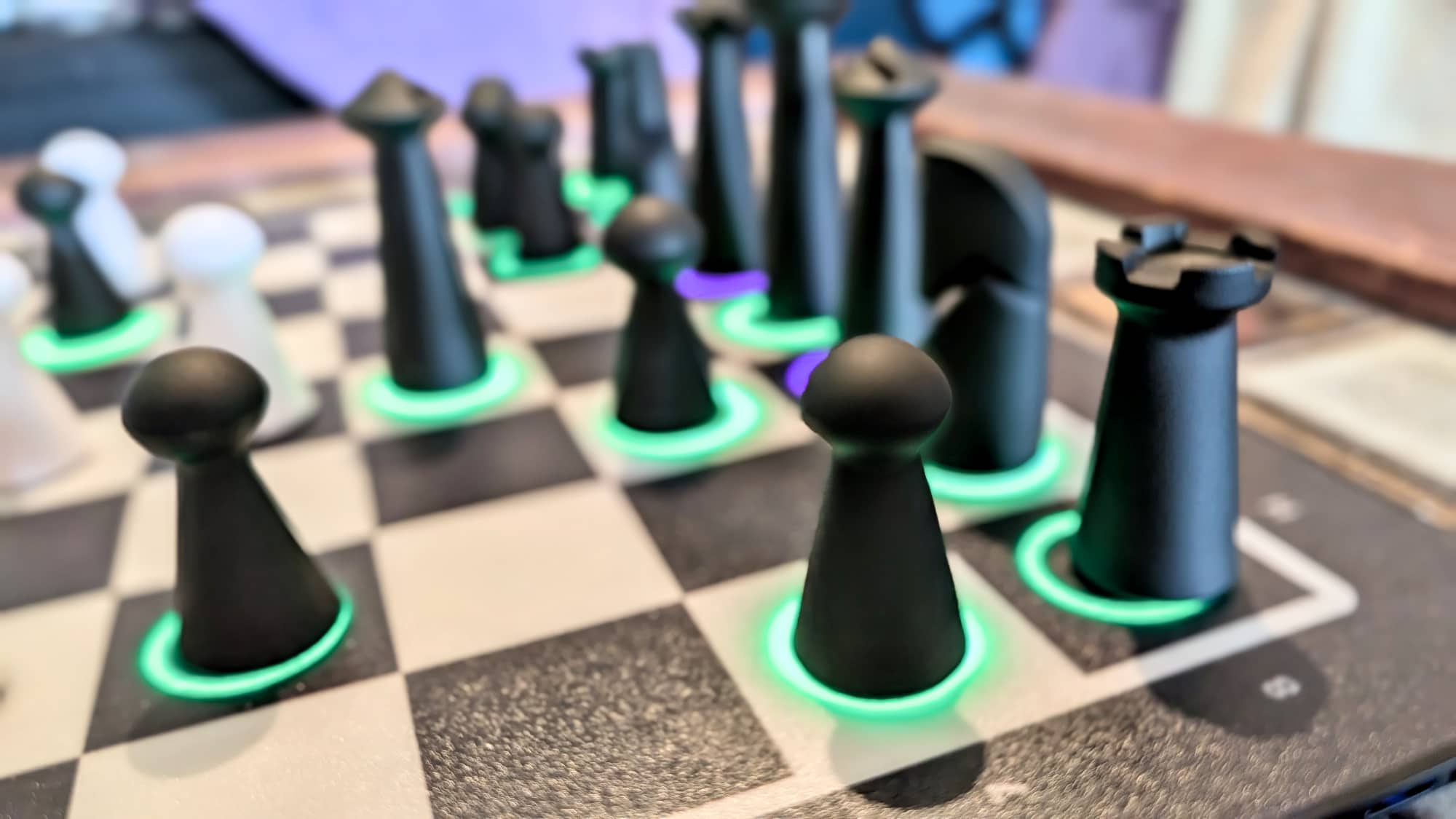
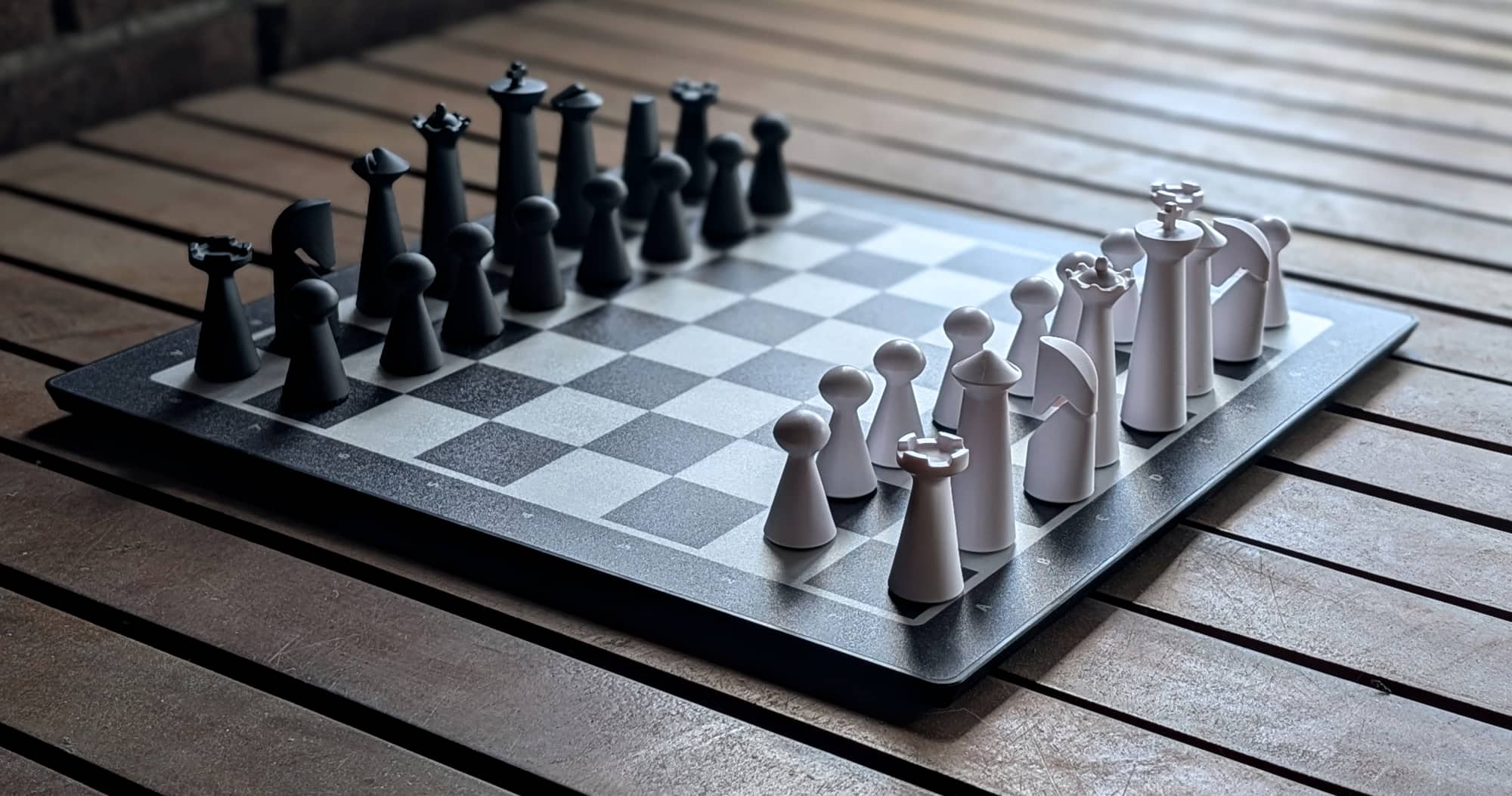
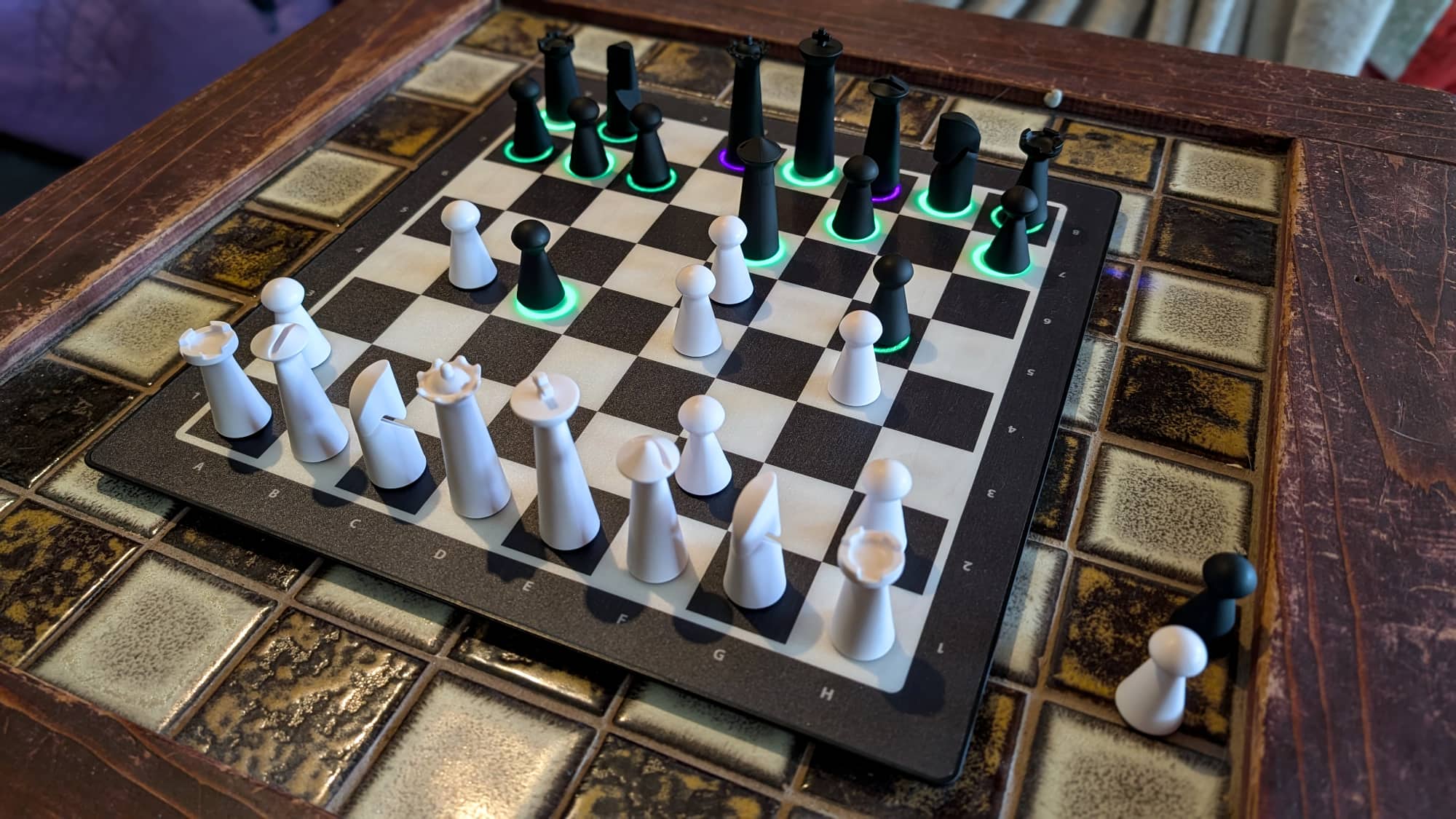
The standard non-Potter set uses pieces with a rather striking angular aesthetic that I really do rather like. They’re nicely weighted with a soft felt base that also houses the magnets that help the board determine where pieces are placed on the board.
The visual aesthetic appeal of the pieces is quite strong.
I can’t get quite as enthused about the board in a non-powered up state, though, mostly because this is a chess board that will cost you between around $300 to $450 at the time of writing depending on your online merchant of choice.
By comparison, the Potter-themed variant costs quite a bit more and closer to $600 if that’s more your style. For that kind of money I’d like something that equals the look and style of the pieces that sit on the board, and that’s just not the case here.
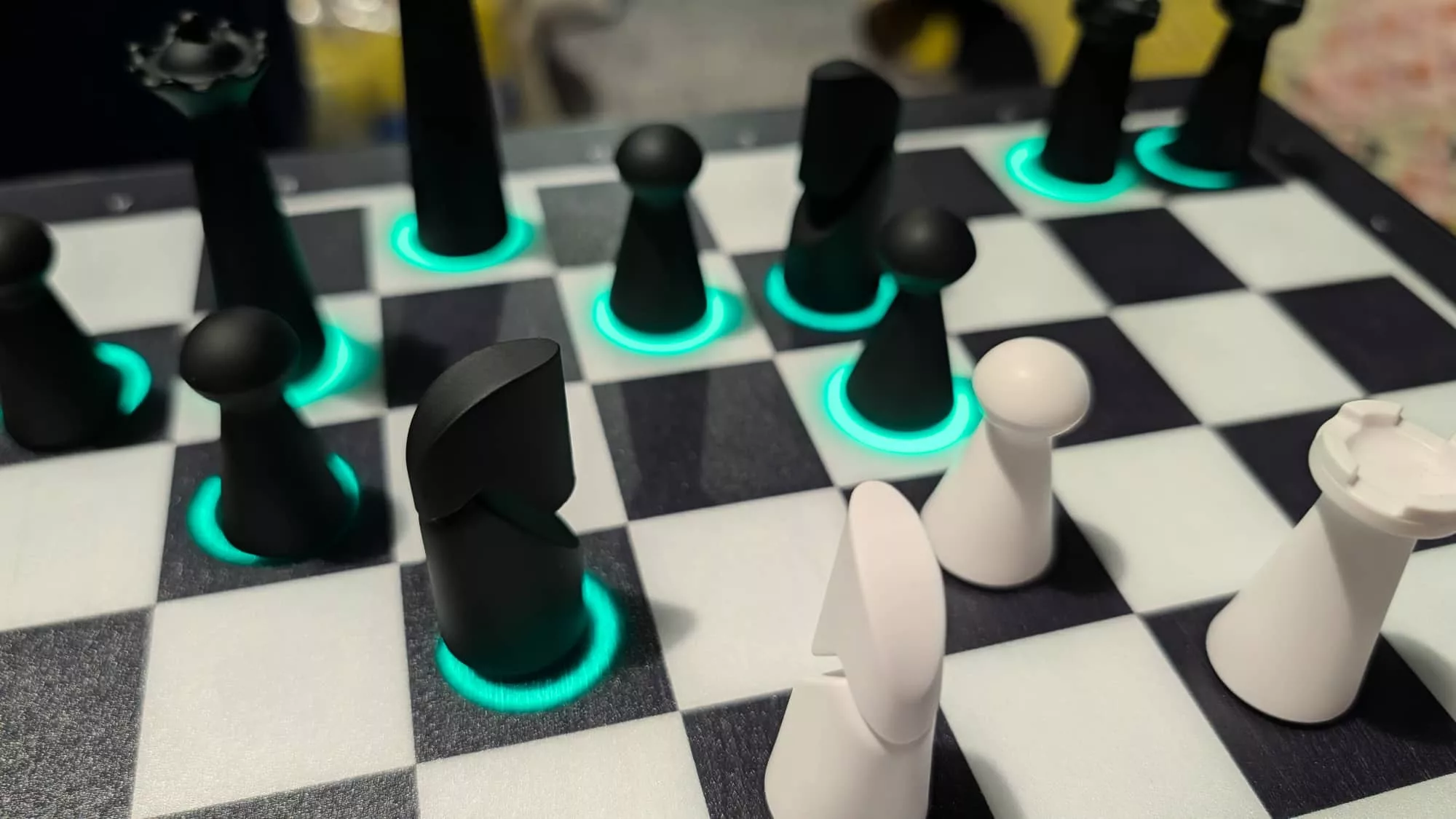
The GoChess Mini board’s surface is plastic and rather obviously so, with some discolouration lines most obvious on white squares that also show the RGB lighting underneath. This isn’t a killer issue to be clear, but again at this price I do feel that you could expect a slightly more premium experience than this offers.
Power up the GoChess Mini and the aesthetic changes, because each square has its own circular RGB light placed underneath it; undoubtedly this is a huge factor in its overall price.
Setup
Knowledge of how a chess board is set up is somewhat assumed, but then the game’s been around longer than any of us have, so that’s not a particularly high hurdle to jump. It’s not as if you need instructions on where the pawns, bishops, and rooks go, but there’s an app should you need to ask questions, as well as this thing you might have heard of called “search”.
What actually makes the GoChess Mini smart – and the reason why I have concerns about it billing itself as “the world’s smartest chess board” – is that, honestly, the board itself is not that smart.
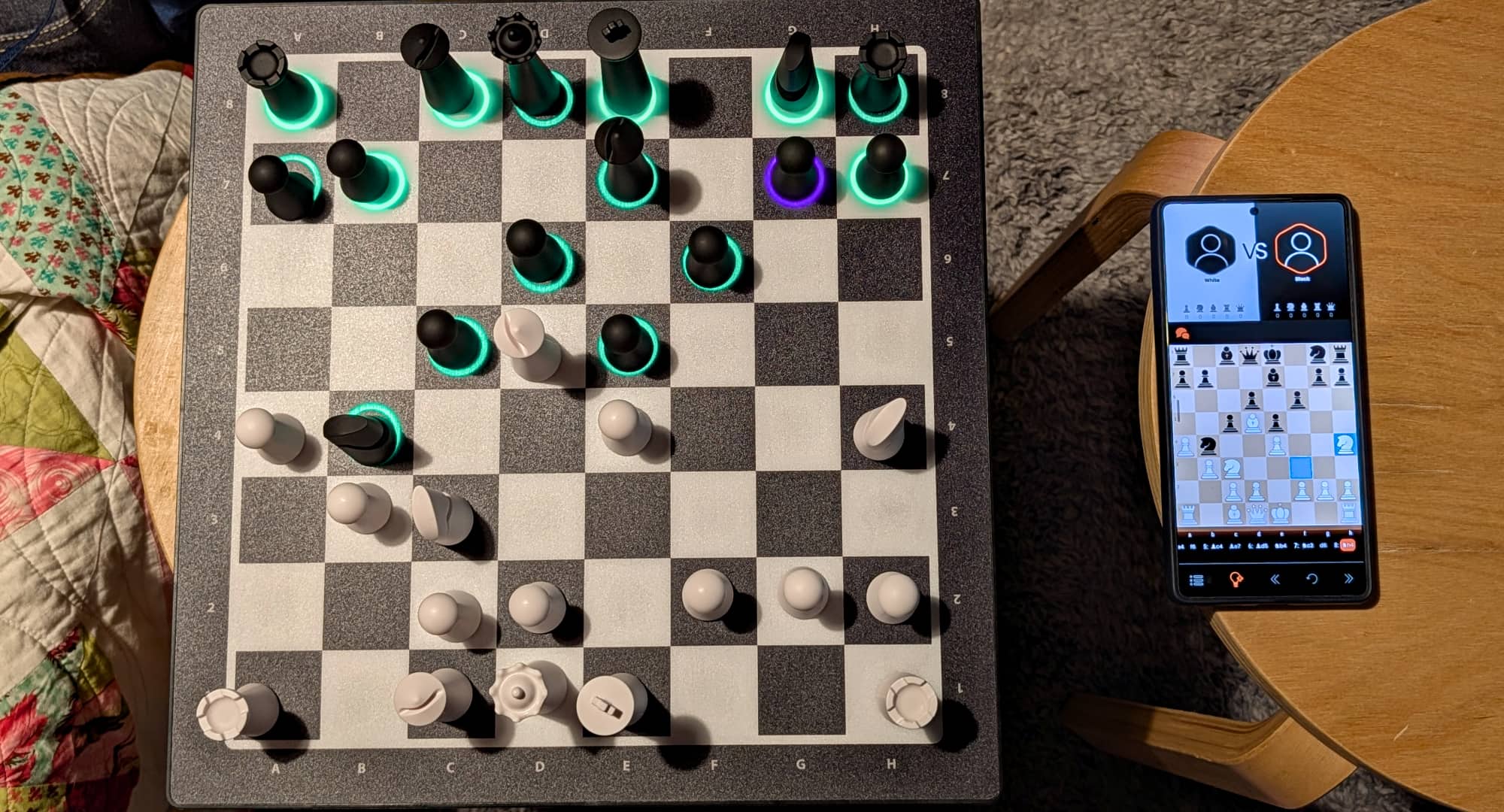
It pairs via Bluetooth to Particula’s GoChess app, and really that’s where the brains of the operation lies. The GoChess App allows for face-to-face play against another human opponent, AI-play at a variety of skill levels against the board (well, let’s be honest here, the app) or online play.
Setup does require creating an account, which means handing over an email address (reminder: set a unique password, don’t re-use them) before you can then pair to the GoChess Mini.
Like so many devices, it uses the familiar routine of a long press on the power button if you do want to or need to pair to a new phone down the track, and using your own account means that it’ll be up to date with the state of your current play achievements.
Is it a grandmaster, or a grand dud?
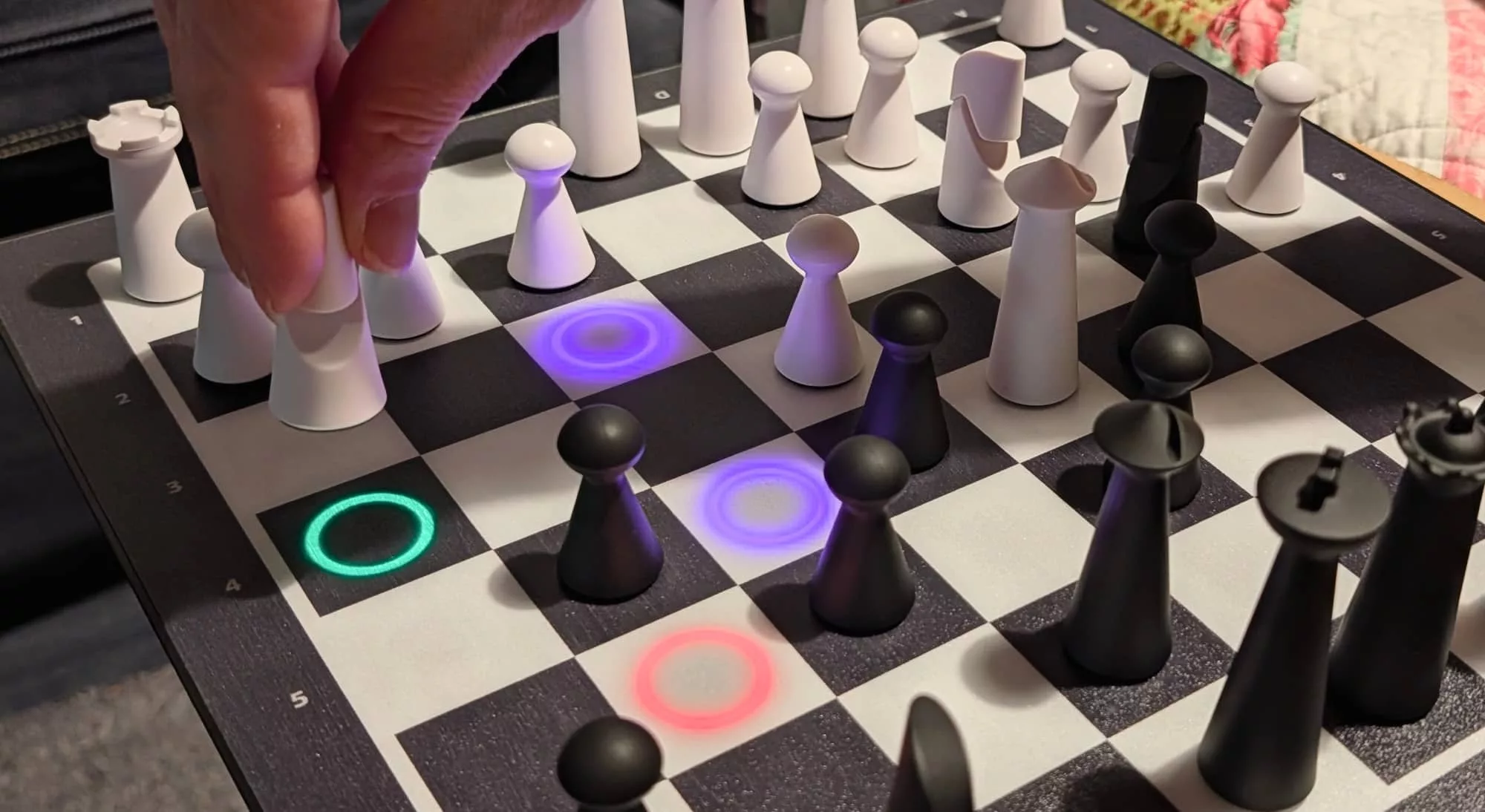
Setting up a game involves putting the pieces directly in the centre of each square, with the board lighting up to show where that is, so that it can track the movement of each piece. It is quite fussy about this, and won’t start a game until it’s certain that pieces are properly placed by default.
The underlying RGB lighting is then used to show suggested moves, with toggles for each player to show movement patterns, best moves and moves that would or could be strategic blunders to assist players with the game.
It’s entirely feasible to set one player with all assists in play while the other gets nothing to make for a more equitable game, though at a certain level you’d likely end up having the assisted player just doing the suggested moves each and every time.
At that point you might as well be playing against the AI.
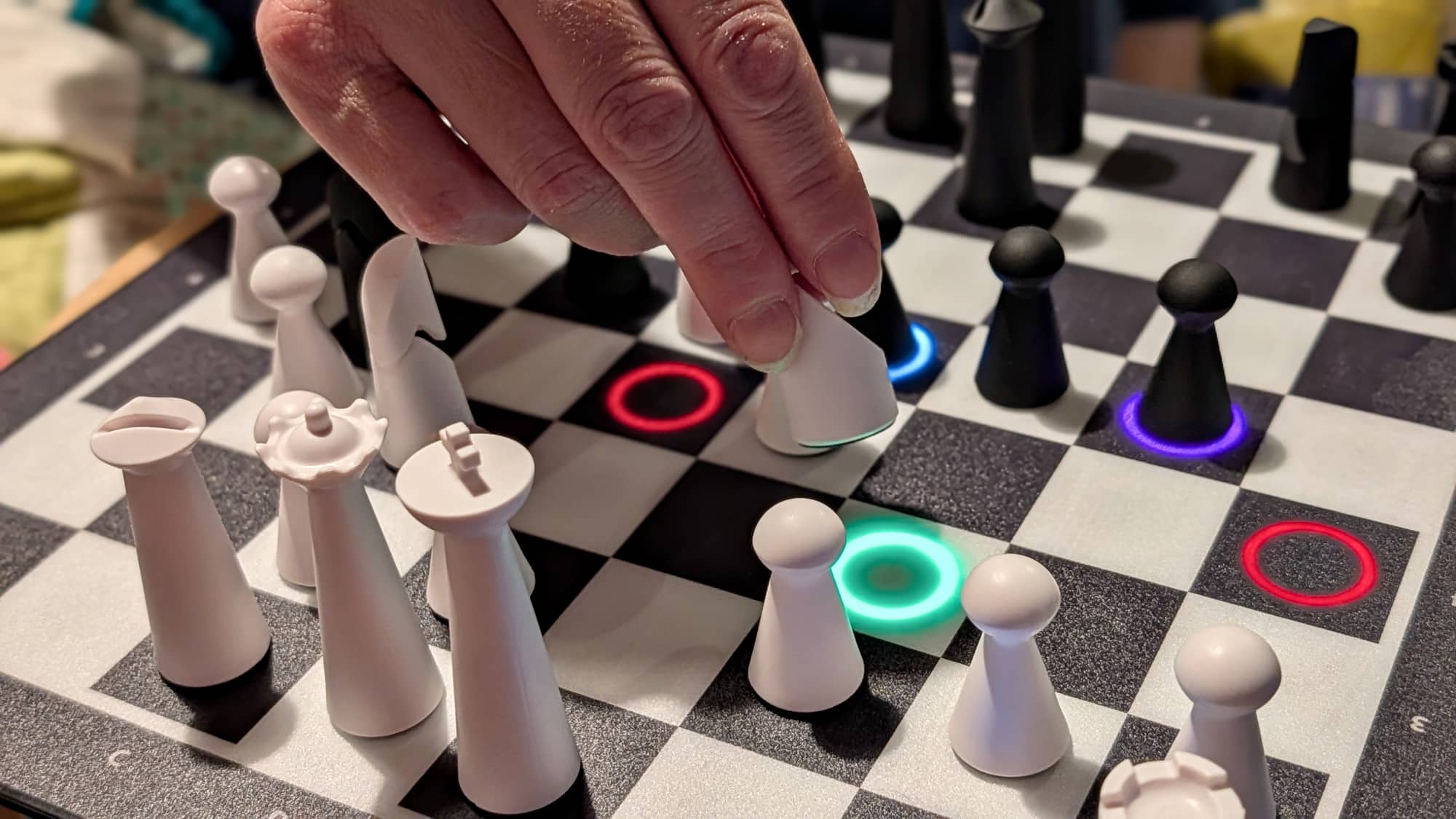
The GoChess Mini is 100% reliant on the GoChess app – the board is essentially a lightboard that waits for commands from the app, and if you do minimise it on a phone or tablet it instantly loses all its RGB goodness – and that does bring with it some issues around stability.
In one game I played, we got to the point where the black player wanted to castle their king, an entirely standard move. The GoChess board lit up with the move option open to the king — a lit blue square, as we were playing with best move hints disabled – but then when the castle was moved, the app outright crashed.
Frustrating initially, though pleasingly when the app was relaunched it had the game saved at the point of the crash. That’s good. What’s bad is that every single time a castling was attempted, the whole thing would just crash again.
Only killing the app and clearing its cache got past that problem, at which point we painstakingly stepped through our moves to the castling point, and this time, it did work.
While that might just be a one-off odd bug, it does point to a weakness that could cost you online match kudos, because “I quit because the app crashed” sounds about as honest as “the dog ate my homework” in the history of excuses.
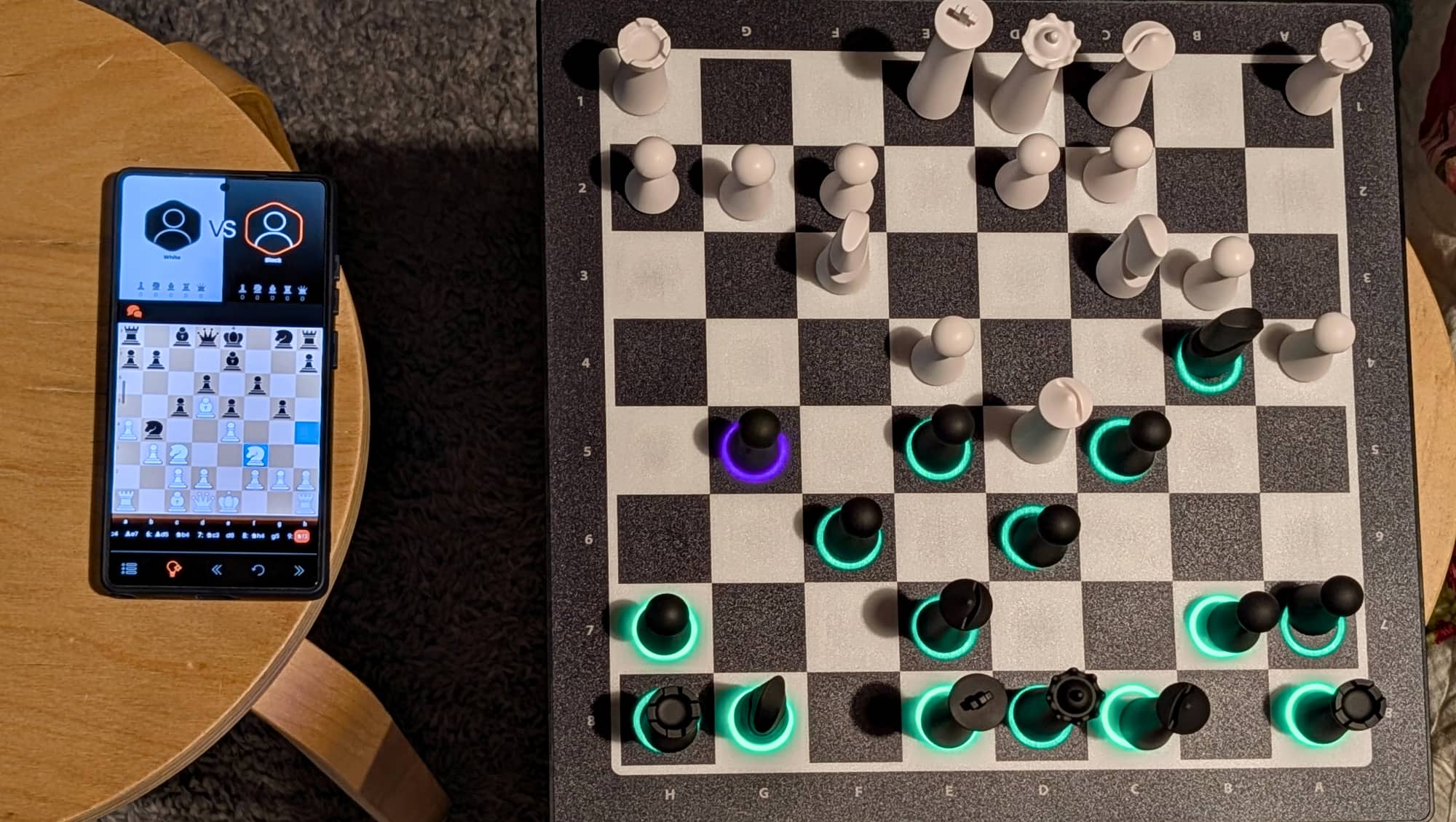
While the GoChess Mini can suggest moves, it’s also not actually smart enough to know what piece is actually on top of a given square; it simply assumes that you’ve placed everything correctly at the start of a game.
Put the pawns on the back row at the start of the game and it’ll just assume that they’re actual chess royalty for the entire duration of the game. It’s probably the first time these pawns have ever felt so regal.
Outside being pedantic as I am sometimes, you are not likely to do that, but the point here is more that this “smart” chess set once again isn’t all that smart, and if you return to a game where a place has been inadvertently shifted – in my case in one instance bumped by a cat – the board will be none the wiser.
Where it is potentially quite smart is as a gift for the chess player in your life who either wants to become a lot better, or already is a lot better than your skill level.
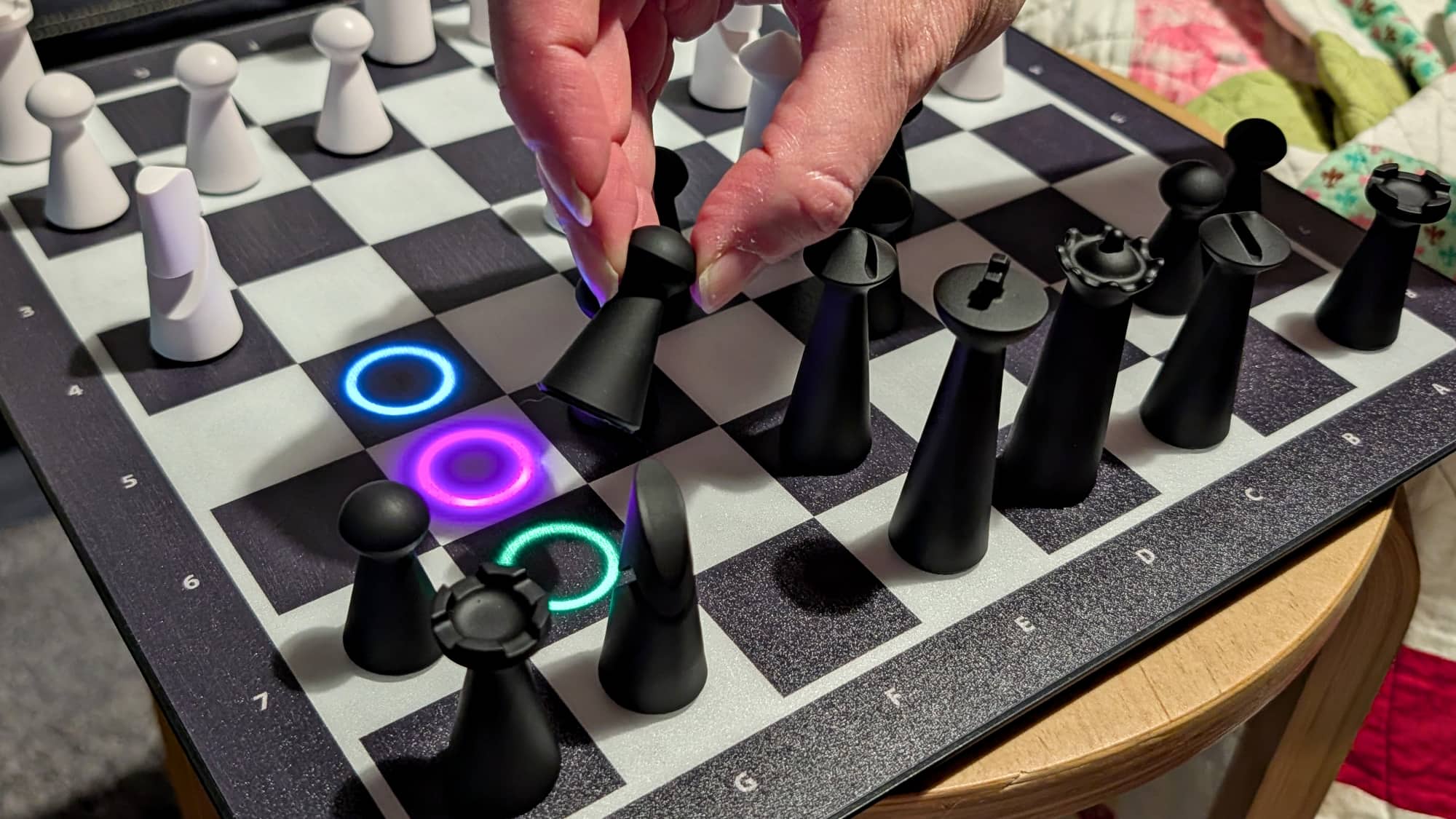
I mentioned earlier on about how I’m a deeply average chess player and have been all my life, and I’m aware that this is somewhat exasperating to my chess genius friends, because I’m no challenge at all to them.
Yes, I can be beat, and probably all too easily.
I could totally use the adjustable AI mode and the puzzle modes of the GoChess Mini to improve my play over time, but equally if they wanted a challenge, they could use it to give them a stiffer combat than I’m able to provide.
That challenge extends out to the online world, as the GoChess app can also log in to Chess.com or Lichess.org for play against anyone in the world, potentially speaking, though you would have to move their pieces on your GoChess Mini board for them if playing that way. It’s a nice inclusion, but I can’t help but feel like you could use those services in almost the same way with a regular chess board anyway.
If only the chess pieces could move themselves, almost like magic, but I doubt even the Harry Potter edition works that way, either.
Yay or Nay?
As a gift for the chess fanatic in your life who wants a hybrid between the existing online worlds of chess and a real world chess set, the Particula GoChess Mini could be just the thing, but it is an expensive entry point that doesn’t really live up to its “smart” billing given that so much of its actual intelligence doesn’t lie in the board but instead in an app living on your smartphone.
Simply put, it is hardly smart. Despite the AI billing and the app support, the GoChess Mini doesn’t change the game for players for the positive. It might just leave them more frustrated.
If you’re just after a starter’s chess set, any $10 or less simple cheap set will play the same game, and while the RGB lighting is a nice show-off point, unless you do have someone wanting to improve their play or have more challenging online experiences in that hybrid style, it’s a hard one to recommend.