

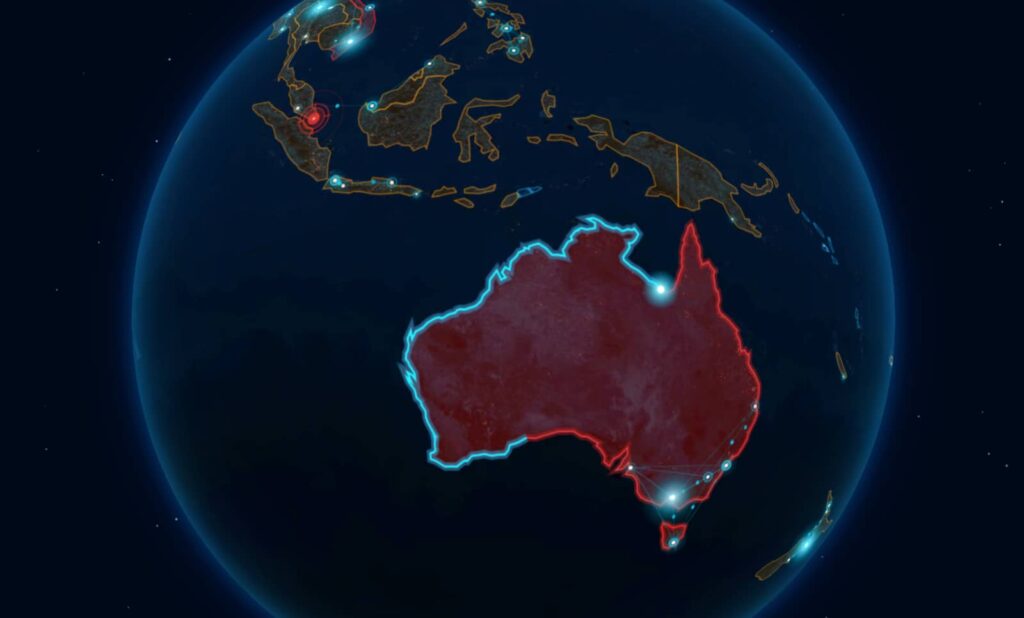
If it seems like there’s no end to scams, the frustrating answer is that’s probably very true, thanks in part to just how much money criminals make from these attacks on our lives and wallets. They keep on happening because they work, with new methods and approaches appearing every day.
Education is one of the biggest answers, partially because software can only do so much, but also because even when the software can do something, its cost can throw people. And that’s before you take into consideration how many scams rely on the physical aspect of sending you a message, and the psychology of the urgency behind it.
Software can only do so much. Education and information may end up being the answer.
Australians are lucky to have the Australian Competition & Consumer Commission, the ACCC, watching their back with the Scamwatch program, which tracks scams and reports of scams, including just how much money has been lost from reports. But it doesn’t have to be the only method of scam monitoring, and the makers of Norton have another solution.
Gen — which also owns Avast and LifeLock — have launched a scam tracking system designed to be a little more visual and interactive. Called the “Fearless Planet Index”, it’s a 3D take on the world and the various attack vectors that are populating it, using information from Gen’s own trackers and signals, showing what’s big in each country based on what some of the leaders in security software can see.
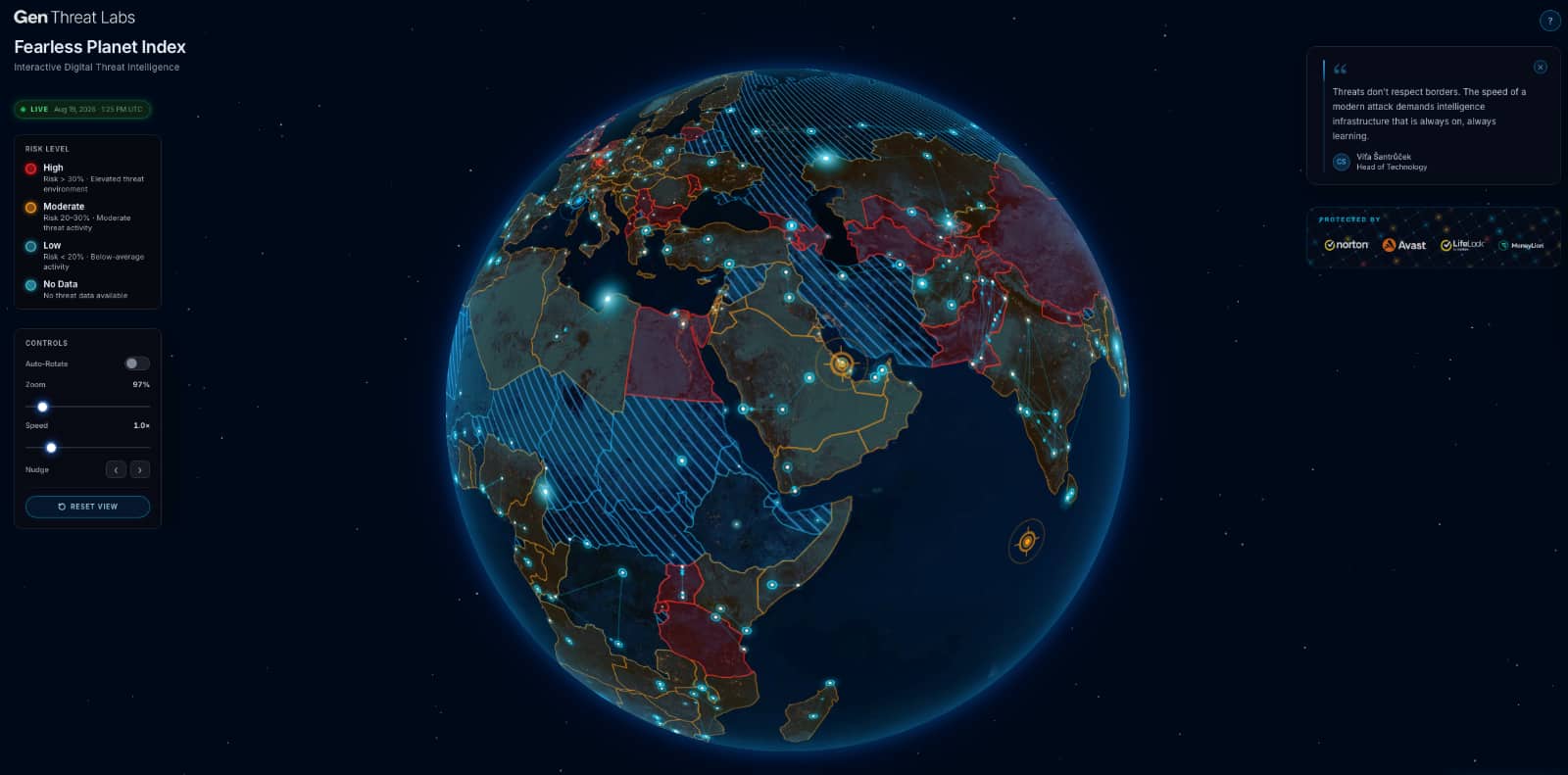
“The Fearless Planet Index is not based on reports submitted to government agencies such as Scamwatch or the ACCC. Instead, it is powered by telemetry from Gen Threat Labs, which analyses billions of real-world cyber security signals collected across Gen’s consumer cyber safety ecosystem,” said Alex Arazi, Vice President of Cyber Safety at Gen, telling Pickr about the technology underpinning the system, also called the “FPI”.
“The platform continuously monitors scams, phishing, malware and identity threats, transforming this threat intelligence into a live view of the digital risk landscape,” he said.
“The FPI provides country-level insights into the most prominent scams, malware threats and identity alerts, along with detailed threat profiles explaining how each threat works, practical advice to help people protect themselves and details on what to do if a person has been impacted, where applicable.”
In short, the Fearless Planet Index appears to be a regularly updated visual approach to understanding the scams and malware attacks appearing around the world today, thanks in part to the tracking Gen’s software has inside. It stops short of including screenshots of the various scams and malware making its way around the world, though, instead directing people to the company news and blog pages.
It’s yet another tool you can use to help work out what’s going on, but it may not provide all the answers. For instance, while it reported on some scams occurring in Australia, it may not have found every scam or attack going on, focusing on the trends.
However, even in its first month of launch, those trends show hundreds of millions phishing attacks, with this approach being the leading type of scam around the world.
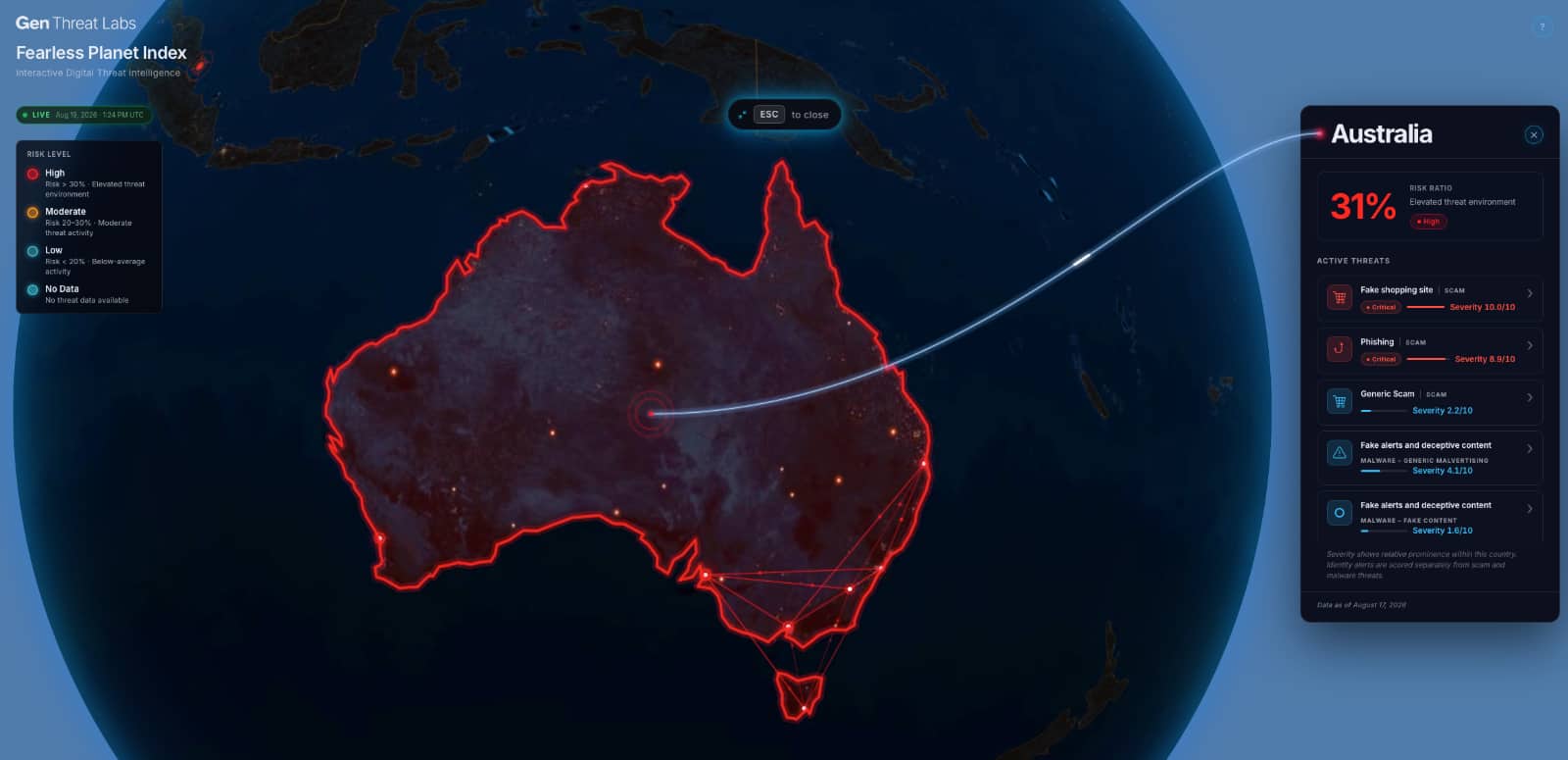
Gen notes that in Australia, shopping scams are ramping up with fake websites and ghost stores, not to mention the sponsored social media campaigns doing the same thing.
“The Fearless Planet Index is updated daily, allowing users to see whether a particular threat has increased, decreased, remained stable or appeared as a new threat compared with the previous day,” said Arazi.
“As new scam trends are detected through Gen Threat Labs’ telemetry, they can be reflected in the platform, giving users an up-to-date picture of the evolving cyber threat landscape.”
The potentially bad news about the website is that like Scamwatch, it’s not going to tell you if the site you’re at is a scam, or even if the email or SMS you’ve received is dodgy. While the 2026 sender ID rules make it less likely that you’re going to receive an SMS phishing scam you can easily fall for, it can still happen, as can email scams, and neither this report nor Scamwatch can necessarily say you’re there.
But it’s another tool that can potentially give you the information to arm yourself with, and in the fight against scams and malware, education and research could end up being the best tool we have.