
Quick review
The good
The not-so-good
It is weird for a networking company like D-Link to get into the power bank space, but that aside, the DPP-201 is a decent effort if you need a chunky power source for your mobile devices.
Phone power banks are an absolute commodity item these days, and for the most part there’s not much that’s special about any of them.
Power goes in, power comes out to charge your gadgets, and the job is done.
While there’s been some understandable worries about the underlying batteries used in cheaper power banks – typically those using badly made Lithium Ion battery arrays – there’s not that much else to say about them for the most part.
Honestly, the most intriguing part of the D-Link DPP-201 that got me interested enough to give it more than a glance was that it was from… well… D-Link.
D-Link isn’t exactly a mobile accessories brand. D-Link is a networking brand, and I’ve reviewed countless D-Link routers, extenders, mesh systems and switches over the many years I’ve been working as a tech journo.
But… battery packs?
It seems that D-Link is branching out into broader consumer power devices of late, though I have few doubts about their actual origin; somebody at D-Link HQ has all but certainly cut a deal for white labelled products that they’re happy enough to sell.
The oddity of it being a D-Link branded power bank aside, is the it actually any good, or indeed all that different from other power banks you might bother to buy?
Design and features
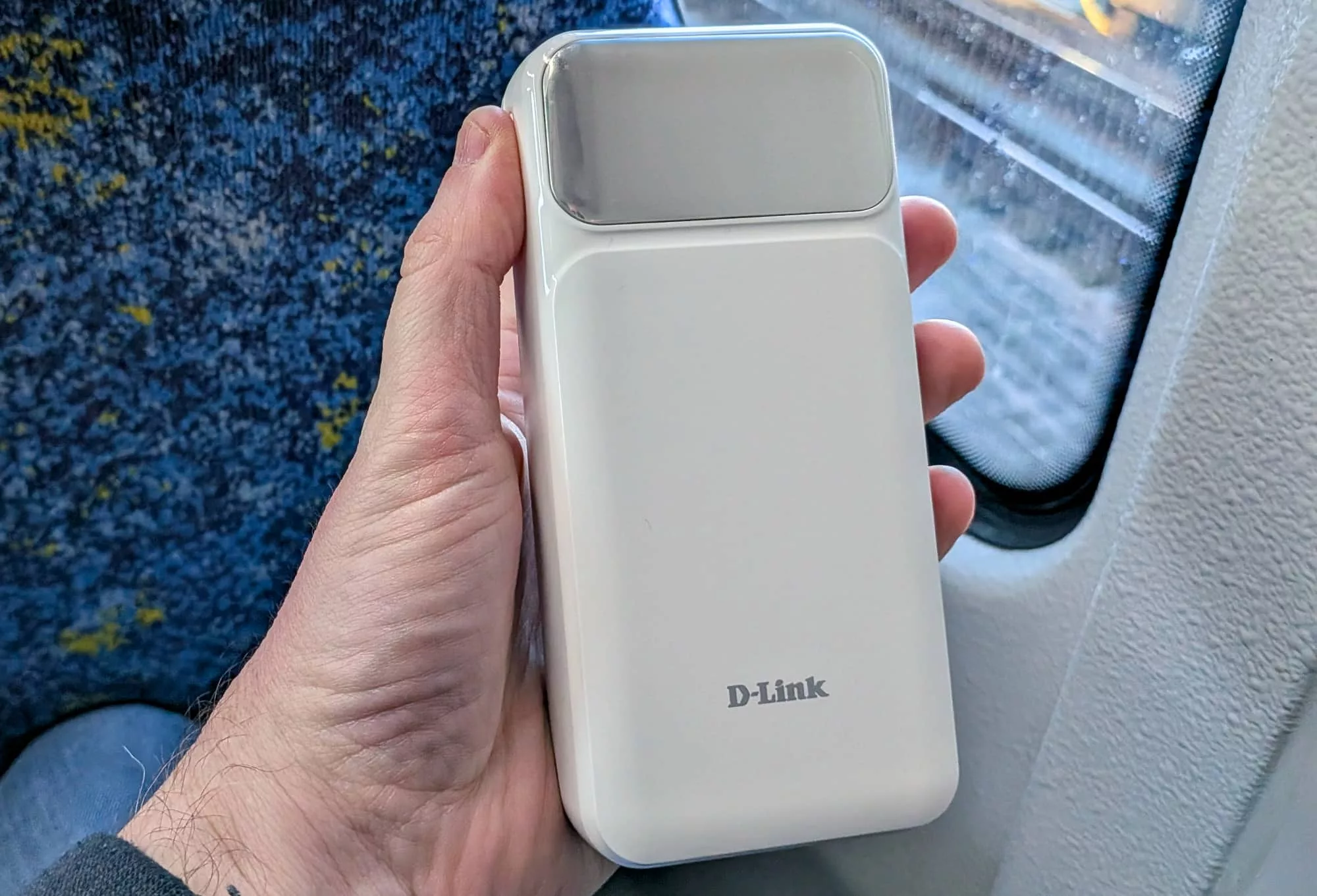
At 144x69x29mm and a weight of 402 grams, the D-Link DPP-201 is identical in size and weight to just about any other 20,000mAh battery pack you can buy.
No surprises there; while I haven’t cracked it open to check the insides, the reality of the way these devices are built and current battery technology – hey, a free power pun, enjoy it – means that there’s not much room for size or weight optimisation.
That does mark the D-Link DPP-201 out as a somewhat chunky item to throw into your bag. If you’re after a battery to slip into a pocket, it’s going to positively bulge., though possibly not as much as Anker’s 27,650mAh Prime power bank.
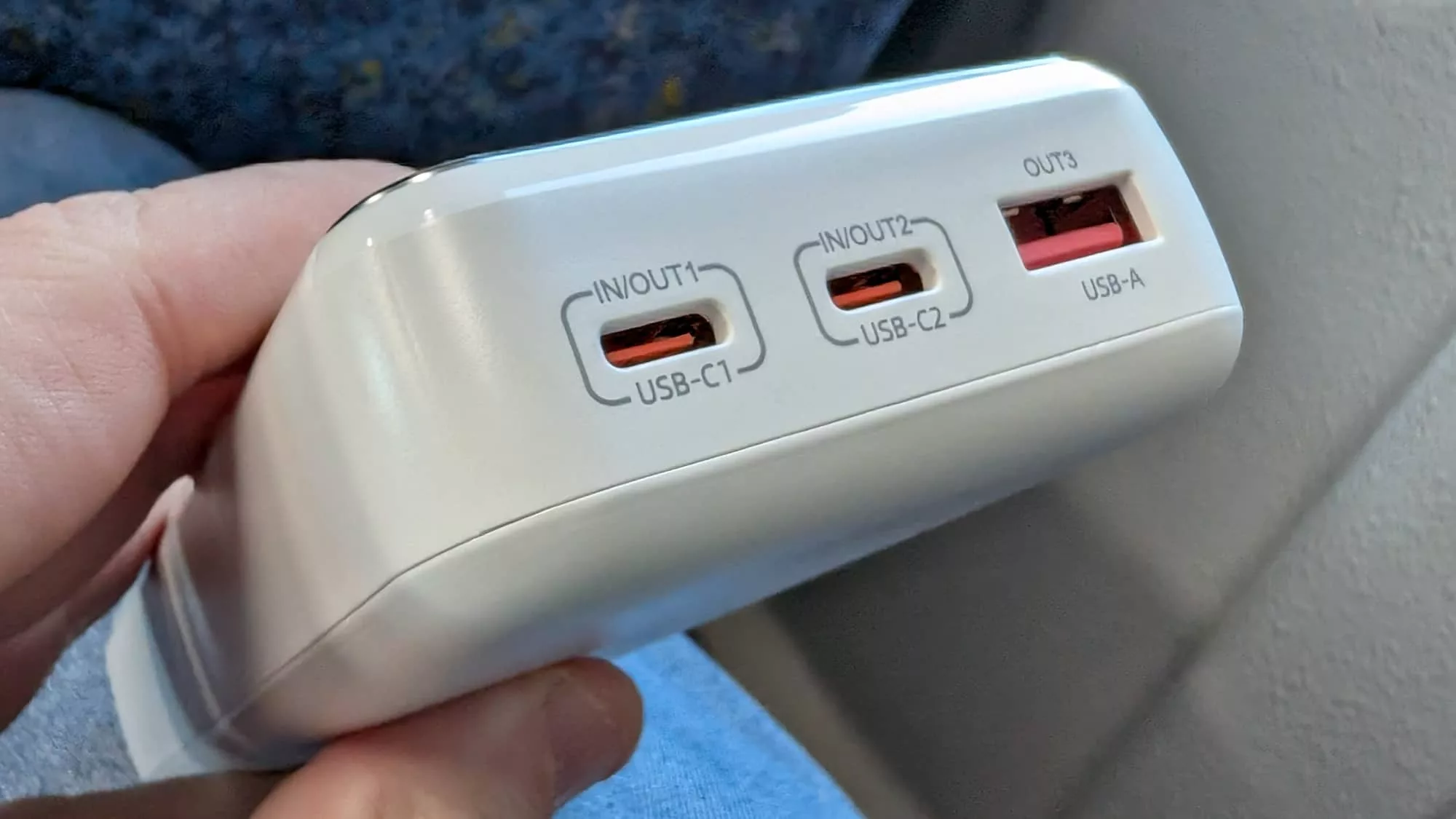
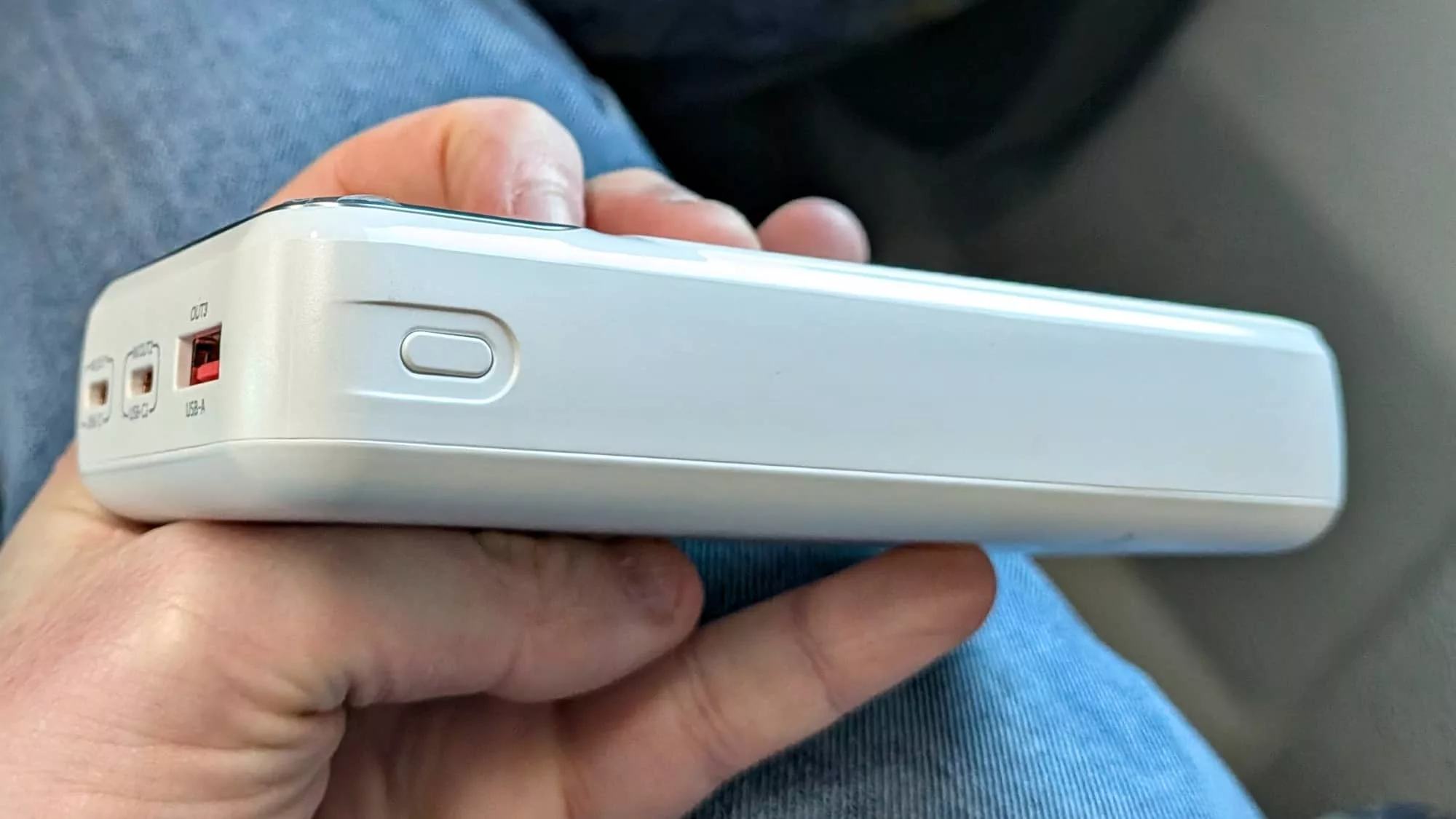
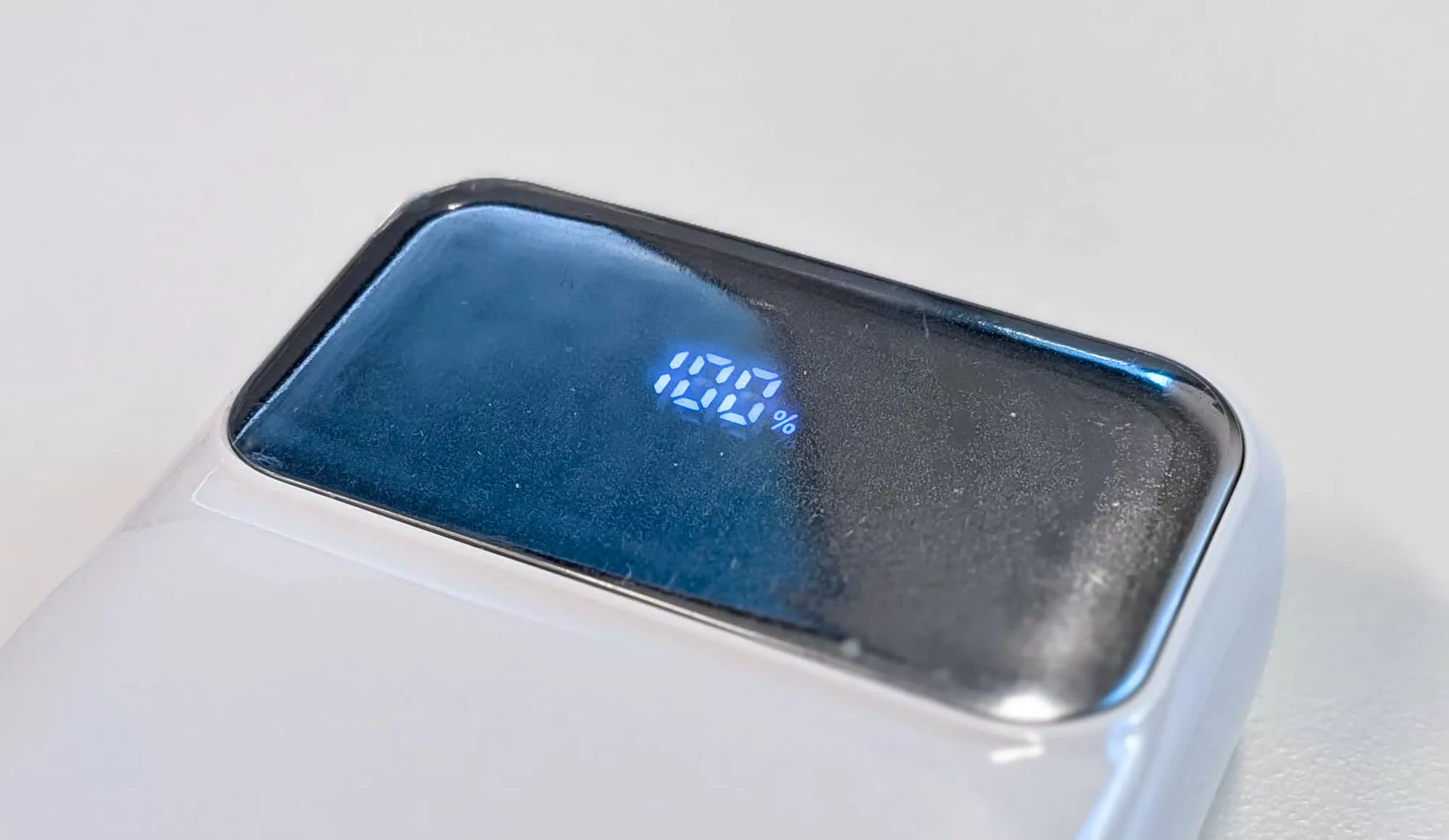
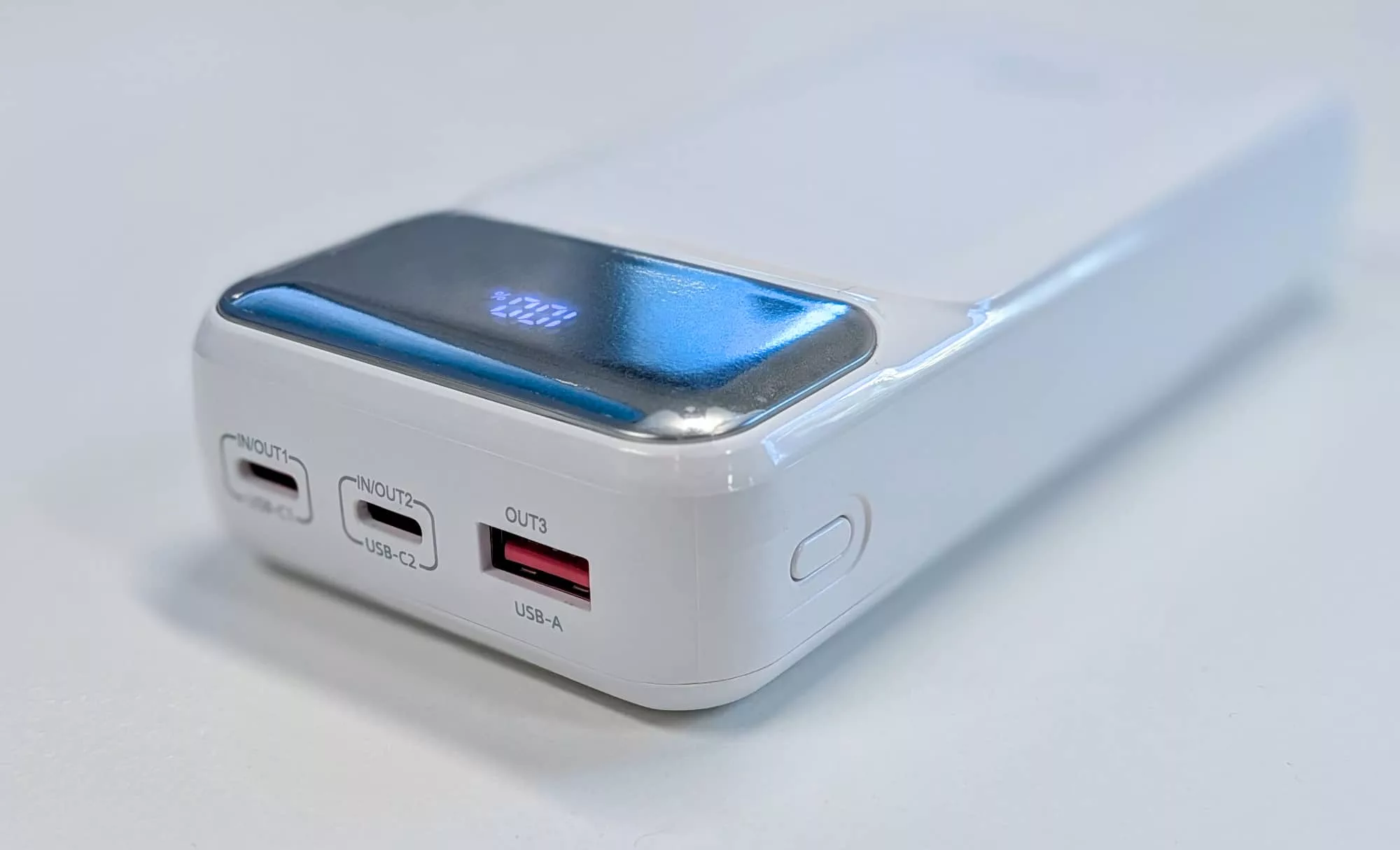
For connectivity, it features dual USB-C input and output sockets, and a sole USB-A output socket at the top, plus a simple LED display that shows the remaining power percentage. A button at the side switches the power bank on or off with a simple tap, while a longer hold will switch it between fast and regular power modes, depending on your needs.
This is all fine, but there’s nothing particularly special about its design, for better or worse. It’s a pretty basic looking power brick.
Performance
The D-Link DPP-201 supports up to 65W USB-PD charging, though this does vary by port used and depending on how many ports you’re using simultaneously.
Either USB-C port by itself can handle up to 65W, while the USB-A port tops out at 22.5W. If you go the combo route with cables snaking out from it, you drop to 35W and 20W from USB ports 1 and 2, or 35W and 22.5W from USB C port 1 and the sole USB-A port. If you go the combination route with USB-C port 2 and the USB A port, it drops to a flat 15W from either port.
One nice detail here is that the D-Link DPP-201 uses Lithium-Polymer battery technology rather than Lithium-Ion. While you can’t exactly go stabbing them and expect no problems at all, Lithium-Polymer batteries are generally more stable over a longer period than Lithium-Ion batteries, which means that the risks associated with these kinds of batteries are substantially reduced.
That’s great on a safety level, though you’re still unlikely to be able to use them on a lot of flights given the rules that most airlines now enforce.
Good luck arguing the difference between Lithium-Ion and Lithium-Polymer with airline cabin staff if you do try to go down that route. Depending on how much they know, they just might tell you to come back when battery packs are semi-solid-state, solid-state, or that you should save your energy for ordering a drink when you’re eventually invited to sit down.
Not shockingly – hey, there’s another power pun, this thing writes itself – the D-Link DPP-201 does a fine job with charging up regular mobile devices like smartphones and tablets. However, it’s also rated for USB-PD delivery at up to 65W, which does give it some scope for charging up more power intensive devices such as laptops.
I had intended to test that out as a simple review bench test, but then I got on a train recently to a meeting only to discover that I’d accidentally failed to charge up my working laptop, a MacBook Air M2.
It had just 1% battery life remaining and was on the verge of suspending itself when I remembered that I had the D-Link DPP-201 in my working bag.
As such, I swapped out my in-office bench test for a field test of how well the D-Link DPP-201 could keep my MacBook working – at least – and hopefully charging on the go.
I was cautious, because Apple gear specifically can be very picky about whether it wants to charge or not despite USB-PD being a standard, but it passed that without issue, picking up the DPP-201 as a power source quickly.
Over a 30 minute train journey, I managed to revive the MacBook Air from 1% battery to 60% battery while also using it for working purposes at cost to the battery capacity of the D-Link battery of 59%.
That’s not quite a benchmark figure, and more of an ad-hoc test.
It’s also not just about power transmission but also the battery chemistry of my gently ageing MacBook Air. Yet it’s a good sign for more general power top-ups of most devices.
It did get mildly warm after that 30 minute discharge, but while noticeable, it wasn’t at any kind of painful level, and the reality of that level of charging is that you’re always going to have a little wasted power escaping as heat.
That’s not D-Link’s fault, though; you’ll have to take it up with the physical constants of the universe if you wish to lodge a complaint.
What needs work?
Honestly, not much.
The D-Link DPP-201 mostly does what it says it will do, and aside from the oddity of it being a D-Link branded product in the first place, and remembering the way that the combinations of port charging work for optimal speed, this is… just a battery pack.
It’s a surprise given the name on the battery back, but the DPP-201 is just that: a power bank that says what it does on the box, and actually does it, too.
Final thoughts (TLDR)
While as a product the D-Link DPP-201 feels like an odd diversion for a brand so very closely associated with networking gear above all else, there’s plenty about the D-Link DPP-201 that’s fine. There’s certainly power to share, which is roughly the point.
That’s all, though. Nothing terrible for sure, but within this category there’s a lot of choice, and I’d definitely be looking to buy as much on price and capacity needs as anything else.
D-Link’s branding being on it will hopefully also mean that it is a better produced battery pack than the type you might consider buying in a cheap-as-chips sale, but it’s a power bank and there’s only so many differences they can offer anyway.