
Try as you might, it’s impossible to escape jargon in technology, because there’s always a new term or concept waiting around a corner.
At the world’s biggest technology show, CES 2026, jargon continues as technology companies introduce you to what’s coming, and in TVs, jargon is definitely on the way.
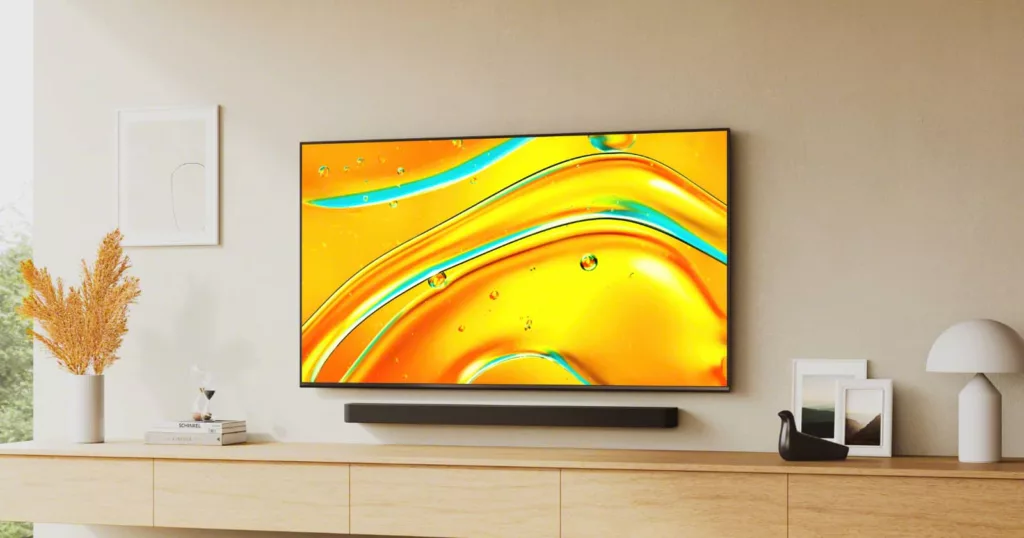
For high-end screens, consumers have Micro RGB to look forward to, a concept that uses tiny LEDs coloured red, green, and blue to light up pixels and provide more accurate backlighting. It’s not quite OLED, but rather another type of TV tech, and one that can mean bigger screens than what OLED delivers right now.
The world of Micro RGB isn’t new for everyone, and for TV maker Hisense, the technology is actually in its second generation. So with the Hisense 2026 TVs, you can expect red, green, blue, and also cyan pixels, an approach Hisense says improves colour accuracy and nuance, giving a little more to the backlighting system.
Hisense calls its Micro RGB system “RGB Mini-LED”, but it means roughly the same thing, and will be found across various screens.
The one getting that cyan LED is the 116 inch UXS, Hisense’s big flagship model that also comes with a 6.2.2 surround sound system tuned by French audio specialists Devialet.
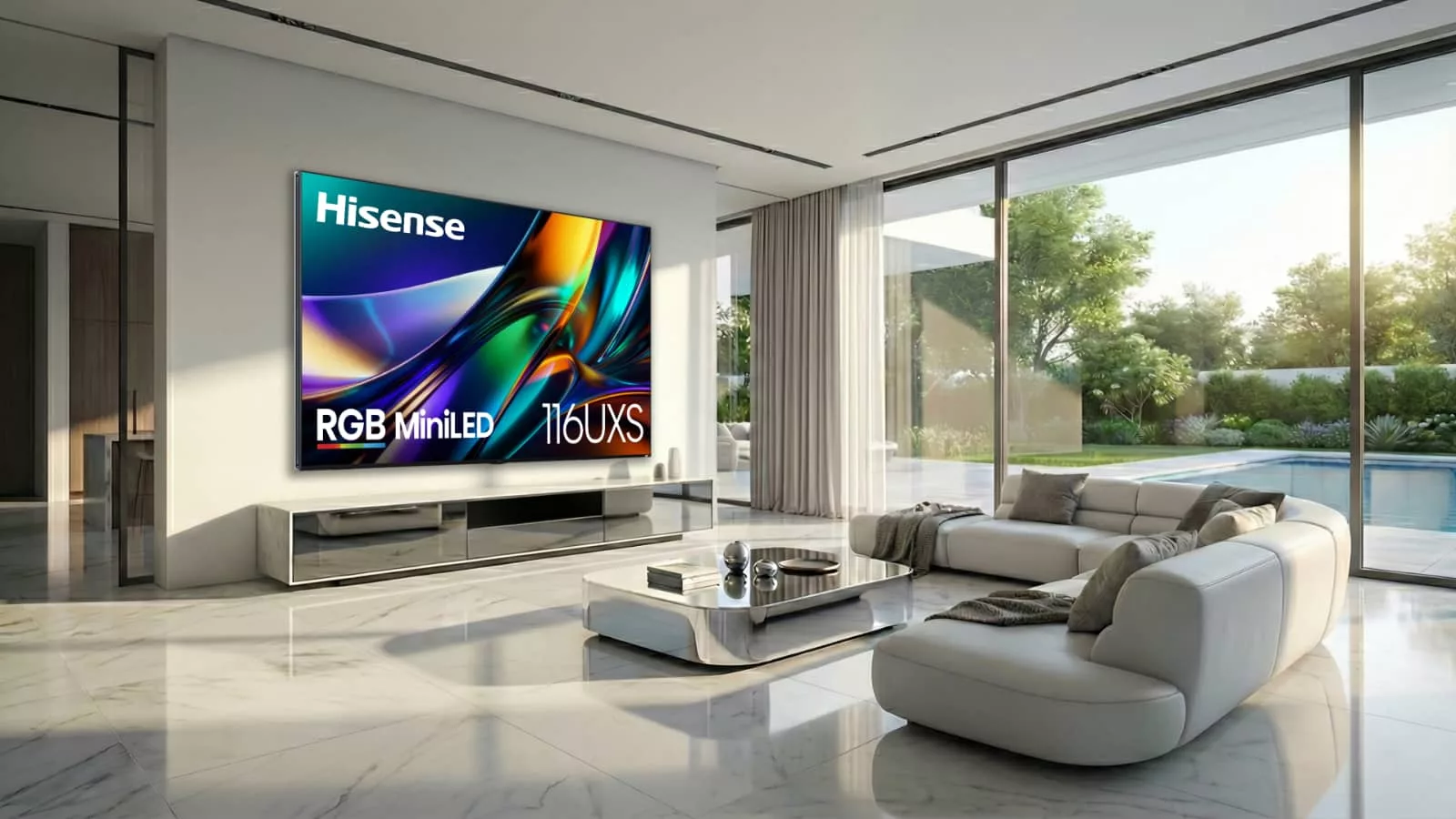
You’ll likely need a reasonable amount of money to grab the 116 inch screen and its four coloured LED, but the good news is Hisense’s take on Micro RGB will also come to more screens.
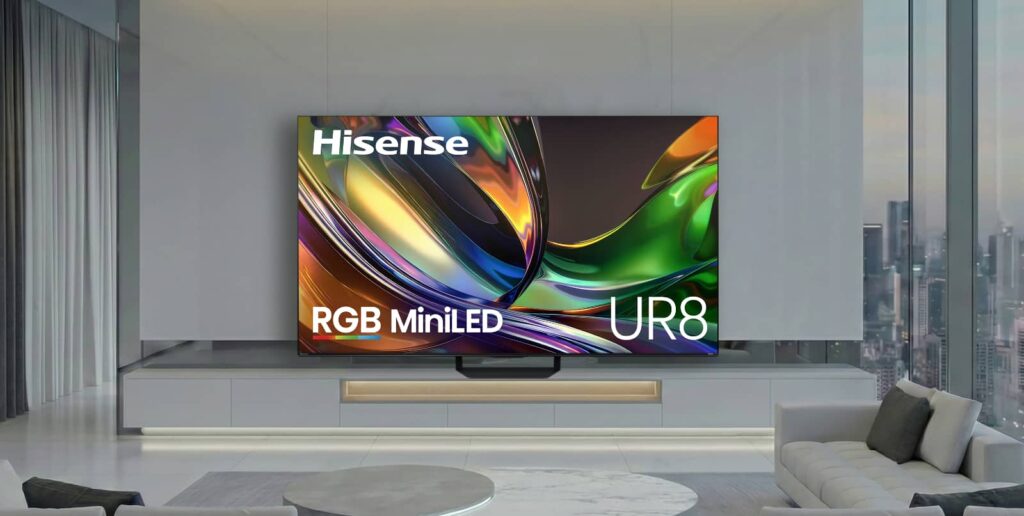
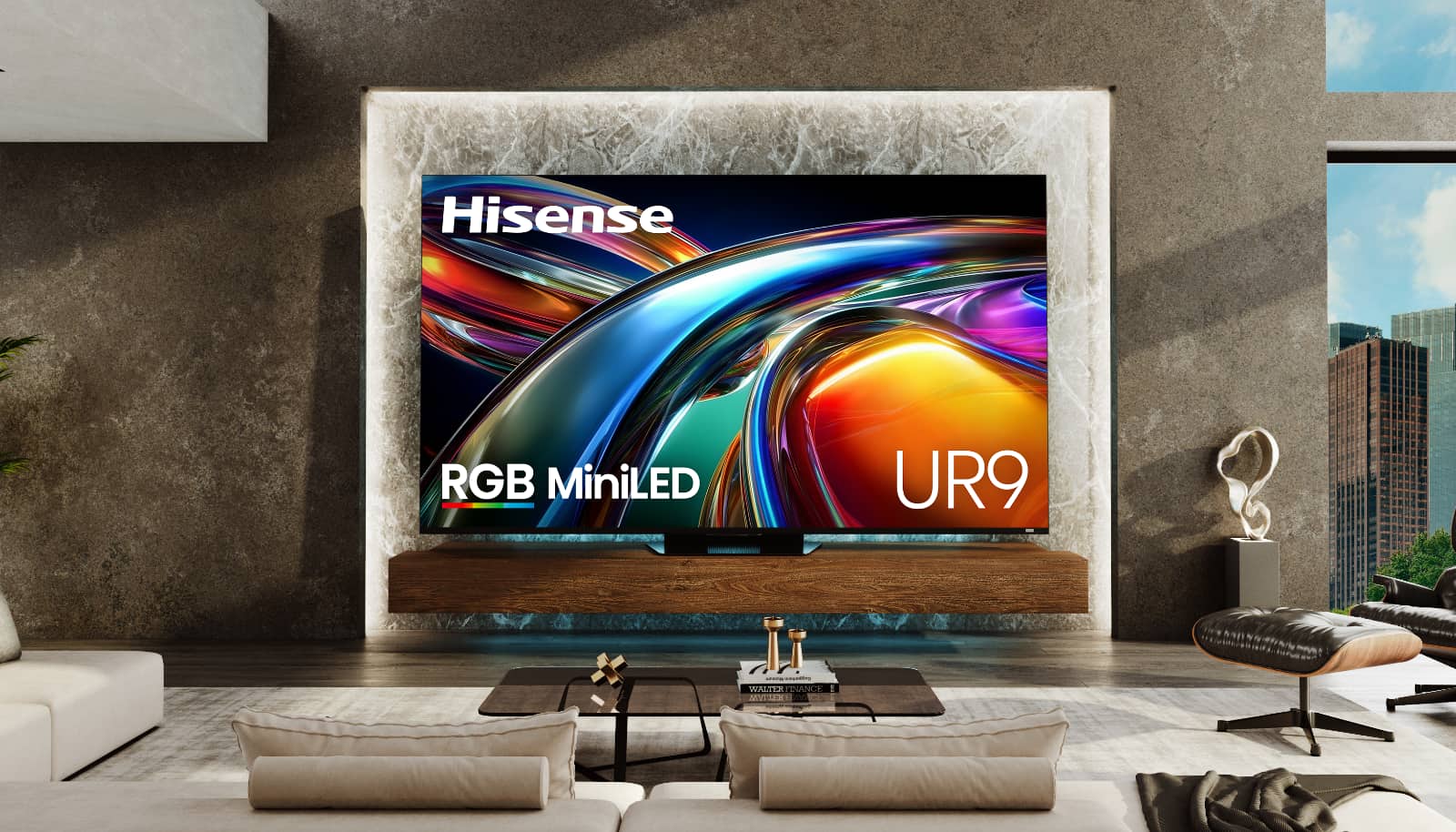
Essentially, the technology will arrive in the UR9 and UR8 models, the range that sits just below the flagship and uses the same two-chip architecture found in the UX model, but with the three colour LEDs, not the extra fourth. Hisense is also rolling out anti-glare matte technology to the UR models, as well as refresh rates for gamers of up to 180Hz.
Those screens will also Devialet-tuned audio, as well, but it just might not be as high-end as the 116 inch UXS screen receives.
Hisense is also making change to its Vidaa operating system, which is now just going to be known as “V”.
Not so much the drink or even the TV show about an alien invasion, “V homeOS” is Hisense’s updated smart TV operating system, and will see a dose of generative AI built in thanks to a collaboration with Microsoft Copilot. What that means in the short term we’re not quite sure yet, but our guess is AI to find programs to watch, plus possibly generative AI wallpapers, since quite a few TVs are announcing that as a feature this year.
Hisense’s Canvas TV will also see an update this year, including improvements to its use of quantum dot enhanced LED backlighting (known as “QLED”), as well as a change to a matte display, as well.
“The breadth of choice across our range is more than a showcase of display technology leadership for Hisense,” said Kevin Ke, Managing Director for Hisense in Australia and New Zealand, adding that “it’s a philosophy of innovation that starts with people.”
“As the first brand to introduce RGB MiniLED to consumers, we remain committed to advancing its potential and redefining the ultimate home entertainment experience,” he said.
Like most things announced at CES, Hisense doesn’t have pricing just yet, but availability details are set to be announced in the coming months.