


It can seem next to impossible to stop scammers from targeting everyone, but they’re doing it every where. They’ll call your phone, send you emails, and even try to be your friend on social.
We’ve all had our fair share of scammers trying to rip us off, but over on Facebook, cybercriminals have been involved in a massive scam attempt to lure in victims using advertising, and Meta has simply been taking the money for scam ads and letting it happen.
In fact, security specialist Bitdefender has found scam ads running in a huge campaign across at least 25 countries, including Australia.
The result saw more than 26,000 advertisements on Meta’s social platforms, with Australian celebrities faked and promoting an investment platform. While every country sees its own variation of the scam, Australians are targeted with financial journalists, including Adele Ferguson, Alan Kohler, and Ross Greenwood, as well as Commonwealth Bank CEO Matt Comyn.
Of course, the investment isn’t legitimate and neither are the appearances. Scammers are essentially using AI and image manipulation and asking people to throw money down a scam-ridden hole, initially registering name, phone number, and email address, with further scammers contacting the victims later on.
Bitdefender’s research into the scam found fake news articles used as part of the approach, with an ad promoting breaking news for a a cloned and artificial news site designed to look real. That includes fake articles on a cloned version of the ABC, often written as if the stories were too controversial and couldn’t be told. Overseas, it means fake versions of the BBC and other news organisations.

But like all scams, they’re just fake. It’s all a lie, using urgency and controversy as a cover and the hope that victims don’t dive in for research, believing it and sending money to scammers purportedly working on their behalf.
While much of this isn’t exactly a new scam approach, getting people to the scams comes by way of Facebook ads. It’s entirely possible to report the ads, but with thousands in place and country-specific variations of the scam, it means one person or company alone isn’t likely to take the network down. Rather, it needs to be something Meta handles.
“Meta does not provide a dedicated public channel for reporting ad fraud at scale,” said Bogdan Botezatu, Senior Director for Threat Research and Reporting at Bitdefender.
“We submit reports for each malicious advertisement we identify on an individual basis,” he said. “However, beyond the platform’s final decision on each specific report, we do not receive any additional feedback or follow-up information. We continue to work with social media platforms and to expand detections for this type of fraud to help users stay protected.”

How can you stay on alert for investment scams
This type of scam has a name, coming in the form of “social engineering”. Specifically, it’s about criminals and scammers using social media to engineer scams, manipulating you through social networks.
It happens more often than people realise, often pushed by hacked or cloned accounts. If you’ve had a “friend” reach out to ask you for money all of a sudden, you may know this approach all too well.
However, it can also happen aided by advertising with fake celebrity endorsements, something that we’ve seen from scams in the past.
These scams are often controversial in nature, using fraudulent celebrities to promoted equally fraudulent products and investments, trapping people in a loop where they think the real person is behind them. It’s a mess.
The problem with something controversial is that it often feels urgent, which is the exact type of emotion scammers prey on.
While news stories can be controversial, it’s unlikely such a controversial angle in finance would go unreported by every news outlet. That’s not a conspiracy.
It’s not a conspiracy if you see it on social, but not on the actual website. If anything, it’s more likely to be less than authentic, because it’s not running on the actual site.
Think of it like phishing, but acting as news manipulation. That’s what’s actually going on.
You only need to check the website address to determine that for yourself, because like all scams, criminals can’t simply use the www-dot-whatever of a real website. They have to use something fake. Check that, and you’ll know you’re at a fake version.
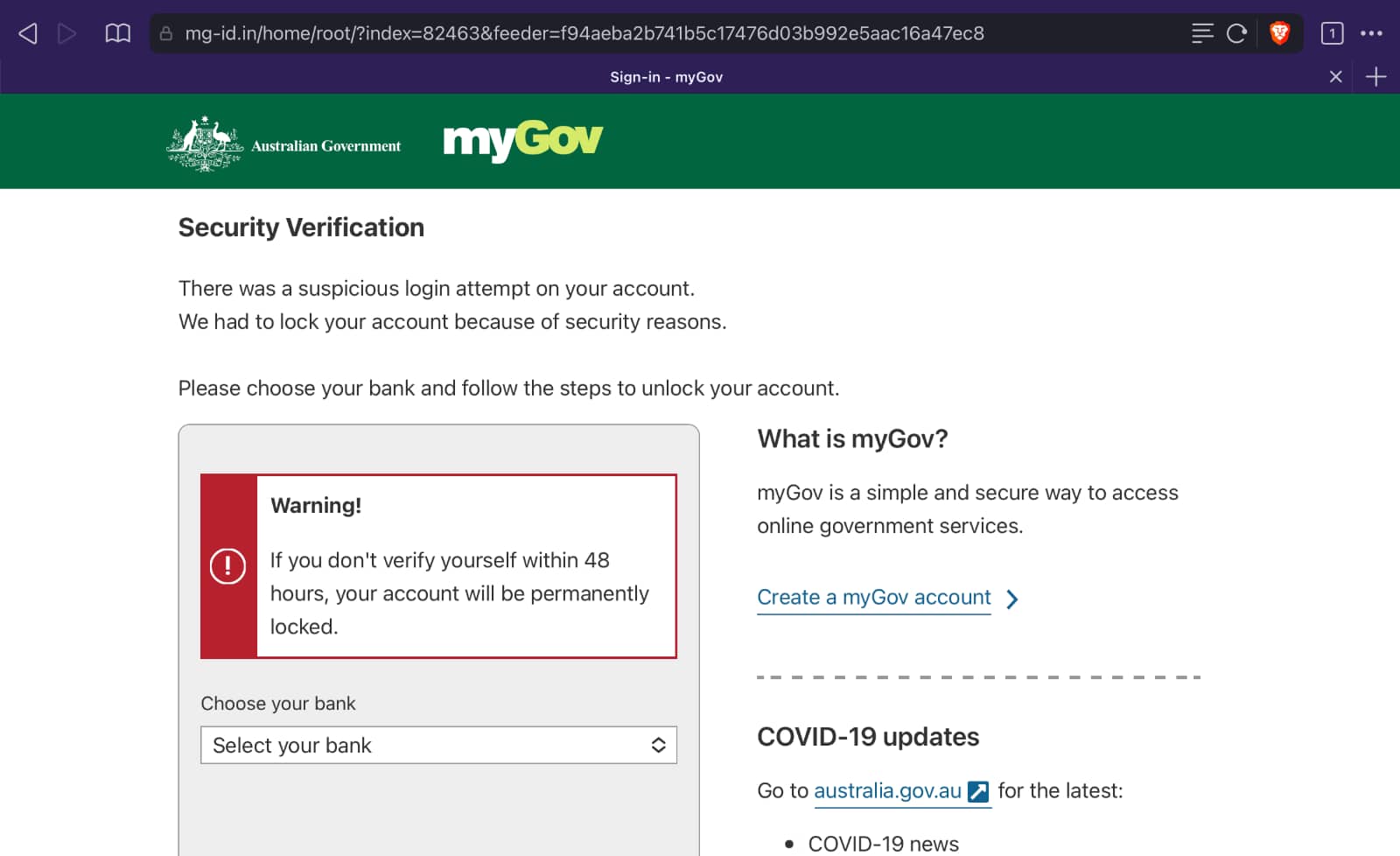
Ultimately, if you see a story like this “breaking” on social media, particularly when it involves money, take it with a grain of salt and do some actual research beyond the social network.
Google the title of the story and look for it on the real site. Look for the angle. Do something to check whether the story is real, especially if it involves money.
If you can’t find it in real life, ask yourself why. The answer is it’s probably fake, or attempt at manipulation. And then simply contact the ACCC’s Scamwatch system, reporting it for everyone, and moving on with your life.